Braque FrancaisSame FCI section
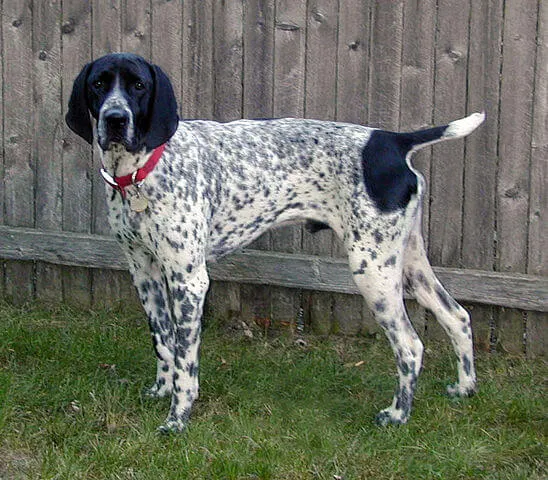
The Braque d'Auvergne is an elegant, extremely affectionate pointing dog — bred to track game persistently in rough terrain and point motionless, making them a demanding working partner outdoors and a gentle shadow indoors.
How the health grade is calculated
Sources for required breeding screenings. Verein für französische Vorstehhunde – VBBFL e.V.
Self-check
Answer 6 quick questions about your everyday life and see how well the Braque d'Auvergne fits you — including an honest cost estimate per month, per year, and across the dog's lifetime.

At a glance
The essentials — key facts, traits, and health priorities — before you dive deeper.
Lifespan
12–15 yrs
Shoulder height
53–63 cm
Weight
20–32 kg
Practical
Temperament
Daily life
What matters most
Especially with a Braque d'Auvergne, choosing the right breeder is the single most important decision you'll make. Serious breeders consistently test the parents for inherited conditions, prioritize healthy early socialization, and stay accountable long after handover. A cheap puppy without health screening tends to become the most expensive dog later on.
See HonestDog breeder standards →Colors & coat
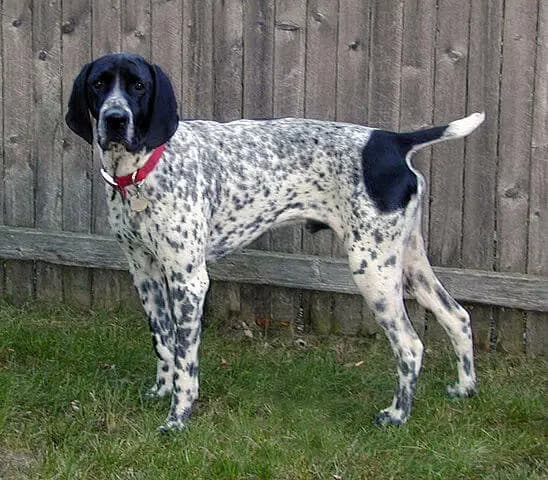
The coat colors that occur in the Braque d'Auvergne — including which ones fall outside the breed standard and which carry genetic risk.
Eye colors
 Brown
Coat type
 Short
 Smooth
The real vibes check
Outdoors, an enduring athlete in search of the next trail; indoors, a gentle cuddle bug who would prefer to crawl right into your lap. The Braque d'Auvergne gives you their whole heart, but in return, they absolutely require a shared task. If you keep their keen nose occupied, you will get one of the most loyal companions ever – if not, they will find their own adventures.
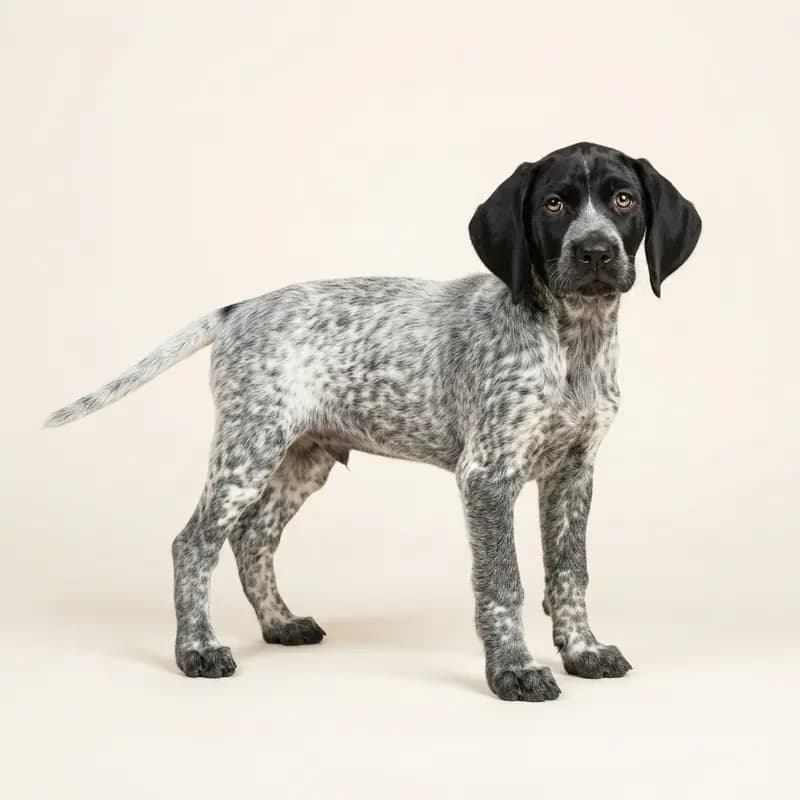
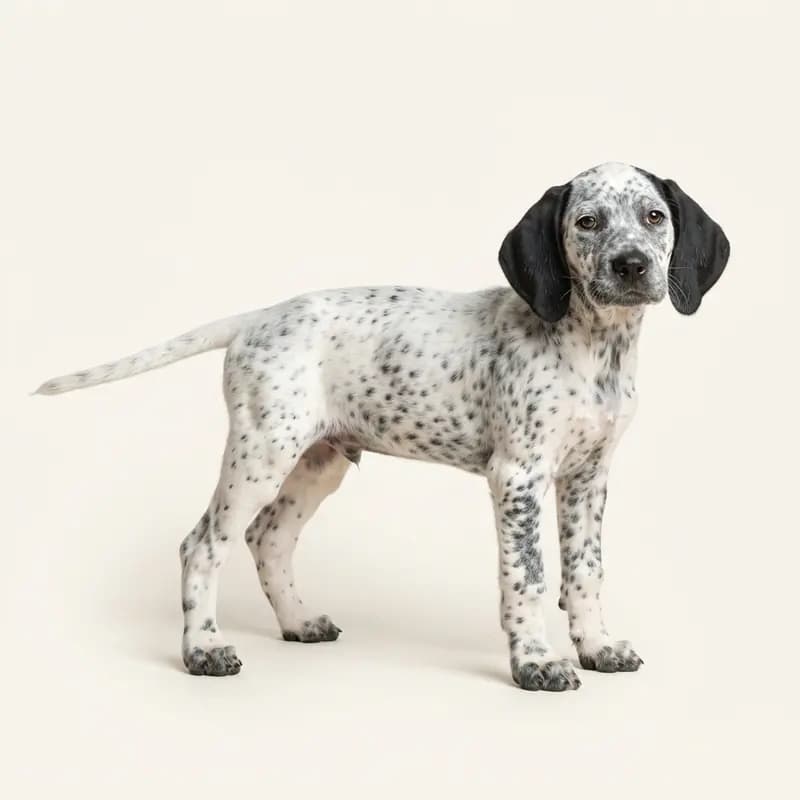
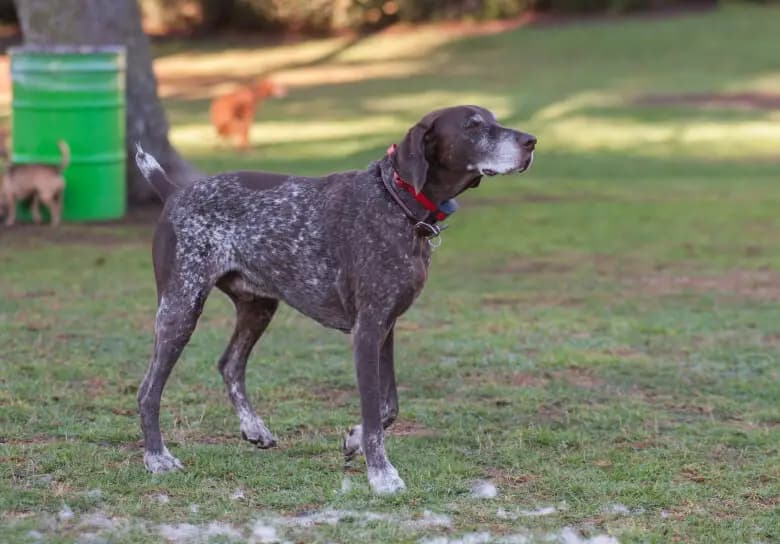
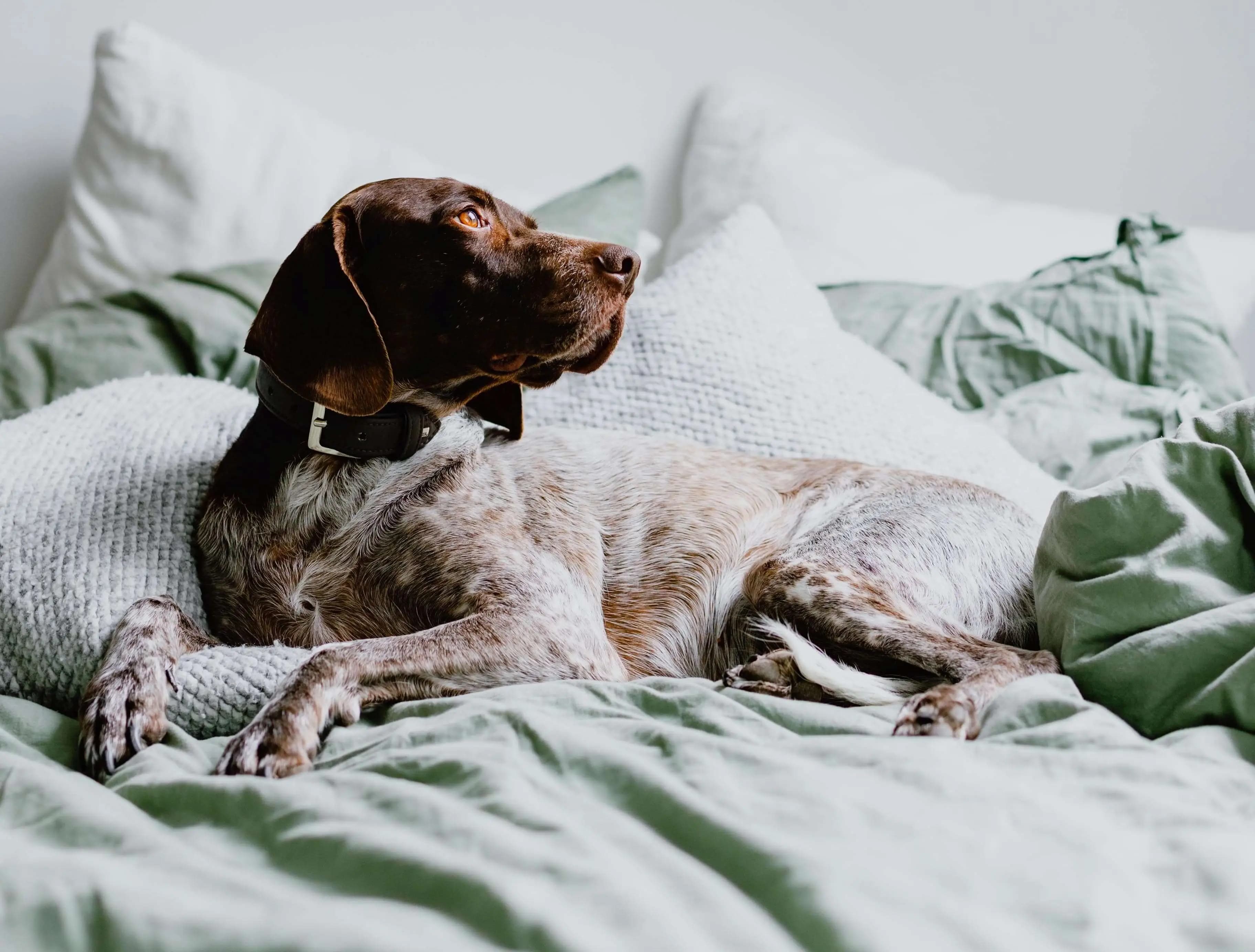
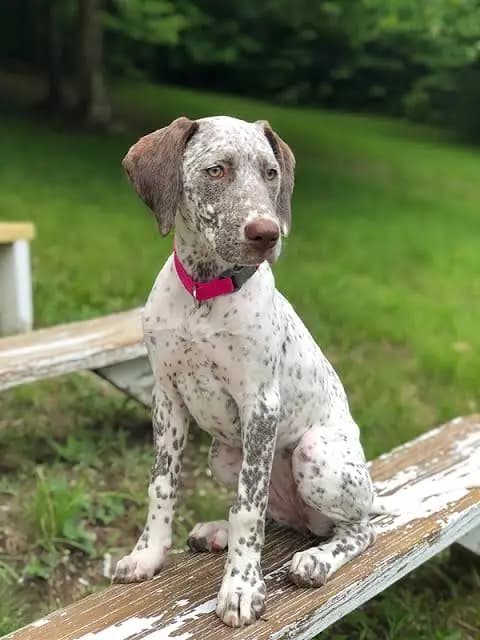
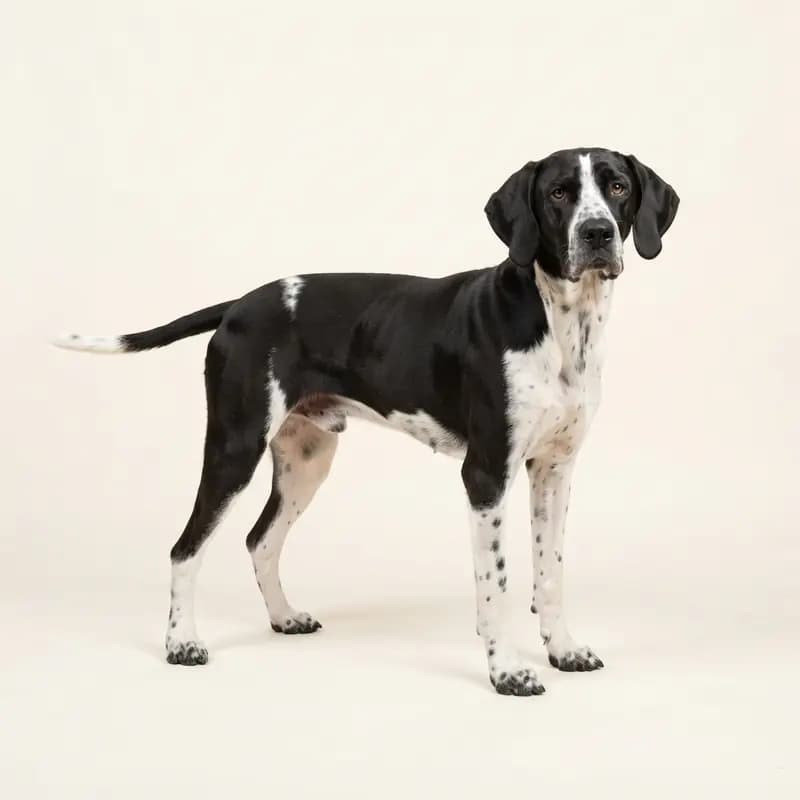
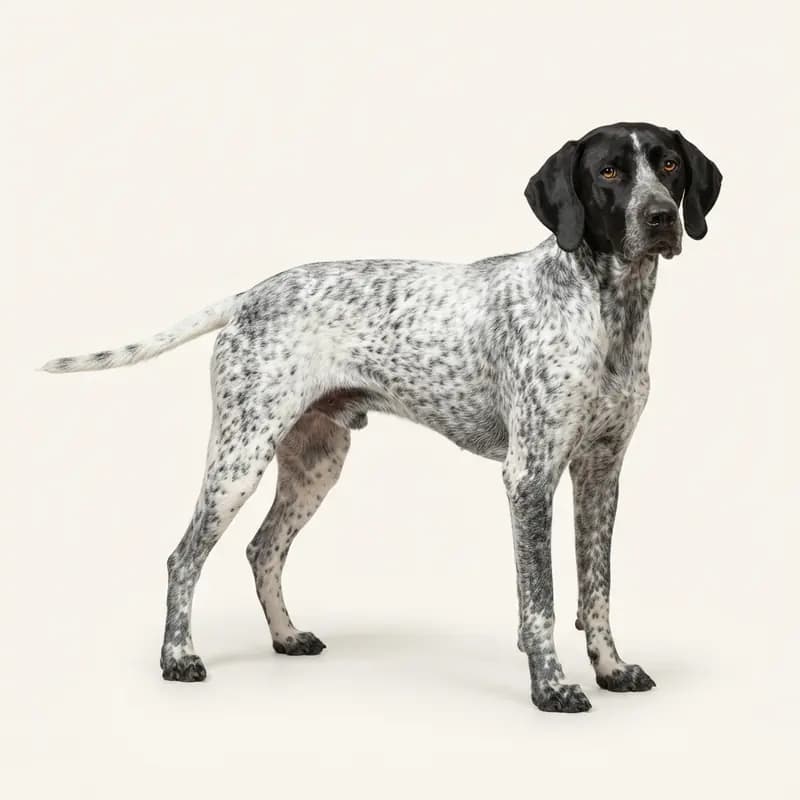
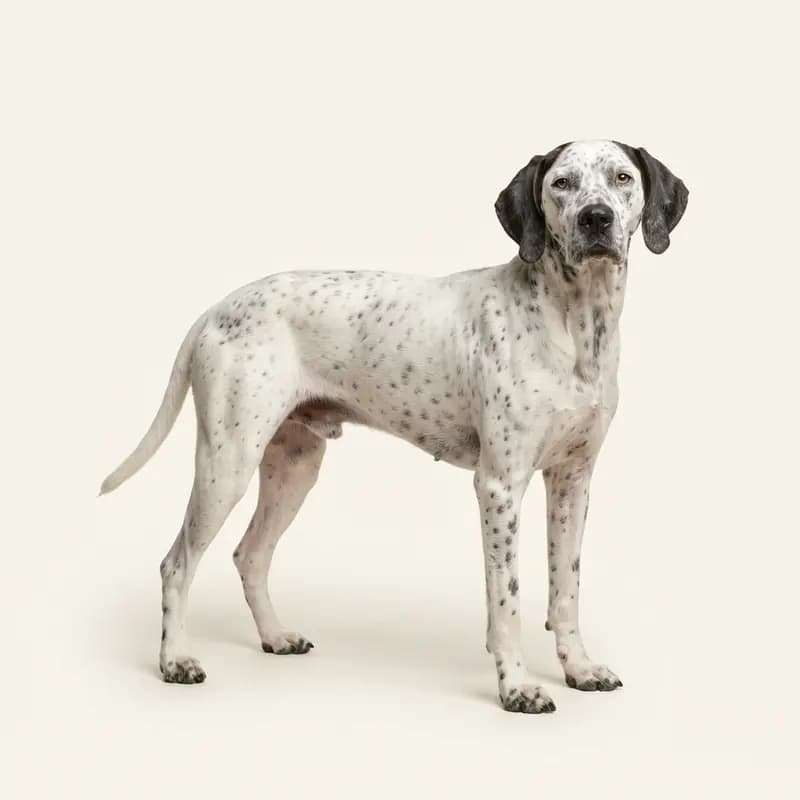
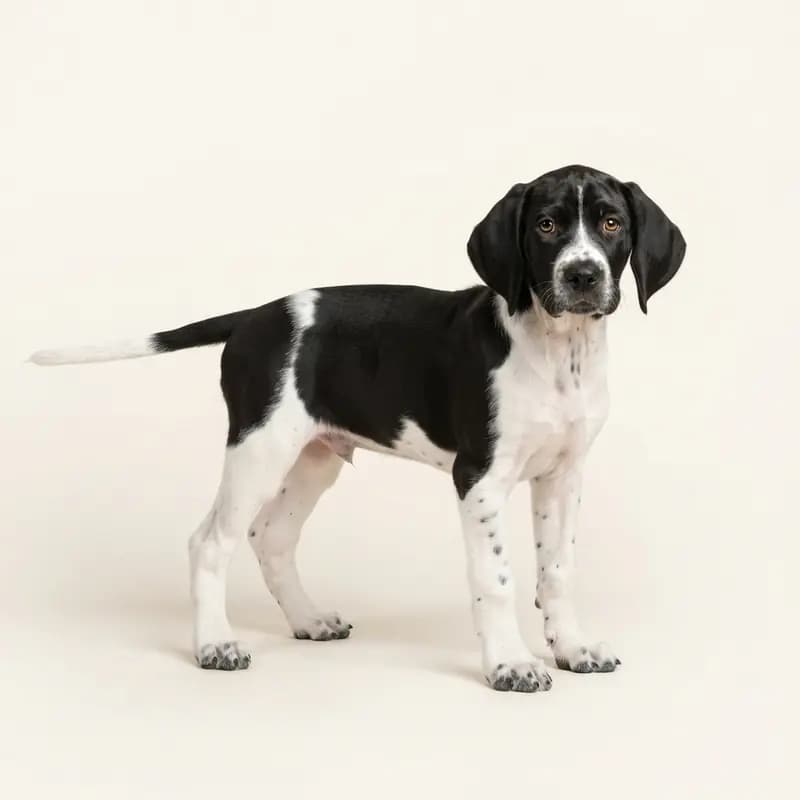
The Braque d'Auvergne, also known as the Auvergne Pointer, is a medium to large dog that belongs to FCI Group 7 (Pointing Dogs). His strong, muscular build and smooth movement give the impression of strength and endurance. The short but thick and fine fur is mostly white and black, with the black color being distributed over the body in varying amounts of speckles and spots. The head is rounded and strong, but not too heavy, with a pronounced stop and medium-sized, rather high-set ears that lie close to the head. The eyes are large and lively, with an intelligent and gentle expression. The body is well proportioned, with a deep chest and strong, well-developed muscles that emphasize its endurance and speed when hunting. Unlike some other dog breeds, there is no clear distinction between performance and show lines in the Braque d'Auvergne, as most breeders want to preserve the breed's versatility and uniform character. Working characteristics are usually considered equivalent to the physical characteristics and health of the breed.
The Braque d'Auvergne is known for its affectionate and loving nature. He is extremely people-oriented and loves spending time with his family, whether on long walks or in a cozy get-together at home. Despite his passion for hunting, he shows a surprising gentleness and patience, especially when dealing with children, making him a wonderful family dog. With his strong work drive and high energy, the Braque d'Auvergne is no couch potato. He needs enough physical and mental stimulation to be happy and balanced. Long walks, hunting training and dog sports like agility can help him drain his energy stores and keep his clever mind busy. It is also ideal as a companion when jogging or cycling. This breed has a strong need to please and is very eager to learn, which usually makes training an enjoyable experience. The Braque d'Auvergne is an intelligent and quick learner, with a good memory and an innate understanding of tasks. Its hunting instinct is strong, so care must be taken when walking in the wild. Solid basic training and consistent training can help control this instinct, but it's important to remember that it's in their nature to seek out birds and wildlife. While the Braque d'Auvergne generally does not like being alone, he can easily adapt to being alone for some time during the day, provided his needs for exercise and companionship have been met beforehand. However, he may suffer from separation anxiety if he is regularly left alone for long periods of time. Despite its friendly and open character, the Braque d'Auvergne is a vigilant dog that will protect its territory and family well. However, he is not aggressive and will usually only bark when he sees a good reason to do so. Overall, the Braque d'Auvergne is a versatile and loving breed that excels as both a working dog and a loyal companion. With the right mix of training, exercise and affection, he will be a valuable and loved part of any family.
| Watchfulness Reports unusual activity but stays controlled. | Moderate |
| Openness to Strangers Warms up quickly and is generally welcoming. | Friendly |
| Hunting or Herding Drive This drive runs deep — no amount of training eliminates it. | Very strong |
Fun Fact!
Did you know that Braque d'Auvergne has its roots in a French region known for its volcanic mountains? This might explain why this breed is so energetic!
The Braque d'Auvergne is a lively and hardworking pointing dog from France. It is characterized by its endurance and strong hunting instinct. These dogs are intelligent and eager to learn but require consistent training and sufficient activity. The Braque d'Auvergne is excellent as a hunting and family dog when properly exercised.
The Braque d'Auvergne is an active dog that needs plenty of space to run and play, so it may not be the best choice for city life unless regular trips to parks or the countryside are available. He gets along well with children and can also get along well with other pets, including cats, if socialized with them from an early age.
Lives for its family — the born family companion.
Takes boisterous and affectionate children in its stride.
Actively enjoys the company of other dogs.
City-appropriate with enough exercise and stimulation.
Owning a dog is a privilege, but it's also a real responsibility. Before you bring one into your life, be honest with yourself about the commitment it takes.
The Braque d'Auvergne is an intelligent dog with a strong drive to work and to please. He is easy to train and responds well to positive reinforcement. His need for mental stimulation and activity makes him a great candidate for various dog sports such as agility, flyball and of course hunting training. Despite his high activity level, there is a risk that he will become a ball junkie. Therefore, it is important to ensure balanced training and a variety of activities. His strong hunting instinct also requires training in frustration tolerance and impulse control. His pointer nature means he can be stubborn at times, but with patience and consistency you can ensure that your Braque d'Auvergne becomes a well-behaved and balanced dog. He will enjoy having a job and pleasing you.
Your Braque d'Auvergne needs a balanced diet tailored to his life stage, health and activity level. This active breed has high calorie needs, so you'll want to make sure you choose high-quality food tailored to the needs of active dogs. When it comes to grooming, the Braque d'Auvergne is easy to care for. His short, thick and fine coat has an undercoat that protects him from the elements. Therefore, he gets along well with the climate in Germany. This breed sheds moderately, and regular brushing can help remove loose hair and keep his coat healthy and shiny.
| Care Level Minimal effort — occasional brushing and bathing. | Low-maintenance |
| Exercise Needs Needs several hours of serious exercise every day. | Very active |
| Shedding Regular shedding — dog hair on clothes is now normal. | Moderate |
| Trainability Picks up commands quickly and wants to please. | Eager to learn |
Our experts are still reviewing this information. Spotted something wrong? Email us at info@honestdog.de.
Robust
Health grade
The Braque d'Auvergne is considered a robust breed, but as with many hunting dogs, hip dysplasia (HD) and elbow dysplasia (ED) are the primary orthopedic risks. The Verein für französische Vorstehhunde – VBBFL e.V. therefore mandates mandatory screenings for HD and ED, as well as a dental and bite evaluation. A responsible breeder only uses parent animals that fully meet these criteria. Ask to see the official findings before buying a puppy: for hips, the maximum permitted limit is HD A–C (C only with conditions), and for elbows, ED 0–1.
Grade is relative to other breeds — AI-assisted and editorially reviewed.
Methodology and data: HonestDog Dog Breed Health Report 2026
What matters most for this breed
Tap any item to see details.
With joint-friendly rearing, a healthy weight, and regular eye check-ups at the vet, your dog will usually remain pain-free and active for a long time.
Responsible breeders have their animals tested mandatorily in advance for hip dysplasia (HD), elbow dysplasia (ED), and dentition in order to specifically prevent severe joint problems in the offspring.
Note: This health overview is AI-assisted and editorially reviewed. It is for orientation only and does not replace veterinary advice.
What matters most for this breed — what's common, how much it affects the dog's life, and how to protect yourself as a buyer.
Tap a body region to see the inherited conditions linked to it.
The three most important risks
Pick a region on the map to explore other areas.
Tier 1 reflects the tests Verein für französische Vorstehhunde – VBBFL e.V. actually mandates. Tiers 2 and 3 show how responsible breeders go beyond.
Club standard. Verein für französische Vorstehhunde – VBBFL e.V. requires these tests for breeding approval. Ask any reputable breeder for the results.
Not health tests, but required for breeding: the club asks for these results too. They don't count toward the risks or the rating.
DNA-Identitätsnachweis
Required by Verein für französische Vorstehhunde – VBBFL e.V.
Acceptable result: Hinterlegung eines DNA-Profils (2ml EDTA Blut)
Dental and bite evaluation
Required by Verein für französische Vorstehhunde – VBBFL e.V.
Acceptable result: Nicht im Text spezifiziert (Erfassung über offizielle Zahnkarte)
No entries in this tier.
No entries in this tier.
Note: This health overview is AI-assisted and editorially reviewed. It is for orientation only and does not replace veterinary advice.
A Braque d'Auvergne costs around ~€180 per month (€100 – €340, depending on your setup). The first year adds up to roughly ~€4,860 including purchase, equipment and puppy school; across the dog's life (13.5 years) it comes to about ~€32,100.
With surgery cover, running costs come to about ~€180 per month — in return, your share of a major operation drops from several thousand euros to around 20 percent.
Per month
~€180
In the first year
~€4,860
Across the dog's life
~€32,100
Estimated purchase price from a breeder: €1,200 – €2,500
Estimate at a mid-range setup (suburban, dry food, 1–2 hours of daily exercise), average German prices, as of July 2026.
HonestDog Concierge
We currently have no breeders for this breed who have passed our verification. Create your short buyer profile: we'll set up your search alert, review a possible source and email you within 28 days.
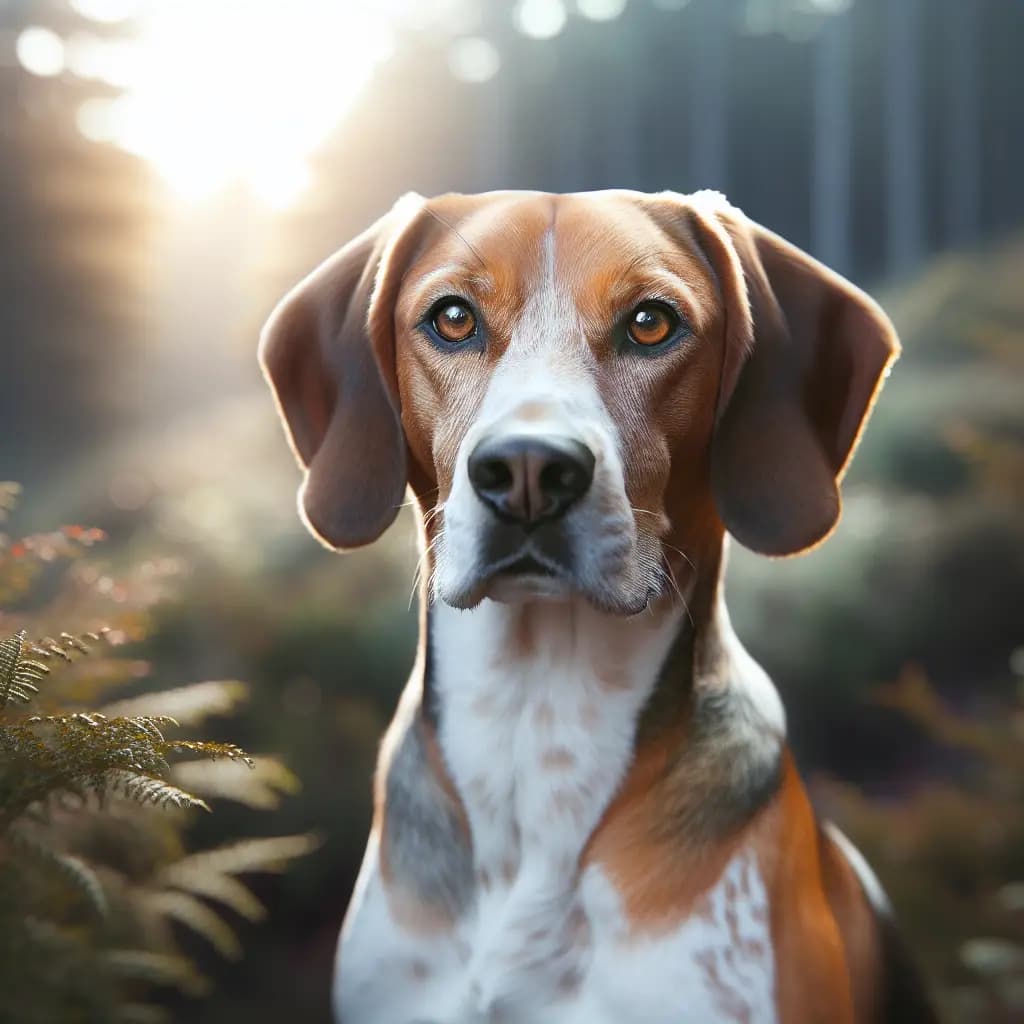
 Illustrative image
 Illustrative image
 Illustrative image
 Illustrative image
The Braque d'Auvergne, as the name suggests, comes from the Auvergne region in central France. Its origins are believed to date back to the late Middle Ages, when pointers became increasingly popular in Europe. The breed was developed from a mix of local hunting dogs and probably Spanish pointers, which were offered as gifts by the Spanish to French nobles. The goal was to create a resilient and adaptable hunting dog that could work effectively in both open terrain and the region's harsh, mountainous landscapes. Despite its long history, the Braque d'Auvergne was not officially recognized as a separate breed until the late 19th century. Over the years, the breed has gained a strong place as a pet, especially in France, due to its excellent pointing skills and affectionate nature. Although the breed is still relatively rare outside of France, it has gained popularity in other countries, including Germany, in recent years. Today, the Braque d'Auvergne is valued as both a working dog and a loyal companion who passionately loves his home and family.
The Braque d'Auvergne was bred as a pointer for hunting and is known for its versatility and good sense of smell.
France
1700
Owners of the Braque d'Auvergne agree on how strongly people-oriented and gentle the breed is to live with. Indoors these dogs are mostly described as calm, cuddly shadows that seek direct physical contact with their people and would rather be curled up on the couch. Their behavior with children and other dogs is almost universally experienced as exemplary and patient.
Experienced owners also stress the downside of this close bond: these dogs often struggle with being alone. If they are isolated for long periods or kept apart in the yard, they quickly develop frustration or separation stress, since they demand very close involvement in everyday family life.
Sources:edogs.derundum.dogtackenberg.dejagdjuenger.deanimalia.bio
On training and exercise, owners report a sensitive, cooperative breed that wants to please but reacts badly to pressure. Harsh training methods quickly make these pointers insecure or unwilling. With calm consistency and positive reinforcement, though, they learn very quickly and attentively.
According to owner accounts, outdoors is where the real bundle of energy shows. The inborn drive to hunt and point feathered and furred game is very much present and calls for long-line training with some foresight. Without purposeful nose work, such as tracking, mantrailing or dummy retrieving, these dogs tend to follow trails on their own or become restless in daily life.
Sources:petbook.derundum.dogtackenberg.dejagdjuenger.deanimalia.bio
Health-wise, owners and breed clubs consider the Braque d'Auvergne a robust working breed that has not been overbred and has no extreme anatomical exaggerations. The short coat is easy to care for and, apart from regular brushing, needs very little work.
The weak spot owners name most is the hanging ears, which are prone to infection because of poor air circulation and need regular checks. Owners also point to the usual caution about bloat after feeding that applies to deep-chested hunting dogs, and to the importance of only taking a puppy from a breeder with documented hip dysplasia (HD) screening.
Sources:tackenberg.dezoomalia.de
Paraphrased from real owner reports · translated from German
The Braque d'Auvergne is an active dog that needs plenty of exercise and mental stimulation. Research the temperament, grooming needs, and space requirements before deciding.
The average life expectancy of a Braque d'Auvergne is 12-15 years. With proper care and regular vet visits, your dog can live a long, healthy life.
Braque d'Auvergne grooming requirements include regular brushing, nail trimming, and dental care. HonestDog provides detailed grooming tips for every breed.
The Braque d'Auvergne can be a great family dog. Proper training and socialization are key. HonestDog provides family suitability information for every breed.
The Braque d'Auvergne comes in these colors: Black and white, Roan, Spotted.
Showcase your kennel on HonestDog and reach families searching for a responsibly bred Braque d'Auvergne.