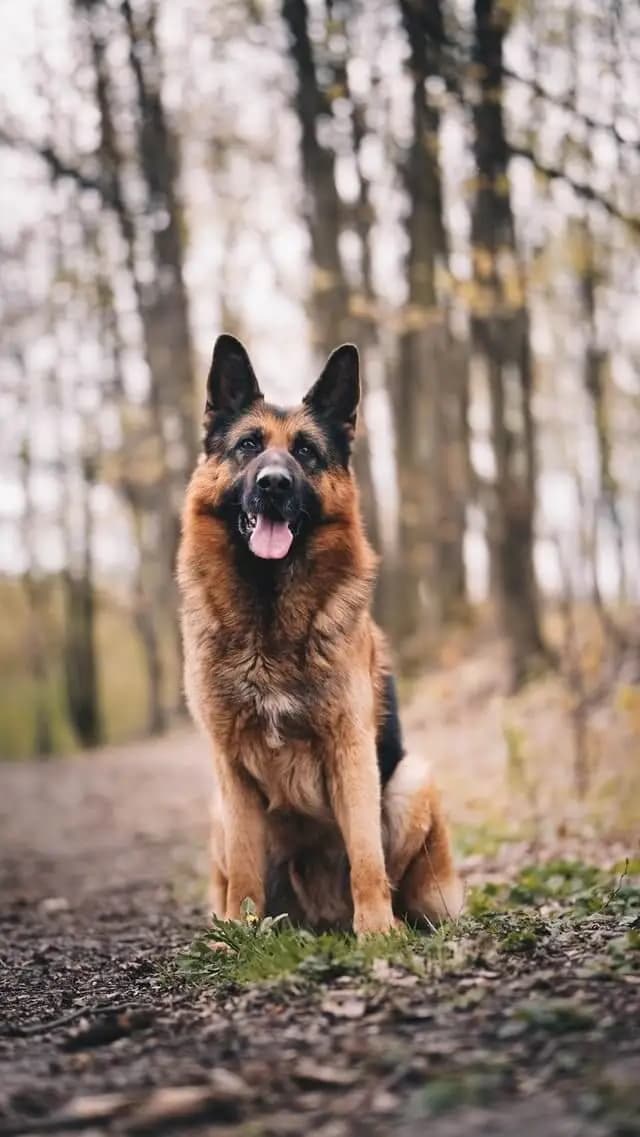
At a shelter you'll meet very different characters. Because the German Shepherd is so people-oriented, many dogs in kennels suffer from the loss of their person and may seem stressed or overexcited at first. Give the dog time: its extremely high trainability (5/5) helps enormously to close any gaps in training with clear, fair leadership. When choosing, also bear in mind that tolerance of other dogs and suitability for children are in the middle range (3/5) – here the individual dog's history counts.
With a life expectancy of 9 to 13 years, health is a central point. German Shepherds are considered robust but have a clear pattern: hips, elbows, the back and a sensitivity to certain medications often remain issues for life. A health-focused breeder has the parent dogs X-rayed before breeding for hip dysplasia (HD), elbow dysplasia (ED) and changes to the back such as transitional vertebrae; this significantly lowers the risk of joint problems in the puppies. Reputable breeders also use established DNA tests for the German Shepherd that show whether a parent dog is clear, a carrier or affected for certain nervous-system diseases such as degenerative myelopathy or a genetic sensitivity to medications, and they plan pairings responsibly on that basis. Other breed-typical issues such as exocrine pancreatic insufficiency, epilepsy, heart diseases (such as aortic stenosis or PDA) or wobbler syndrome also play a role in the breed.
If a shelter dog originally comes from a puppy mill, these important screenings of the parents are often missing. So ask the shelter to show you all the vet records, and make careful management of medication tolerance and regular joint checks with your vet a fixed part of your plans.