German Wirehaired PointerClose relative
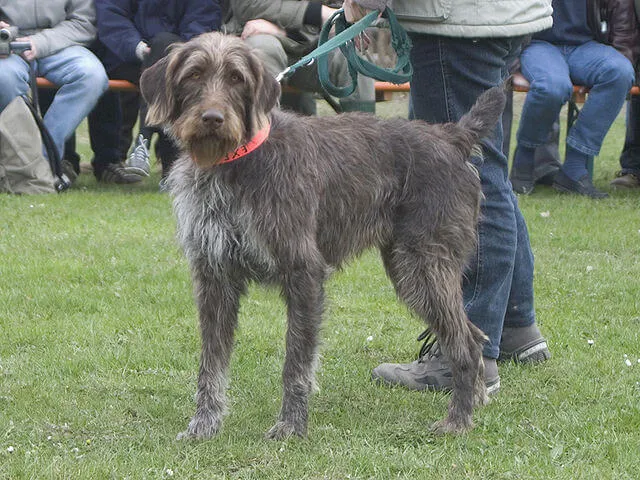
The Deutsch Stichelhaar is a robust, steady-natured, and assertive versatile hunting dog (Vollgebrauchs-Vorstehhund) — bred for uncompromising work in fields, forests, and water, and equipped with a healthy dose of predatory sharpness.
Self-check
Answer 6 quick questions about your everyday life and see how well the German Roughhaired Pointer fits you — including an honest cost estimate per month, per year, and across the dog's lifetime.
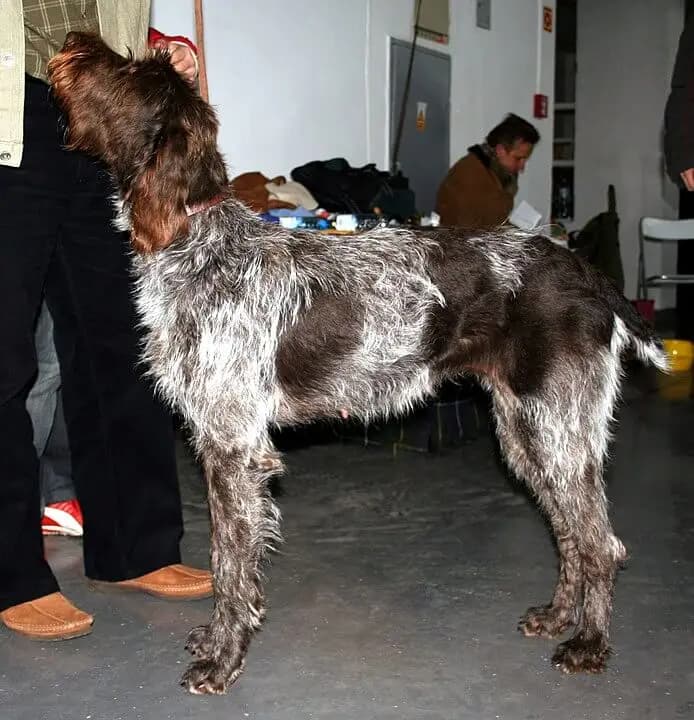
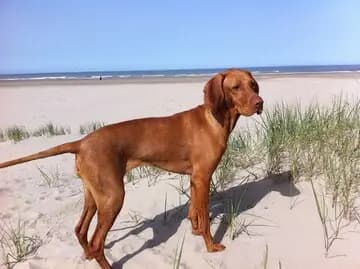
At a glance
The essentials — key facts, traits, and health priorities — before you dive deeper.
Lifespan
12–14 yrs
Shoulder height
58–66 cm
Weight
20–29 kg
Practical
Temperament
Daily life
What matters most
Especially with a German Roughhaired Pointer, choosing the right breeder is the single most important decision you'll make. Serious breeders consistently test the parents for inherited conditions, prioritize healthy early socialization, and stay accountable long after handover. A cheap puppy without health screening tends to become the most expensive dog later on.
See HonestDog breeder standards →Colors & coat
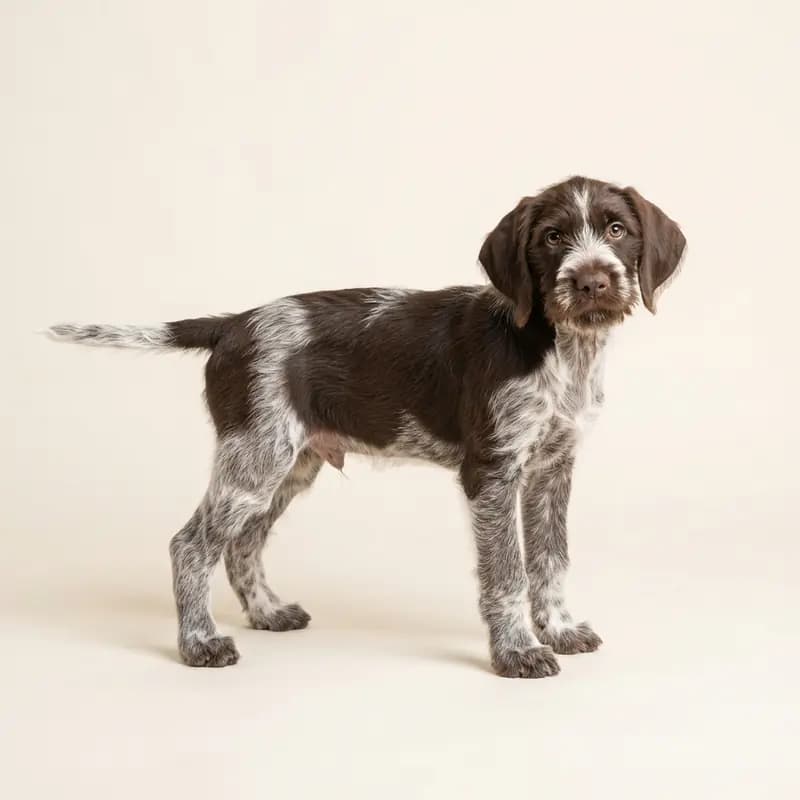
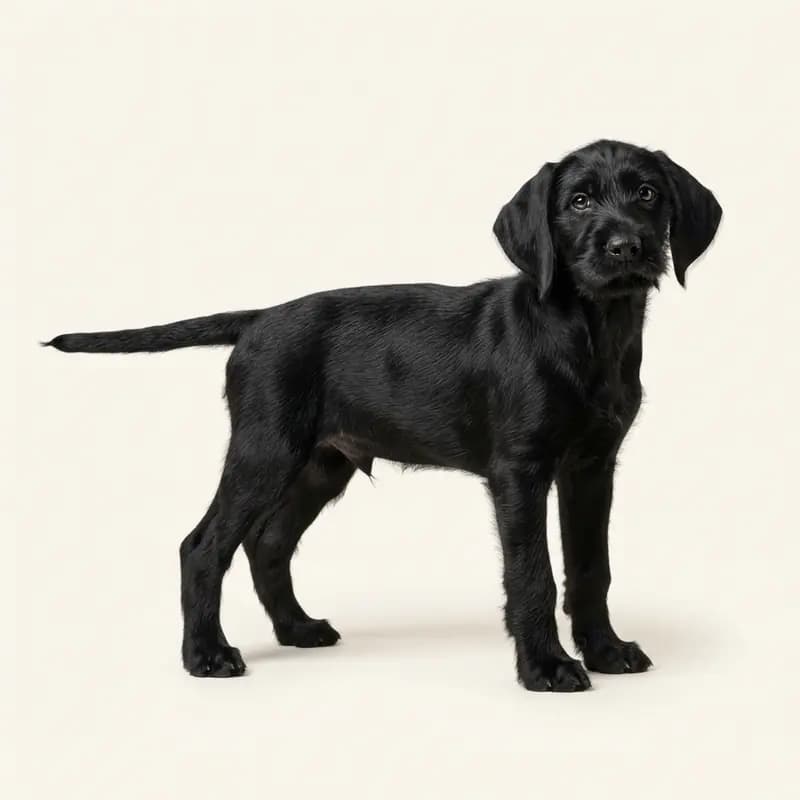
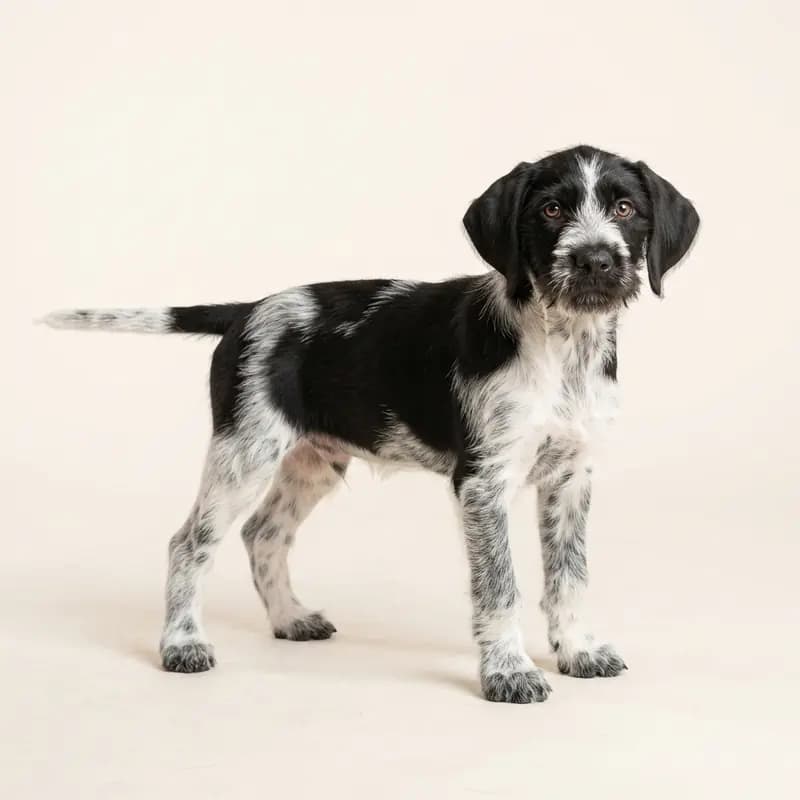
The coat colors that occur in the German Roughhaired Pointer — including which ones fall outside the breed standard and which carry genetic risk.
Eye colors
 Brown
Coat type
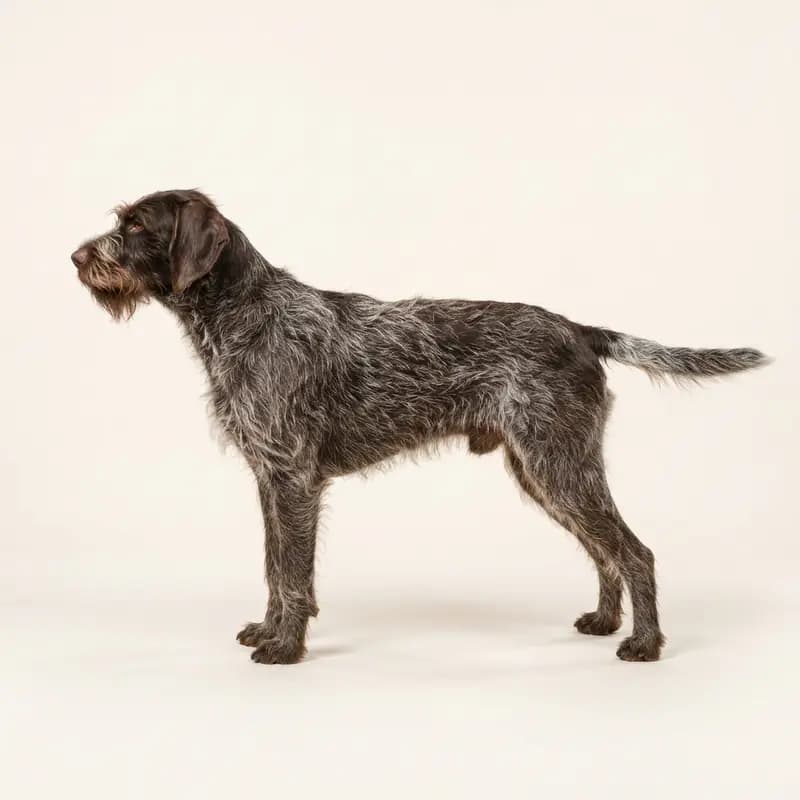 Illustrative image
Wire
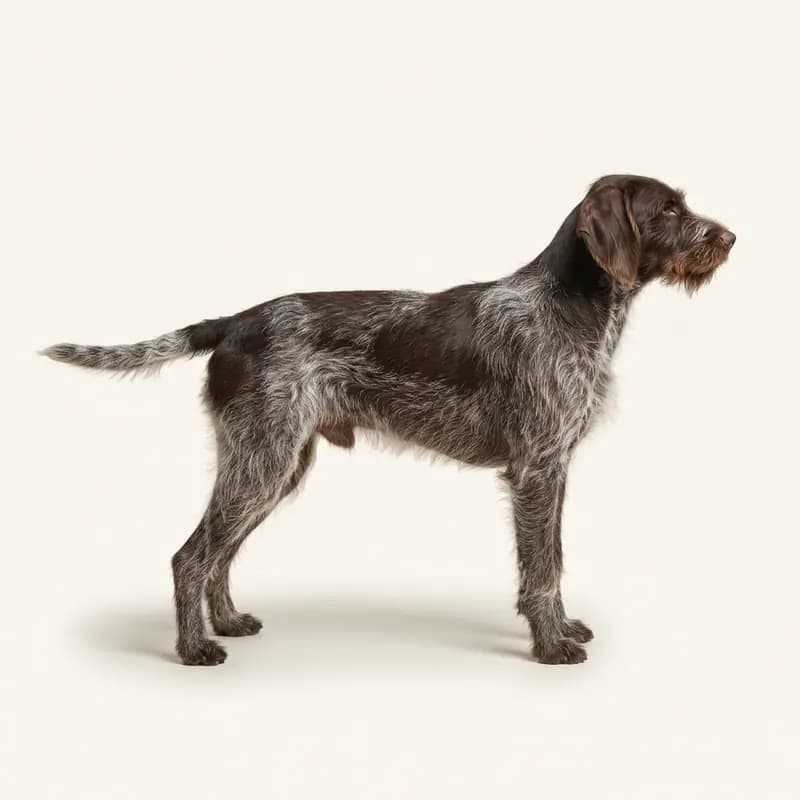 Illustrative image
Medium
 Double coat
The real vibes check
A Deutsch Stichelhaar is not a side project; he is a highly specialized forest worker in a rough coat. If you don't give him a real job, he will find one himself — and that usually means he takes command and starts regulating the local wildlife or your property without compromise. You aren't getting a teddy bear, but a loyal, serious worker who demands absolute clarity.
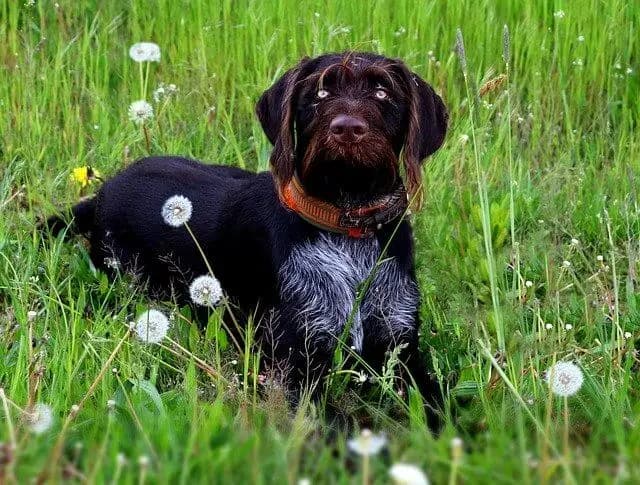
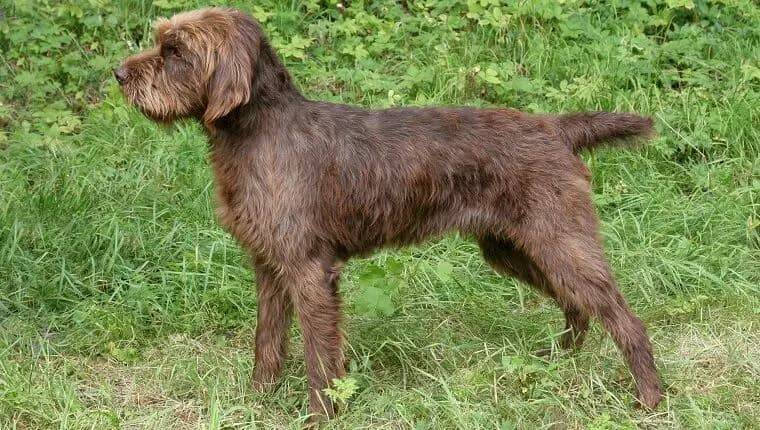
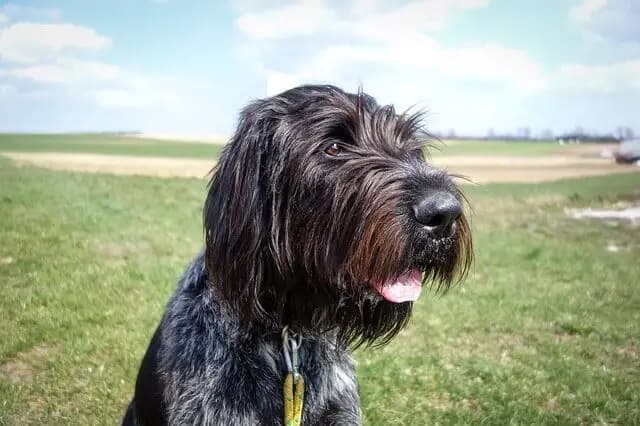
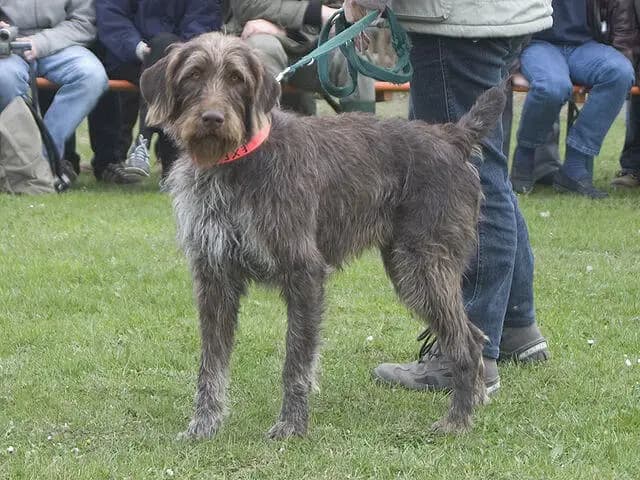
The German Stichelhaar is a medium-sized dog breed with a powerful and harmonious physique. Its distinctive appearance is characterized by its hard, wiry and dense fur, which protects it from a wide range of weather conditions. Its robust constitution and compact body shape make it a versatile and resilient hunting dog. He belongs to FCI Group 7, which includes pointers. A distinction between show and performance lines is not common with the German Stichelhaar, as the focus is on its use as a working dog.
If you are looking for an intelligent, adaptable and reliable hunting companion, the German Stichelhaar could be just the right dog for you. Its character is shaped by its use as a hunting and working dog. Therefore he is very attentive and alert, but at the same time calm and balanced. He shows a strong bond with his caregiver and is very people-oriented, but without being a cuddly dog. His intelligence and strong willingness to work make him an easy-to-train companion who wants to be challenged both mentally and physically. The pronounced hunting behavior of the German Stichelhaar requires appropriate activity and exercise. He is a passionate retriever and is ideal for working in the water. He is also an excellent sniffer dog and shows great endurance and concentration at work. As a vigilant and attentive dog, the German Stichelhaar also exhibits strong protective behavior. He is initially reserved towards strangers without being aggressive. He is patient and good-natured when dealing with children, which also makes him a family-friendly dog. The German Stichelhaar can easily learn to stay alone if this is practiced from an early age. Its adaptability and sense of balance allow it to cope in both a rural environment and an urban environment as long as it receives adequate exercise and activity. Despite his independence and independence, he seeks closeness and cooperation with his people and wants to be viewed as a full member of the family. He shows a strong bond with his caregiver and is very people-oriented, but without being a cuddly dog. His intelligence and strong willingness to work make him an easy-to-train companion who wants to be challenged both mentally and physically. The pronounced hunting behavior of the German Stichelhaar requires appropriate activity and exercise. He is a passionate retriever and is ideal for working in the water. He is also an excellent sniffer dog and shows great endurance and concentration at work. As a vigilant and attentive dog, the German shows stabs
| Watchfulness A natural watchdog with real protective instinct. | High |
| Openness to Strangers Neither pushily friendly nor suspicious. | Neutral |
| Hunting or Herding Drive Powerful instinct that can override recall when triggered. | Strong |
Fun Fact!
Did you know that the German Stichelhaar is one of the few purely German pointers? His name "Stichelhaar" comes from the bristly, prickly hairs that protrude from its fur.
The Deutsch Stichelhaar is a robust and enduring hunting dog, especially valued for work in rough terrain. It is characterized by its high trainability and pronounced sense of smell. These dogs are active and require meaningful activity to fully realize their potential. The Deutsch Stichelhaar is a loyal companion, suitable both as a hunting dog and as a family dog, provided it receives sufficient exercise and consistent training.
The German Stichelhaar is an active and lively dog that needs a lot of exercise and activity. Therefore, he is less suitable for keeping in the city unless you can offer him sufficient exercise and activity. He gets along well with children and, if properly socialized, can live with other pets, including cats.
Loves family life and thrives in a group.
Gets on well with children — with adult supervision.
Usually gets on fine with other dogs.
Can manage in the city, but only with very active owners.
Owning a dog is a privilege, but it's also a real responsibility. Before you bring one into your life, be honest with yourself about the commitment it takes.
The German Stichelhaar is an intelligent dog with a strong work ethic. Therefore, he needs a consistent and loving education as well as an activity that matches his natural instincts and energy. Be it dummy training, nose work or dog sports such as agility or obedience, it is important that you provide your German Stichelhaar with sufficient mental and physical challenges. Due to its hunting disposition, the German Stichelhaar can develop strong prey and hunting behavior. Early socialization and targeted training are important here to ensure that your dog is well controlled and does not hunt. Since German Stichelhaar dogs tend to be very focused on their caregivers and learn quickly, being overly busy or overwhelmed can become a problem. It's important to give your dog periods of rest and to teach him that it's okay to just do nothing.
A balanced and nutritious diet is crucial for the health and well-being of your German Stichelhaar. Since this is an active and high-energy breed, the diet should contain enough proteins and carbohydrates to meet its energy needs. Also make sure that your dog gets enough vitamins and minerals. German Stichelhaar dogs are rather undemanding when it comes to grooming. Their wiry, medium-length fur has a dense undercoat that protects them well from cold and wet conditions, and they therefore cope very well with the climate in Germany. They shed moderately and only require occasional brushing to remove dead hair and keep their coat in good condition.
| Care Level Regular brushing and occasional professional grooming. | Moderate |
| Exercise Needs Needs several hours of serious exercise every day. | Very active |
| Shedding Regular shedding — dog hair on clothes is now normal. | Moderate |
| Trainability Picks up commands quickly and wants to please. | Eager to learn |
Our experts are still reviewing this information. Spotted something wrong? Email us at info@honestdog.de.
Solid
Health grade
In the Deutsch Stichelhaar, the primary health risks lie in the musculoskeletal system and the nervous system: hip dysplasia (HD), osteochondritis dissecans (OCD), and epilepsy are the breed's key concerns. Responsible breeders therefore carefully examine their breeding animals before mating and document teeth as well as testicle descent without gaps. Before buying a puppy, ask to see the official radiographic reports of the parent animals with the threshold values HD A–B and proof of freedom from osteochondritis dissecans (OCD). Furthermore, specifically ask about the occurrence of epilepsy in the breeding lines and request proof of freedom from cryptorchidism (undescended testicles) as well as dental anomalies.
Grade is relative to other breeds — AI-assisted and editorially reviewed.
Methodology and data: HonestDog Dog Breed Health Report 2026
What matters most for this breed
Tap any item to see details.
With joint-friendly rearing, well-balanced exercise, and occasional eye check-ups, your dog will generally stay fit and ready for action for a long time.
Reputable breeders have the hips, elbows, shoulders, and eyes of the parent animals tested and ensure proper blood clotting to reduce risks within the bloodline.
Note: This health overview is AI-assisted and editorially reviewed. It is for orientation only and does not replace veterinary advice.
What matters most for this breed — what's common, how much it affects the dog's life, and how to protect yourself as a buyer.
Tap a body region to see the inherited conditions linked to it.
The three most important risks
Pick a region on the map to explore other areas.
Tier 1 is the recommended health standard for this breed. Tiers 2 and 3 show how responsible breeders go beyond.
Recommended standard. These tests make up the recommended health standard for this breed — the baseline of any careful breeding program. Ask any reputable breeder for the results.
No entries in this tier.
Note: This health overview is AI-assisted and editorially reviewed. It is for orientation only and does not replace veterinary advice.
A German Roughhaired Pointer costs around ~€190 per month (€100 – €360, depending on your setup). The first year adds up to roughly ~€4,930 including purchase, equipment and puppy school; across the dog's life (13 years) it comes to about ~€31,990.
With surgery cover, running costs come to about ~€180 per month — in return, your share of a major operation drops from several thousand euros to around 20 percent.
Per month
~€190
In the first year
~€4,930
Across the dog's life
~€31,990
Estimated purchase price from a breeder: €1,200 – €2,500
Estimate at a mid-range setup (suburban, dry food, 1–2 hours of daily exercise), average German prices, as of July 2026.
HonestDog Concierge
We currently have no breeders for this breed who have passed our verification. Create your short buyer profile: we'll set up your search alert, review a possible source and email you within 28 days.
 Illustrative imageIllustrative image
 Illustrative image
 Illustrative image
The history of the German Stichelhaar is closely linked to hunting and rural Germany. The first evidence of the breed can be found as early as the Middle Ages, with the current form of the German Stichelhaar emerging at the end of the 19th century. It was bred by passionate hunters with the aim of creating a robust, versatile and reliable hunting and working dog. The official recognition as a separate breed by the German Dog Association (VDH) took place in 1892.
The German Stichelhaar is a versatile hunting dog used for field work, water work and retrieving.
Germany
1888
Many owners and hunters describe the German Roughhaired Pointer as a very calm, even-tempered housemate that behaves quite differently at home than in the field. With its people it wants to be close and is seen as an affectionate companion that, with enough exercise, is patient and relaxed in family life with children too. It often bonds very strongly with its main person and would like to be taken along everywhere.
At the same time, reports point out that the breed is watchful by nature and keeps a close eye on the house and yard. It is often aloof or reserved with strangers but warms up after a short introduction. Owners clearly see a life as a family or companion dog with no job as the wrong placement, though: if it doesn't get enough mental and physical work outdoors, its calm at home can quickly turn into restlessness.
Sources:verein-deutsch-stichelhaar.dejagdhundehalter.dejagdjuenger.de
In training reports and specialist forums, the German Roughhaired Pointer is usually described as easy to handle, eager to work and focused on its handler. Unlike some very high-drive pointing breeds, it often naturally keeps visual contact and tends to search close "under the gun," working closely with its handler rather than charging off uncontrolled into the distance. Its love of water and its urge to retrieve make training many tasks much easier.
Owners stress, however, that despite its serious nature this dog is sensitive to pressure and harshness. An overly strict or rough hand quickly makes it withdraw in insecurity or dig in its heels. What it needs is calm, consistent and fair leadership. Some owners also occasionally report a certain noise sensitivity or gun shyness, which is why owners and trainers advise careful, proper exposure to everyday sights and sounds and to loud bangs from puppyhood on.
Sources:wildhueter-st-hubertus.dejagdhundehalter.deforum.wildundhund.de
Paraphrased from real owner reports · translated from German
The German Roughhaired Pointer is an active dog that needs plenty of exercise and mental stimulation. Research the temperament, grooming needs, and space requirements before deciding.
The average life expectancy of a German Roughhaired Pointer is 12-14 years. With proper care and regular vet visits, your dog can live a long, healthy life.
German Roughhaired Pointer grooming requirements include regular brushing, nail trimming, and dental care. HonestDog provides detailed grooming tips for every breed.
The German Roughhaired Pointer can be a great family dog. Proper training and socialization are key. HonestDog provides family suitability information for every breed.
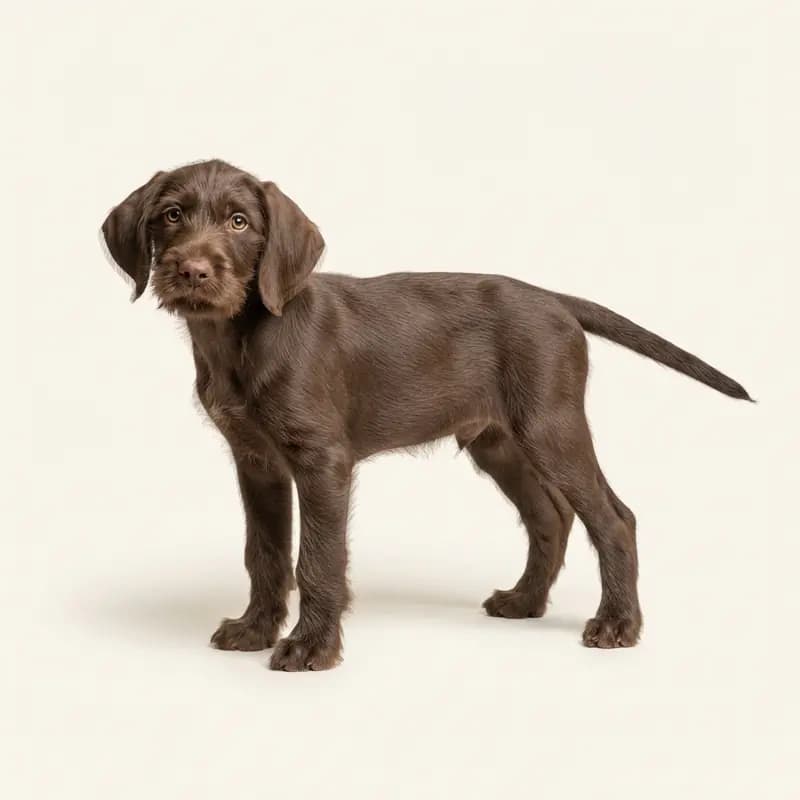
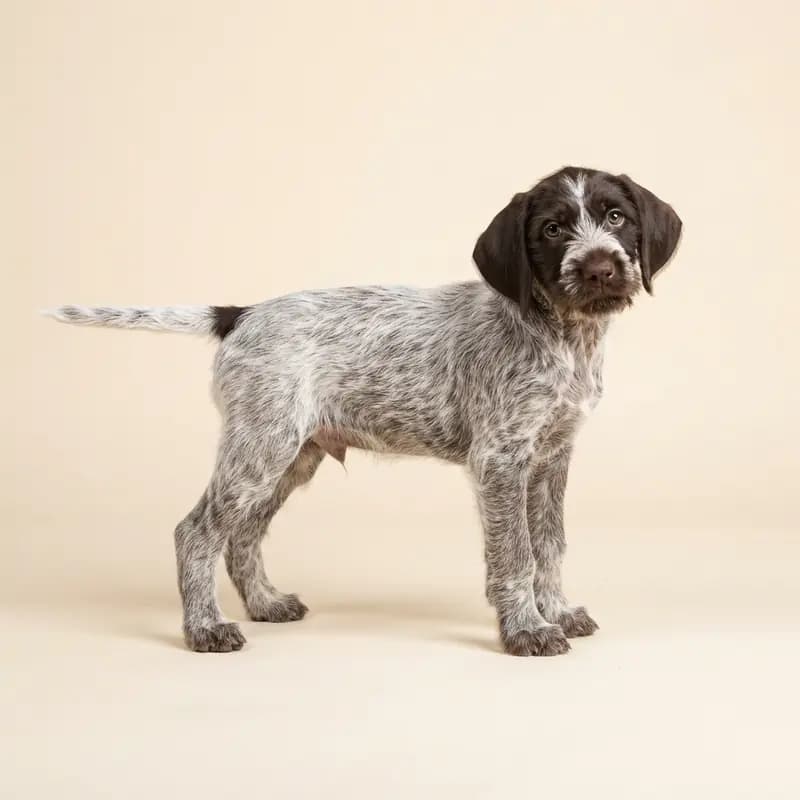
The German Roughhaired Pointer comes in these colors: Brown, Roan, Brown and white, Black, Black and white. Colors that fall outside the breed standard are marked as such on the breed page.
Showcase your kennel on HonestDog and reach families searching for a responsibly bred German Roughhaired Pointer.