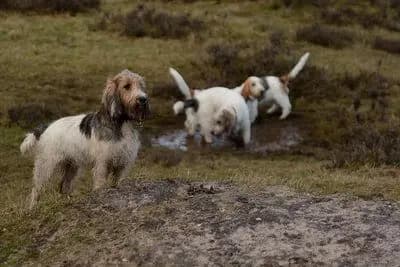
Petit Basset Griffon Vendéen
Close relative
Dogs love cookies, and so do we
Cookies for analytics and ads. Privacy
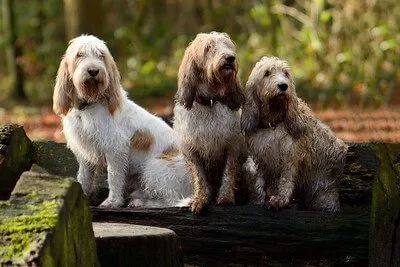
The Grand Basset Griffon Vendéen is a robust, stubborn, and cheerful Frenchman—a wire-haired, low-slung pack hound bred to hunt for hours, tracking game through impenetrable thorn thickets.
How the health grade is calculated
Sources for required breeding screenings. Verein für Französische und Schweizer Laufhunde e.V. (CCFS)
Self-check
Answer 6 quick questions about your everyday life and see how well the Grand Basset Griffon Vendéen fits you — including an honest cost estimate per month, per year, and across the dog's lifetime.
Question 1 of 6
Count honestly — the normal day, not the best one.
 AI image
At a glance
The essentials — key facts, traits, and health priorities — before you dive deeper.
Lifespan
12–14 yrs
Shoulder height
39–44 cm
Weight
18–22 kg
Practical
Temperament
Daily life
What matters most
Especially with a Grand Basset Griffon Vendéen, choosing the right breeder is the single most important decision you'll make. Serious breeders consistently test the parents for inherited conditions, prioritize healthy early socialization, and stay accountable long after handover. A cheap puppy without health screening tends to become the most expensive dog later on.
See HonestDog breeder standards →Colors & coat
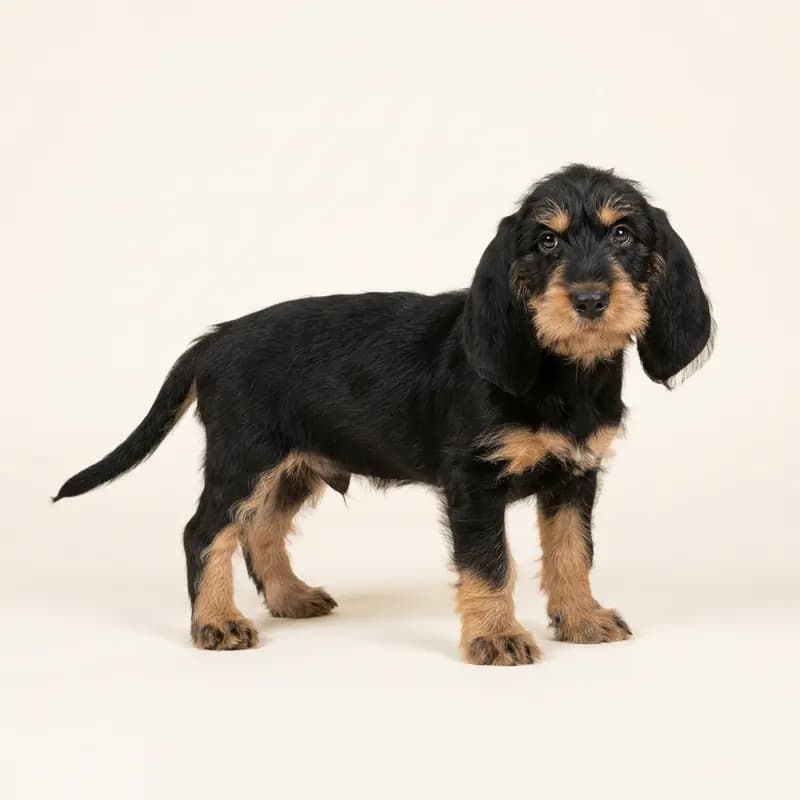
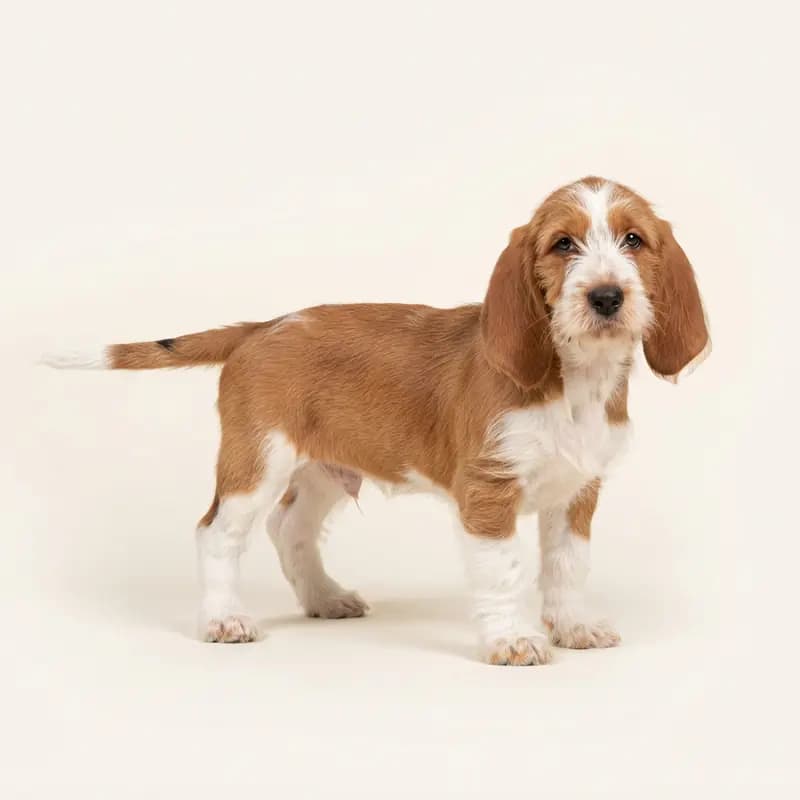
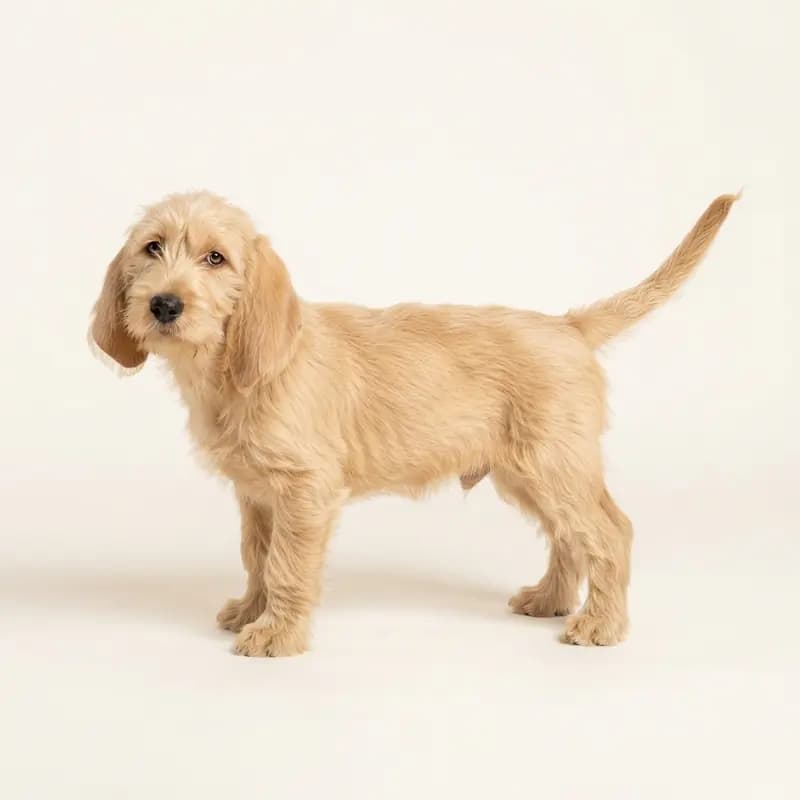
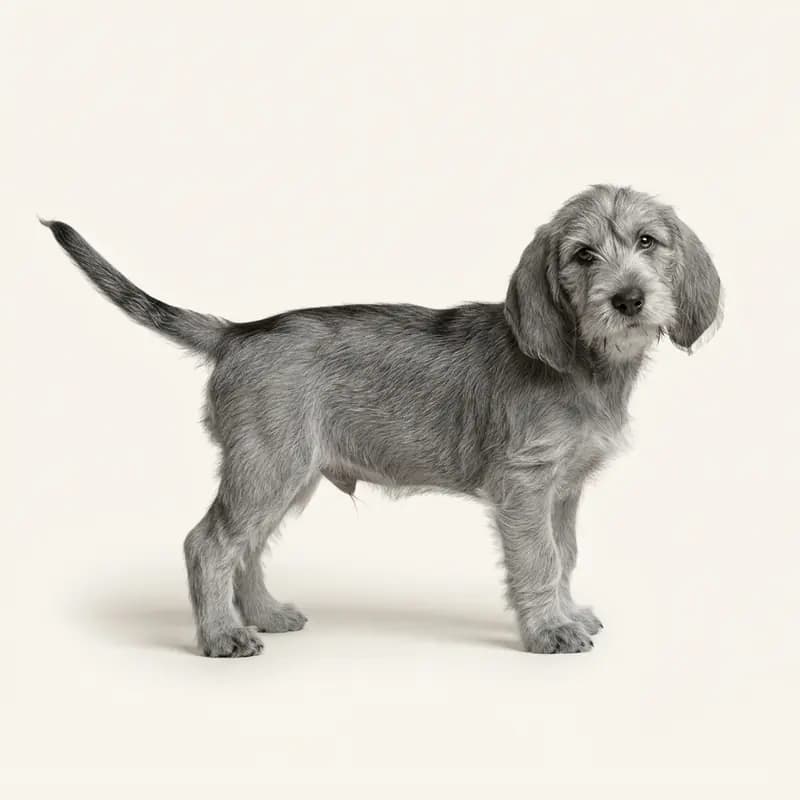
The coat colors that occur in the Grand Basset Griffon Vendéen — including which ones fall outside the breed standard and which carry genetic risk.
Eye colors
 Brown
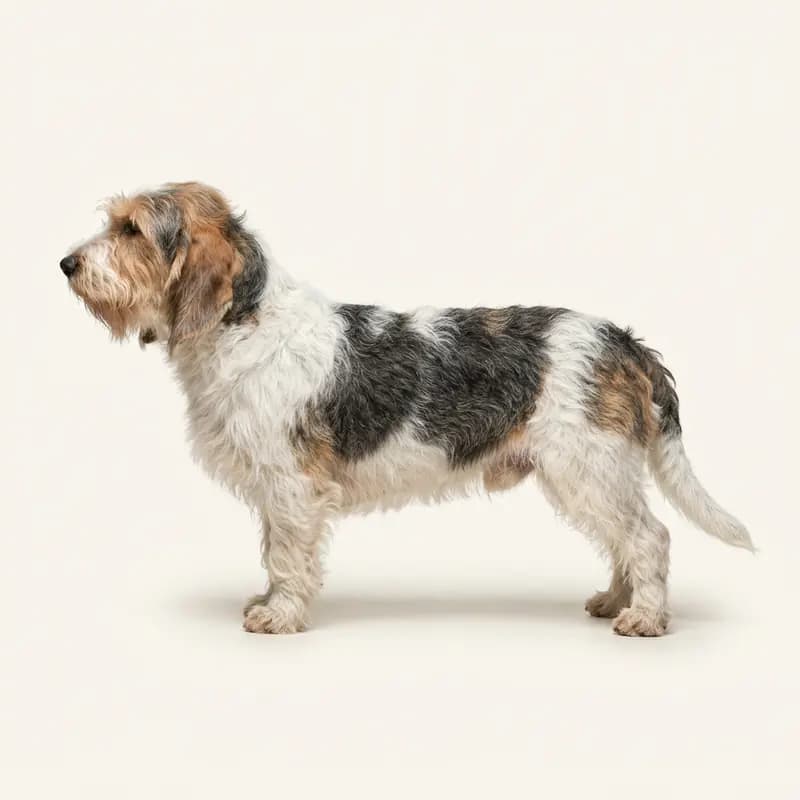
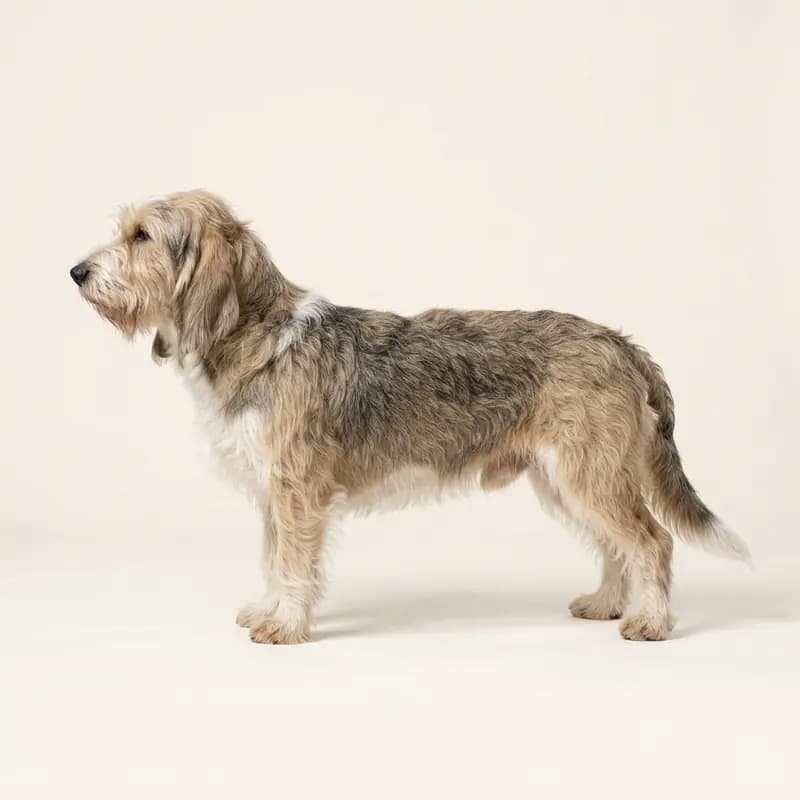
Coat type
 Illustrative image
Wire
 Illustrative image
Medium
 Double coat
The real vibes check
A Grand Basset Griffon Vendéen is not a classic follower of commands, but an independent forest worker in a shaggy coat. When he picks up a scent in the bushes, his brain switches to autopilot and your calls become background music. You aren't getting a dog that hangs on your every word, but a humorous, enduring buddy with whom every walk becomes a little expedition.
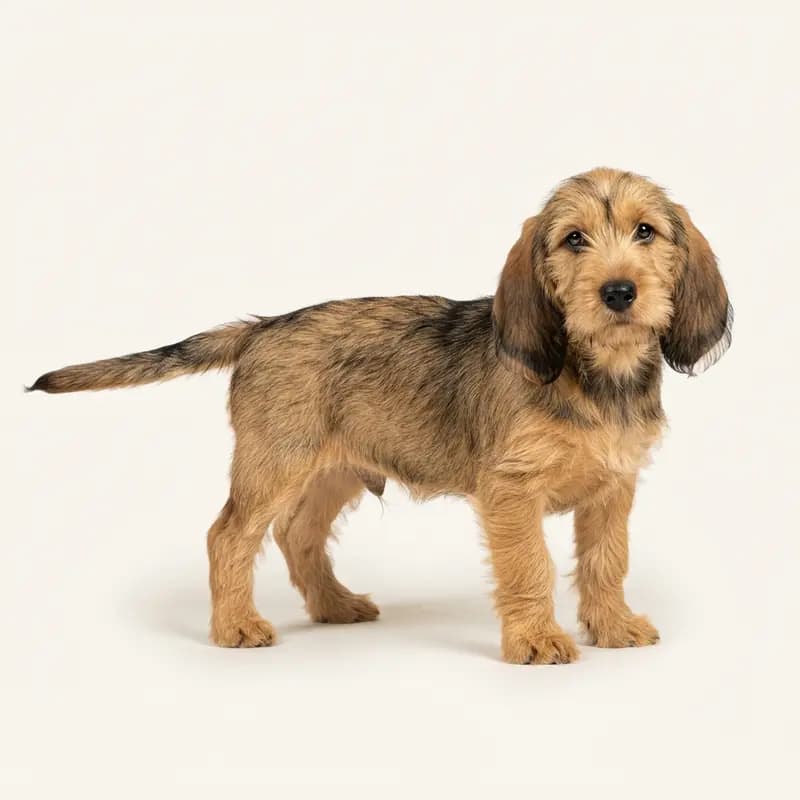
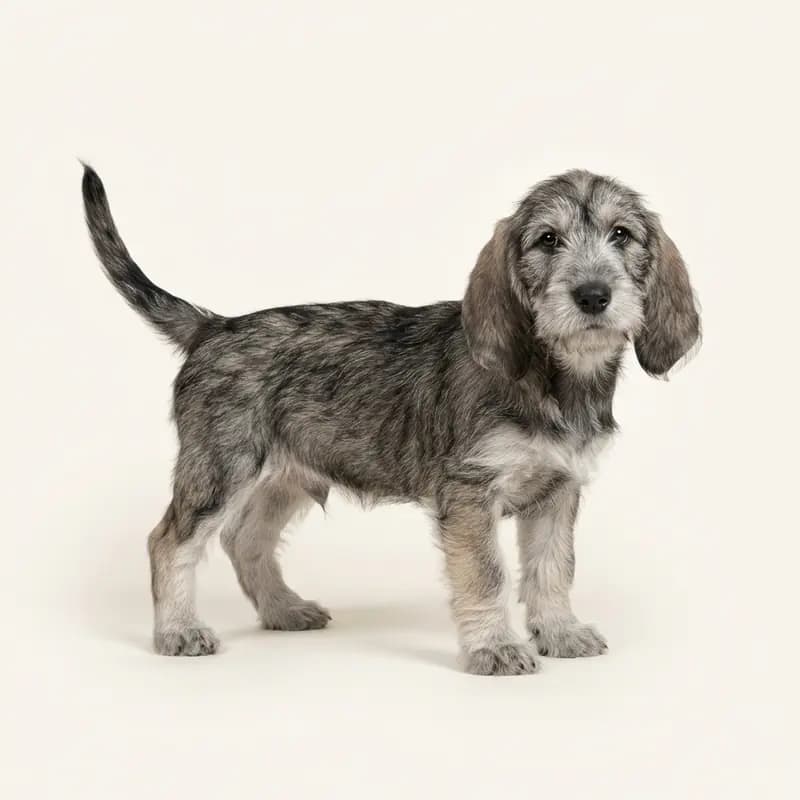
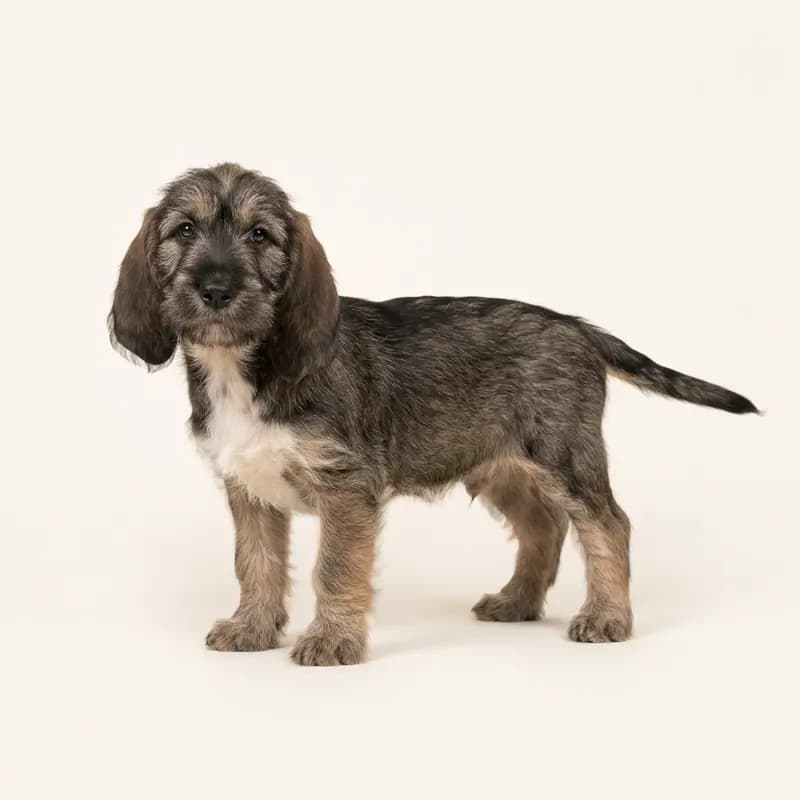
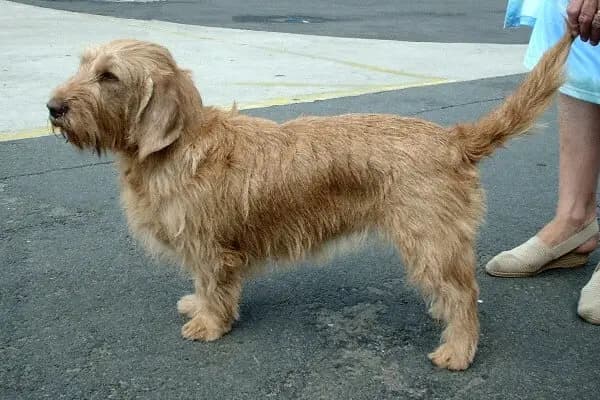
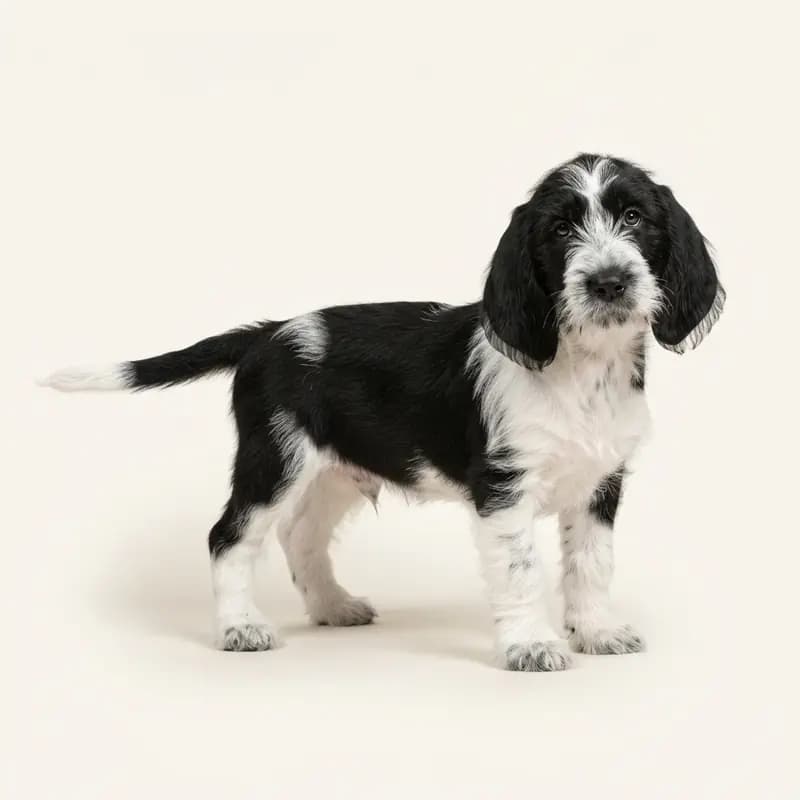
The Grand Basset Griffon Vendéen, often simply called Grand Basset, is a medium-sized dog with an elegant yet robust build. With long ears that reach almost to the tip of his nose and bushy eyebrows, he has an expressive facial expression that is often described as melancholic. His coat is rough and slightly longer than that of many other dog breeds, giving him a distinctive appearance. He belongs to FCI Group 6, Section 1.3, and is classified as a scent hound. It was originally bred for hunting, particularly rabbit hunting. There is no distinction between performance and show lines, but it is important to note that the Grand Basset has a keen sense of smell and a natural hunting instinct.
The Grand Basset Griffon Vendéen is an energetic and lively dog. His friendly nature and lovable personality make him a wonderful companion. But don't forget that he also has the heart of an adventurer! His history as a hunting dog has given him a strong sense of smell and a natural curiosity. He loves being outside and exploring new things. If you enjoy hiking or spending time in nature, the Grand Basset could be the perfect partner. The Grand Basset is very people-oriented and enjoys the company of his family. He usually gets along well with children and is often a playful and patient playmate. He can also get along well with other dogs, especially if he is used to them from an early age. One of the things you need to take into account is his strong hunting instincts. If he smells an interesting trail, he can be very determined to follow it. This means that a securely fenced yard and leash training are particularly important. The Grand Basset is intelligent, but also a bit stubborn. He can learn to stay alone, but he prefers to be in company. He is alert and will often bark if he notices something suspicious, making him a good watchdog. However, he is not aggressive and will usually react friendly to visitors as soon as he realizes that they pose no danger. Overall, the Grand Basset Griffon Vendéen is a happy, active and loving dog. If you are willing to provide him with regular physical and mental stimulation and take his curiosity and exploration into account, you will find him a loyal and entertaining companion. It is important to understand that he is a breed with specific needs and characteristics, and when these are met, a wonderful bond can be created between you and your Grand Basset.
| Watchfulness Reports unusual activity but stays controlled. | Moderate |
| Openness to Strangers Warms up quickly and is generally welcoming. | Friendly |
| Hunting or Herding Drive This drive runs deep — no amount of training eliminates it. | Very strong |
Fun Fact!
The Grand Basset Griffon Vendéen is often referred to as the "happy dog" because he always seems to be in a good mood and has a happy demeanor!
The Grand Basset Griffon Vendéen is a French sniffer dog. The GBGV is a somewhat active, but never cocky dog and does not tire quickly.
The Grand Basset Griffon Vendéen is an active dog that requires a lot of exercise. It is more suited to life in the country or in a house with a garden than a city apartment. Small children are usually not a problem for the Grand Basset as long as they learn to treat the dog with respect. He can also get along well with other pets if he is accustomed to them from an early age, but his hunting instinct can be a challenge when it comes to small animals such as rabbits or cats.
Loves family life and thrives in a group.
Gets on well with children — with adult supervision.
Actively enjoys the company of other dogs.
Can manage in the city, but only with very active owners.
Owning a dog is a privilege, but it's also a real responsibility. Before you bring one into your life, be honest with yourself about the commitment it takes.
Grand Bassets are intelligent but also stubborn dogs. Early, consistent training is crucial. Because of their hunting dog characteristics, they can benefit from activities such as tracking and nose work. You have to be careful that the dog doesn't become a "ball junkie" as this can lead to an obsession. It is also important to teach the Grand Basset to develop frustration tolerance and impulse control, as this is particularly important in a dog with a strong prey drive. Positive reinforcement and varied training are key to success. The Grand Basset needs to be challenged mentally and physically, but it is important not to overwhelm him. The goal should be to express the dog's natural instincts in a controlled manner and make him a balanced and happy member of the family.
The Grand Basset Griffon Vendéen needs a balanced diet to stay healthy and active. High-quality dog food tailored to the needs of different life stages should be preferred. Make sure your dog doesn't get too much food and support him with exercise to maintain a healthy weight. In terms of grooming, the Grand Basset has a rough, medium-length coat with an undercoat. He sheds hair all year round, but regular brushing, about twice a week, will help keep the coat in good condition and minimize shedding around the house. His long ears should also be checked and cleaned regularly to avoid infections. The Grand Basset copes well with the German climate, although he may require a coat during the cold winter months.
| Care Level Regular brushing and occasional professional grooming. | Moderate |
| Exercise Needs Needs several hours of serious exercise every day. | Very active |
| Shedding Hair everywhere, always — no white clothing survives. | Very heavy |
| Trainability Has its own ideas and will test limits. | Strong-willed |
Our experts are still reviewing this information. Spotted something wrong? Email us at info@honestdog.de.
Solid
Health grade
The Grand Basset Griffon Vendeen is overall a robust breed, but it carries predispositions to hip dysplasia (HD), eye issues such as persistent pupillary membranes (PPM), and epilepsy. The Verein für Französische und Schweizer Laufhunde e.V. (CCFS) makes an ophthalmological eye examination mandatory. A responsible breeder also tests for hip dysplasia (HD) and consistently excludes affected animals from breeding in cases of hereditary epilepsy. Before buying, have the breeder show you the ophthalmological eye test, proof of hip health (cutoff: HD A–B), and ideally also a finding for patellar luxation (PL 0) of the parent animals.
Grade is relative to other breeds — AI-assisted and editorially reviewed.
Methodology and data: HonestDog Dog Breed Health Report 2026
What matters most for this breed
Tap any item to see details.
You should pay attention to a healthy weight and joint-friendly exercise to relieve pressure on his long back, and schedule regular eye check-ups with your vet.
Responsible breeders have the mandatory ophthalmological eye exam carried out and additionally screen the parent animals for hip dysplasia (HD) and patellar luxation (PL).
Note: This health overview is AI-assisted and editorially reviewed. It is for orientation only and does not replace veterinary advice.
What matters most for this breed — what's common, how much it affects the dog's life, and how to protect yourself as a buyer.
Tap a body region to see the inherited conditions linked to it.
The three most important risks
Pick a region on the map to explore other areas.
Tier 1 is the core standard: the tests Verein für Französische und Schweizer Laufhunde e.V. (CCFS) requires, plus further tests from the recommended health standard for this breed. Tiers 2 and 3 show how responsible breeders go beyond.
Core standard. Tests marked “Club standard” are required by Verein für Französische und Schweizer Laufhunde e.V. (CCFS) for breeding approval; the others are part of the recommended health standard for this breed. Ask any reputable breeder for the results.
No entries in this tier.
Note: This health overview is AI-assisted and editorially reviewed. It is for orientation only and does not replace veterinary advice.
A Grand Basset Griffon Vendéen costs around ~€180 per month (€100 – €340, depending on your setup). The first year adds up to roughly ~€5,740 including purchase, equipment and puppy school; across the dog's life (13 years) it comes to about ~€31,720.
With surgery cover, running costs come to about ~€180 per month — in return, your share of a major operation drops from several thousand euros to around 20 percent.
Per month
~€180
In the first year
~€5,740
Across the dog's life
~€31,720
Estimated purchase price from a breeder: €2,000 – €3,500
Estimate at a mid-range setup (suburban, dry food, 1–2 hours of daily exercise), average German prices, as of July 2026.
HonestDog Concierge
We currently have no breeders for this breed who have passed our verification. Create your short buyer profile: we'll set up your search alert, review a possible source and email you within 28 days.
 Illustrative imageIllustrative image
 Illustrative image
 Illustrative image
The Grand Basset Griffon Vendéen comes from the Vendée region in western France. He belongs to the Basset Hound family and has a long history as a hunting dog. Its roots date back to the 16th century, but the modern Grand Basset Griffon Vendéen as we know it today was developed in the late 19th and early 20th centuries. French breeder Paul Dezamy played a crucial role in shaping the breed. He purposefully bred dogs that were larger and faster than their ancestors to better meet the needs of modern hunters. The Fédération Cynologique Internationale (FCI) recognized the Grand Basset Griffon Vendéen as a separate breed in 1954. It has since become popular in Europe and other parts of the world, both as a hunting dog and as a family companion dog.
The Grand Basset Griffon Vendéen was bred to hunt rabbits and other small game, known for its endurance and rough coat.
France
1800
With the family, owners describe the Grand Basset Griffon Vendéen as a very devoted, good-natured and cheerful housemate. Given enough exercise, it is usually surprisingly calm and snuggly indoors and thoroughly enjoys its close bond with its people. Thanks to its origins as a pack hound, it generally gets along very well with other dogs day to day and shows plenty of patience and playfulness with children.
This strong pack orientation also brings challenges, though. Many owners stress that the GBGV has a hard time being alone. If it is left isolated or understimulated for long stretches, it quickly tends toward frustration, loud howling or destructive behavior at home. Owners also point to its strong voice: as a classic hound, it likes to communicate, sounds off at unfamiliar noises and often comments on what's happening in a ringing voice, which is why most owners consider it a poor fit for city apartments with thin walls.
Sources:zoomalia.detackenberg.devdh.deedogs.deforum.hundund.de
In training and on walks, owners see the well-known two sides of this French hound. Indoors it wants to please, but out in open country it often turns stubborn. Owners agree that it has a deep-rooted independence: as soon as its nose picks up a trail, the dog quickly develops real "tunnel vision" and simply doesn't hear recalls. Don't expect blind obedience from this breed, since it was bred to make its own decisions in the undergrowth.
In the experience of many owners, reliable off-leash time in areas with lots of game is therefore hardly possible, or only after a very large investment of time in long-line training. Training takes a great deal of humor, patience and consistency, because harshness makes these sensitive hounds refuse to cooperate at all. To satisfy its high need for exercise and its sense of smell, many owners rely on targeted nose work such as mantrailing, drag trails or dummy searches. A securely fenced yard is also described as essential, since otherwise these dogs like to head off exploring on their own.
Owners see the Grand Basset Griffon Vendéen as a fundamentally weather-hardy, tough and long-lived breed. Even so, its build needs regular attention day to day. The long, hairy, hanging ears call for special care: owners report that moisture and dirt collect there easily, so the ear canals need regular checking and cleaning to prevent recurring infections.
Owners also have a nuanced view of caring for the coarse, rough coat. The dense coat is considered dirt-repellent, but burrs, twigs and thorns regularly get caught in it on outings through woods and meadows. On the legs, beard and around the ears especially, the hair quickly forms stubborn mats without regular brushing. Owners also urge keeping an eye on weight: the GBGV often has a hearty appetite, and with its long body, extra weight can put needless strain on the joints and back.
Sources:zoomalia.detackenberg.deedogs.dewelpen.dedogforum.de
Paraphrased from real owner reports · translated from German
The Grand Basset Griffon Vendéen is an active dog that needs plenty of exercise and mental stimulation. Research the temperament, grooming needs, and space requirements before deciding.
The average life expectancy of a Grand Basset Griffon Vendéen is 12-14 years. With proper care and regular vet visits, your dog can live a long, healthy life.
Grand Basset Griffon Vendéen grooming requirements include regular brushing, nail trimming, and dental care. HonestDog provides detailed grooming tips for every breed.
The Grand Basset Griffon Vendéen can be a great family dog. Proper training and socialization are key. HonestDog provides family suitability information for every breed.
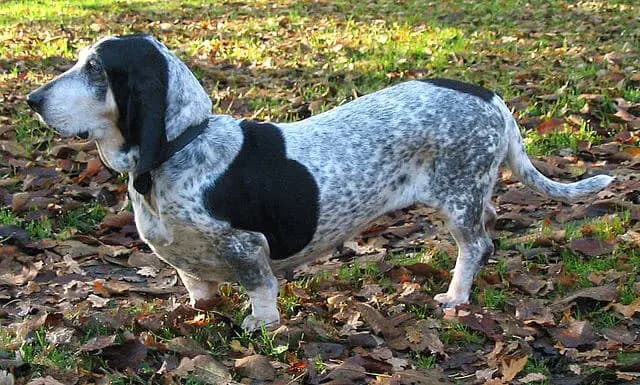
The Grand Basset Griffon Vendéen comes in these colors: Tricolor, Black and white, Black and tan, Red and white, Fawn, Grizzle, Sable, Wolf grey, Wild boar.
Showcase your kennel on HonestDog and reach families searching for a responsibly bred Grand Basset Griffon Vendéen.