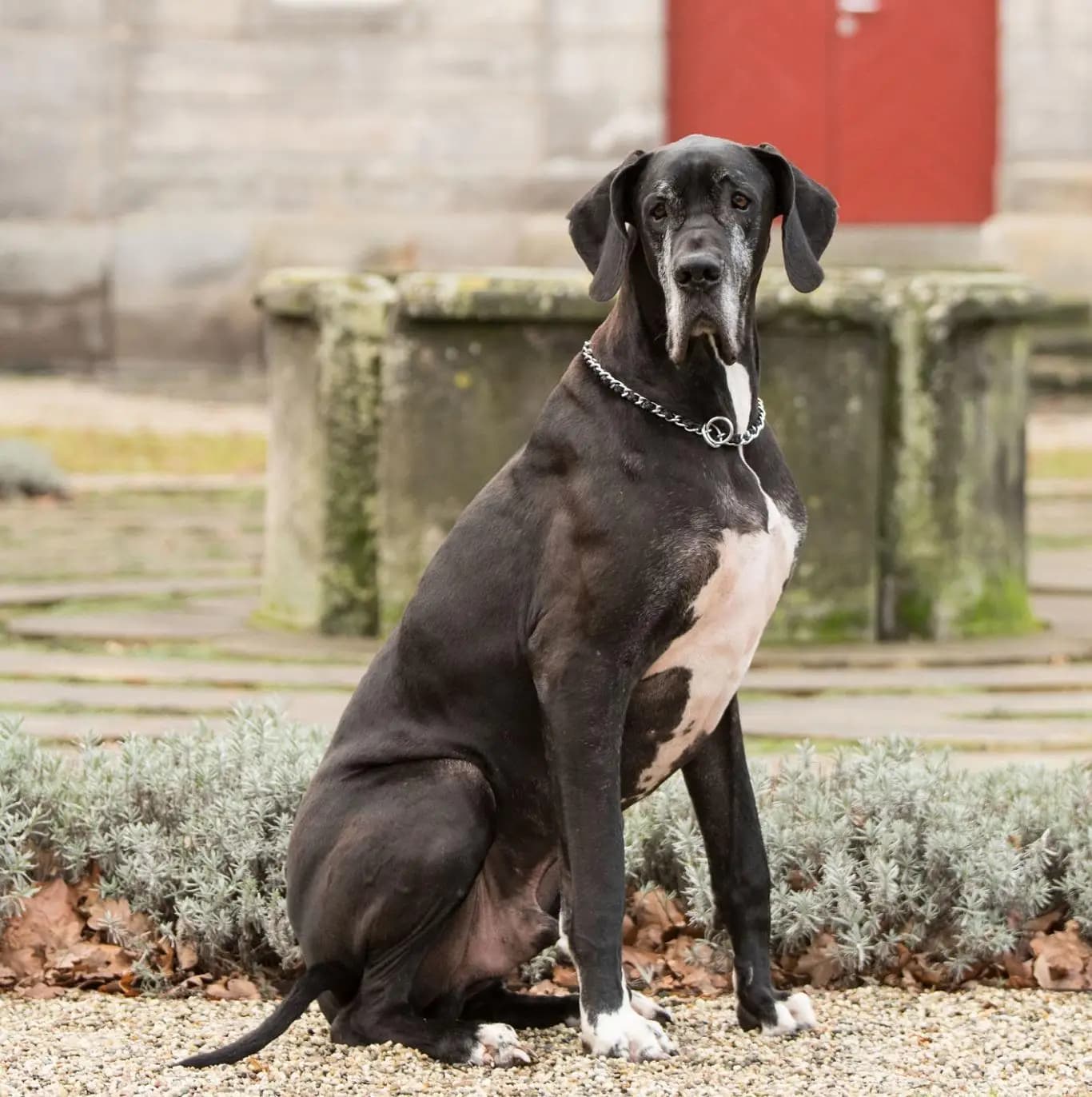
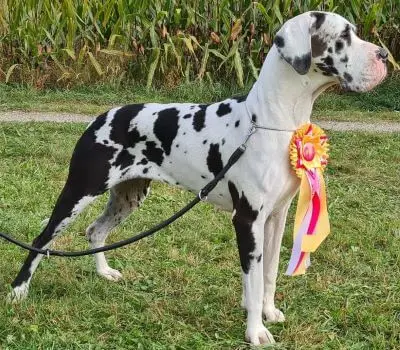
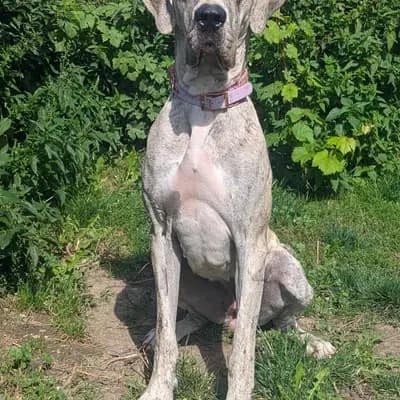
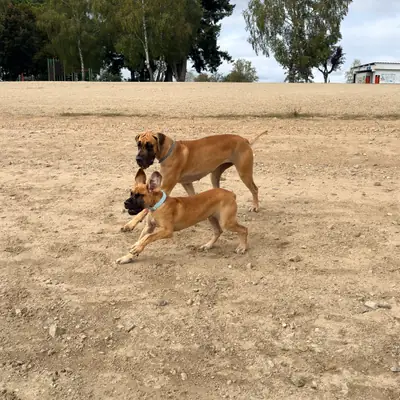
Despite its size, the Great Dane has a moderate energy level (3/5) and is a calm housemate indoors. Its short, dense, smooth coat makes grooming straightforward (grooming effort 2/5), even though it sheds moderately (3/5). However, it is unsuitable for life in a cramped city flat or on a third floor without a lift (suitability for city living 1/5). Especially in the first year of life, climbing stairs and abrupt stops must be avoided to protect the growing joints and bones.
It is very sociable with other dogs (4/5) and within the family (4/5). With younger children (child-friendliness 3/5), however, care is needed, as a boisterous 60-kilogram adolescent dog can easily knock children over without meaning to. The biggest challenge in everyday life is its close bond: Great Danes very much dislike being left alone. You need to build up short periods of being alone in small steps and with patience. Training (trainability 3/5) also demands loving consistency from puppyhood onwards – nobody can hold a fully grown male on the lead by physical strength alone.
Checklist: the questions to ask in your first conversation with the breeder
Take your time when you visit in person, observe the dam (does she seem friendly, patient and free from lameness?) and ask specific questions about health care:
- Official HD results: “Can you show me the official X-ray evaluations for hip dysplasia for both parent dogs?”
- Heart and eye examinations: “Are there up-to-date cardiology reports (heart ultrasound scan for DCM and aortic stenosis) and eye examination certificates (for cataracts and glaucoma) for the parents?”
- Health of the breeding line: “Have there been cases of gastric torsion, wobbler syndrome, underactive thyroid or oesophageal disorders such as megaoesophagus in your lines, and how old did the puppies’ grandparents live to be?”
- Rearing and growth: “What food are the puppies given for slow, joint-friendly growth, and how do you prepare the little ones for everyday life in the home?”
On HonestDog, a breeder profile only goes online once the breeder has completed registration: identity verification by ID and selfie, proof of club membership or a §11 permit where applicable, a knowledge test on breeding and animal welfare, and agreement to the HonestDog breeding standards, which among other things rule out breeding for exaggerated traits that harm health. Health tests of the parent dogs that breeders upload are visible directly on the profile; ask to see the original results when you visit. Your next step: compare the profiles of the Great Dane breeders on HonestDog, look at the health evidence they have uploaded and ask directly about the next litter.