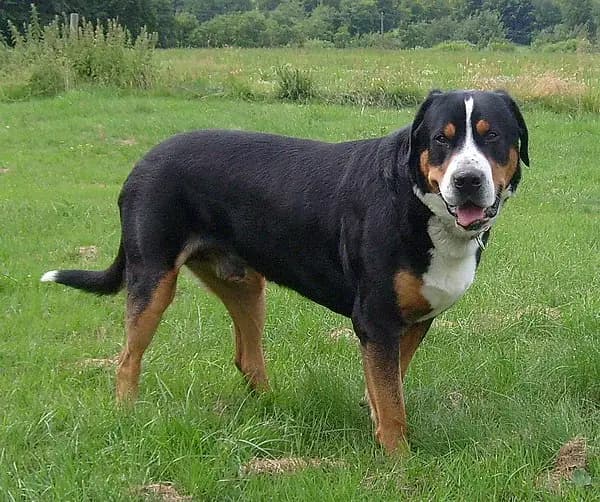
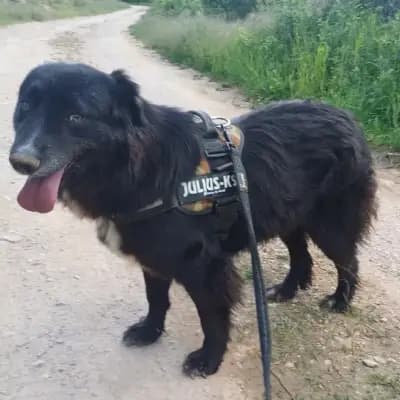
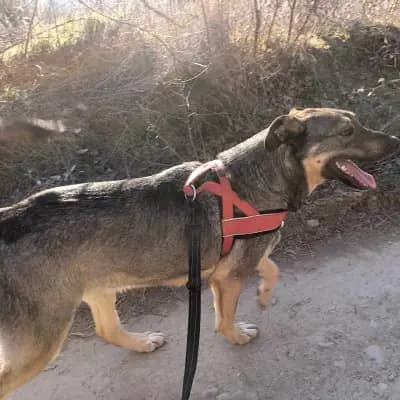
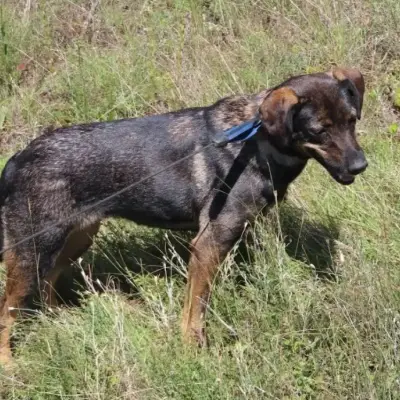
If you want to adopt a Greater Swiss Mountain Dog, you will meet a very people-oriented dog that often suffers badly in the shelter from the loss of its people. Give him time to build trust. Once the bond is there, he shows himself to be a child-friendly, good-natured partner who usually gets on well with other dogs, too. His dense, smooth, short double coat makes grooming pleasantly straightforward (grooming effort 2 out of 5), although you will need to allow for a moderate amount of shedding.
Keeping an eye on health issues
Because of their sheer mass, Greater Swiss Mountain Dogs come with a number of breed-typical problem areas, above all concerning the joints, eyes and nervous system, plus the risk of gastric torsion. The well-known joint and skeletal issues include hip dysplasia (HD), elbow dysplasia (ED), osteochondritis dissecans (OCD) and SLC13A1-associated chondrodysplasia. Eye conditions include cataracts, ectropion and entropion, as well as other eye abnormalities. Health-focused breeders, for example in the Schweizer Sennenhund-Verein für Deutschland e.V. (SSV), have the joints X-rayed and the eyes clinically examined to reduce the risk of these conditions, and study pedigrees closely to reduce the risk of neurological disease in the line.
However, if a shelter dog comes from an unplanned mating or from irresponsible puppy farmers, these health screenings of the parent dogs are often missing. When you collect the dog from the shelter, vaccinations, microchip and an admission check-up are usually covered; ask to see the veterinary records in detail and find out whether any joint or eye findings are already on file.