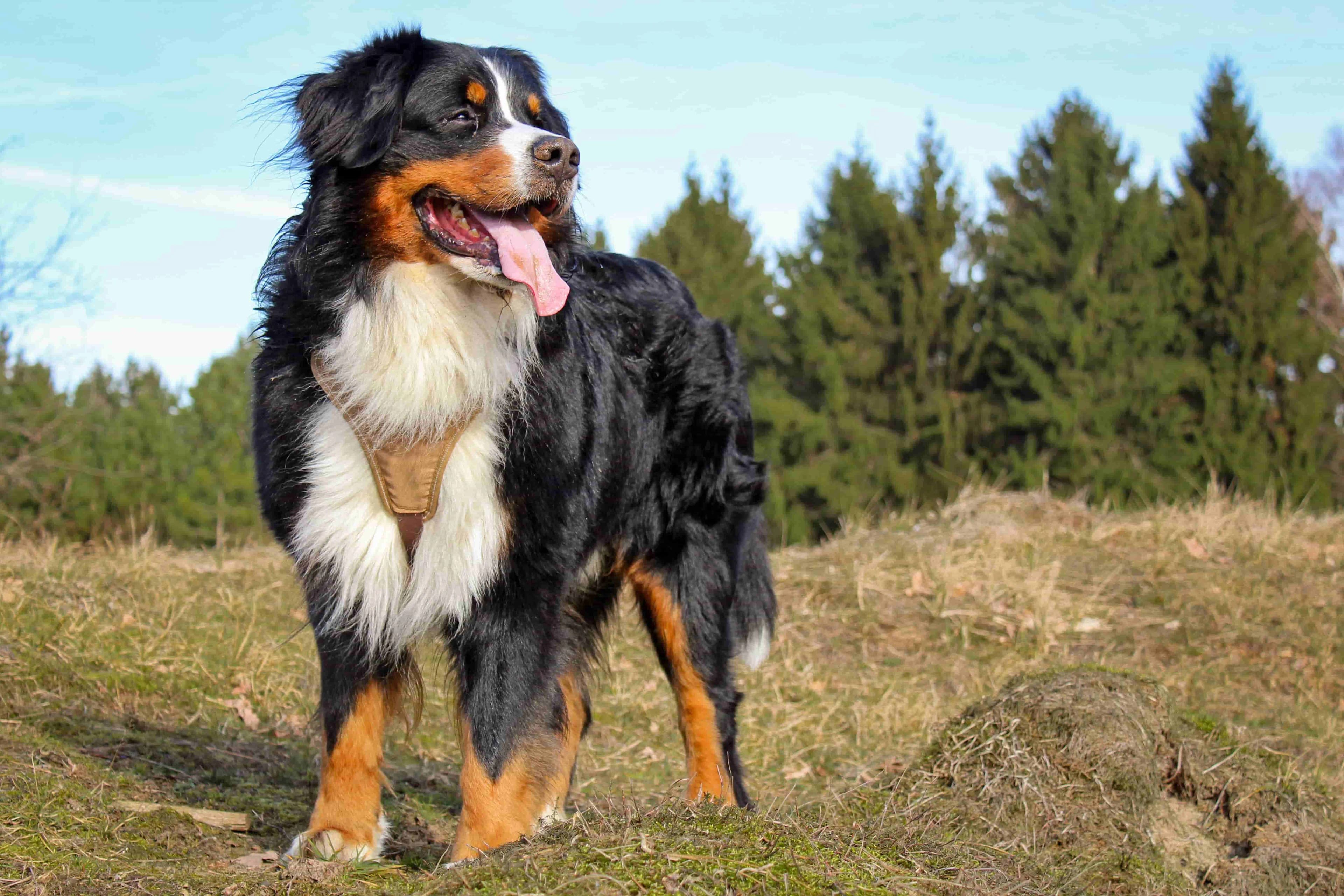
Bernese Mountain DogSame FCI section
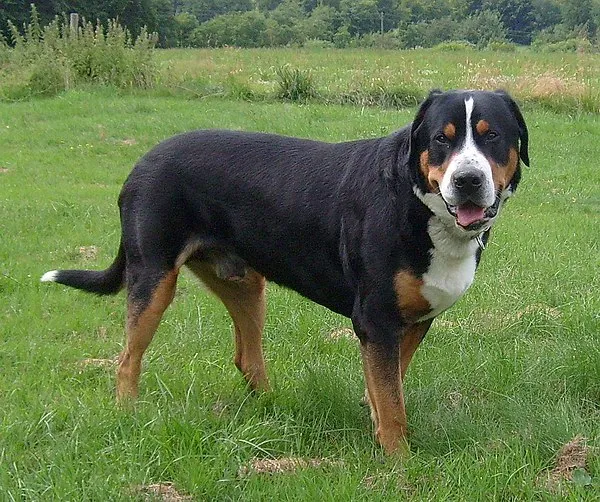
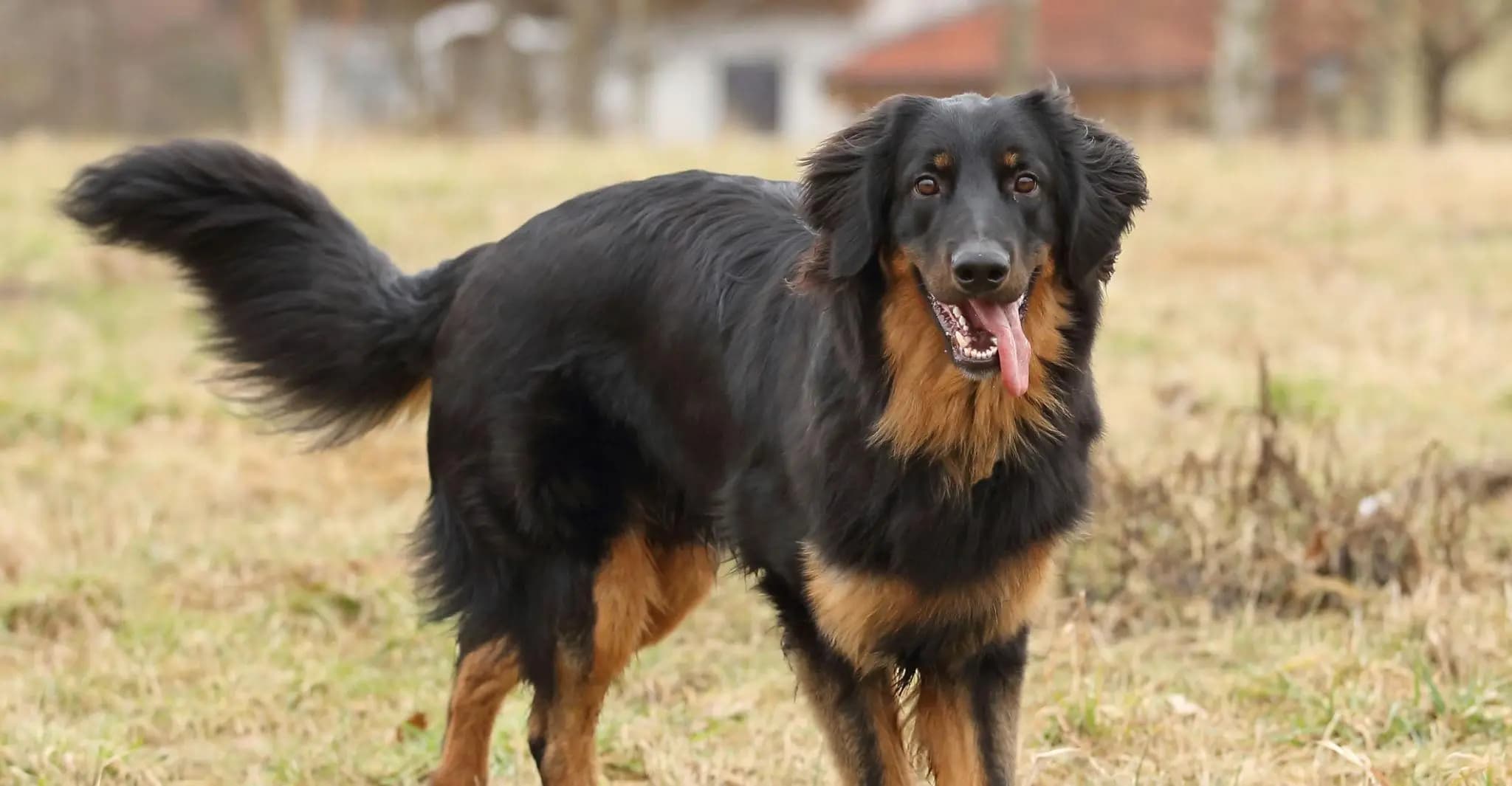
The Greater Swiss Mountain Dog is a massive, extremely steady-nerved family companion—bred as a vigilant farm dog and powerful draft dog, tasked with guarding the home and pulling heavy carts through the mountains.
How the health grade is calculated
Sources for required breeding screenings. Schweizer Sennenhund-Verein für Deutschland e.V. (SSV) · Schweizer Sennenhund-Verein für Deutschland e.V. (SSV)
Self-check
Answer 6 quick questions about your everyday life and see how well the Greater Swiss Mountain Dog fits you — including an honest cost estimate per month, per year, and across the dog's lifetime.


At a glance
The essentials — key facts, traits, and health priorities — before you dive deeper.
Lifespan
10–11 yrs
Shoulder height
60–72 cm
Weight
36–64 kg
Practical
Temperament
Daily life
What matters most
Especially with a Greater Swiss Mountain Dog, choosing the right breeder is the single most important decision you'll make. Serious breeders consistently test the parents for inherited conditions, prioritize healthy early socialization, and stay accountable long after handover. A cheap puppy without health screening tends to become the most expensive dog later on.
See HonestDog breeder standards →Colors & coat
The coat colors that occur in the Greater Swiss Mountain Dog — including which ones fall outside the breed standard and which carry genetic risk.
Eye colors
 Brown
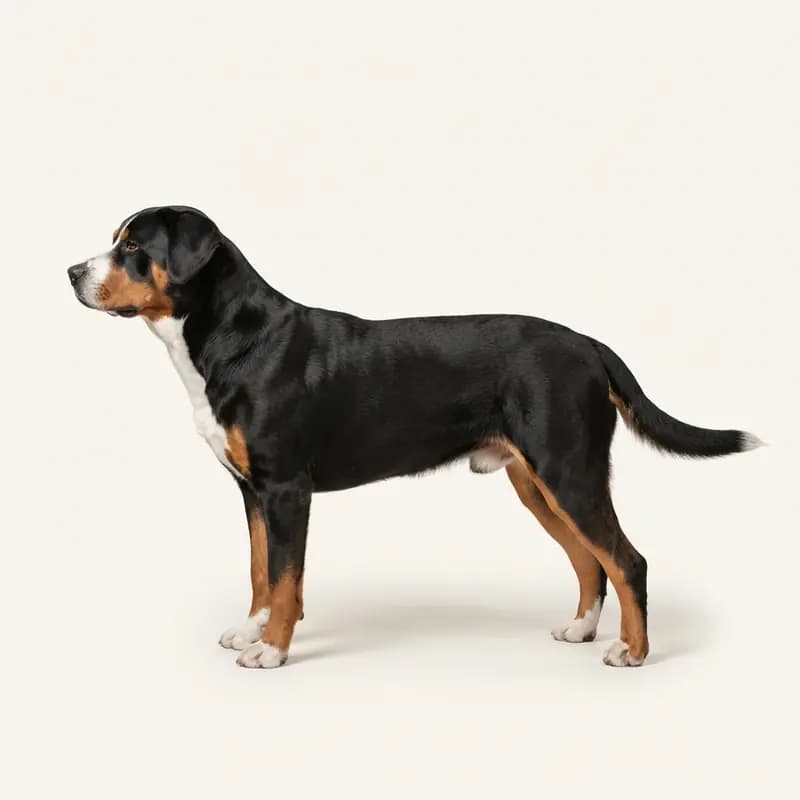
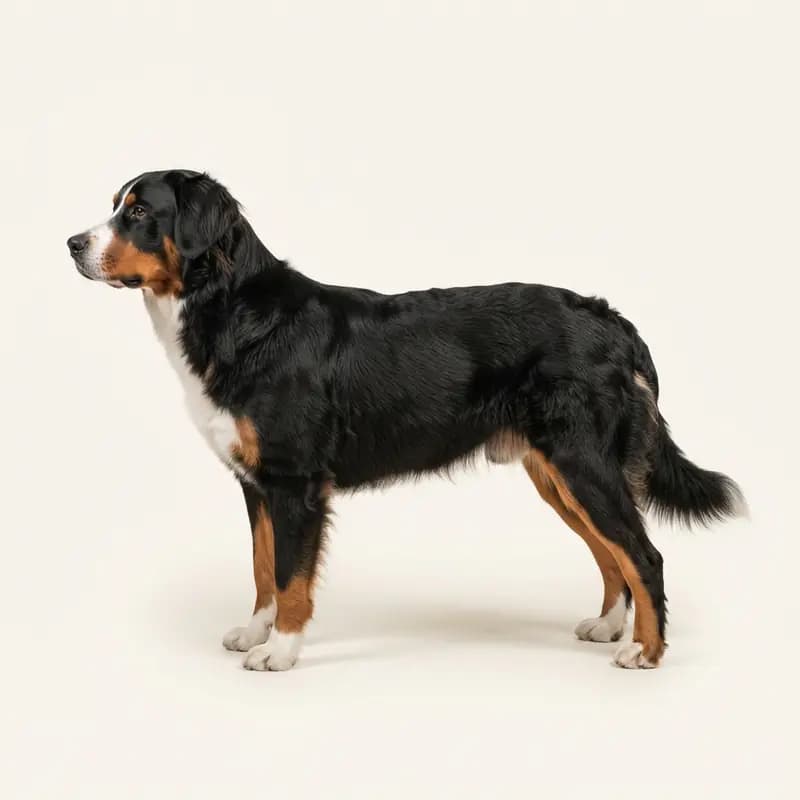
Coat type
 Illustrative image
Short
 Illustrative image
Medium
 Double coat
The real vibes check
A Greater Swiss Mountain Dog is not a blind follower of commands, but a stoic colleague. If he decides that a walk ends here, you are suddenly debating with 60 kilos of pure Alpine determination. You aren't getting a light-footed athlete, but a rock-solid protector whose loyalty is as massive as his stature.
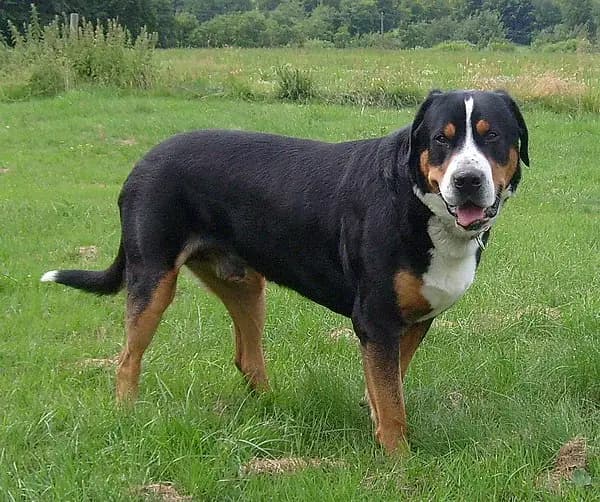
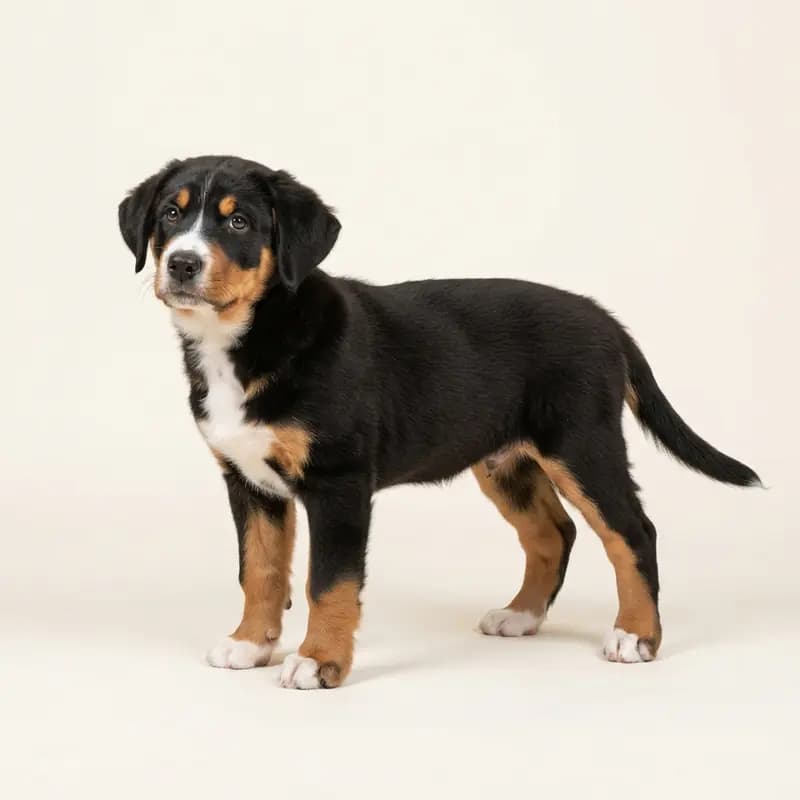
The Greater Swiss Mountain Dog, also affectionately known as “Grosser”, is an impressive presence. With its strong stature and characteristic colors - black, with rusty brown and white markings - it attracts attention. Its physique is muscular and balanced, which is a testament to its role as a working dog in the past. His facial expression is friendly and intelligent, and his dark eyes radiate calm and serenity. This handsome dog belongs to FCI Group 2, Section 3: Swiss Mountain Dogs. There is no distinction between performance and show lines in this breed, which underlines its versatility as a family, working and show dog.
The Greater Swiss Mountain Dog is known for its calm and relaxed temperament. He is very people-oriented and forms a close bond with his family. His loyalty and desire to please make him a wonderful companion and family dog. He is also a good guardian, guarding his territory and his family without aggression but with determination. Despite its size and strength, the Greater Swiss Mountain Dog is a gentle giant. He is friendly and good-natured and gets along well with children. He is also tolerant of other dogs and pets if properly socialized. His playful side is often evident in his tendency to run and play, especially as a puppy and young adult. The Greater Swiss Mountain Dog is a hard-working dog that enjoys tasks. He can learn to stay alone, but he prefers to be close to his people and take part in their activities. He doesn't have the strong hunting behavior of some other breeds, but he can protect his family and home from intruders when necessary. The breed is intelligent and learns quickly, which, combined with their love of work and desire to please, makes training easier. However, they tend to be a bit stubborn if not sufficiently motivated or stimulated. Positive and consistent upbringing is therefore essential.
| Watchfulness A natural watchdog with real protective instinct. | High |
| Openness to Strangers Warms up quickly and is generally welcoming. | Friendly |
| Hunting or Herding Drive Mild interest in movement and small animals — easily managed. | Low |
Fun Fact!
Did you know that the Greater Swiss Mountain Dog is the oldest and largest of the four mountain dog breeds? Despite their size, they are known for their gentleness and balanced nature!
Greater Swiss Mountain Dogs are considered independent, territorial dogs, but also friendly. Appropriate socialization and upbringing is important, not least because of their size.
Greater Swiss Mountain Dogs are wonderful family dogs and get along well with children. They are usually also friendly with other pets. However, they need enough space and are therefore not necessarily suitable as pure city dogs, although they can adapt to life in an apartment as long as they get enough exercise and mental activity. They love nature and enjoy long walks and trips to the mountains.
Lives for its family — the born family companion.
Extraordinarily patient and loving — a true family dog.
Actively enjoys the company of other dogs.
City-appropriate with enough exercise and stimulation.
Owning a dog is a privilege, but it's also a real responsibility. Before you bring one into your life, be honest with yourself about the commitment it takes.
Greater Swiss Mountain Dogs are very trainable and eager to work. They require consistent but loving training and respond well to positive reinforcement. Because of their size and strength, it is important that they learn to walk well on a leash and control their strength. They need both physical and mental exercise, but they can also relax well and are usually quiet people around the house.
As large and active dogs, they need a balanced diet to provide them with enough energy. It is important to pay attention to the quality of the food and, if necessary, adapt it to the age, activity and health of the dog. Grooming the coat of Greater Swiss Mountain Dogs is relatively uncomplicated. They have a dense, short coat with an undercoat that sheds heavily twice a year, especially in spring and autumn. Regular brushing helps keep the coat clean and healthy.
| Care Level Minimal effort — occasional brushing and bathing. | Low-maintenance |
| Exercise Needs Needs several hours of serious exercise every day. | Very active |
| Shedding Hair everywhere, always — no white clothing survives. | Very heavy |
| Trainability Willing to learn with clear rules and regular training. | Balanced |
Our experts are still reviewing this information. Spotted something wrong? Email us at info@honestdog.de.
Solid, watch carefully
Health grade
In the Greater Swiss Mountain Dog, size and bulk entail a serious risk of joint diseases such as hip dysplasia (HD), elbow dysplasia (ED), and osteochondritis dissecans (OCD); in addition, cataracts occur. The Schweizer Sennenhund-Verein für Deutschland e.V. (SSV) therefore mandatorily prescribes X-ray and eye examinations, requiring, for example, a breeding value of at most 102 for HD, and that animals must be free of OCD and cataracts. A health-oriented breeder additionally tests for chondrodysplasia (SLC13A1) as well as ectropion / entropion. Before buying a puppy, have the official results of both parents shown to you: ED 0–1, freedom from OCD and cataracts, and, in the case of a genetic test for chondrodysplasia (SLC13A1), at least one clear partner if the other is a carrier.
Grade is relative to other breeds — AI-assisted and editorially reviewed.
Methodology and data: HonestDog Dog Breed Health Report 2026
What matters most for this breed
Tap any item to see details.
You should ensure slow growth through appropriate nutrition, joint-friendly exercise, and strict rest periods after meals to avoid future problems.
Responsible breeders have parent animals screened for HD, ED, OCD, and cataracts, and additionally test for chondrodysplasia (SLC13A1) in order to systematically minimize severe joint and hereditary diseases.
Note: This health overview is AI-assisted and editorially reviewed. It is for orientation only and does not replace veterinary advice.
What matters most for this breed — what's common, how much it affects the dog's life, and how to protect yourself as a buyer.
Tap a body region to see the inherited conditions linked to it.
The three most important risks
Pick a region on the map to explore other areas.
Tier 1 reflects the tests Schweizer Sennenhund-Verein für Deutschland e.V. (SSV) actually mandates. Tiers 2 and 3 show how responsible breeders go beyond.
Club standard. Schweizer Sennenhund-Verein für Deutschland e.V. (SSV) requires these tests for breeding approval. Ask any reputable breeder for the results.
Not health tests, but required for breeding: the club asks for these results too. They don't count toward the risks or the rating.
DNA-Identitätsnachweis
Required by Schweizer Sennenhund-Verein für Deutschland e.V. (SSV)
Acceptable result: DNA-Profil Premium SNP (ISAG 2020) liegt vor (bis Ende 2026 alternativ ISAG 2006)
Wesensbeurteilung
Required by Schweizer Sennenhund-Verein für Deutschland e.V. (SSV)
Acceptable result: Erfolgreich bestandene Körung
No entries in this tier.
Note: This health overview is AI-assisted and editorially reviewed. It is for orientation only and does not replace veterinary advice.
A Greater Swiss Mountain Dog costs around ~€220 per month (€110 – €420, depending on your setup). The first year adds up to roughly ~€6,700 including purchase, equipment and puppy school; across the dog's life (10.5 years) it comes to about ~€31,620.
With surgery cover, running costs come to about ~€230 per month — in return, your share of a major operation drops from several thousand euros to around 20 percent.
Per month
~€220
In the first year
~€6,700
Across the dog's life
~€31,620
Estimated purchase price from a breeder: €2,500 – €4,000
Estimate at a mid-range setup (suburban, dry food, 1–2 hours of daily exercise), average German prices, as of July 2026.
 Illustrative imageIllustrative image
 Illustrative image
The Greater Swiss Mountain Dog is the oldest and largest of the four mountain dog breeds and has a long history as a working dog in the Swiss Alps. He was used for a variety of tasks including pulling carts, herding flocks, and guarding farms and livestock. The breed was valued early on by farmers and traders for its strength, endurance and versatility. Despite their hard work, their popularity declined in the late 19th century when modern transportation methods were introduced. Fortunately, Professor Albert Heim rediscovered the breed at a dog exhibition and recognized its uniqueness. Through his efforts, the breed was officially recognized in 1908 and a breeding program was established to preserve the breed.
The Greater Swiss Mountain Dog was bred as a draft, guard and driving dog, known for its strength and tri-colored coat.
Switzerland
1908
In daily life, owners mostly describe the Greater Swiss Mountain Dog as a balanced, steady-nerved and very devoted companion. Many owners value its calm presence at home: it rarely pushes itself on people, but it always wants to be part of what's going on and would most like to lie at its people's feet. With its own family and children it is usually considered patient and loving. Still, owners regularly point to its sheer body weight; young dogs in particular can accidentally knock over smaller children out of boisterous excitement.
A central theme in owner accounts is the breed's guarding and territorial behavior. As a classic farm dog, it keeps a close eye on its surroundings. Compared with the smaller Swiss mountain dog breeds it is considered not very barky, but unfamiliar visitors or anyone approaching the garden fence are often announced in a deep, impressive voice. Owners stress that a well-fenced property is important and that rules for visits have to be clear from the start so the protective and guarding drive doesn't take on a life of its own.
As for activity, many owners say the breed has less need for fast-paced sports, but it is by no means lazy. These dogs especially enjoy long, steady walks, hikes, draft work (such as pulling a wagon or sled) and nose work. Compared with many other breeds, its hunting drive is usually weak, which often makes outings in fields and woods relaxed.
Sources:easy-dogs.netpetsdeli.devom-kanzeltal.deskg.chforum.hund.info
In training, many owners find the Greater Swiss willing to learn and intelligent, but by no means a blindly obedient dog ("will to please"). Forum posts keep describing a real stubborn streak: commands are often briefly questioned first or carried out at a leisurely pace. Owners' experience is that harshness or pressure alone leads to stubborn refusal, so they agree on calm consistency, patience and positive reinforcement with food or shared tasks.
Many describe adolescence and growing up as an especially challenging phase. Greater Swiss are known as late bloomers that often aren't fully mature mentally and physically until about three years old. When a young dog weighing 40 to 50 kilograms tests its limits, you quickly hit your own physical limits without early training.
That's why experienced owners stress that loose-leash walking and standing calmly have to be the top priority from the start. If you can't hold a full-grown dog on the leash, every encounter with other dogs or passersby becomes a real test of strength, which is why owners strongly recommend joining a good training school early.
Sources:easy-dogs.netpetsdeli.devom-kanzeltal.devdh.detackenberg.de
Health and physical resilience take up a lot of space in owner communities. The breed is generally seen as a weatherproof, hardy outdoor type, but its bulk and size bring typical weak spots. Joint diseases such as hip dysplasia (HD), elbow dysplasia (ED) and osteochondritis dissecans (OCD) of the shoulder come up very often. Owners therefore firmly advise strictly avoiding stair climbing and sudden stop-and-go movement in the first year of life, and making sure the dog grows at a moderate, not too fast, pace with the right food.
Another recurring worry in reports is the risk of bloat, which is why owners stick carefully to rest periods after meals. Breed forums also repeatedly name specific hereditary conditions such as epilepsy or blood clotting disorders as points to look at closely when choosing a reputable breeder and checking their pedigrees.
Everyday grooming holds a few surprises too: although the short double coat looks easy to care for, owners report huge amounts of undercoat during shedding season that call for daily brushing. Reports usually put average life expectancy at about 8 to 11 years, something owners should be aware of before getting one.
Sources:petsdeli.devom-kanzeltal.deeasy-dogs.netvdh.detackenberg.de
Paraphrased from real owner reports · translated from German
The Greater Swiss Mountain Dog is an active dog that needs plenty of exercise and mental stimulation. Research the temperament, grooming needs, and space requirements before deciding.
The average life expectancy of a Greater Swiss Mountain Dog is 10-11 years. With proper care and regular vet visits, your dog can live a long, healthy life.
Greater Swiss Mountain Dog grooming requirements include regular brushing, nail trimming, and dental care. HonestDog provides detailed grooming tips for every breed.
The Greater Swiss Mountain Dog can be a great family dog. Proper training and socialization are key. HonestDog provides family suitability information for every breed.
The Greater Swiss Mountain Dog comes in these colors: Tricolor.
Showcase your kennel on HonestDog and reach families searching for a responsibly bred Greater Swiss Mountain Dog.