Greater Swiss Mountain DogSame FCI section
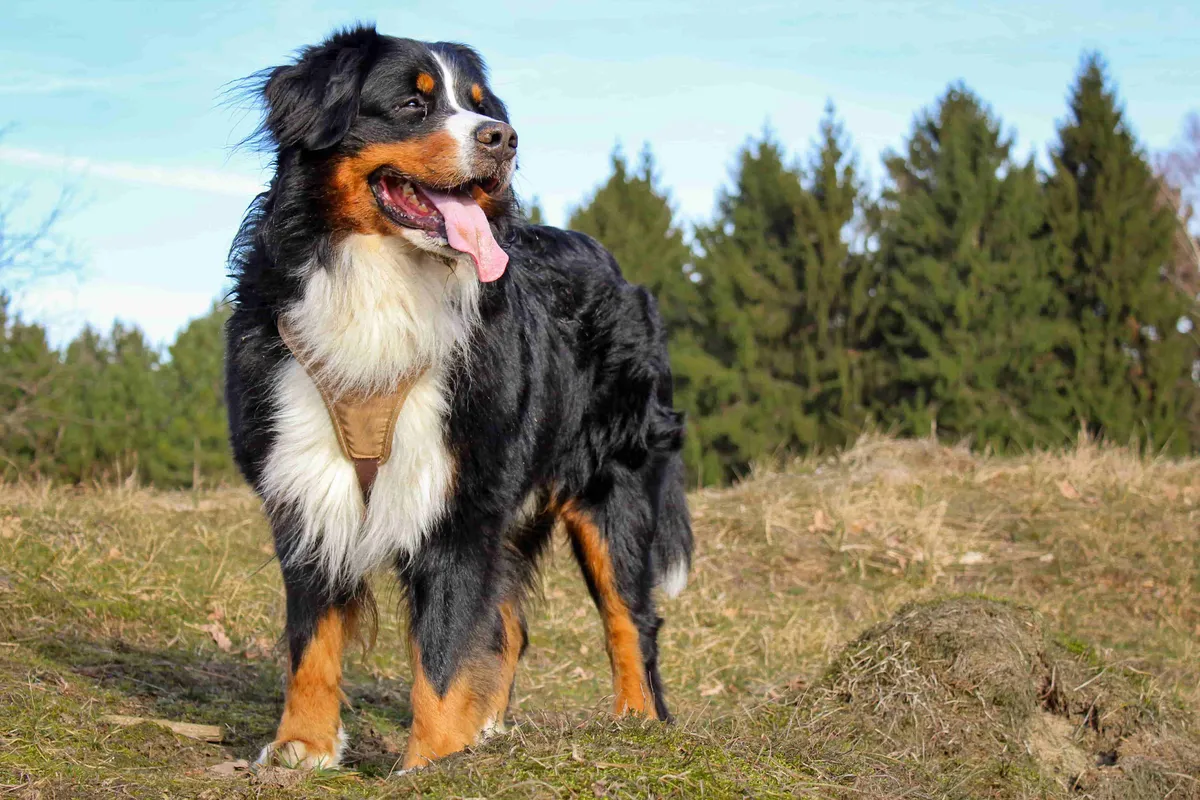
The Bernese Mountain Dog is a massive, extremely people-oriented farm and draft dog—bred to pull heavy carts in the harsh Swiss climate and guard the property without ever being aggressive.
How the health grade is calculated
Sources for required breeding screenings. Schweizer Sennenhund-Verein für Deutschland e.V.
Self-check
Answer 6 quick questions about your everyday life and see how well the Bernese Mountain Dog fits you — including an honest cost estimate per month, per year, and across the dog's lifetime.


At a glance
The essentials — key facts, traits, and health priorities — before you dive deeper.
Lifespan
6–8 yrs
Shoulder height
58–70 cm
Weight
36–50 kg
Practical
Temperament
Daily life
What matters most
Especially with a Bernese Mountain Dog, choosing the right breeder is the single most important decision you'll make. Serious breeders consistently test the parents for inherited conditions, prioritize healthy early socialization, and stay accountable long after handover. A cheap puppy without health screening tends to become the most expensive dog later on.
See HonestDog breeder standards →Colors & coat
The coat colors that occur in the Bernese Mountain Dog — including which ones fall outside the breed standard and which carry genetic risk.
Eye colors
 Brown
Coat type
 Long
 Double coat
The real vibes check
A Bernese Mountain Dog is always lying exactly where you want to walk—and that is no coincidence, but his deeply ingrained job as an observer of the family pack. He is not a dog for blind obedience or high athletic performance, but a stoic rock in the surf. If you appreciate his deliberate nature, you get a loyal, bear-sized shadow who would go through fire for you, as long as he doesn't have to run to do it.
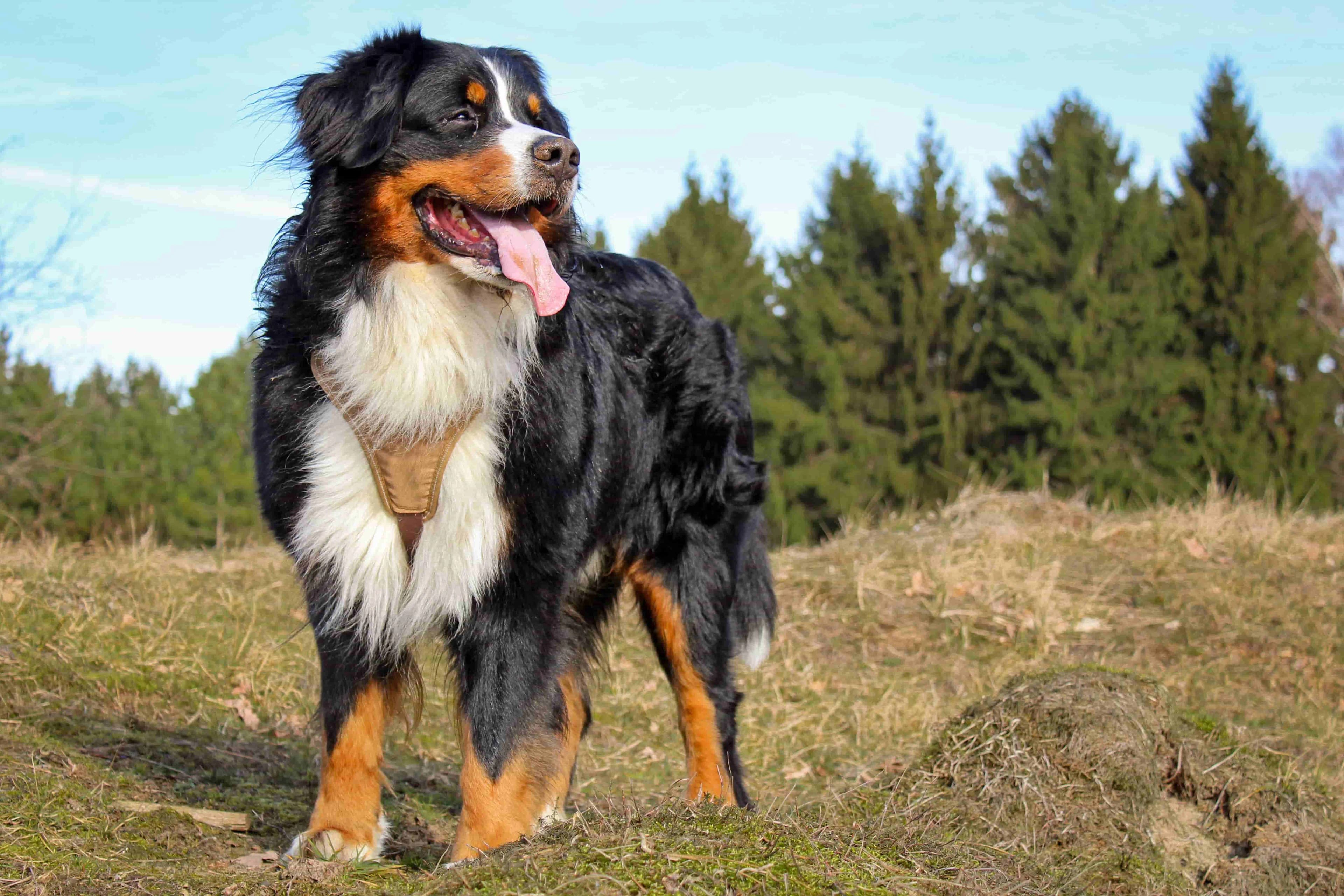
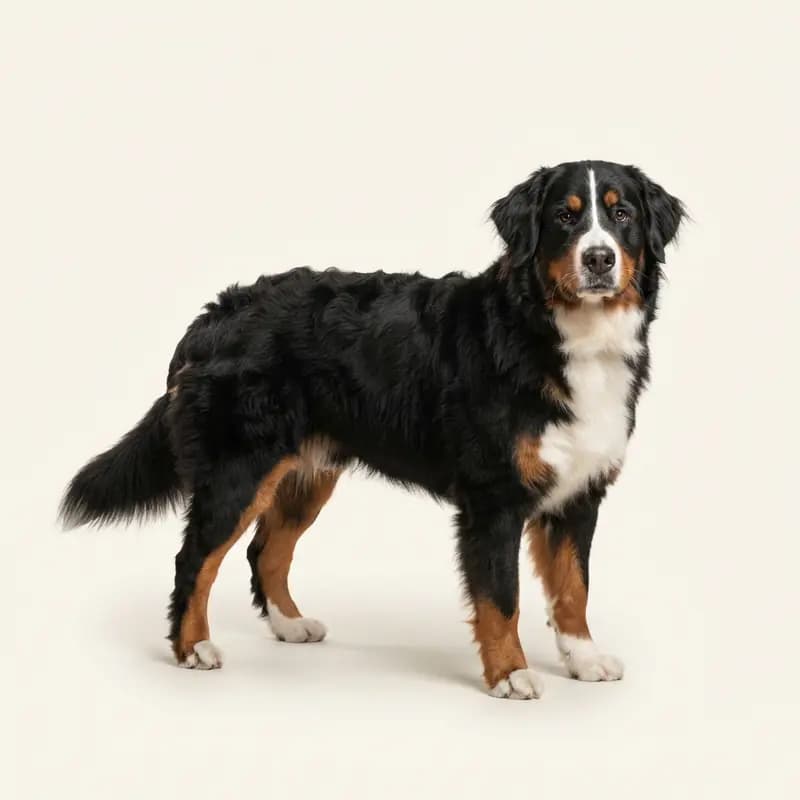
The Bernese Mountain Dog is an impressive presence. It belongs to FCI Group 2, Section 3, which includes the Swiss Mountain Dogs. Its majestic, long and silky coat, strong stature and distinctive tricolor pattern make it unmistakable. The fur is black with rusty red and white markings. Bernese Mountain Dogs have a strong and harmonious body structure. They are strong and agile, reflecting their original use as farm working dogs. This breed does not differentiate between performance and show lines. It is important to note that the Bernese Mountain Dog's coat requires regular care to prevent matting and tangles.
The Bernese Mountain Dog is an exceptionally gentle and friendly dog, often referred to as a "gentle giant". His loving nature makes him a wonderful family dog. He is very people-oriented and builds a strong bond with his family. This also makes him a good companion for children, although of course it is always important to supervise interactions between dogs and children. The Bernese Mountain Dog has a rather calm temperament, but is still playful and enjoys family activities. His alertness and protective instinct are still present, which is why he is also a good watchdog without being aggressive. However, this should not be confused with an overprotective instinct, as they are usually well socialized and friendly towards strangers. Because the Bernese Mountain Dog was originally used as a working dog, it has a certain level of energy that should be expended through regular exercise and mental stimulation. At the same time, you should be careful not to overwhelm him, especially at a young age, as this can put strain on his joints. The Bernese Mountain Dog does not particularly exhibit hunting or prey-catching behavior, but as with all dogs, this can vary from person to person. It is important to socialize him well from an early age and give him a clear structure, otherwise he can tend to be a bit stubborn. As for being alone, the Bernese Mountain Dog can learn to stay alone for short periods of time, but due to his close bond with his family, this should not be overused. Long periods of alone time are not suitable for him. Overall, the Bernese Mountain Dog is a loving, loyal and gentle breed that fits wonderfully into family life and is a reliable companion. For people who are willing to dedicate themselves to grooming and exercise needs and want to build a close bond with their dog, the Bernese Mountain Dog is a wonderful choice.
| Watchfulness Reports unusual activity but stays controlled. | Moderate |
| Openness to Strangers Neither pushily friendly nor suspicious. | Neutral |
| Hunting or Herding Drive Mild interest in movement and small animals — easily managed. | Low |
Fun Fact!
Bernese Mountain Dogs were known in Switzerland as draft animals that transported milk cans to dairies.
Bernese Mountain Dogs are considered sociable, calm dogs. They can also be territorial and wary, as well as unfriendly towards strangers. As with many large breeds, life expectancy is rather short. Common problems include musculoskeletal disorders and cancer.
Due to their size and need for exercise, Bernese Mountain Dogs are not necessarily suited to city life in a small apartment. They thrive in environments with plenty of space to move and play. They are very family oriented and tend to get along well with children, although it is important to monitor the interaction. They can also get along with cats and other pets, especially if they are raised together from an early age.
Lives for its family — the born family companion.
Extraordinarily patient and loving — a true family dog.
Actively enjoys the company of other dogs.
Can manage in the city, but only with very active owners.
Owning a dog is a privilege, but it's also a real responsibility. Before you bring one into your life, be honest with yourself about the commitment it takes.
Bernese Mountain Dogs are intelligent and trainable dogs, but training them requires patience and consistency. It's important to teach them frustration tolerance and impulse control early on so that they grow into well-behaved adults. Because of their work history, they enjoy activities that challenge both their bodies and their minds. Suitable activities can include pulling dogs or agility. Although they enjoy a good level of activity, it is important to be careful not to "over-occupy" the dog as this can lead to stress and joint problems. Ball games should be enjoyed with caution as Bernese Mountain Dogs tend to become ball junkies.
Bernese Mountain Dogs benefit from a balanced diet tailored to their specific needs. Because of their size and activity, they require a diet rich in proteins and healthy fats. Make sure you choose food that is suitable for large breeds and does not contain unnecessary fillers. Regarding coat care: Bernese Mountain Dogs have long, silky fur with a dense undercoat. They tend to shed, especially during shedding periods. Regular brushing (several times a week) is necessary to prevent mats and keep the skin healthy. Their undercoat insulates them well, so they can cope with the German climate.
| Care Level Needs regular professional grooming — time-consuming and costly. | High-maintenance |
| Exercise Needs Needs several hours of serious exercise every day. | Very active |
| Shedding Hair everywhere, always — no white clothing survives. | Very heavy |
| Trainability Willing to learn with clear rules and regular training. | Balanced |
Our experts are still reviewing this information. Spotted something wrong? Email us at info@honestdog.de.
Elevated risks
Health grade
On average, the Bernese Mountain Dog reaches only about seven and a half to eight and a half years of age, with cancer accounting for more than half of all deaths and histiocytic sarcoma alone for roughly one seventh. The Schweizer Sennenhund-Verein für Deutschland e.V. prescribes X-ray examinations for hip dysplasia (HD, limit A–C) and elbow dysplasia (ED, limit 0–1) for breeding. Responsible breeders also test for degenerative myelopathy, histiocytosis, and progressive retinal atrophy. In addition to the mandatory HD and ED findings, ask to see genetic tests – for degenerative myelopathy, a carrier may only be mated with a clear animal.
Grade is relative to other breeds — AI-assisted and editorially reviewed.
Methodology and data: HonestDog Dog Breed Health Report 2026
What matters most for this breed
Tap any item to see details.
You should focus on joint-friendly rearing, a healthy body weight, and regular checks for lumps—for example through preventative screenings—to maintain his vitality for as long as possible.
Responsible breeders have their dogs officially X-rayed for hip dysplasia (HD) as well as elbow dysplasia (ED) and additionally test voluntarily for degenerative myelopathy and histiocytosis.
Note: This health overview is AI-assisted and editorially reviewed. It is for orientation only and does not replace veterinary advice.
What matters most for this breed — what's common, how much it affects the dog's life, and how to protect yourself as a buyer.
Tap a body region to see the inherited conditions linked to it.
The three most important risks
Pick a region on the map to explore other areas.
Tier 1 reflects the tests Schweizer Sennenhund-Verein für Deutschland e.V. actually mandates. Tiers 2 and 3 show how responsible breeders go beyond.
Club standard. Schweizer Sennenhund-Verein für Deutschland e.V. requires these tests for breeding approval. Ask any reputable breeder for the results.
Not health tests, but required for breeding: the club asks for these results too. They don't count toward the risks or the rating.
DNA-Identitätsnachweis
Required by Schweizer Sennenhund-Verein für Deutschland e.V.
Acceptable result: DNA-Profil Premium SNP (ISAG 2020) vorgelegt
Wesensbeurteilung
Required by Schweizer Sennenhund-Verein für Deutschland e.V.
Acceptable result: Erfolgreich bestandene Körung
Note: This health overview is AI-assisted and editorially reviewed. It is for orientation only and does not replace veterinary advice.
A Bernese Mountain Dog costs around ~€220 per month (€110 – €420, depending on your setup). The first year adds up to roughly ~€5,840 including purchase, equipment and puppy school; across the dog's life (7 years) it comes to about ~€21,510.
With surgery cover, running costs come to about ~€220 per month — in return, your share of a major operation drops from several thousand euros to around 20 percent.
Per month
~€220
In the first year
~€5,840
Across the dog's life
~€21,510
Estimated purchase price from a breeder: €1,800 – €3,000
Estimate at a mid-range setup (suburban, dry food, 1–2 hours of daily exercise), average German prices, as of July 2026.
 Illustrative image
 Illustrative image
The Bernese Mountain Dog originally comes from Switzerland and is one of the four mountain dog breeds, also known as Swiss Mountain Dogs. The Bernese Mountain Dog takes its name from the Bern region where it was primarily used. The breed is believed to have descended from the Molossians, which were brought by the Romans as they crossed the Alps in ancient times. Bernese Mountain Dogs were used as working dogs on farms. Their duties included herding and guarding livestock, pulling milk can carts and protecting the house and farm. The breed was also known for its ability to form strong bonds with its family and act as both a working dog and a loving companion. The breed was recognized as a separate breed in 1907 and its popularity has steadily increased since then. Today, Bernese Mountain Dogs are best known as family dogs and valued for their gentle nature and loyalty.
The Bernese Mountain Dog was used as a versatile farm dog for herding livestock, pulling carts and as a guard dog.
Switzerland
1900
In family life, owners almost universally describe the Bernese Mountain Dog as a very affectionate, good-natured and cuddly companion. Many stress its great patience and calm with children. The breed always wants to be close to its people and likes nothing better than lying down in the middle of the action or right at its people's feet. House and yard are watched attentively; barking is usually limited to a short, deep warning, and these dogs don't tend toward restless nonstop barking.
At the same time, experienced owners point out that the image of a purely lazy, cuddly bear distorts reality. Bernese Mountain Dogs carry a lot of body mass, which, especially in their younger years, can come with boisterous enthusiasm. Weather is another often-discussed point in daily life: snow and cold temperatures thrill them, but they clearly suffer in summer heat and cut their activity back to the bare minimum. Grooming shouldn't be underestimated either, since the dense coat carries a lot of dirt into the house in any weather and the year-round shedding means constant brushing and vacuuming.
Sources:aniswiss.comdogvers.deparents.atreddit.comtiermedizinportal.de
On training, owners report a fine balance between sensitivity and surprising stubbornness. The Bernese Mountain Dog doesn't obey blindly (it lacks a "will to please" in the classic sense); many owners describe with a smile how their dog calmly thinks a command over before carrying it out. Pressure, excessive harshness or loud scolding quickly lead this breed to refuse completely or withdraw in deep uncertainty. In dog forums, calm, kind but crystal-clear consistency is therefore considered the only approach that works.
Owner accounts also regularly put the myth into perspective that Bernese Mountain Dogs are born "already trained" and have no prey drive at all. Their passion for hunting is rarely as strong as in specialized breeds, but deer, hares or birds taking off do catch the interest of many young dogs and call for targeted recall training from the start. Owners also stress the need for early loose-leash training: when a full-grown Bernese throws its full weight into the leash, sheer strength is hardly enough to control it.
Sources:parents.atbsin-forum.detierforum.demit-tier.dedogforum.de
The dominant and most painful topic in almost every owner community is the breed's health and its relatively short life expectancy. In forums, owners repeatedly share their deep worry about how prone the breed is to tumors. Histiocytic sarcoma in particular is often named as a devastating blow that frequently strikes dogs as early as six to eight years of age. Many long-time owners already see a Bernese that reaches ten or older as a rare gift.
Besides cancer, joint problems, especially hip and elbow dysplasia, play a central role when owners compare notes. Owners regularly warn against putting young Bernese through athletic strain too early or letting them climb stairs unnecessarily. Owner accounts also speak openly about the financial burden of vet bills for diagnostics, surgery and medication. Despite this well-known heartache, most owners stress that the dogs' uniquely gentle, loyal nature makes every moment together worth it, but they urge prospective owners to choose breeders with strict health testing very carefully.
Paraphrased from real owner reports · translated from German
The Bernese Mountain Dog is an active dog that needs plenty of exercise and mental stimulation. Research the temperament, grooming needs, and space requirements before deciding.
The average life expectancy of a Bernese Mountain Dog is 6-8 years. With proper care and regular vet visits, your dog can live a long, healthy life.
Bernese Mountain Dog grooming requirements include regular brushing, nail trimming, and dental care. HonestDog provides detailed grooming tips for every breed.
The Bernese Mountain Dog can be a great family dog. Proper training and socialization are key. HonestDog provides family suitability information for every breed.
The Bernese Mountain Dog comes in these colors: Tricolor.
Showcase your kennel on HonestDog and reach families searching for a responsibly bred Bernese Mountain Dog.
