Finding a reputable Bernese Mountain Dog breeder: a guide
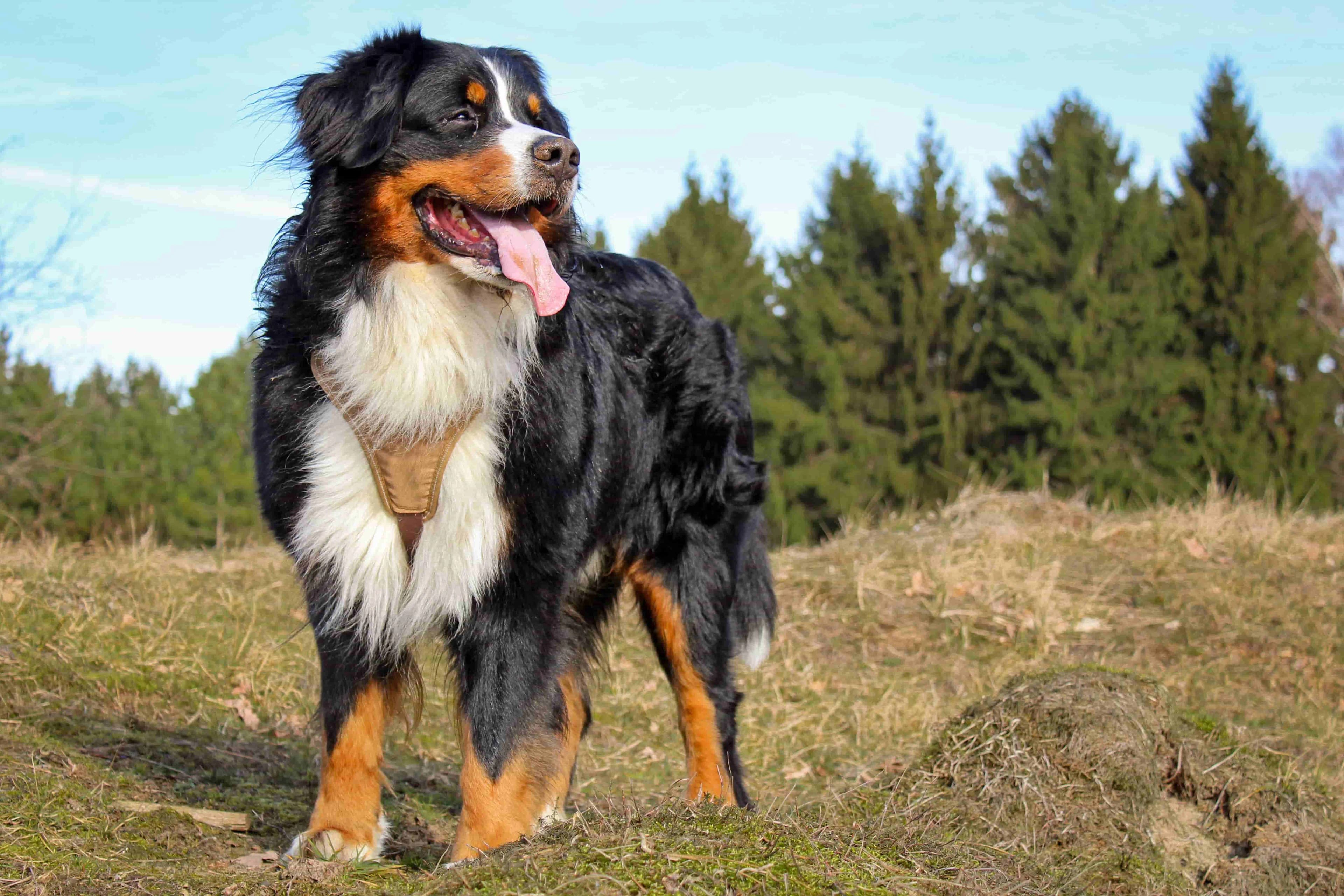
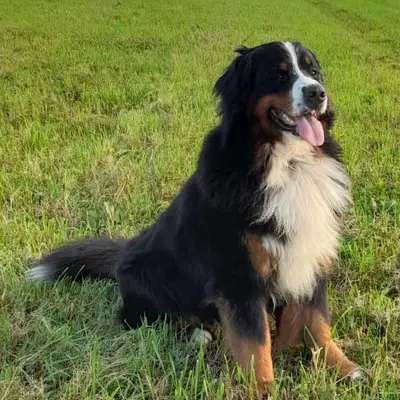
The Bernese Mountain Dog is the very image of the “gentle giant”. With its calm, good-natured temperament, enormous strength and unconditional love for its family, it takes our hearts by storm. These dogs are highly people-oriented and real members of the family. But precisely because we love these gentle bears so much, finding a responsible Bernese Mountain Dog breeder is by far the most important step on the way to your own puppy.
Why your choice of breeder is a matter of life and death with this breed
Let’s face facts: compared with other breeds, the Bernese Mountain Dog has an alarmingly short life expectancy of only 6 to 8 years on average. The breed carries a heavy genetic predisposition, particularly to aggressive cancers and orthopaedic problems. An unprofessional backyard breeder usually pays attention only to the pretty tricoloured coat and the sturdy build. A genuine, reputable breeder, on the other hand, sees themselves as a guardian of the breed and breeds deliberately for longevity, vitality and a robust build. In dogs that weigh up to 50 kilograms, genetics leaves no room for error.
Key breed-specific health tests: what you need to look out for
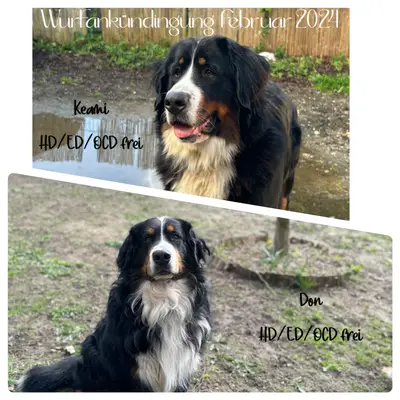
A general “health check” at the vet is nowhere near enough for this breed. A reputable breeder will show you, without being asked, specific laboratory and X-ray results for the parent dogs. The following tests are essential for the Bernese Mountain Dog:
- Hip and elbow dysplasia X-rays: Hip dysplasia and elbow dysplasia are critical in large, heavy dogs. Both parents must have been officially X-rayed and the results evaluated by an independent assessor.
- Genomic breeding value (Antagene test) for histiocytic sarcoma (HS): This is one of the most common and deadliest cancers in the Bernese. The DNA test places dogs in categories (A, B, C) in order to drastically reduce the cancer risk within the breeding line.
- Degenerative myelopathy (DM): A genetic test for the Exon 1 and Exon 2 mutations shows whether a parent is clear, a carrier or affected; if the breeder mates carriers only with clear partners, no puppy can inherit the mutation from both parents.
Hallmarks of an excellent Bernese Mountain Dog breeder
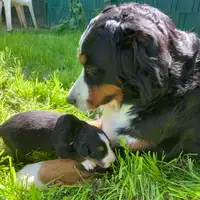
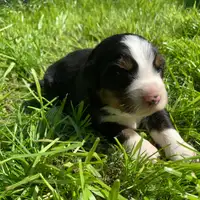
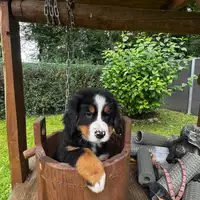
Responsible breeders invest an enormous amount of time in rearing their puppies. The puppies grow up in a family environment. This is essential because the Bernese, as a future family dog, must be accustomed early on to everyday noises, children and other animals. As the coat is long and silky with a dense undercoat, grooming takes quite a lot of effort, and a good breeder will give you thorough guidance on coat care. In addition, the realistic price for a healthy, well-socialised puppy from a reputable breeder is between 1,800 and 3,000 EUR. Bargain offers far below this are a major warning sign.
6 specific questions to ask your breeder
To separate the wheat from the chaff, you should go into real detail in your conversation. Use these questions to test the breeder’s expertise:
- 1. What is the genomic breeding value (Antagene pre-test) of the planned mating with regard to histiocytic sarcoma?
- 2. Can you show me the official hip and elbow dysplasia X-ray results for both parents, confirmed by the breed club?
- 3. On average, how old did the grandparents and great-grandparents of this litter live to be, and what did they die of?
- 4. How exactly do you structure the puppies’ early socialisation in the first 8 weeks to encourage their steady, calm nature?
- 5. What feeding recommendations will you give me to prevent the puppy’s bones from growing too quickly in its first months?
- 6. Which puppy in the litter best suits my daily life in terms of character? (Remember: this breed is poorly suited to city life – they need space!)
Find your dream dog on HonestDog
Searching for a truly trustworthy breeder can be tiring and confusing. On HonestDog, every breeder goes through a registration process before being approved: identity verification by ID and selfie, proof of club membership or a §11 permit where applicable, a knowledge test on breeding and animal welfare, and agreement to the HonestDog breeding standards – including no breeding with traits associated with extreme breeding, and no breeding dogs under 18 months. Without a verified §11 permit, a breeder can list no more than two breeding bitches there, and you can report anything unusual on a breeder profile directly via “Report content”.