MittelspitzSame FCI group
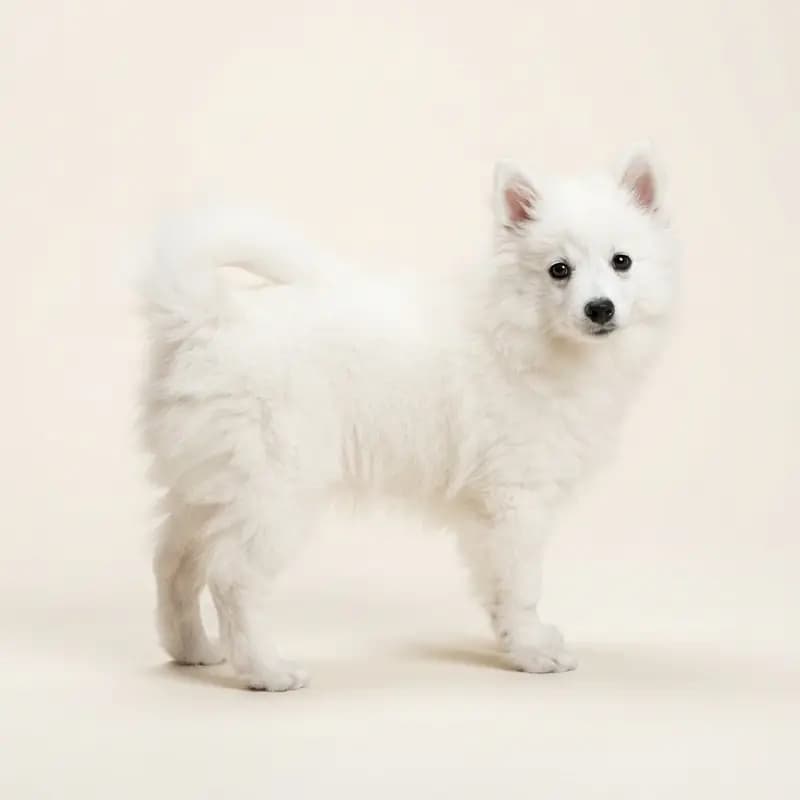
The Japanese Spitz is a cheerful, attentive companion dog in a Spitz format—bred to translate the look of Nordic Spitz breeds into a manageable, people-oriented operating system without a hunting instinct.
How the health grade is calculated
Sources for required breeding screenings. Verein für Deutsche Spitze e.V.
Self-check
Answer 6 quick questions about your everyday life and see how well the Japanese Spitz fits you — including an honest cost estimate per month, per year, and across the dog's lifetime.




At a glance
The essentials — key facts, traits, and health priorities — before you dive deeper.
Lifespan
12–15 yrs
Shoulder height
30–38 cm
Weight
6–10 kg
Practical
Temperament
Daily life
What matters most
Especially with a Japanese Spitz, choosing the right breeder is the single most important decision you'll make. Serious breeders consistently test the parents for inherited conditions, prioritize healthy early socialization, and stay accountable long after handover. A cheap puppy without health screening tends to become the most expensive dog later on.
See HonestDog breeder standards →Colors & coat
The coat colors that occur in the Japanese Spitz — including which ones fall outside the breed standard and which carry genetic risk.
Eye colors
 Brown
Coat type
 Long
 Double coat
The real vibes check
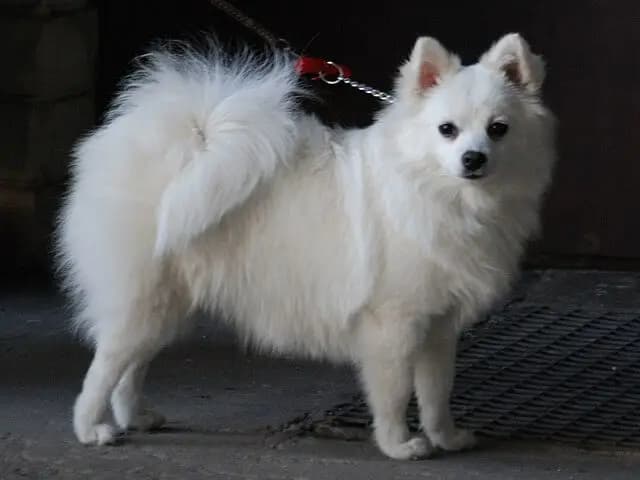
A Japanese Spitz looks like a miniature Samoyed, but it doesn't need a sled to be happy—it needs you. While it may announce every mail carrier with the typical Spitz seriousness, it will immediately curl up again as your cheerful shadow afterward. You aren't getting a stubborn Nordic worker, but an adaptable optimist who just wants to be wherever you are.
With his bright white, thick mane and his cheerful smile, the Japanese Spitz steals the show. Its square build, bushy tail carried proudly over its back, and bright, dark eyes give it the classic Spitz appearance. There is no distinction between performance and show lines in this breed as they are primarily bred as companion dogs. The FCI lists the Japanese Spitz in Group 5: Spitz and dogs of the original type, Section 5: Asian Spitz and related breeds.
The Japanese Spitz is a lively and cheerful dog who is known for loving and bonding closely with his people. He is a real “people dog” and loves being close to his people, whether playing, going for a walk or just cuddling on the sofa. He is a wonderful family dog who gets along well with children and generally has a loving and patient nature. Despite its size and cute appearance, the Japanese Spitz is a brave dog that is not afraid to protect his family if he believes they are threatened. That's why he is also a good watchdog, warning his people about strangers or unusual noises. The Japanese Spitz is an active dog that loves to play and exercise. He is not hyperactive, but he needs daily exercise and mental stimulation to be happy and balanced. He learns quickly and is always ready to try new tricks learn or participate in dog sports such as agility. Although he is an active dog, he also has a calm side and can relax well if he has had enough exercise and activity. One of the best features of the Japanese Spitz is its adaptability. He can adapt well to different lifestyles and environments as long as he gets enough love, care and attention. Although he is a robust and healthy dog, he should be kept as a house dog as he needs close contact with his people and does not like to be left alone. With proper introduction and training, the Japanese Spitz can learn to stay alone for short periods of time, but he should not be left alone for long periods of time or he will become unhappy and stressed. The Japanese Spitz does not typically exhibit strong hunting behavior, but can respond to moving objects such as balls or Frisbees. He may also have a tendency to chase birds or squirrels in the park, but with proper training this behavior can be controlled. Overall, the Japanese Spitz is a happy, loving and loyal companion dog that fits well into a family and is a loyal friend and protector. His intelligence, cheerful nature and adaptability make him a wonderful companion for many different people and lifestyles.
| Watchfulness Occasionally alerts but is fundamentally open. | Low |
| Openness to Strangers Warms up quickly and is generally welcoming. | Friendly |
| Hunting or Herding Drive Barely any prey drive — small animals trigger nothing. | Very low |
Fun Fact!
Did you know that the Japanese Spitz is often called the “Smiley Dog” because of its cheerful and loving personality?
The Japanese Spitz is a small, barking dog that needs exercise and activity.
The Japanese Spitz is an adaptable dog that can be kept well in both the city and the country. They are very people-oriented and generally get along well with children and other people ust out. Their intelligence and friendly nature make them a good choice for families. They are alert and can be good guard dogs, but are not aggressive.
Lives for its family — the born family companion.
Extraordinarily patient and loving — a true family dog.
Actively enjoys the company of other dogs.
Small space, noise, lots of people — no problem at all.
Owning a dog is a privilege, but it's also a real responsibility. Before you bring one into your life, be honest with yourself about the commitment it takes.
The Japanese Spitz is an intelligent dog that enjoys learning and challenges. Early socialization and consistent, positive training methods are important for this breed. They respond well to rewards and positive reinforcement. As with all dog breeds, Japanese Spitz can develop inappropriate behavior if they don't get enough exercise or mental stimulation. Dogs of this breed can also be prone to developing obsessive behavior around balls or other toys if not properly trained and occupied. It is therefore important to find a good balance between playtime and rest periods and to teach the dog to relax sometimes. It is also important to teach the Japanese Spitz frustration tolerance and impulse control as they can sometimes have a tendency to become agitated and overconfident.
A balanced and nutrient-rich food is crucial for the health and well-being of your Japanese Spitz. Exact feeding recommendations may vary depending on the dog's age, weight and activity level. It is always advisable to discuss feeding recommendations and needs with the breeder and veterinarian. When it comes to grooming, the Japanese Spitz requires regular grooming due to its thick, double-layered coat. It usually loses its undercoat heavily twice a year, while moderate shedding can be expected the rest of the year. Regular brushing helps prevent tangles and keeps the coat healthy and clean. Despite its thick fur, the Japanese Spitz copes well with the climate in Germany.
| Care Level Regular brushing and occasional professional grooming. | Moderate |
| Exercise Needs Needs 1–2 hours of real exercise daily. | Active |
| Shedding Hair everywhere, always — no white clothing survives. | Very heavy |
| Trainability Willing to learn with clear rules and regular training. | Balanced |
Our experts are still reviewing this information. Spotted something wrong? Email us at info@honestdog.de.
Solid
Health grade
In the Japanese Spitz, the focus is primarily on musculoskeletal issues, particularly patellar luxation (PL) and hip dysplasia (HD). The Verein für Deutsche Spitze e.V. mandates an examination for patellar luxation (PL) for breeding approval, allowing only dogs with grades PL 0–1 to be used for breeding. A health-conscious breeder additionally has the hips examined for hip dysplasia (HD). Before buying a puppy, ask to see the official test results of both parents to minimize the risk of joint diseases in your dog.
Grade is relative to other breeds — AI-assisted and editorially reviewed.
Methodology and data: HonestDog Dog Breed Health Report 2026
What matters most for this breed
Tap any item to see details.
With joint-friendly rearing and regular eye care, you can do a lot to ensure your dog stays healthy and active for a long time.
Responsible breeders are required to test their breeding dogs for patellar luxation (PL) with a threshold of PL 0–1 and additionally have an examination for hip dysplasia (HD) performed.
Note: This health overview is AI-assisted and editorially reviewed. It is for orientation only and does not replace veterinary advice.
What matters most for this breed — what's common, how much it affects the dog's life, and how to protect yourself as a buyer.
Tap a body region to see the inherited conditions linked to it.
The three most important risks
Pick a region on the map to explore other areas.
Tier 1 reflects the tests Verein für Deutsche Spitze e.V. actually mandates. Tiers 2 and 3 show how responsible breeders go beyond.
Club standard. Verein für Deutsche Spitze e.V. requires these tests for breeding approval. Ask any reputable breeder for the results.
Not health tests, but required for breeding: the club asks for these results too. They don't count toward the risks or the rating.
DNA-Identitätsnachweis
Required by Verein für Deutsche Spitze e.V.
Acceptable result: DNA-Lagerung nebst DNA-Karte nach ISAG 2006-Standard
Wesensbeurteilung
Required by Verein für Deutsche Spitze e.V.
Acceptable result: Erfüllung der Mindestanforderungen oder bestandene Begleithundeprüfung
No entries in this tier.
Note: This health overview is AI-assisted and editorially reviewed. It is for orientation only and does not replace veterinary advice.
A Japanese Spitz costs around ~€170 per month (€90 – €310, depending on your setup). The first year adds up to roughly ~€4,820 including purchase, equipment and puppy school; across the dog's life (13.5 years) it comes to about ~€29,750.
With surgery cover, running costs come to about ~€160 per month — in return, your share of a major operation drops from several thousand euros to around 20 percent.
Per month
~€170
In the first year
~€4,820
Across the dog's life
~€29,750
Estimated purchase price from a breeder: €1,500 – €2,500
Estimate at a mid-range setup (suburban, dry food, 1–2 hours of daily exercise), average German prices, as of July 2026.
The Japanese Spitz, as the name suggests, originally comes from Japan and has been recognized as an independent breed since 1948. This breed was developed in the 1920s by importing white large Spitz from Northeast Asia and later white medium Spitz from Europe and crossing them with each other. The aim was to breed a beautiful, robust and manageable companion dog that had the attractive appearance of the larger Spitz breeds, but in a smaller, easier to care for size. The Japanese Spitz enjoys great popularity in its home country and increasingly worldwide.
The Japanese Spitz was bred to be a companion dog with a friendly nature.
Japan
1920
At home and in family life, owners usually describe the Japanese Spitz as a very affectionate, cheerful and easygoing companion. Many owners appreciate how adaptable it is: it does just as well in a city apartment as in a house with a yard, as long as it is closely involved in daily life. Because its hunting drive is very low to nearly nonexistent, it usually gets along fine with children and other pets in the household – cats included.
Because it bonds so strongly with its people, however, being left alone is considered one of the biggest challenges. Owners regularly stress that Japanese Spitz need to learn to be alone gently and in small steps from puppyhood. If they are left isolated for many hours, they quickly tend toward stress, separation insecurity or frustration barking.
Although it is compact and very charming to look at, it is by no means just a lap dog. Owners point out that outdoors it is surprisingly keen to run and active. With something else to keep it busy, it will tolerate a quieter day now and then, but it visibly thrives on long walks, hikes or games that give it something to do.
Sources:japanspitze-vom-buchenblick.dezooroyal.demit-tier.dereddit.comedelweiss-vom-buchenbach.jimdoweb.com
On training and temperament, experienced owners highlight how quickly the Japanese Spitz picks things up and how eager it is to work with you. It usually learns commands and tricks in no time and is easy to guide with positive reinforcement and playful motivation. Its sensitive nature, however, makes it react badly to pressure or harshness, so patience and friendly consistency are needed.
Alertness and barking are a central topic in owner accounts. Compared directly with the European spitz types, the Japanese Spitz is considered more moderate in how vocal it is, but it remains a watchdog with a strong urge to alert. It reliably sounds off at unfamiliar noises or at the front door. Many owners stress that without early training of this alert barking and clear quiet zones, a habit of yapping can develop quickly.
Many Japanese Spitz also meet strangers with the reserve typical of spitz breeds at first. They don't immediately seek out every visitor, but with good socialization they stay neutral and friendly. In dog sports such as agility or trick dog training, its love of movement combined with mental alertness often proves to be a real advantage.
Sources:zooroyal.demit-tier.dezoomalia.dedogforum.dereddit.com
When it comes to grooming, the Japanese Spitz pleasantly surprises many new owners, but it also brings seasonal challenges. Owners often mention a self-cleaning effect: once dry, dirt and mud usually fall out of the dense coat on their own or brush out easily. The much-dreaded typical "doggy smell" is also rarely an issue with this breed.
Experienced owners still warn about the work during shedding season, though: twice a year, the Japanese Spitz loses huge amounts of fine undercoat. During this phase, thorough daily brushing is a must, because otherwise the hair mats and the whole home ends up covered in fluff. Owners firmly reject shaving the coat, so as not to permanently damage its delicate texture.
On the whole, the breed is considered healthy and long-lived, but owners report a few recurring weak spots. These mainly include sensitive eyes, with occasional tear staining or a tendency toward misplaced eyelashes (distichiasis). Owners also point to a predisposition to tartar in smaller dogs and to patellar luxation, which is why careful breeder selection and regular dental care at home matter.
Sources:japanspitze-vom-buchenblick.demit-tier.deedelweiss-vom-buchenbach.jimdoweb.comzoomalia.dereddit.com
Paraphrased from real owner reports · translated from German
The Japanese Spitz is an adaptable dog that adjusts well to various lifestyles. Research the temperament, grooming needs, and space requirements before deciding.
The average life expectancy of a Japanese Spitz is 12-15 years. With proper care and regular vet visits, your dog can live a long, healthy life.
Japanese Spitz grooming requirements include regular brushing, nail trimming, and dental care. HonestDog provides detailed grooming tips for every breed.
The Japanese Spitz can be a great family dog. Proper training and socialization are key. HonestDog provides family suitability information for every breed.
The Japanese Spitz comes in these colors: White.
Showcase your kennel on HonestDog and reach families searching for a responsibly bred Japanese Spitz.