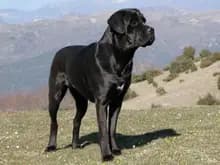
Cane CorsoSame FCI section
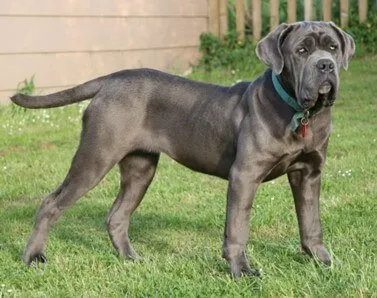
The Mastino Napoletano is a massive, uncompromisingly loyal, and silent guardian—bred in ancient Southern Italy to defend estates and villas through sheer presence and fearless intervention when necessary. An archaic heavyweight that gives everything for its family, but consistently ignores or rejects strangers.
How the health grade is calculated
Sources for required breeding screenings. Club für Molosser e.V.
Self-check
Answer 6 quick questions about your everyday life and see how well the Neapolitan Mastiff fits you — including an honest cost estimate per month, per year, and across the dog's lifetime.

At a glance
The essentials — key facts, traits, and health priorities — before you dive deeper.
Lifespan
8–10 yrs
Shoulder height
60–75 cm
Weight
50–70 kg
Practical
Temperament
Daily life
What matters most
Especially with a Neapolitan Mastiff, choosing the right breeder is the single most important decision you'll make. Serious breeders consistently test the parents for inherited conditions, prioritize healthy early socialization, and stay accountable long after handover. A cheap puppy without health screening tends to become the most expensive dog later on.
See HonestDog breeder standards →Colors & coat
The coat colors that occur in the Neapolitan Mastiff — including which ones fall outside the breed standard and which carry genetic risk.
Eye colors
 Brown
 Amber
Coat type
 Short
 Smooth
The real vibes check
A Mastino Napoletano is not a dog for the dog park; he is your family's personal bouncer. He spends most of the day seemingly asleep in his spot, but has every movement in the room exactly on his radar. You aren't buying a pet to play with, but an archaic guardian whose loyalty is unshakable—provided you earn his respect through calm, absolutely composed sovereignty.
The Neapolitan Mastiff is an impressive dog with a massive build and strong bones. He is a representative of the Molossians and belongs to FCI Group 2, Section 2.1: Mastiff type. Its size and powerful muscles are the result of its centuries of breeding as a guard dog and herding dog. Its impressive presence is highlighted by its characteristic, wide and massive head with pronounced skin folds and wrinkles. Its short, dense coat is close-fitting and very easy to care for. Although he can appear frightening, the Neapolitan Mastiff has a gentle and loving personality. His deep, expressive eyes reflect the gentleness and deep bond with his family. He radiates a calm and serenity that makes him a pleasant companion.
Despite its impressive size and strong build, the Neapolitan Mastiff is an extremely calm and balanced dog. He radiates a natural serenity and calm that is also transferred to his surroundings. He is not a dog that needs to be constantly in action, but rather enjoys simply being with his family, watching and protecting them. The Neapolitan Mastiff is a very people-oriented dog. He forms a deep bond with his family and is extremely loving and gentle towards them. At first he is often reserved and cautious towards strangers. However, he is not an aggressive dog and usually does not show unjustified aggressive behavior. Rather, he sees his job as protecting and looking after his family. He always behaves calmly and confidently. Despite his attachment to his people, the Neapolitan Mastiff also has an independent character. He is an intelligent dog who can do his tasks independently and does not constantly have to depend on his people. This makes him a pleasant companion who does not constantly demand attention. Since the Neapolitan Mastiff was originally bred as a guard and protection dog, it has a strong protective instinct and strong territorial behavior. This should always be taken into account when keeping this dog. He needs clear structures and consistent but loving training in order to become a pleasant family dog. He is very trainable and with the right training he can learn many different tasks and is an excellent guard and protection dog. Despite its protective instinct, the Neapolitan Mastiff generally does not show strong hunting or prey-catching behavior. He can integrate well into a household with other pets as long as they are viewed as part of his family from the start. Although the Neapolitan Mastiff enjoys being with his family, he can also learn to stay alone for short periods of time. He is not a dog that needs constant entertainment and activity, but can also keep himself busy. However, he should not be left alone all the time as he loves his people very much and needs their company.
| Watchfulness Strong territorial instinct — may actively confront intruders. | Very high |
| Openness to Strangers Careful around unfamiliar people — thaws slowly. | Cautious |
| Hunting or Herding Drive Barely any prey drive — small animals trigger nothing. | Very low |
Fun Fact!
Did you know that the Neapolitan Mastiff is one of the oldest dog breeds in the world and its history can be traced back to ancient times?
Many Neapolitan Mastiffs suffer from extreme breeding traits, e.g.: ectropion with chronically inflamed conjunctiva, problems in the musculoskeletal system and inflammation due to excessive folding of the skin.
The Neapolitan Mastiff can live well in both a city and the country as long as he gets enough exercise and mental stimulation. He is a very loving and family-oriented dog who gets along well with children, although his size means he is a better fit for families with older children. He also gets along well with other pets as long as he is used to them from an early age.
Loves family life and thrives in a group.
Takes boisterous and affectionate children in its stride.
Usually gets on fine with other dogs.
Can manage in the city, but only with very active owners.
Owning a dog is a privilege, but it's also a real responsibility. Before you bring one into your life, be honest with yourself about the commitment it takes.
Raising a Neapolitan Mastiff requires patience and consistency. This breed is intelligent and independent, meaning they can be stubborn at times. However, they respond well to positive reinforcement and reward-based training methods. They don't tend to be "ball junkies" but rather enjoy quieter activities and exercises that challenge them mentally. It is important that you socialize your Neapolitan Mastiff well from the start and teach him to appropriately control his size and strength. He should also learn to tolerate frustration and control his impulses. A well-trained Neapolitan Mastiff makes a wonderful companion and guard dog, defending his home and family vigorously but without aggression.
As a large and active dog, the Neapolitan Mastiff requires a balanced and nutritious diet. A diet high in high-quality protein and healthy fats is ideal. It is important to control portions to avoid obesity, which can lead to health problems. The Neapolitan Mastiff has a short and dense coat that is relatively easy to care for. It has no undercoat, so it is well adapted to the climate in Germany and can cope well in both the warmer and colder months. Regular brushing can help keep his coat clean and healthy and reduce the amount of hair he loses.
| Care Level Regular brushing and occasional professional grooming. | Moderate |
| Exercise Needs Enjoys daily movement but isn't a sports dog. | Moderate |
| Shedding Hair everywhere, always — no white clothing survives. | Very heavy |
| Trainability Has its own ideas and will test limits. | Strong-willed |
Our experts are still reviewing this information. Spotted something wrong? Email us at info@honestdog.de.
Elevated risks
Health grade
In the Neapolitan Mastiff, there are clear breed-specific risks for dilated cardiomyopathy as well as severe joint problems such as hip dysplasia (HD) and elbow dysplasia (ED), complemented by susceptibilities to skin fold dermatitis, ectropion / entropion, and prolapse of the gland of the third eyelid (Cherry Eye). The Club für Molosser e.V. therefore strictly mandates cardiological findings for dilated cardiomyopathy as well as X-ray examinations for HD (maximum HD C, mated only with A or B) and ED (maximum ED 2). A health-conscious breeder additionally pays attention to eyes and skin. Have the official findings for HD, ED, and dilated cardiomyopathy of the parent animals presented to you and ask about the status regarding ectropion / entropion.
Grade is relative to other breeds — AI-assisted and editorially reviewed.
Methodology and data: HonestDog Dog Breed Health Report 2026
What matters most for this breed
Tap any item to see details.
You should ensure a very joint-friendly upbringing and regularly care for the skin folds and eyes to prevent chronic inflammation in good time.
Responsible breeders have their dogs screened for hip dysplasia (HD), elbow dysplasia (ED), and dilated cardiomyopathy, and also pay attention to ectropion / entropion as well as skin fold dermatitis.
Note: This health overview is AI-assisted and editorially reviewed. It is for orientation only and does not replace veterinary advice.
What matters most for this breed — what's common, how much it affects the dog's life, and how to protect yourself as a buyer.
Tap a body region to see the inherited conditions linked to it.
The three most important risks
Pick a region on the map to explore other areas.
Tier 1 is the core standard: the tests Club für Molosser e.V. requires, plus further tests from the recommended health standard for this breed. Tiers 2 and 3 show how responsible breeders go beyond.
Core standard. Tests marked “Club standard” are required by Club für Molosser e.V. for breeding approval; the others are part of the recommended health standard for this breed. Ask any reputable breeder for the results.
Not health tests, but required for breeding: the club asks for these results too. They don't count toward the risks or the rating.
No entries in this tier.
Note: This health overview is AI-assisted and editorially reviewed. It is for orientation only and does not replace veterinary advice.
A Neapolitan Mastiff costs around ~€240 per month (€120 – €470, depending on your setup). The first year adds up to roughly ~€7,190 including purchase, equipment and puppy school; across the dog's life (9 years) it comes to about ~€30,090.
With surgery cover, running costs come to about ~€250 per month — in return, your share of a major operation drops from several thousand euros to around 20 percent.
Per month
~€240
In the first year
~€7,190
Across the dog's life
~€30,090
Estimated purchase price from a breeder: €2,500 – €4,500
Estimate at a mid-range setup (suburban, dry food, 1–2 hours of daily exercise), average German prices, as of July 2026.
HonestDog Concierge
We currently have no breeders for this breed who have passed our verification. Create your short buyer profile: we'll set up your search alert, review a possible source and email you within 28 days.
In some German federal states, special regulations apply to Neapolitan Mastiff as a listed or dangerous dog. Depending on your location, this may include a temperament test, permit or other official requirements, leash and muzzle obligations, and higher insurance or tax costs. Always check with your local authorities.
Full guide to restricted-breed ownership in Germany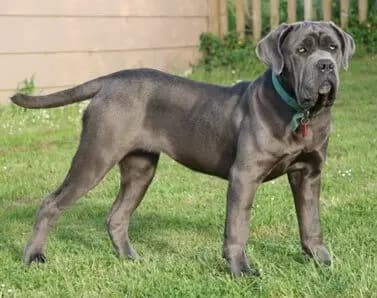
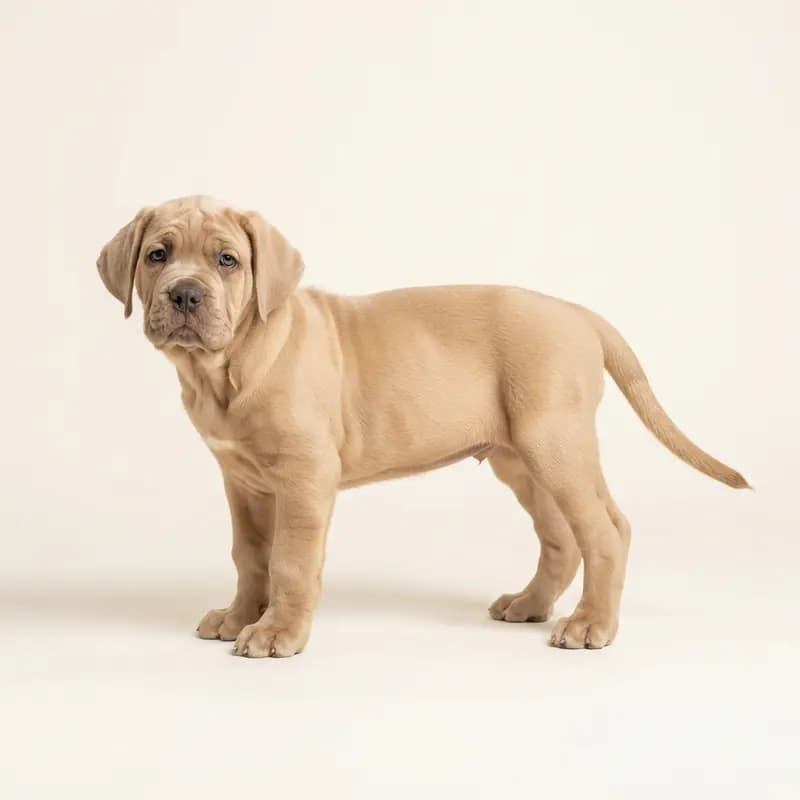
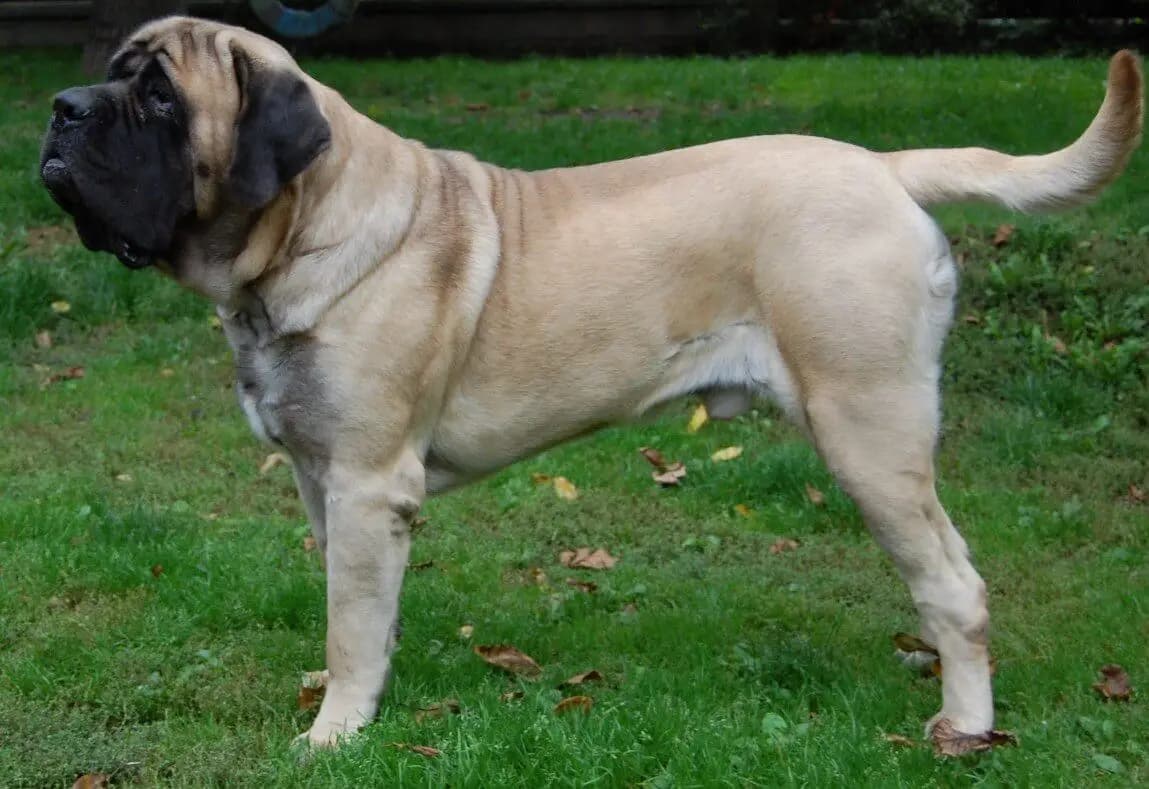
 Illustrative image
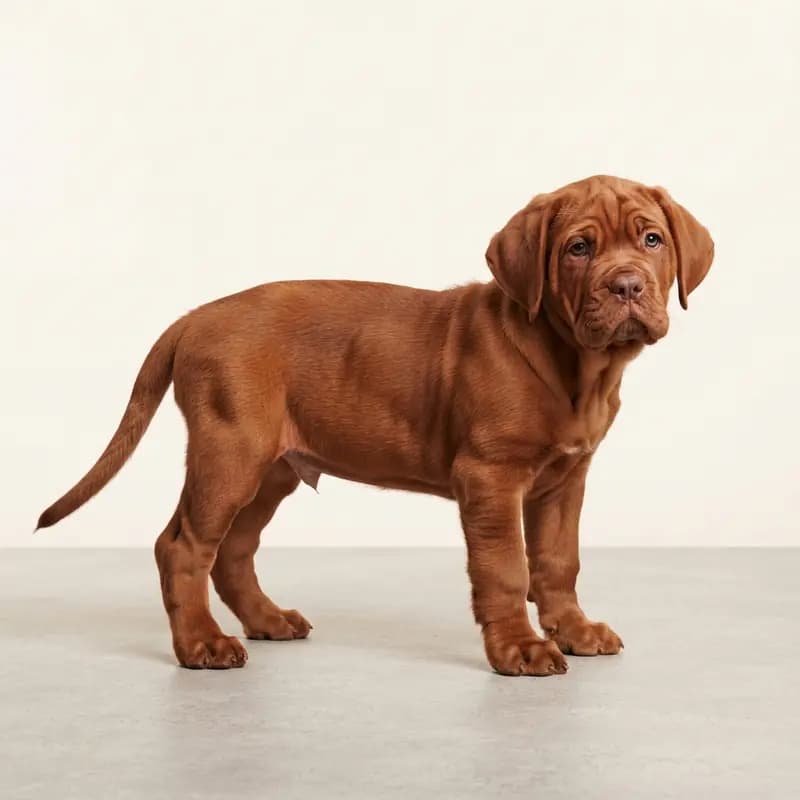
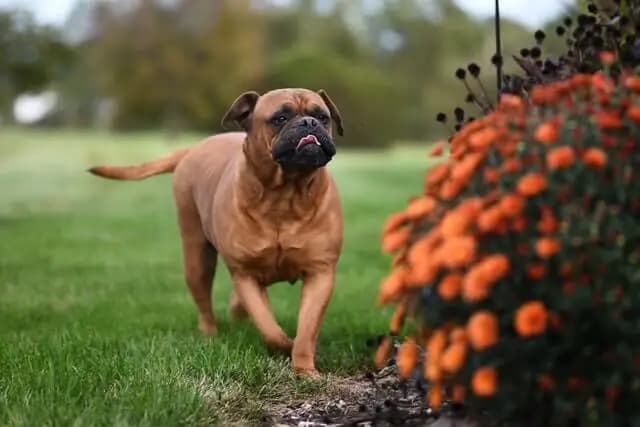
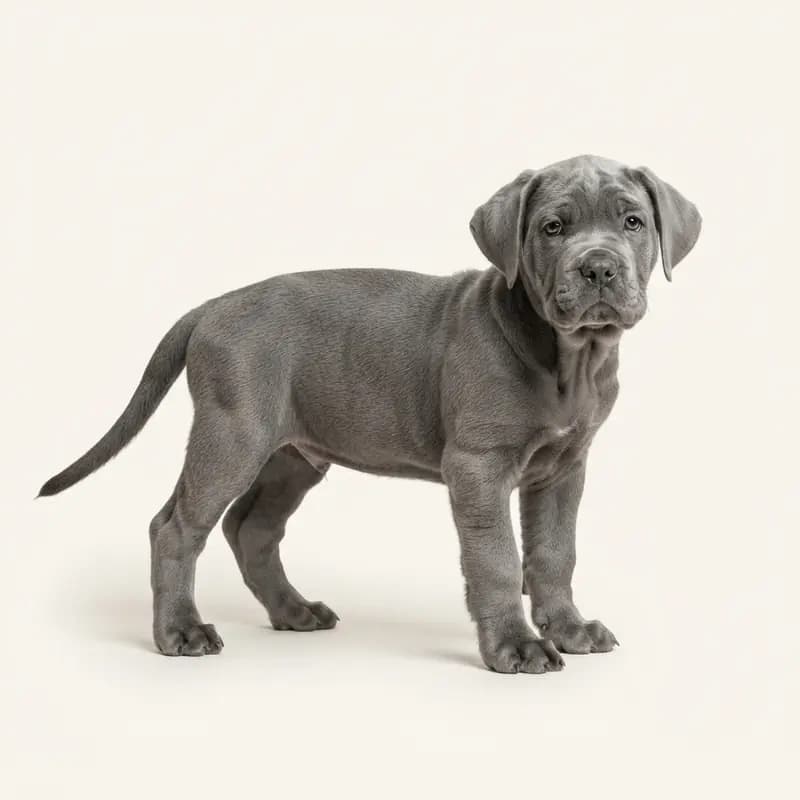 Illustrative image
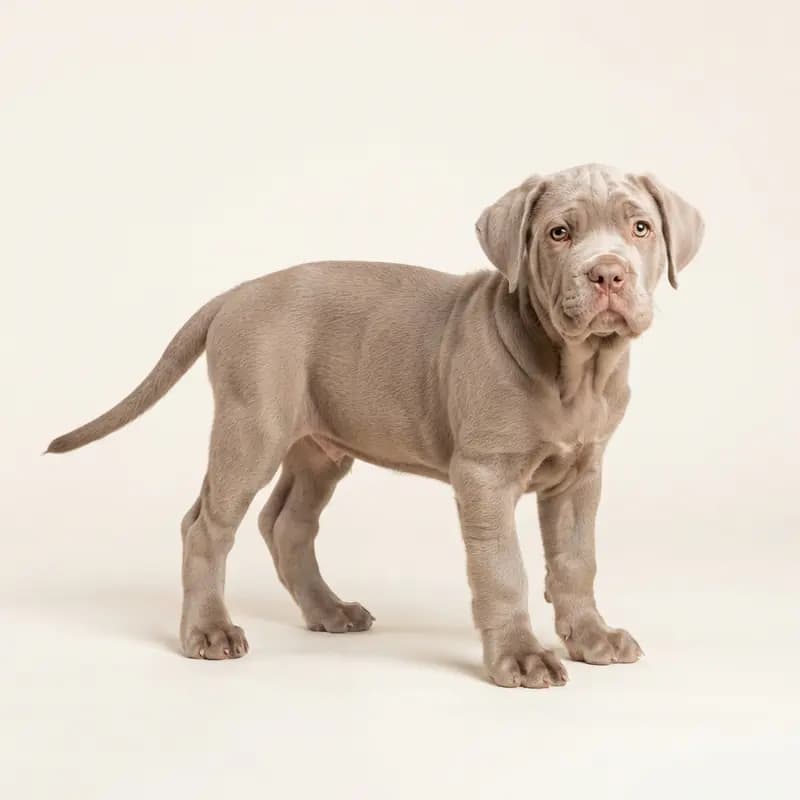
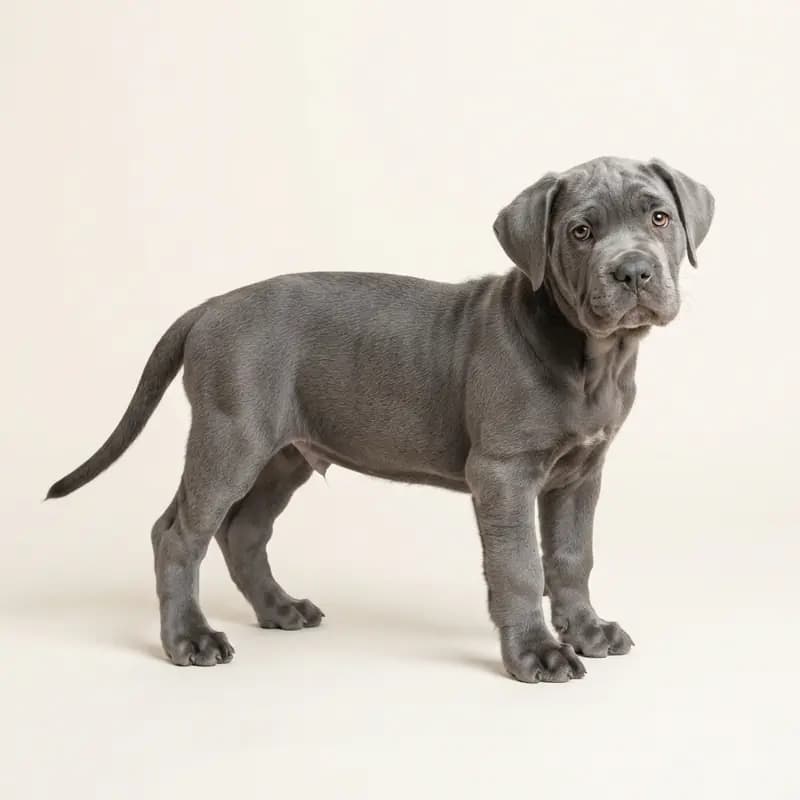 Illustrative image
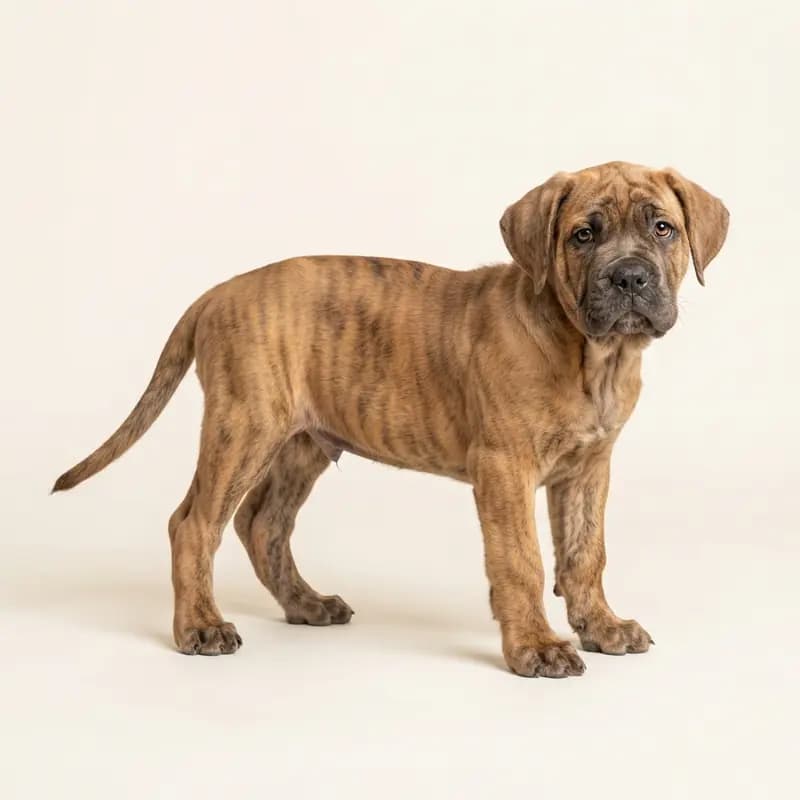
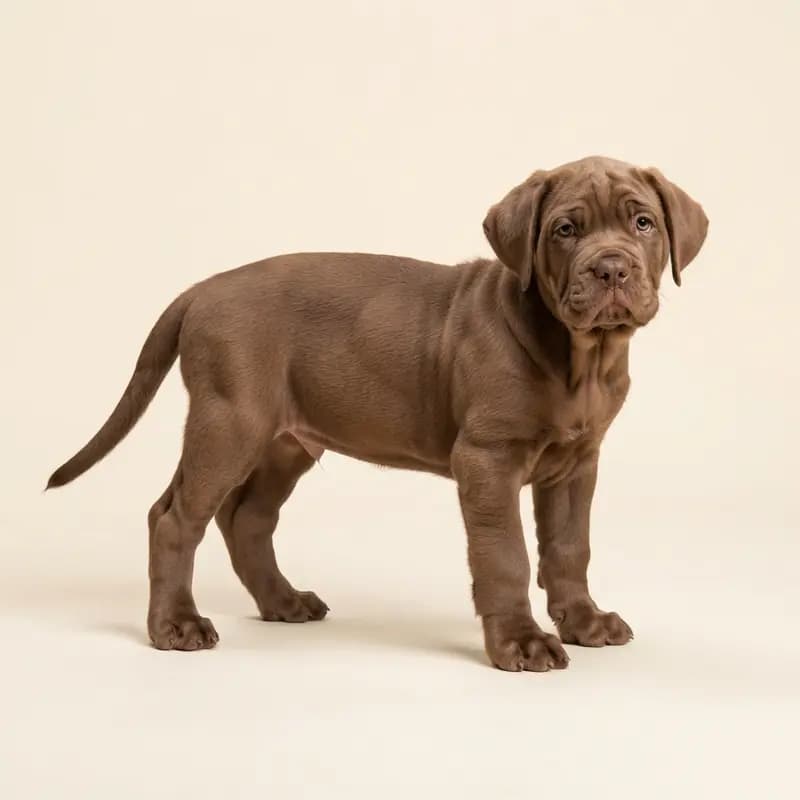 Illustrative image
The history of the Neapolitan Mastiff goes way back into antiquity. He originally comes from Italy, more precisely from the region around Naples, where he was used as a guard and protection dog. His ancestors were the powerful war dogs of the ancient Romans, which they took with them to war and fought as gladiators in the arena. Over time, the role of the Neapolitan Mastiff changed. He was used less as a war dog and more as a protection dog for house and yard. In the Middle Ages, he served as a bodyguard for nobles and merchants, protected by his commanding presence and unwavering courage. The breed was recognized as a separate breed by the FCI in 1949. Despite its long history and centuries of breeding as a working dog, the Neapolitan Mastiff is now known more as a loving family dog and loyal companion. He has found a permanent place in the hearts of many dog lovers and is valued above all for his loyalty, calm temperament and deep bond with his family.
The Neapolitan Mastiff was used as a guard and protection dog, known for its imposing appearance and protective instinct.
Italy
Antike
Owners often describe the Neapolitan Mastiff as a gentle giant and the calm center of the household. Many report that these dogs radiate remarkable composure, have a high threshold for stimulation, and are very affectionate, almost cuddly, and deeply loyal within their own family. Indoors they are usually surprisingly calm and unobtrusive. Even so, experienced owners stress that you always need to be aware of their sheer mass and strength; despite their good nature, caution is called for around smaller children, since the dogs can simply underestimate their own weight in play.
On the other hand, their strong guarding drive and protective behavior require constant, attentive management. Owners repeatedly describe how visitors or strangers on the property are watched with deep suspicion and reserve. A securely fenced yard and clear rules for visitors are considered basic requirements in the community. Many owners also point out, with a wink, the practical challenges of daily life: heavy drooling after drinking and the urge of these heavy dogs to snuggle right up against their people call for a good deal of patience.
Sources:yorkie-hundeforum.comtierwelt.chmolosserforum.detackenberg.deeinfachtierisch.de
On training and handling, owners and trainers agree that the Neapolitan Mastiff needs calm, unshakable, and completely consistent leadership. Many owners describe the dog as a very independent thinker with a real stubborn streak: it follows commands willingly only when it fully respects its person and sees a point in the action. According to owner accounts, pressure, sharpness, or harshness quickly cause this breed to shut down inside or lose trust for good.
Forums especially often highlight how crucial early, careful socialization is. With an adult weight of up to 70 kilograms, loose-leash walking is not optional but a necessity, since in an emergency the dog could hardly be held physically. Owners strongly advise practicing calm encounters with unfamiliar dogs and people from puppyhood on. Owners unanimously do not recommend the breed for beginners, since mistakes made in adolescence are hard to correct later because of the protective instinct and the dog's sheer physical power.
Sources:tackenberg.deeinfachtierisch.demolosserforum.defressnapf.de
Health and physical soundness are discussed at length among owners, often with noticeable worry. Because of exaggerated type and deliberate breeding for extreme mass and wrinkles, many dogs struggle with specific problems. Owners regularly report joint problems such as hip and elbow dysplasia and early-onset arthritis, which is why stairs and excess weight should be strictly avoided. The breed's susceptibility to bloat also calls for careful feeding routines with long rest periods.
A recurring point in grooming reports is the intensive care the skin and eyes need. The deep skin folds have to be checked regularly and kept dry to prevent inflammation and infection. Eye problems such as droopy eyelids or cherry eye are also mentioned often. Many owners therefore strongly urge future owners to choose puppies only from breeders who value a moderate, functional build, and to set aside money for potential vet bills from the start.
Sources:einfachtierisch.derudel.teamgesundehundeforum.comtierisch-verliebt.depurina.de
Paraphrased from real owner reports · translated from German
The Neapolitan Mastiff is an adaptable dog that adjusts well to various lifestyles. Research the temperament, grooming needs, and space requirements before deciding.
The average life expectancy of a Neapolitan Mastiff is 8-10 years. With proper care and regular vet visits, your dog can live a long, healthy life.
Neapolitan Mastiff grooming requirements include regular brushing, nail trimming, and dental care. HonestDog provides detailed grooming tips for every breed.
The Neapolitan Mastiff can be a great family dog. Proper training and socialization are key. HonestDog provides family suitability information for every breed.
The Neapolitan Mastiff comes in these colors: Black, Grey, Blue, Brown, Fawn, Red, Isabella, Brindle.
Showcase your kennel on HonestDog and reach families searching for a responsibly bred Neapolitan Mastiff.