Finnish SpitzSame FCI section
The Norrbottenspitz is an agile, alert Nordic hunting spitz—bred to track down game birds in dense forests and bark persistently until the hunter arrives. A clever lightweight with a tremendous work ethic.
Self-check
Answer 6 quick questions about your everyday life and see how well the Norrbottenspitz fits you — including an honest cost estimate per month, per year, and across the dog's lifetime.
At a glance
The essentials — key facts, traits, and health priorities — before you dive deeper.
Lifespan
12–15 yrs
Shoulder height
40–47 cm
Weight
11–17 kg
Practical
Temperament
Daily life
What matters most
Especially with a Norrbottenspitz, choosing the right breeder is the single most important decision you'll make. Serious breeders consistently test the parents for inherited conditions, prioritize healthy early socialization, and stay accountable long after handover. A cheap puppy without health screening tends to become the most expensive dog later on.
See HonestDog breeder standards →Colors & coat
The coat colors that occur in the Norrbottenspitz — including which ones fall outside the breed standard and which carry genetic risk.
Eye colors
 Brown
Coat type
 Short
 Double coat
The real vibes check
Don't let the cute, fox-like appearance fool you—under that soft coat lies a highly specialized hunter who will loudly report every bird in the vicinity to you. You aren't getting a quiet lap dog, but an alert forest worker who prefers to view life as a shared outdoor adventure.
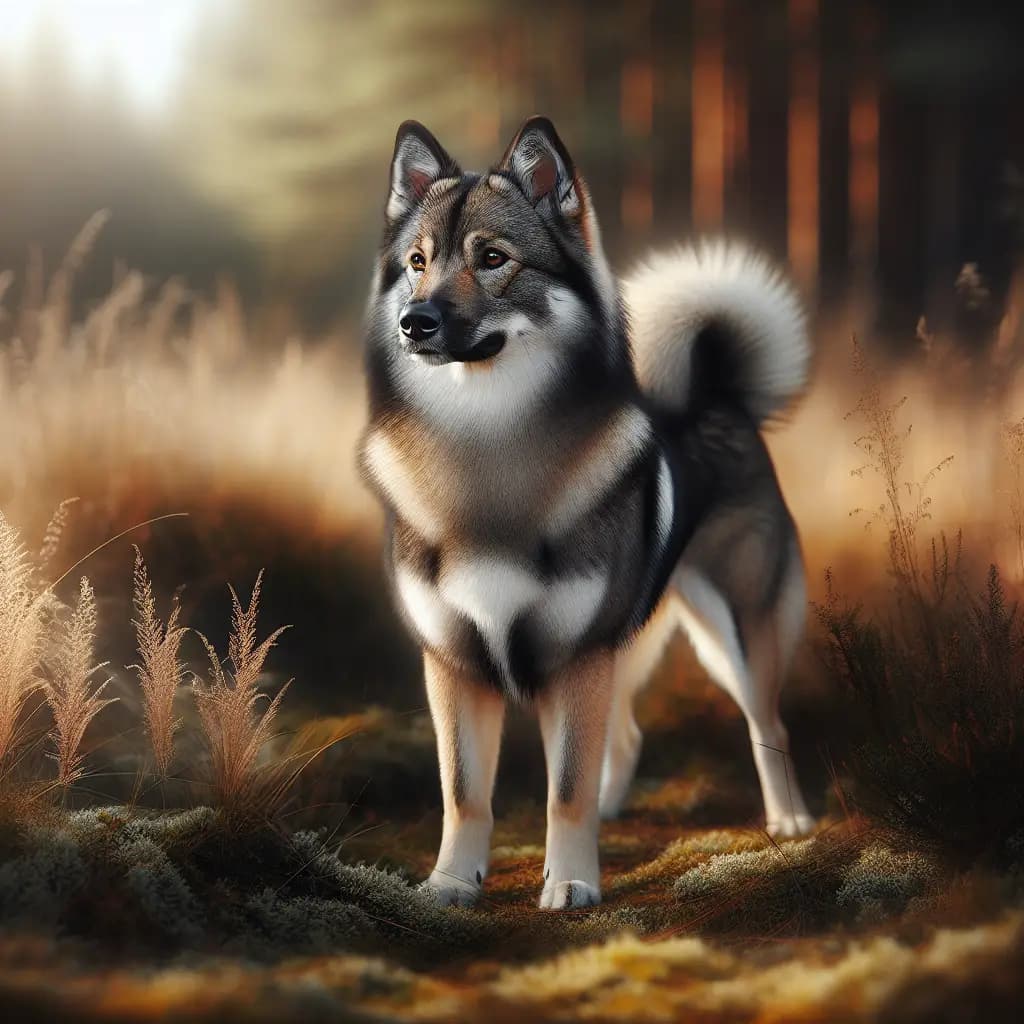
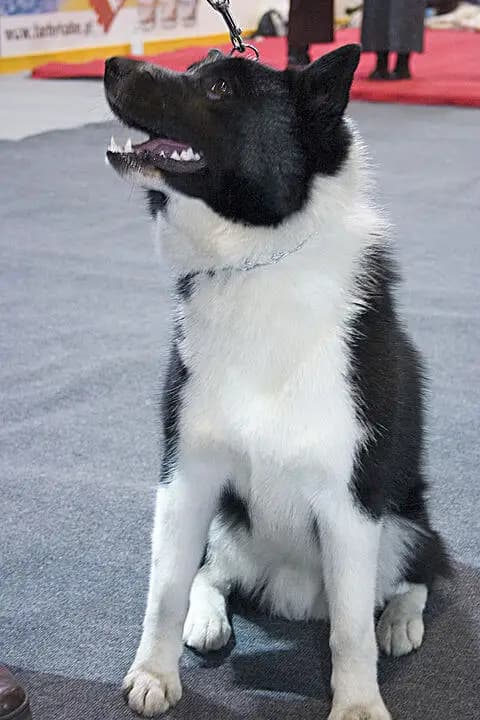
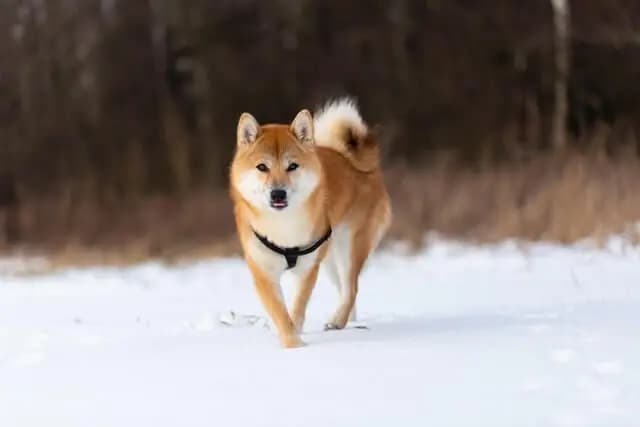
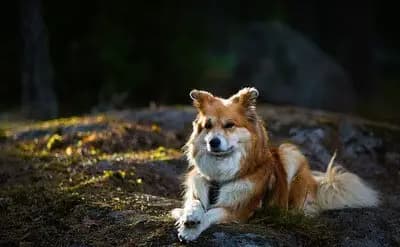
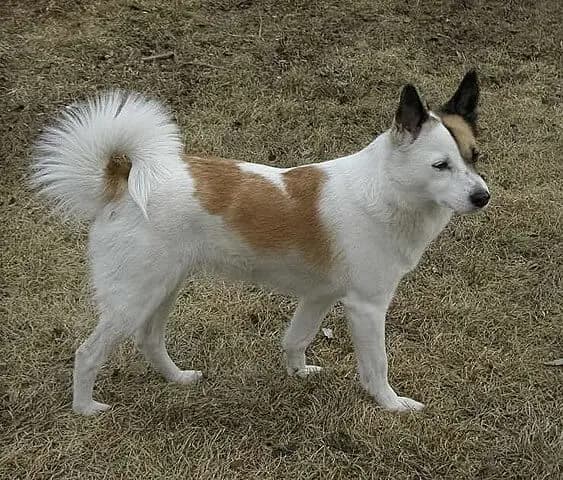
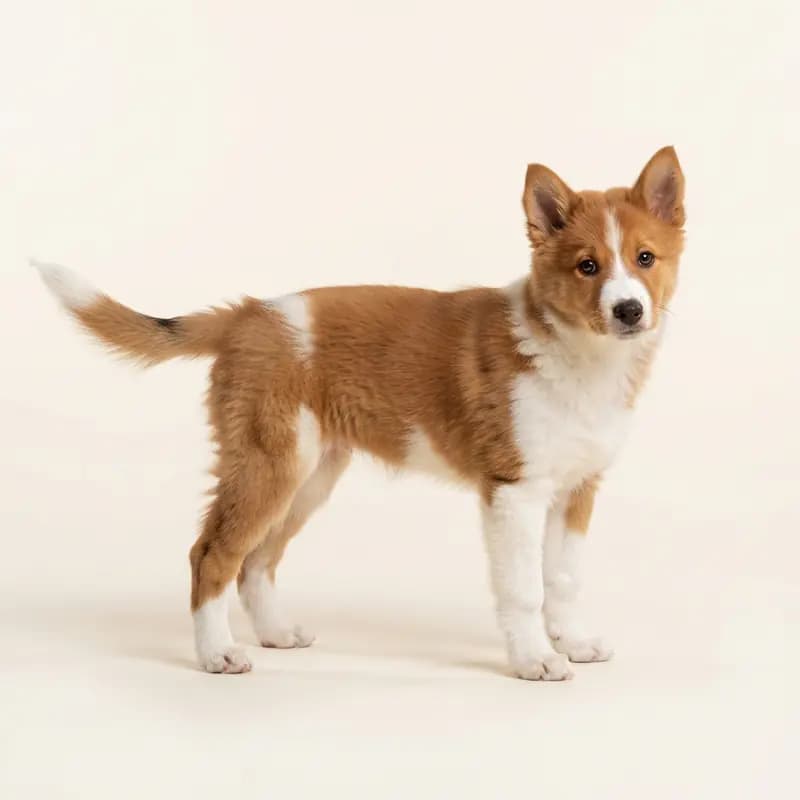
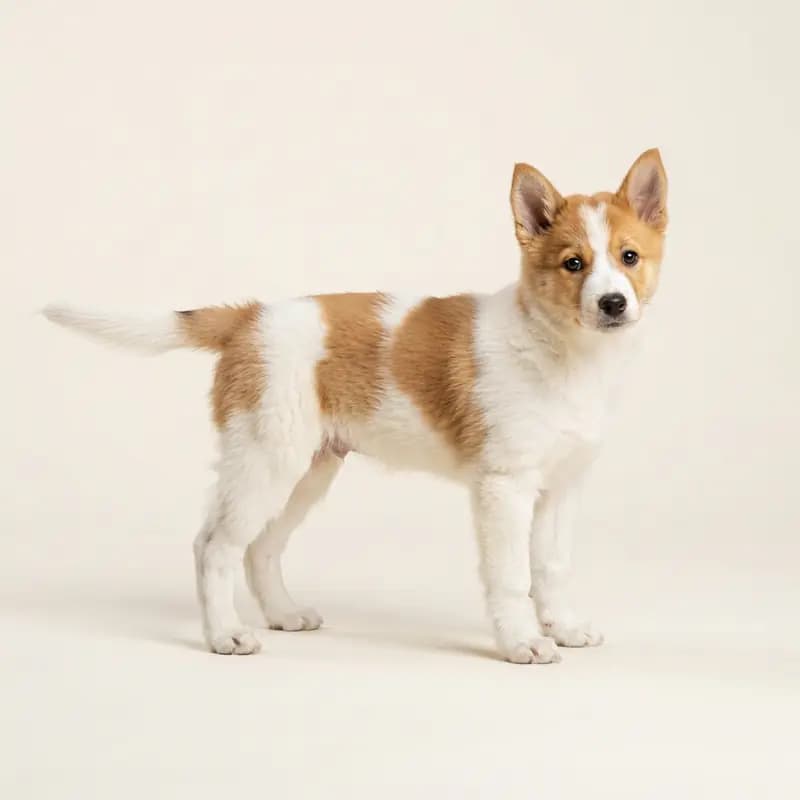
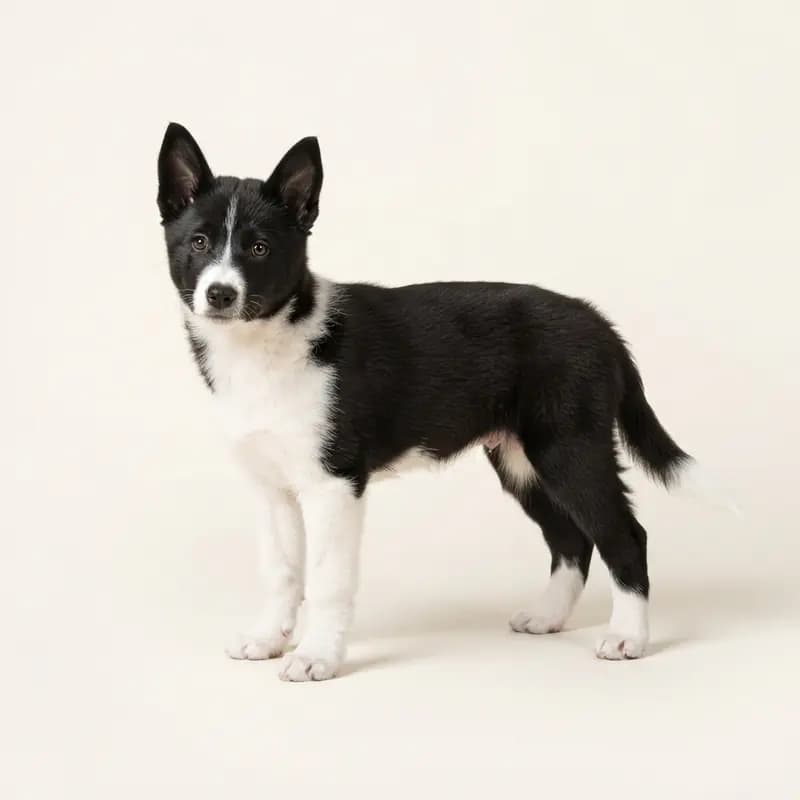
The Norrbottenspitz is a medium-sized dog native to northern Sweden. Its physique is strong and compact, with pronounced muscles and strong bones. The head is wedge-shaped with a pronounced forehead and well-developed cheeks. The ears are medium-sized, erect and pointed, giving the dog an attentive and lively expression. The Norrbottenspitz belongs to FCI Group 5: Spitz and Urtype dogs, Section 2: Nordic hunting dogs.
The Norrbottenspitz is a spirited and lively dog with a natural curiosity and alertness that make him an excellent watchdog. He is extremely people-oriented and enjoys the company of his family. Despite his small size, he is quite independent and can cope well with times alone as long as these are not excessively long. The Norrbottenspitz's tendency to hunt is a character trait that must be taken into account when keeping this dog. He has a strong prey drive and can react accordingly to small animals he sees outside. However, appropriate socialization and training can help control this behavior. As an original working dog, the Norrbottenspitz is very active and needs a lot of exercise every day. He enjoys long walks, games and activities that challenge both his body and mind. However, despite his active temperament, he is a ru at home A friendly and balanced companion who is looking for closeness to his family. Another notable feature of the Norrbottenspitz is its high intelligence. He learns quickly and is always ready to take on new tasks and challenges. This ability, combined with his natural curiosity, makes him an excellent candidate for various types of dog sports and training. The Norrbottenspitz is a loyal and reliable companion, ready to protect its territory and family. He is alert and attentive and will immediately raise the alarm if he notices anything suspicious. However, despite his alertness, he is not an overly barking dog and will only bark when he believes it is necessary. Overall, the Norrbottenspitz is an intelligent, active and loyal dog that proves to be a loyal companion and reliable watchdog. It is best suited to active people who can exercise both mental and physical stress. With proper training and socialization, the Norrbottenspitz can be a wonderful family member and a great companion.
| Watchfulness Reports unusual activity but stays controlled. | Moderate |
| Openness to Strangers Warms up quickly and is generally welcoming. | Friendly |
| Hunting or Herding Drive Mild interest in movement and small animals — easily managed. | Low |
Fun Fact!
Although the Norrbottenspitz was originally used to hunt small animals such as birds and rodents, it is known to also be able to hunt larger prey such as moose by barking to drive them in the direction of the hunters.
The Norrbottenspets is a small, slightly rectangular Spitz dog, well balanced, with sinewy and well-developed muscles. He is alert, with his head held high, fearless and extremely agile. He is calm, alert and attentive and has a friendly disposition.
Although originally a working dog, the Norrbottenspitz has proven to be quite adaptable to different living situations as long as its needs for exercise and mental stimulation are met. He can live in the city as long as he gets enough exercise and has regular access to safe places to run and play. The Norrbottenspitz is generally good with children and shows patience and kindness. However, as with any dog, interactions between dogs and small children should always be supervised. The Norrbottenspitz can also get along with other pets, including cats, especially if it has been socialized with them from an early age.
Lives for its family — the born family companion.
Extraordinarily patient and loving — a true family dog.
Actively enjoys the company of other dogs.
City-appropriate with enough exercise and stimulation.
Owning a dog is a privilege, but it's also a real responsibility. Before you bring one into your life, be honest with yourself about the commitment it takes.
The Norrbottenspitz is an intelligent, eager-to-learn dog that responds well to structured and positive training. He is an active dog and therefore needs a task or goal to be happy and balanced. With its high intelligence and willingness to please, the Norrbottenspitz can perform well in a variety of canine activities and sports, including agility, obedience and Rally-O. It is important that when training your Norrbottenspitz you not only challenge his body, but also his mind. Intelligence games and puzzles can be a good way to challenge him mentally. Make sure you also give him enough rest time, as dogs, like humans, need rest to recover from mentally demanding activities. The Norrbottenspitz has a strong hunting instinct, so it is important to accustom him to different types of environmental stimuli from an early age and to teach him to ignore these stimuli. Good recall is essential and should be trained early on.
The Norrbottenspitz is an active dog and therefore requires a high-quality diet that meets its energy needs. A mix of high-quality dry or wet food and occasional fresh foods such as vegetables and lean meats can provide a balanced diet. When it comes to grooming, the Norrbottenspitz has a double coat with a dense undercoat and a hard, straight top coat. This helps it cope with the harsh weather conditions in its home region of Sweden and also makes it suitable for the climate in Germany. However, this dense undercoat means that he can shed heavily, especially during the coat change periods in spring and autumn. A regular Regular brushing helps keep the coat clean and tangle-free and reduces the amount of hair spread around the house.
| Care Level Minimal effort — occasional brushing and bathing. | Low-maintenance |
| Exercise Needs Needs several hours of serious exercise every day. | Very active |
| Shedding Regular shedding — dog hair on clothes is now normal. | Moderate |
| Trainability Willing to learn with clear rules and regular training. | Balanced |
Our experts are still reviewing this information. Spotted something wrong? Email us at info@honestdog.de.
Robust
Health grade
The Norrbottenspitz is considered an exceptionally robust and primitive breed with an extremely low genetic burden. Occasionally, eyes should be examined for hereditary defects such as cataracts or Progressive Retinal Atrophy (PRA) to keep breeding lines free from eye diseases. Since hardly any other breed-typical hereditary diseases are known, this dog is in outstanding health.
Grade is relative to other breeds — AI-assisted and editorially reviewed.
Methodology and data: HonestDog Dog Breed Health Report 2026
What matters most for this breed
Tap any item to see details.
With consistent preventative care, joint-friendly rearing, and regular eye check-ups, most of these dogs remain active and healthy well into old age.
Reputable breeders have the parents' knees, hips, and eyes tested and, due to the rarity of the breed, pay special attention to diverse bloodlines to minimize risks.
Note: This health overview is AI-assisted and editorially reviewed. It is for orientation only and does not replace veterinary advice.
What matters most for this breed — what's common, how much it affects the dog's life, and how to protect yourself as a buyer.
Tap a body region to see the inherited conditions linked to it.
The three most important risks
Pick a region on the map to explore other areas.
Tier 1 is the recommended health standard for this breed. Tiers 2 and 3 show how responsible breeders go beyond.
Recommended standard. These tests make up the recommended health standard for this breed — the baseline of any careful breeding program. Ask any reputable breeder for the results.
No entries in this tier.
Note: This health overview is AI-assisted and editorially reviewed. It is for orientation only and does not replace veterinary advice.
A Norrbottenspitz costs around ~€160 per month (€90 – €300, depending on your setup). The first year adds up to roughly ~€4,790 including purchase, equipment and puppy school; across the dog's life (13.5 years) it comes to about ~€29,250.
With surgery cover, running costs come to about ~€160 per month — in return, your share of a major operation drops from several thousand euros to around 20 percent.
Per month
~€160
In the first year
~€4,790
Across the dog's life
~€29,250
Estimated purchase price from a breeder: €1,500 – €2,500
Estimate at a mid-range setup (suburban, dry food, 1–2 hours of daily exercise), average German prices, as of July 2026.
 Illustrative image
 Illustrative image
 Illustrative image
The Norrbottenspitz, named after the Nordic region of Norrbotten in Sweden, has a long and storied past. Originally used as a hunting and herding dog, it played an important role in Swedish culture and history. This breed was almost extinct as modern hunting methods eliminated the need for such a dog. Fortunately, lovers of the breed made efforts to revive it, and in 1967 the Norrbottenspitz was officially recognized by the FCI as a separate breed.
The Norrbottenspitz was bred as a hunting dog for hunting birds and small animals in the Nordic forests.
Sweden
1600
Many owners describe the Norrbottenspets as an affectionate, cheerful and remarkably adaptable housemate in family life. Indoors, with enough exercise, it's described as calm, cuddly and deeply attached to its people, but outdoors its high energy level comes alive. In owners' experience these dogs get along well with children and make enthusiastic playmates, as long as their personal space is respected.
Owners often stress, however, that the breed is only partly suited to life in a cramped or thin-walled rental apartment. As a typical watch and farm spitz, it reacts in a flash to noises or strangers at the door and reliably sounds the alarm. Owners therefore clearly recommend a rural setting with a securely fenced yard, so the dog's need to move and to keep watch can be met without stress.
In owner accounts of training, the Norrbottenspets's high intelligence is praised across the board, but experienced owners also warn about its strong independent streak. As a Scandinavian hunting dog for treed game and game birds, it's used to making its own decisions and doesn't offer unconditional, blind obedience. Pressure alone gets you little with this dog; instead it needs varied motivation, clear boundaries and consistency paired with understanding.
Prey drive is a recurring everyday challenge, especially toward birds and small mammals. Many owners report that off-leash time in the woods or along field edges is often only possible after long anti-hunting training, or on a long line. To keep the dog mentally content and less prone to excessive barking, owners have had success with nose and brain work such as tracking, mantrailing or agility.
Owners and breed experts describe the Norrbottenspets as a very natural, robust and hardy breed when it comes to health, with none of the typical marks of overbreeding. Because the gene pool is closely monitored and the dog never became a mass-market fashion, breed-typical hereditary diseases remain rare. Most dogs easily live well beyond 12 to 15 years and often stay surprisingly active and playful well into their senior years.
Owner accounts describe grooming as pleasantly simple, since the dirt-repellent, weatherproof coat gets by with an occasional brushing. The seasonal coat change does test owners' patience, though: during this phase the dense undercoat comes out in clumps, which means daily brushing and a high tolerance for dog hair around the house. Owners also point out that the biggest hurdle often comes before the dog even moves in: because the breed is rare outside Northern Europe, prospective owners sometimes have to accept very long waits for a puppy.
Paraphrased from real owner reports · translated from German
The Norrbottenspitz is an active dog that needs plenty of exercise and mental stimulation. Research the temperament, grooming needs, and space requirements before deciding.
The average life expectancy of a Norrbottenspitz is 12-15 years. With proper care and regular vet visits, your dog can live a long, healthy life.
Norrbottenspitz grooming requirements include regular brushing, nail trimming, and dental care. HonestDog provides detailed grooming tips for every breed.
The Norrbottenspitz can be a great family dog. Proper training and socialization are key. HonestDog provides family suitability information for every breed.
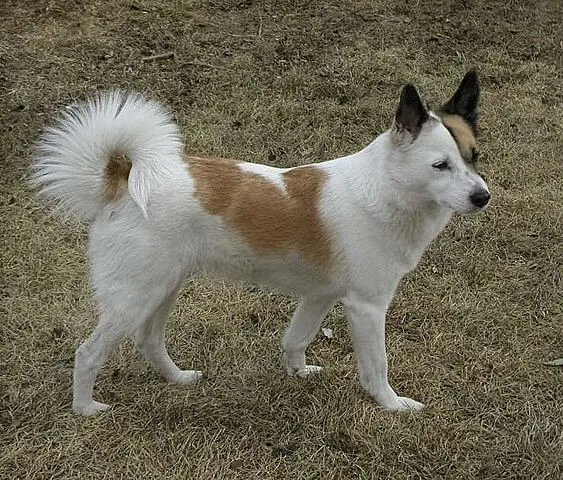
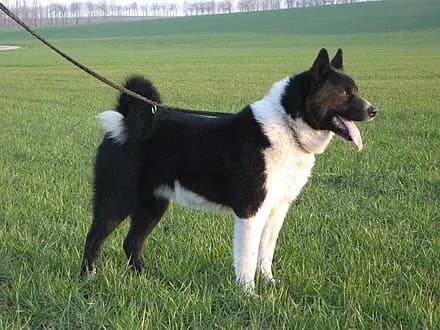
The Norrbottenspitz comes in these colors: Red and white, Piebald, Black and white.
Showcase your kennel on HonestDog and reach families searching for a responsibly bred Norrbottenspitz.