Russian-European LaikaSame FCI section
The Karelian Bear Dog is a fearless, highly reactive Nordic hunting spitz—bred to independently track and hold large, defensive game like bears or moose at bay with loud, persistent barking.
Self-check
Answer 6 quick questions about your everyday life and see how well the Karelian Bear Dog fits you — including an honest cost estimate per month, per year, and across the dog's lifetime.
At a glance
The essentials — key facts, traits, and health priorities — before you dive deeper.
Lifespan
10–12 yrs
Shoulder height
49–60 cm
Weight
17–28 kg
Practical
Temperament
Daily life
What matters most
Especially with a Karelian Bear Dog, choosing the right breeder is the single most important decision you'll make. Serious breeders consistently test the parents for inherited conditions, prioritize healthy early socialization, and stay accountable long after handover. A cheap puppy without health screening tends to become the most expensive dog later on.
See HonestDog breeder standards →Colors & coat
The coat colors that occur in the Karelian Bear Dog — including which ones fall outside the breed standard and which carry genetic risk.
Eye colors
 Brown
Coat type
 Illustrative image
Medium
 Double coat
 Smooth
The real vibes check
A Karelian Bear Dog won't ask for your permission when you're out and about; he is a highly specialized survivalist who takes command the moment he enters the woods. What keeps him alive in Scandinavia when facing a bear—lightning-fast, autonomous decision-making and absolute fearlessness—quickly becomes a risk in a typical suburban setting. You aren't getting a cuddle-bug, but an uncompromising child of nature that needs real work to thrive.
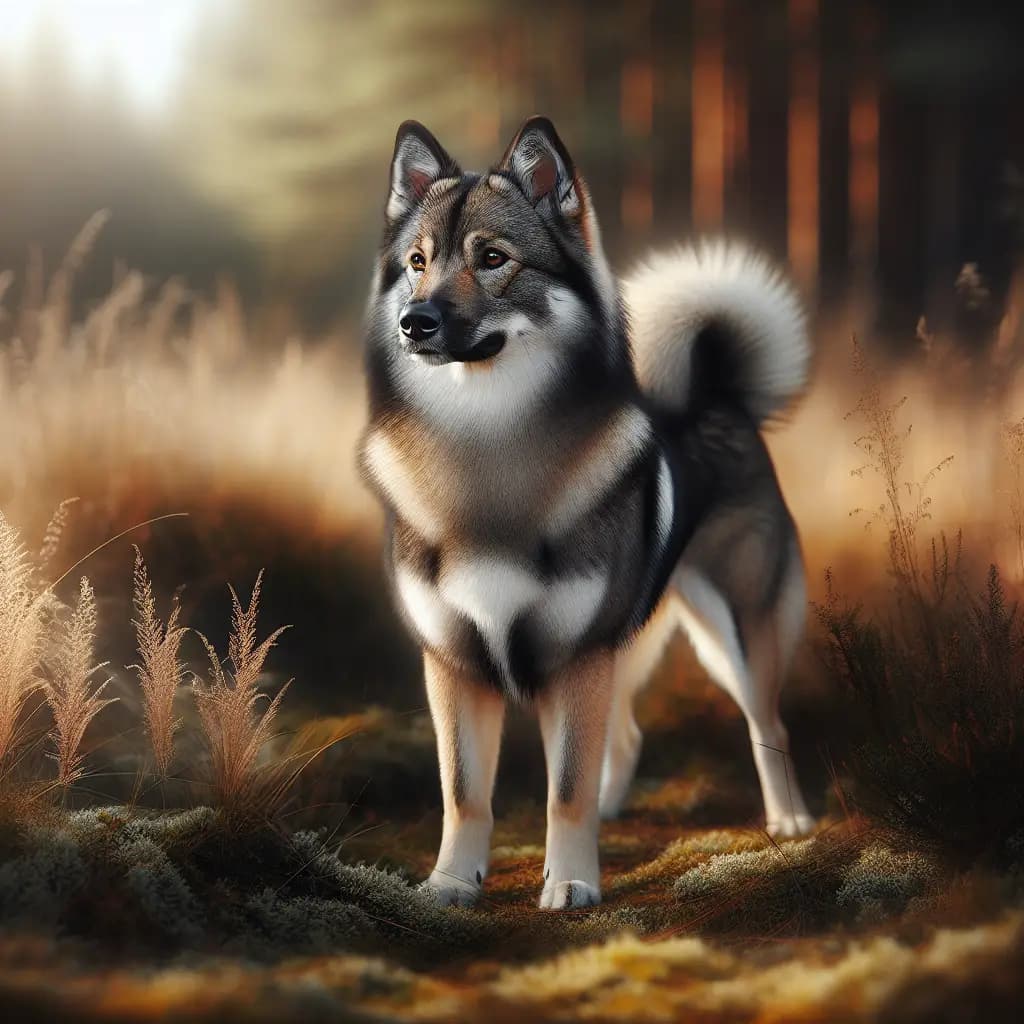
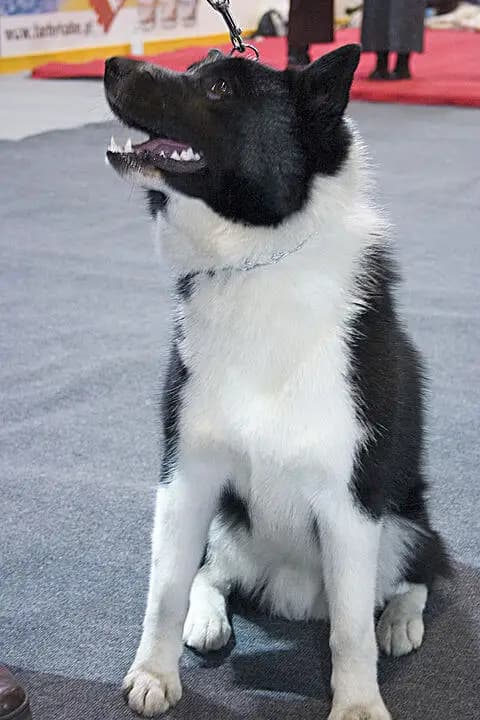
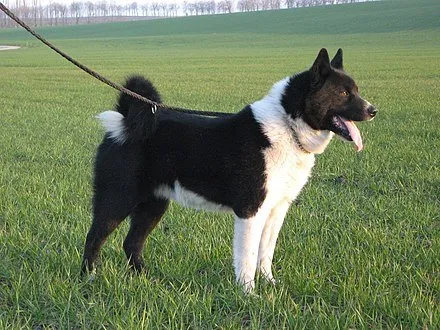
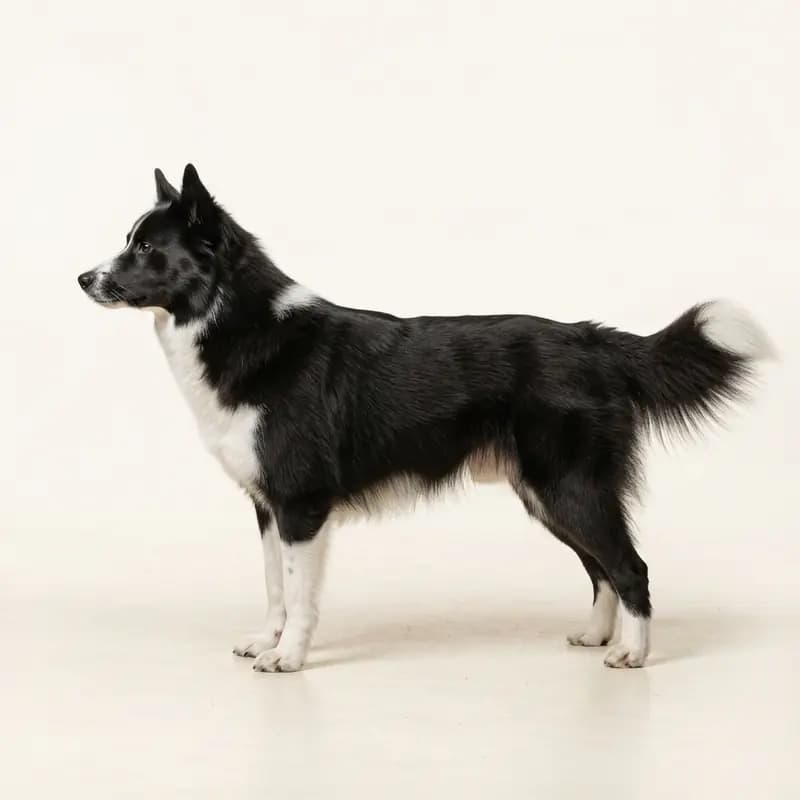
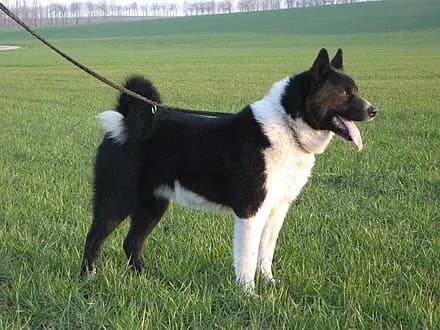
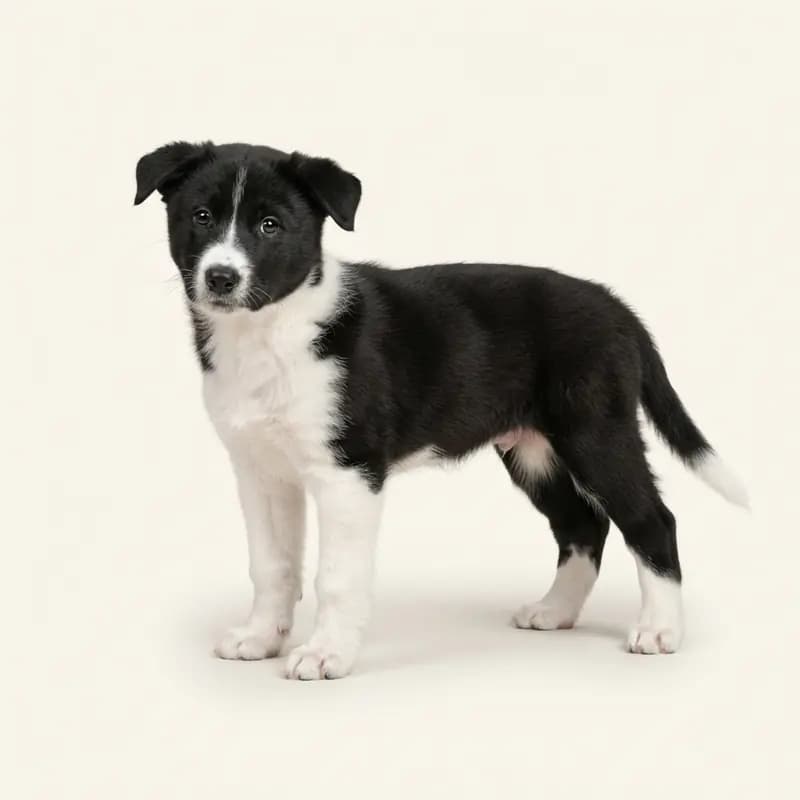
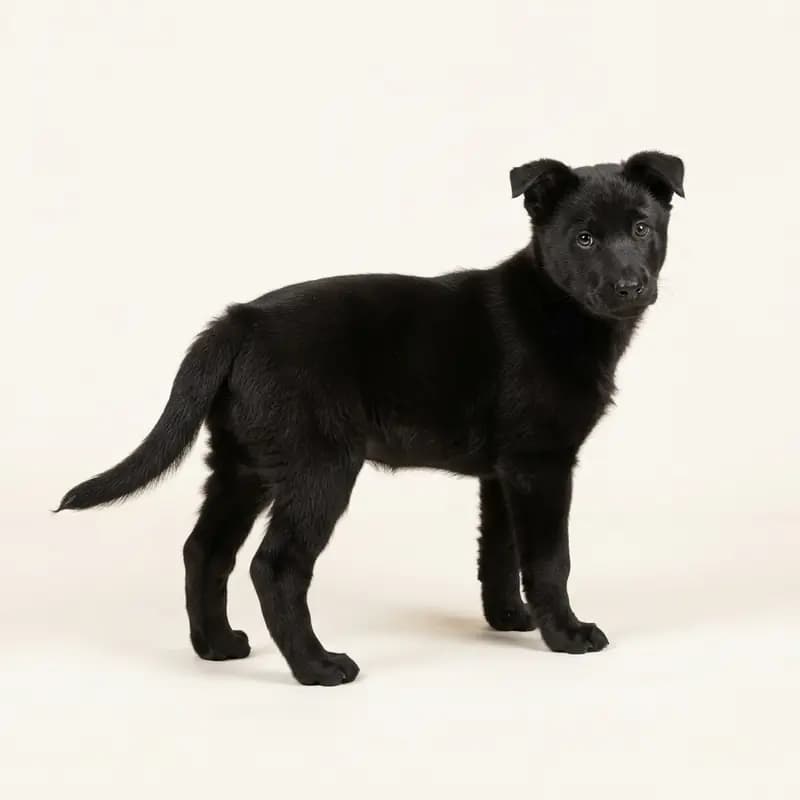
The Karelian Bear Dog is a medium-sized dog with a strong and robust body structure. This athletic dog has a broad chest, powerful legs, and a bushy tail that is carried curled over its back. Its head is broad with a pronounced forehead and a straight bridge of the nose. The eyes are dark brown, small and round, the ears are medium sized and set high, they are upright and tilted slightly forward. The coat of the Karelian Bear Dog is dense and straight, the length varies from short to medium long. A thick undercoat protects it from extreme weather conditions. The coat color is primarily black with white markings commonly found on the chest, neck, face, legs and tail. The Karelian Bear Dog belongs to FCI Group 5, the Spitz and Urtype dogs, more precisely to Section 2, the Nordic hunting dogs. There is no distinction between performance and show lines, all Karelian Bear Dogs are working dogs valued for their game handling skills.
The Karelian Bear Dog is an energetic, independent and courageous dog. It was bred to hunt in the wild without human guidance, so it is characterized by a high level of independence and determination. However, he is also loyal and can develop a strong bond with his owner. As a hunting dog, the Karelian Bear Dog has a strong hunting instinct. It shows a strong interest in game and can react quickly when it sees prey. This instinct can become a problem if not managed properly, so it is important that the Karelian Bear Dog is kept in a controlled environment and that it is well trained. The Karelian Bear Dog is an active dog that needs a lot of exercise. He enjoys long walks and games, but he also needs mental stimulation to be happy. Despite his independence, he enjoys the company of people and can integrate well into a family as long as his needs are met. The Karelian Bear Dog is an alert dog that is very aware of its surroundings. He tends to guard his territory and can be suspicious of strangers. However, despite its size and strength, the Karelian Bear Dog is not an aggressive dog and does not typically display aggressive behavior unless it feels threatened. Although the Karelian Bear Dog enjoys spending time with his family, he can learn to stay alone as long as he is properly prepared. It is important to note that this breed does not like to be ignored and they require sufficient mental and physical stimulation to be happy and well-adjusted. So if you have an active lifestyle and are looking for a dog to accompany you on your adventures, the Karelian Bear Dog could be the perfect choice for you. Please note, however, that this dog requires clear leadership and consistent training to reach its full potential.
| Watchfulness Strong territorial instinct — may actively confront intruders. | Very high |
| Openness to Strangers Neither pushily friendly nor suspicious. | Neutral |
| Hunting or Herding Drive Powerful instinct that can override recall when triggered. | Strong |
Fun Fact!
Did you know that the Karelian Bear Dog is so popular in its native Finland that it has even been featured on a postage stamp? Yes it is! This impressive breed has achieved postage stamp fame.
The Karelian Bear Dog is a strong and enduring hunting dog, particularly suited for work in dense forests. It shows a high degree of independence while still being loyal to its owner. These dogs are alert and brave but require consistent training and sufficient activity. Due to their strong hunting drive, they are less suitable as purely family dogs but are well suited to active people with experience handling hunting dogs.
The Karelian Bear Dog is an active and energetic dog that requires plenty of exercise and mental stimulation. It is therefore more suitable for rural areas or houses with a large, secure garden than for a city apartment. He enjoys long walks and outdoor activities. Although he generally gets along well with children, his size and energy may make him not the best choice for families with very young children. However, there should be no problems with older children who know how to treat dogs with respect. As for other pets, it should be noted that the Karelian Bear Dog has a strong hunting instinct. So it could be difficult with cats and small pets unless he grew up with them from a young age.
Loves family life and thrives in a group.
Gets on well with children — with adult supervision.
Usually gets on fine with other dogs.
Can manage in the city, but only with very active owners.
Owning a dog is a privilege, but it's also a real responsibility. Before you bring one into your life, be honest with yourself about the commitment it takes.
Raising the Karelian Bear Dog requires patience, consistency and clear leadership. He is intelligent and learns quickly, but can also be stubborn. He needs lots of mental stimulation and tasks that satisfy his hunting instincts. Therefore, activities such as tracking or mantrailing are ideal for this breed. Although the Karelian Bear Dog is a working dog, you should be careful not to overwhelm him. As with any breed, there is a risk that he will become a "ball junkie" if he is trained too intensively, he becomes one. It is important to ensure sufficient periods of relaxation and also to integrate playful elements into training. An important aspect of training is teaching the Karelian Bear Dog to control its instincts. Since he is a strong hunter, it is important to get him used to dealing with other animals early on and to train him to have a strong recall command. Promoting frustration tolerance and impulse control should also be part of the training. Distraction training can be particularly helpful here. If you are willing to invest enough time and energy into training, you will find that the Karelian Bear Dog can be a loyal and capable companion.
When it comes to nutrition, the Karelian Bear Dog is not particularly demanding and does well with a balanced, high-quality dog food. However, make sure that it doesn't over because being overweight can seriously affect your dog's health. When it comes to grooming, the Karelian Bear Dog has a dense, water-repellent double coat that protects it from the harsh climatic conditions of its homeland. So he can also cope well with the German climate. However, during the shedding phases in spring and autumn, he can shed quite heavily. Regular brushing helps keep the coat clean and healthy and the hair in your home in check.
| Care Level Regular brushing and occasional professional grooming. | Moderate |
| Exercise Needs Needs several hours of serious exercise every day. | Very active |
| Shedding Hair everywhere, always — no white clothing survives. | Very heavy |
| Trainability Bred to make decisions without human direction. | Very independent |
Our experts are still reviewing this information. Spotted something wrong? Email us at info@honestdog.de.
Solid, watch carefully
Health grade
In the Karelian Bear Dog, breed-specific risks exist for hip dysplasia (HD) as well as various eye diseases such as cataracts, progressive retinal atrophy, and primary lens luxation (PLL). A health-oriented breeder therefore has their breeding stock comprehensively examined orthopedically and ophthalmologically to prevent severe deformities and vision loss. When buying a puppy, consistently insist on documentation for both parents: demand an official evaluation for hip dysplasia (HD) with a result of HD A–B. In addition, you should ask to see written reports confirming that both parents are clear of primary lens luxation (PLL), Collie eye anomaly (CEA), and progressive retinal atrophy.
Grade is relative to other breeds — AI-assisted and editorially reviewed.
Methodology and data: HonestDog Dog Breed Health Report 2026
What matters most for this breed
Tap any item to see details.
With joint-friendly rearing, a healthy weight, and regular veterinary check-ups for the eyes and thyroid, most of these dogs remain active well into old age.
Reputable breeders have the hips, elbows, and eyes of the parent dogs tested and keep a close eye on thyroid levels to minimize risks within the bloodline.
Note: This health overview is AI-assisted and editorially reviewed. It is for orientation only and does not replace veterinary advice.
What matters most for this breed — what's common, how much it affects the dog's life, and how to protect yourself as a buyer.
Tap a body region to see the inherited conditions linked to it.
The three most important risks
Pick a region on the map to explore other areas.
Tier 1 is the recommended health standard for this breed. Tiers 2 and 3 show how responsible breeders go beyond.
Recommended standard. These tests make up the recommended health standard for this breed — the baseline of any careful breeding program. Ask any reputable breeder for the results.
No entries in this tier.
Note: This health overview is AI-assisted and editorially reviewed. It is for orientation only and does not replace veterinary advice.
A Karelian Bear Dog costs around ~€180 per month (€100 – €350, depending on your setup). The first year adds up to roughly ~€5,050 including purchase, equipment and puppy school; across the dog's life (11 years) it comes to about ~€27,200.
With surgery cover, running costs come to about ~€180 per month — in return, your share of a major operation drops from several thousand euros to around 20 percent.
Per month
~€180
In the first year
~€5,050
Across the dog's life
~€27,200
Estimated purchase price from a breeder: €1,500 – €2,500
Estimate at a mid-range setup (suburban, dry food, 1–2 hours of daily exercise), average German prices, as of July 2026.
HonestDog Concierge
We currently have no breeders for this breed who have passed our verification. Create your short buyer profile: we'll set up your search alert, review a possible source and email you within 28 days.
 Illustrative image
 Illustrative image
 Illustrative image
The Karelian Bear Dog, also called Karjalankarhukoira, comes from the Karelia region, which lies between Finland and Russia. This breed is the result of centuries of breeding dogs specifically designed to hunt large game such as bears and elk. This breed is believed to be closely related to the primitive dogs that lived in this region thousands of years ago. The development of the modern breed began in the late 19th and early 20th centuries, when the Finns began to systematically breed the best hunting dogs. During World War II, the Karelian Bear Dogs were threatened with extinction because many dogs went to war or lived in the war zones. After the war, efforts were made to revive the breed by importing dogs from the remote parts of Karelia. The Karelian Bear Dog was recognized as a separate breed by the Finnish Kennel Club in 1945. Today is the Karelian Bear dog very popular in Finland and is still used mainly for hunting large game. However, this breed is rare in the rest of the world.
The Karelian Bear Dog was bred to hunt large game such as bears and elk.
Finland
1600
Within the family, owners describe the Karelian Bear Dog as a faithful, very affectionate companion that is often surprisingly calm indoors. It is very loyal to its familiar people and enjoys being petted up close. Toward strangers, on the other hand, it is typically aloof, reserved and always watchful. It keeps a close eye on its territory and reliably reports anything unusual, without being aggressive for no reason.
Owners agree, however, that the breed is anything but an undemanding family dog that just runs alongside. A Karelian needs a great deal of exercise and activity and, above all, a rural setting with a secure property. Small pets such as cats or rabbits in the same household are often seen as prey because of its deep-seated hunting instinct, so owners usually advise against such combinations. Living with children in the household who are taught to be respectful usually works well if the dog is raised with them, but it always calls for careful management.
Sources:mit-tier.detackenberg.deder-hundegefaehrte.dedfg-sh.dezooplus.de
In training, many owners find that classic methods hit their limits, because the Karelian Bear Dog has no strong will to please. It was bred to make its own decisions in rough terrain and to hold dangerous big game at bay. Owners therefore stress repeatedly that blind obedience or unquestioning submission simply can't be forced. Trying to work with harshness or pressure only leads this self-assured dog to stubbornness, refusal or a lasting breach of trust.
According to experienced owners, a dependable daily life only comes through calm, unshakable consistency, fairness and a strong bond. The biggest off-leash challenge remains its very strong hunting drive: once the Bear Dog has picked up a trail, it easily tunes out its surroundings and any commands, so a reliable recall is very hard to guarantee in areas with a lot of wildlife, and many owners rely on a long line or fenced runs for good. It is also considered highly selective with other dogs; experienced owners avoid uncontrolled encounters at dog parks, since it won't back down when provoked.
Sources:mit-tier.deder-hundegefaehrte.dedfg-sh.detackenberg.dewamiz.de
When it comes to health and hardiness, owners and breeders consistently rate the Karelian Bear Dog as very resilient. Because the breed was selected for generations mainly for performance and function in extreme climates, it is considered largely free of breed-typical exaggerations or extreme susceptibility to disease. Cold, snow and rough weather don't bother the dense double coat; in fact, many of these dogs really come alive in winter temperatures.
Most owners describe grooming as manageable, but intensive during the seasonal shed. Outside those phases, regular brushing of the dirt-repellent coat is enough. The real "health risk," owners say, is a lack of mental stimulation and exercise: if the dog doesn't get enough room to run and hunting-style activity, it quickly becomes frustrated and restless or turns to substitute behaviors such as destructiveness indoors. Kept well and mentally content, however, it is considered a long-lived, vigorous partner.
Sources:mit-tier.dewamiz.dezooroyal.de
Paraphrased from real owner reports · translated from German
The Karelian Bear Dog is an active dog that needs plenty of exercise and mental stimulation. Research the temperament, grooming needs, and space requirements before deciding.
The average life expectancy of a Karelian Bear Dog is 10-12 years. With proper care and regular vet visits, your dog can live a long, healthy life.
Karelian Bear Dog grooming requirements include regular brushing, nail trimming, and dental care. HonestDog provides detailed grooming tips for every breed.
The Karelian Bear Dog can be a great family dog. Proper training and socialization are key. HonestDog provides family suitability information for every breed.
The Karelian Bear Dog comes in these colors: Black and white, Black.
Showcase your kennel on HonestDog and reach families searching for a responsibly bred Karelian Bear Dog.