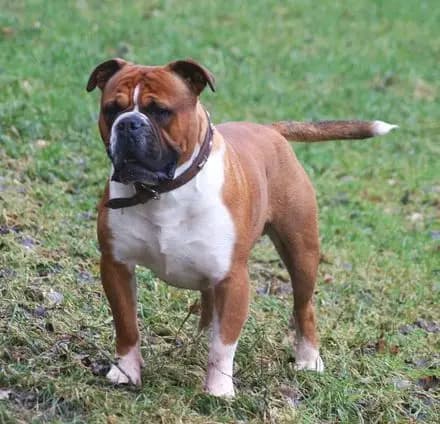
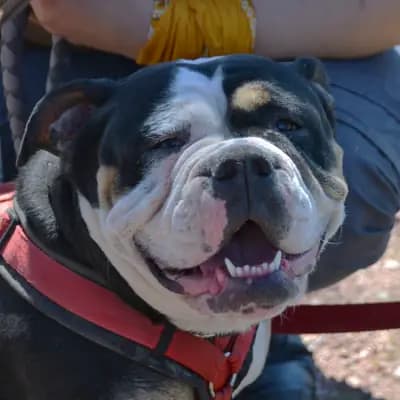
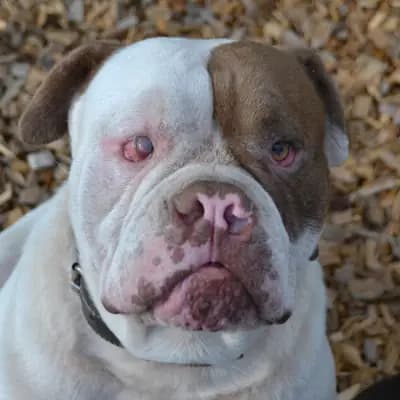
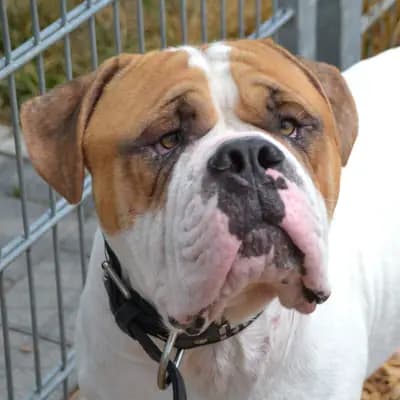
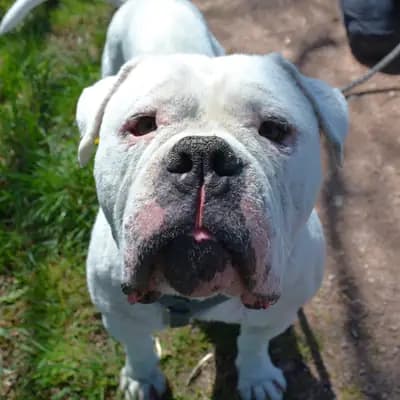
A second-hand dog comes with its own story. Some dogs are unsettled at first because they've lost their people; others use their typical stubbornness to test the new house rules first. Their tolerance of other dogs is moderate (3/5) and depends heavily on whether their socialization was right in the past. With males or insecure dogs, confident handling on the leash is called for at first.
Putting the breed's health issues in realistic perspective
Old English Bulldogs are considered athletic dogs, but they have a clear health pattern: the joints, the heart and breathing often remain issues for life. Health-focused breeders (for example in the COBD e.V. – Club für Olde Bulldogges in Deutschland) have their parent dogs examined by X-ray and clinical diagnostics for hip dysplasia (HD), elbow dysplasia (ED), patellar luxation (PL), heart disease, brachycephalic syndrome (BOAS), eye problems (ophthalmological eye exam) and, in dilute colors, Color Dilution Alopecia, and also use DNA tests for degenerative myelopathy, cystinuria and hyperuricosuria (HUU) to lower the risk for the puppies – but with a shelter dog, the background is often unknown.
If your new companion originally comes from a puppy mill, these important preliminary checks on the parents are missing. So pay particular attention to breathing noises during exertion, a smooth gait and skin problems in dogs with a dilute coat color (blue). Without careful management of weight and exercise and regular preventive checkups, health problems and vet bills rise considerably later on.