
Portuguese Podengo (Small Shorthair)Close relative

The Podengo Português is a lightning-fast, incredibly clever primitive hunter—bred to hunt independently in rugged terrain using its eyes, nose, and ears. This inherent independence makes it a fascinating companion, but certainly not one that obeys blindly.
How the health grade is calculated
Sources for required breeding screenings. Deutscher Windhundzucht- und Rennverband e.V. (DWZRV)
Self-check
Answer 6 quick questions about your everyday life and see how well the Podengo Português fits you — including an honest cost estimate per month, per year, and across the dog's lifetime.



At a glance
The essentials — key facts, traits, and health priorities — before you dive deeper.
Lifespan
12–15 yrs
Shoulder height
20–70 cm
Weight
4–30 kg
Practical
Temperament
Daily life
What matters most
Especially with a Podengo Português, choosing the right breeder is the single most important decision you'll make. Serious breeders consistently test the parents for inherited conditions, prioritize healthy early socialization, and stay accountable long after handover. A cheap puppy without health screening tends to become the most expensive dog later on.
See HonestDog breeder standards →Colors & coat
The coat colors that occur in the Podengo Português — including which ones fall outside the breed standard and which carry genetic risk.
Eye colors
 Amber
 Brown
Coat type
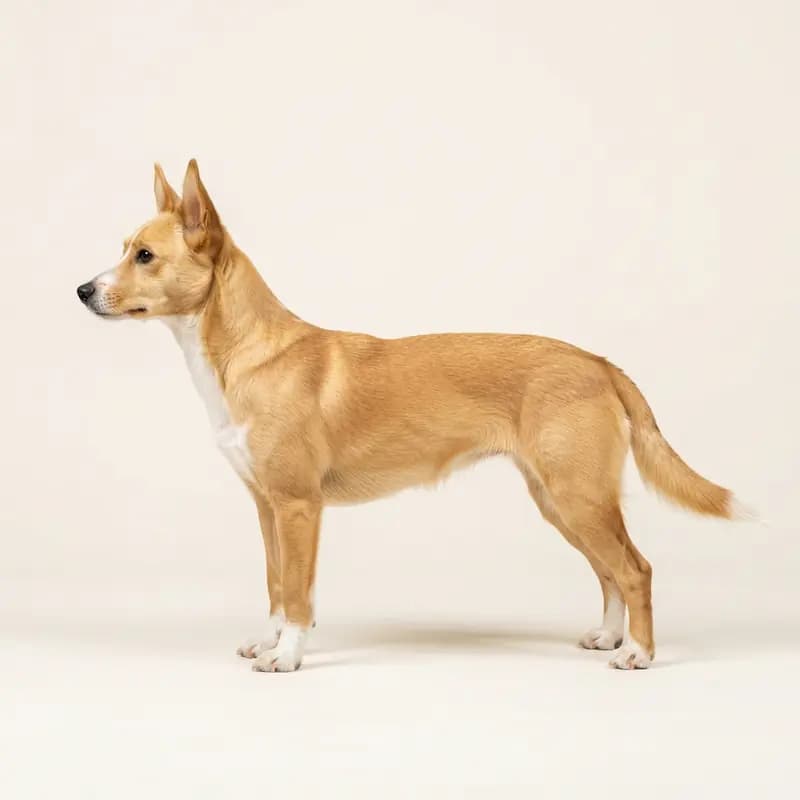 Illustrative image
Short
 Smooth
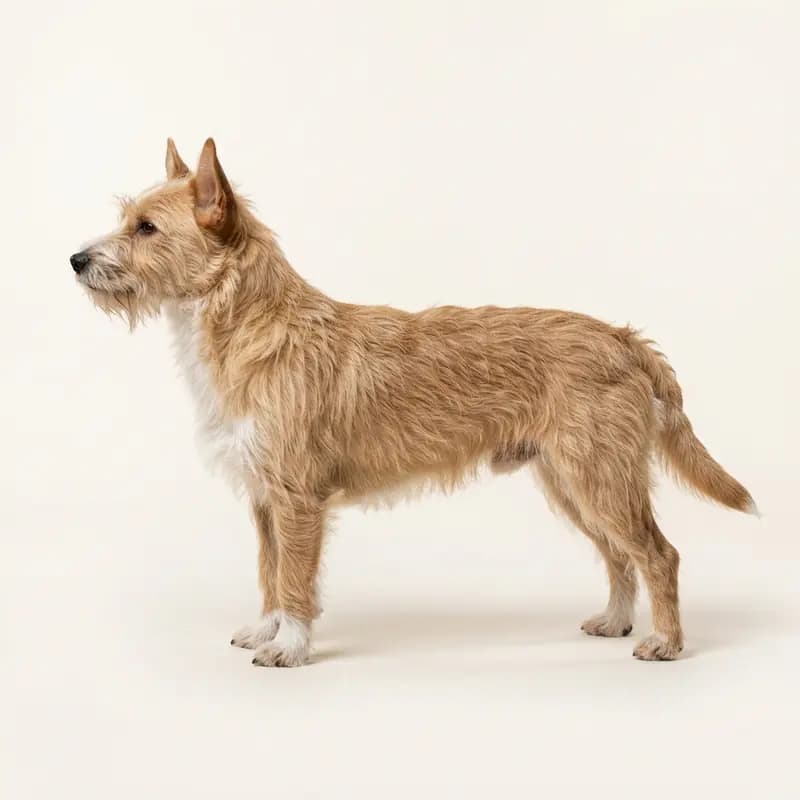 Illustrative image
Wire
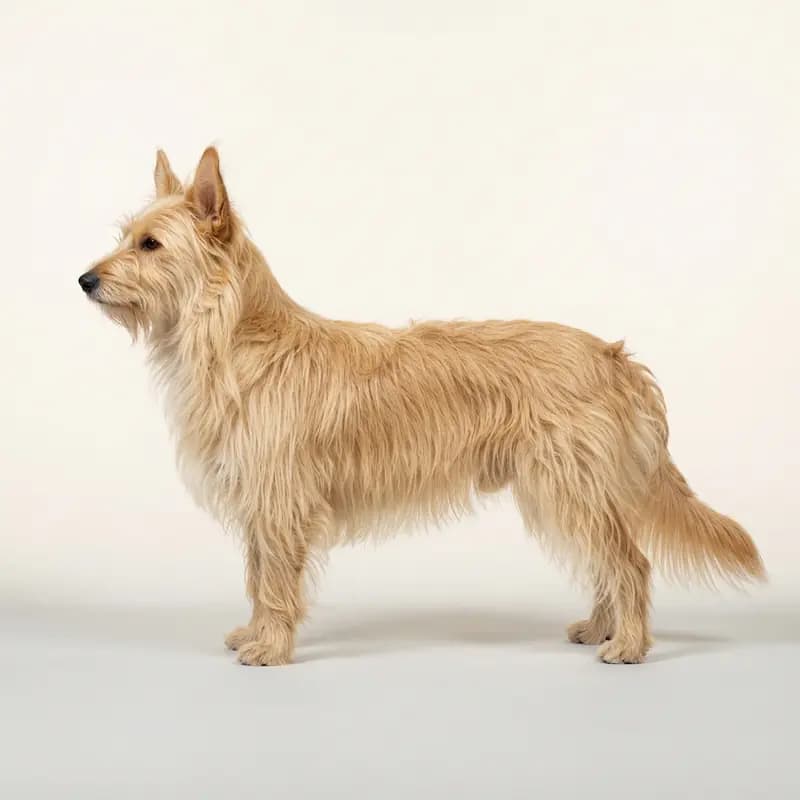 Illustrative image
Long
The real vibes check
A Podengo Português is not a command-follower, but a free spirit in a dog suit. When they scent something outside, their brain switches into hunting mode and you are temporarily logged off—but indoors, they transform into an extremely cuddly, gentle shadow. You aren't getting a programmed robot, but a piece of wild nature that chooses to be with you every single day.
The Podengo Portugues is a versatile and interesting dog breed from Portugal. He belongs to FCI group 5, one of the top dogs and dogs of the original type. This dog is known for its striking appearance with pointed ears that are always alert. There are three size variants: the Podengo Português Pequeno (small), the Podengo Português Medio (medium) and the Podengo Português Grande (large). This distinction is based on their size and intended use. Within these sizes there are two coat types: smooth and wiry. The small and medium variants are more suitable for hunting rabbits, while the large variant is traditionally used for hunting wild boars. What is also interesting is that there is no clear separation in this breed between performance and show lines.
The Podengo Portugues is an energetic and fascinating dog. In all three size variations, they show a lively temperament and high intelligence. Although they are traditionally used as hunting dogs, they also have the potential to be wonderful companion dogs. If you have an active lifestyle, you will find that the Podengo Portugues is a perfect partner for outdoor activities. His agility and endurance make him a great companion for long walks, hikes or bike rides. The small and medium-sized versions of the Podengo Portugues are particularly agile and have a pronounced prey-catching behavior, while the larger version is often a little quieter, but still active. The breed tends to be very people-oriented and forms close bonds with their family. They are often playful and enjoy interacting with their owners. They are also known for their alertness and are often wary of strangers, making them good guard dogs. One of the most notable features of Podengo Portugues is its independence. These dogs are often independent and can sometimes be stubborn. This means they can keep themselves busy, but it also means they sometimes have a mind of their own and don't always respond immediately to commands. In terms of hunting behavior, the Podengo Portugues often shows a strong interest in small animals and moving objects. It's important to consider this if you already have other small pets or live in an area where there is a lot of wildlife. The Podengo Portugues can learn to stay alone, but it is important to train this gradually and ensure that he is sufficiently mentally and physically exercised before he is left alone.
| Watchfulness Reports unusual activity but stays controlled. | Moderate |
| Openness to Strangers Warms up quickly and is generally welcoming. | Friendly |
| Hunting or Herding Drive This drive runs deep — no amount of training eliminates it. | Very strong |
Fun Fact!
Did you know that the Podengo Portugues in Portugal are often referred to as "rabbit hunters"? is known and enjoys great popularity because he is so skilled at tracking down and catching rabbits?
Classified as a hunting dog, the alert and playful Small Portuguese Podengo Pequeno is a fast, athletic rabbit hunter of ancient lineage. Pequenos love to run, romp and hunt outdoors, but are also charming and well-behaved housemates.
The Podengo Portugues is certainly suitable as a city dog, provided it receives enough exercise and mental stimulation. Young children are usually not a problem, but it is important to supervise interactions. As for other pets, they can get along well with cats if they are together from an early age, but it is advisable to be careful as they have a hunting instinct.
Loves family life and thrives in a group.
Takes boisterous and affectionate children in its stride.
Usually gets on fine with other dogs.
City-appropriate with enough exercise and stimulation.
Owning a dog is a privilege, but it's also a real responsibility. Before you bring one into your life, be honest with yourself about the commitment it takes.
The Podengo Portugues is intelligent but also independent. This means that positive, reward-based training is most effective. This breed tends to be active and needs adequate mental and physical stimulation. However, it is important to be careful not to "over-busy" the dog. and give him rest times. Agility and running games are great activities to utilize their energy, but it's wise to make sure they don't become "ball junkies." become. The hunting instinct is strong in this breed and it is crucial to offer them alternatives such as search games and encourage impulse control.
The Podengo Portugues is an active dog and needs a balanced diet tailored to its energy needs. High-quality food that contains sufficient protein and nutrients is crucial for his well-being. Regarding coat care: The Podengo Portugues has either a short or wiry coat, without an undercoat. He copes well with the climate in Germany, but a small coat for particularly cold days doesn't hurt. Since he doesn't have an undercoat, he doesn't shed much and only needs occasional brushing.
| Care Level Minimal effort — occasional brushing and bathing. | Low-maintenance |
| Exercise Needs Needs several hours of serious exercise every day. | Very active |
| Shedding Hair everywhere, always — no white clothing survives. | Very heavy |
| Trainability Has its own ideas and will test limits. | Strong-willed |
Our experts are still reviewing this information. Spotted something wrong? Email us at info@honestdog.de.
Robust
Health grade
The Podengo Português is considered a very robust breed, yet hereditary risks exist for eye diseases such as cataracts, progressive retinal atrophy, and progressive rod-cone degeneration (PRCD). The Deutscher Windhundzucht- und Rennverband e.V. (DWZRV) therefore mandates compulsory tests for breeding approval, in which the parent animals must be free from these eye conditions. Responsible breeders additionally have the musculoskeletal system examined to rule out hip dysplasia (HD) and patellar luxation (PL). Before buying a puppy, have the breeder show you the veterinary ophthalmological certificates as well as evidence of HD (limit HD A–B) and PL (limit PL 0–1) for the parents.
Grade is relative to other breeds — AI-assisted and editorially reviewed.
Methodology and data: HonestDog Dog Breed Health Report 2026
What matters most for this breed
Tap any item to see details.
With joint-friendly rearing, a healthy weight, and regular eye check-ups, you lay the best foundation for a long, active dog life.
Responsible breeders verify that breeding dogs are free of cataract, progressive retinal atrophy, and PRCD, prove HD A–B, and additionally have their knees screened for patellar luxation (PL).
Note: This health overview is AI-assisted and editorially reviewed. It is for orientation only and does not replace veterinary advice.
What matters most for this breed — what's common, how much it affects the dog's life, and how to protect yourself as a buyer.
Tap a body region to see the inherited conditions linked to it.
The three most important risks
Pick a region on the map to explore other areas.
Tier 1 is the core standard: the tests Deutscher Windhundzucht- und Rennverband e.V. (DWZRV) requires, plus further tests from the recommended health standard for this breed. Tiers 2 and 3 show how responsible breeders go beyond.
Core standard. Tests marked “Club standard” are required by Deutscher Windhundzucht- und Rennverband e.V. (DWZRV) for breeding approval; the others are part of the recommended health standard for this breed. Ask any reputable breeder for the results.
No entries in this tier.
No entries in this tier.
Note: This health overview is AI-assisted and editorially reviewed. It is for orientation only and does not replace veterinary advice.
A Podengo Português costs around ~€170 per month (€90 – €310, depending on your setup). The first year adds up to roughly ~€4,850 including purchase, equipment and puppy school; across the dog's life (13.5 years) it comes to about ~€30,130.
With surgery cover, running costs come to about ~€160 per month — in return, your share of a major operation drops from several thousand euros to around 20 percent.
Per month
~€170
In the first year
~€4,850
Across the dog's life
~€30,130
Estimated purchase price from a breeder: €1,500 – €2,500
Estimate at a mid-range setup (suburban, dry food, 1–2 hours of daily exercise), average German prices, as of July 2026.
HonestDog Concierge
We currently have no breeders for this breed who have passed our verification. Create your short buyer profile: we'll set up your search alert, review a possible source and email you within 28 days.
 Illustrative imageIllustrative imageIllustrative image
 Illustrative image
The Podengo Portugues comes from Portugal and has a long history that dates back to ancient times. It is believed that his ancestors were brought to Portugal by the ancient Phoenicians and Romans. These dogs were originally versatile working dogs, used as both hunting and guard dogs. The breed has been valued over the centuries for its excellent rabbit hunting skills. It was not until the 1970s that the Podengo Portugues began to be bred outside of rural areas of Portugal, leading to wider recognition. The Fédération Cynologique Internationale (FCI) recognized the Podengo Portugues as an independent breed in 1955.
Bred in various sizes to hunt different sized game, the Podengo Português is known for its versatility and adaptability.
Portugal
Antike
At home, owners consistently describe the Portuguese Podengo as an affectionate, gentle and often very cuddly housemate. Many owners appreciate the breed's two very different sides: indoors these dogs are surprisingly calm, like to sleep snuggled up on the couch and seek out their people, but outdoors they instantly turn into a bundle of energy. Many are reserved or watchful with strangers at first but warm up quickly with people they know.
A frequently mentioned everyday challenge is the combination of jumping power, curiosity and alertness. Some owners report that Podengos develop surprising climbing and digging skills in the yard, and that fences are no real obstacle when something exciting beckons on the other side. Time alone also has to be built up very carefully from puppyhood, since the breed is sensitive to change and, when bored or frustrated, can get quite creative about rearranging the furniture.
Sources:reddit.comdogorama.apphundeforum.comeinfachtierisch.dekokogenetics.com
The central topic in owner forums is the strong hunting drive and off-leash time. Many owners point out that the Podengo hunts not only by sight but with all its senses, nose, eyes and ears, and reacts in a flash to movement like rabbits, deer or birds. In areas with a lot of wildlife or in the woods, relaxed off-leash time is simply unthinkable for many owners, so a long line or secure exercise areas become a constant part of daily life. Some owners do manage a reliable recall through intensive training, but most warn against underestimating the dog in the underbrush.
In training, methods based on pressure or harshness meet with complete refusal. Owners repeatedly stress the breed's high sensitivity and strong will of its own. Don't expect unquestioning obedience; the Podengo only cooperates when the bond is right and it sees a point or a motivating reward in the task. With positive reinforcement, humor and patience, many Podengos can be won over to tracking, agility or search games, which give them the right kind of outlet.
In owner reports and breed-specific discussions, the Portuguese Podengo is considered a very robust, weatherproof and long-lived primitive-type dog that has largely been spared extreme overbreeding. Owners often report lively dogs that stay agile into old age and rarely have breed-typical stomach or skin problems. Grooming is described as simple and low-maintenance for both the smooth and the wire coat.
The main health topic, especially in the small variety (Pequeno), is a tendency toward patellar luxation (dislocating kneecaps), so caution is advised with stairs or sharp turns during play. For dogs adopted from Portuguese rescues into Central Europe, owners also point to the need for screening for Mediterranean diseases. It's also mentioned that the fine coat, which has no dense undercoat, can be sensitive to cold, wet winter weather, which is why many owners put functional coats on their dogs when temperatures drop below freezing.
Sources:kokogenetics.comedogs.depeqaboo.comzoomalia.dereddit.com
Paraphrased from real owner reports · translated from German
The Podengo Português is an active dog that needs plenty of exercise and mental stimulation. Research the temperament, grooming needs, and space requirements before deciding.
The average life expectancy of a Podengo Português is 12-15 years. With proper care and regular vet visits, your dog can live a long, healthy life.
Podengo Português grooming requirements include regular brushing, nail trimming, and dental care. HonestDog provides detailed grooming tips for every breed.
The Podengo Português can be a great family dog. Proper training and socialization are key. HonestDog provides family suitability information for every breed.
The Podengo Português comes in these colors: Yellow, Fawn, White, Black, Brown, Black and white, Brown and white, Brindle, Black and tan, Tricolor. Colors that fall outside the breed standard are marked as such on the breed page.
Showcase your kennel on HonestDog and reach families searching for a responsibly bred Podengo Português.