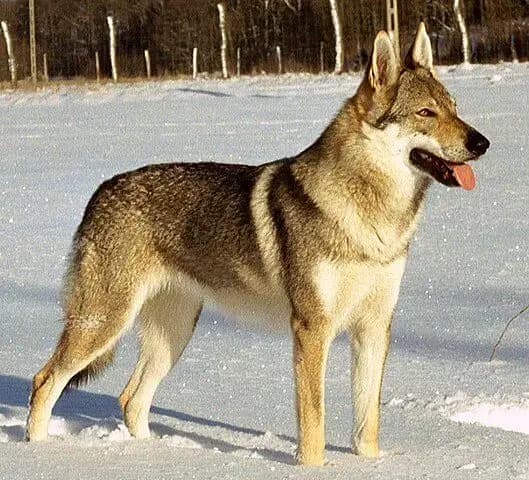
Czechoslovakian WolfdogSame FCI section
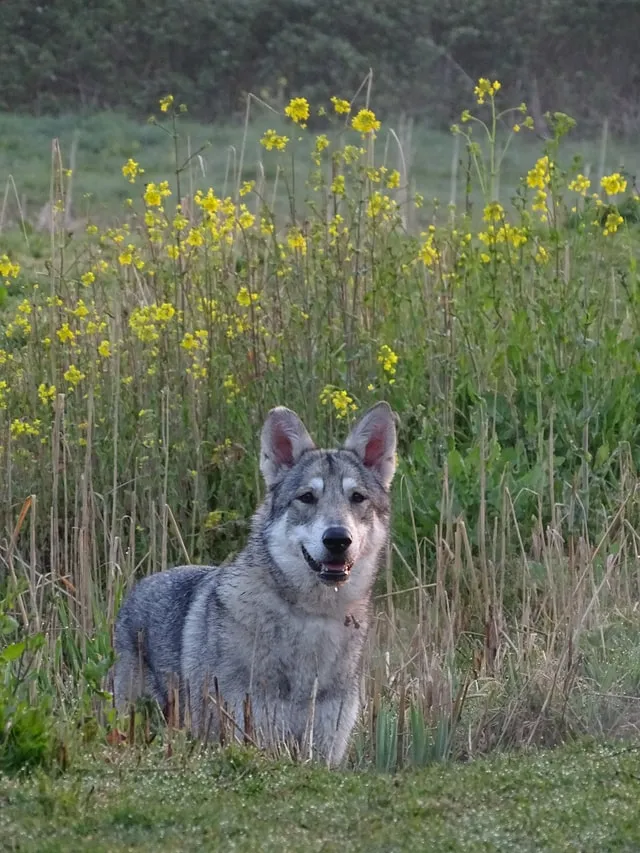
The Saarloos Wolfhond is a highly sensitive, shy wolfdog—bred from the German Shepherd and the European wolf with the goal of creating a working dog, but which instead inherited the cautious, flight-oriented nature of its wild ancestors.
How the health grade is calculated
Sources for required breeding screenings. Deutscher Verein für Saarlooswolfhunde e.V. (DVSWH)
Self-check
Answer 6 quick questions about your everyday life and see how well the Saarloos Wolfdog fits you — including an honest cost estimate per month, per year, and across the dog's lifetime.

At a glance
The essentials — key facts, traits, and health priorities — before you dive deeper.
Lifespan
10–12 yrs
Shoulder height
60–75 cm
Weight
30–41 kg
Practical
Temperament
Daily life
What matters most
Especially with a Saarloos Wolfdog, choosing the right breeder is the single most important decision you'll make. Serious breeders consistently test the parents for inherited conditions, prioritize healthy early socialization, and stay accountable long after handover. A cheap puppy without health screening tends to become the most expensive dog later on.
See HonestDog breeder standards →Colors & coat
The coat colors that occur in the Saarloos Wolfdog — including which ones fall outside the breed standard and which carry genetic risk.
Eye colors
 Amber
Coat type
 Medium
 Double coat
The real vibes check
A Saarloos Wolfhond looks like a predator from the wild, but will hide behind your legs at the sound of a backfiring exhaust. You aren't getting a fearless protector, but a highly sensitive being that often doesn't understand our modern world. If you offer it a quiet life away from the hustle and bustle, it will gift you a quiet, deep bond that you have to earn anew every single day.
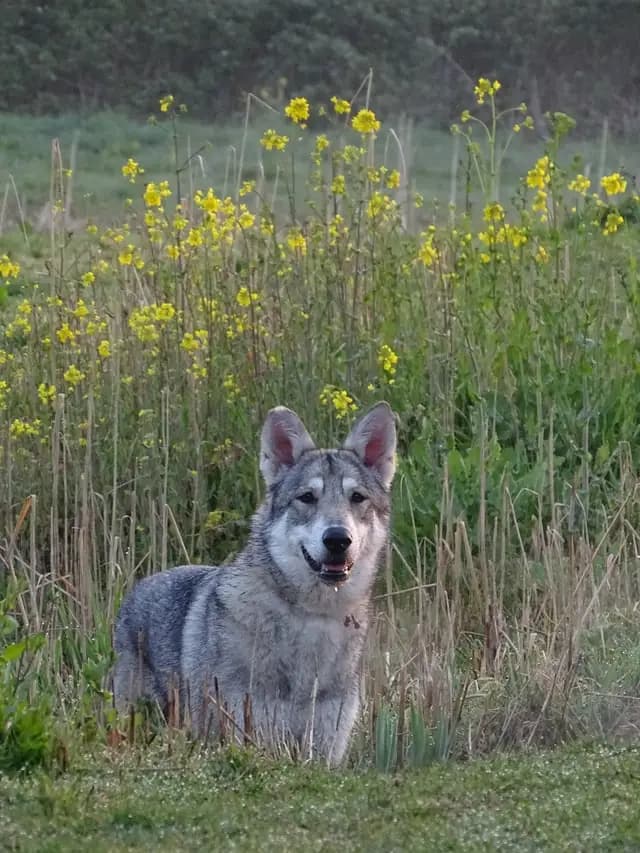
The Saarloos Wolfhond is a fascinating breed of dog that cannot deny its wolf-like appearance. With its strong build, piercing eyes and thick, straight fur covering the entire surface of its body, this dog is strongly reminiscent of its distant ancestor, the wolf. Despite its impressive size and powerful appearance, the Saarloos Wolfhond exudes a kind of quiet dignity and reserved elegance. According to the FCI classification, the Saarloos Wolfhond belongs to Group 1, the herding and driving dogs (excluding Swiss Mountain Dogs), and there to Section 1, the shepherd dogs. It has the standard number 311. Something special about this breed is that there is no strict distinction between performance and show lines. Instead, the Saarloos Wolfhond is valued primarily for its natural abilities and unique nature.
The Saarloos Wolfhond is an incredibly fascinating dog with a unique character. His character is strongly influenced by his special genetic origins - a mix of the hard-working German Shepherd and the independent, wild wolf. This breed is known for its independence and self-reliant character. Although the Saarloos Wolfhond needs contact with his family, he also values his personal freedom and can spend hours exploring his surroundings or simply listening to the sounds of nature. In general, the Saarloos Wolfhond is not an exuberant or extremely playful dog. Instead, he shows a rather calm and reserved nature. He is not the type of dog that always needs to be the center of attention or is constantly looking for attention. He can initially be reserved and cautious towards strangers. But despite his independence and reserve, deep down the Saarloos Wolfhond is a loyal and devoted companion. Once he has formed a bond, he is loyal to his person and has a strong bond with his family. He is certainly capable of building deep and meaningful relationships with his people, but this takes time and patience. In terms of its working ability, the Saarloos Wolfhond is more of an endurance athlete than a high-performance sprinter. His enduring temperament and natural curiosity make him a great companion for long hikes or nature trips. Although the Saarloos Wolfhond has a strong hunting instinct, its caution and reticence towards new things can often outweigh this. That's why he's not necessarily inclined to run out impulsively and chase game. Nevertheless, you should always keep an eye on him when he is running free. Another interesting aspect of the Saarloos Wolfhond is its natural alertness. Although he is not a typical guard dog and is reserved and non-aggressive towards strangers, he has a strong awareness of his surroundings and is always attentive to what is happening around him. He probably won't bark or actively drive away an intruder, but he will certainly pay attention and alert his human to any unusual activity. When it comes to staying alone, with some training the Saarloos Wolfhond can learn to stay alone for short periods of time. However, it should be remembered that he is a sociable dog that prefers the company of his family and does not like to be left alone for long periods of time. Too much time alone can lead to stress and anxiety, which can have a negative impact on his well-being. Overall, the Saarloos Wolfhond is a fascinating and unique dog that combines both the independence and alertness of the wolf and the loyalty and hard work of the German Shepherd. His character requires a certain amount of patience and understanding, but if you are willing to invest the time and effort, you will gain a loyal, fascinating and independent companion who will enrich your life in a very special way.
| Watchfulness A natural watchdog with real protective instinct. | High |
| Openness to Strangers Neither pushily friendly nor suspicious. | Neutral |
| Hunting or Herding Drive Mild interest in movement and small animals — easily managed. | Low |
Fun Fact!
Did you know that the Saarloos Wolfhond was named after its breeder, Leendert Saarloos? He crossed a European wolf with a German Shepherd to create a breed of dog that combines the strength and appearance of a wolf with the trainability and loyalty of a dog.
The Saarloos Wolfdog is a strong and independent dog with a pronounced protective instinct. It requires consistent training and plenty of exercise, as it is very active and alert. Due to its strong territorial behavior, it is especially suitable for experienced owners who can provide clear leadership. The Saarloos Wolfdog is not a typical family dog but shows a close bond with its caregivers.
The Saarloos Wolfhond is an independent dog that needs a lot of space and activity. Therefore, it is not necessarily suitable as a city dog, but can be kept well in a house with a garden or in the country. He needs a lot of exercise and mental stimulation to be happy and balanced. He is friendly with children, but due to his size and strength, careful supervision is required around young children. He can also get along well with other dogs and pets as long as he has been properly socialized.
Gets on well with different people and varying routines.
Gets on well with children — with adult supervision.
Usually gets on fine with other dogs.
Can manage in the city, but only with very active owners.
Owning a dog is a privilege, but it's also a real responsibility. Before you bring one into your life, be honest with yourself about the commitment it takes.
The Saarloos Wolfhond is an intelligent animal that requires careful and consistent training. He responds best to positive reinforcement and needs an owner who is calm, patient and assertive. It's important to give him social interaction from an early age so he learns how to behave in different situations. The Saarloos Wolfhond is by nature an active and persistent dog that loves to run and play. He would be well suited to dog sports such as canicross, mantrailing or agility. It is important to ensure that the dog does not become overly busy and has enough time to rest. The Saarloos Wolfhond can definitely become a ball junkie, so you shouldn't overuse playing with the ball and instead offer him a variety of activities. Since the Saarloos Wolfhond has a strong hunting instinct, it is important to teach him to control this impulse and develop frustration tolerance. This can be achieved through targeted training and mental stimulation.
The Saarloos Wolfhond's diet should be balanced and varied. As with any dog, it is important to ensure an adequate supply of high-quality proteins, carbohydrates, fats, vitamins and minerals. There are many different types of dog food on the market, and it is important to find a food that meets your dog's specific needs. It may be helpful to seek advice from a veterinarian or a canine nutritionist. The Saarloos Wolfhond has a thick coat with a dense undercoat that protects it from cold and wet conditions. The coat needs to be brushed regularly to avoid mats and skin problems. You should plan more time for fur care, especially during the coat change periods in spring and autumn. The Saarloos Wolfhond copes well with the German climate and can live well in both the heat and the cold.
| Care Level Minimal effort — occasional brushing and bathing. | Low-maintenance |
| Exercise Needs Needs several hours of serious exercise every day. | Very active |
| Shedding Hair everywhere, always — no white clothing survives. | Very heavy |
| Trainability Bred to make decisions without human direction. | Very independent |
Our experts are still reviewing this information. Spotted something wrong? Email us at info@honestdog.de.
Solid, watch carefully
Health grade
In the Saarloos Wolfhond, there are serious breed-specific risks for degenerative myelopathy, pituitary dwarfism, as well as hip dysplasia (HD) and eye diseases. The Deutsche Verein für Saarlooswolfhunde e.V. (DVSWH) therefore mandatorily prescribes genetic testing for degenerative myelopathy (clear or carrier, whereby carriers may only be mated with clear partners) and pituitary dwarfism, as well as eye problems (ophthalmological eye examination). A health-conscious breeder additionally has the parent animals examined for hip dysplasia (HD) as well as for cataract, primary open-angle glaucoma, ectropion / entropion, and progressive retinal atrophy. Before buying a puppy, have the breeder present complete written findings for hip dysplasia (HD) (maximum HD C, mated only with A or B) and all breeding-relevant genetic tests and eye certificates.
Grade is relative to other breeds — AI-assisted and editorially reviewed.
Methodology and data: HonestDog Dog Breed Health Report 2026
What matters most for this breed
Tap any item to see details.
Through joint-friendly rearing, adapted exercise, and regular health and eye check-ups, you can best support your dog's well-being in everyday life.
Responsible breeders test for Degenerative Myelopathy, Pituitary Dwarfism, and eye problems (ophthalmologic eye test), and also take additional X-rays for Hip Dysplasia (HD).
Note: This health overview is AI-assisted and editorially reviewed. It is for orientation only and does not replace veterinary advice.
What matters most for this breed — what's common, how much it affects the dog's life, and how to protect yourself as a buyer.
Tap a body region to see the inherited conditions linked to it.
The three most important risks
Pick a region on the map to explore other areas.
Tier 1 is the core standard: the tests Deutscher Verein für Saarlooswolfhunde e.V. (DVSWH) requires, plus further tests from the recommended health standard for this breed. Tiers 2 and 3 show how responsible breeders go beyond.
Core standard. Tests marked “Club standard” are required by Deutscher Verein für Saarlooswolfhunde e.V. (DVSWH) for breeding approval; the others are part of the recommended health standard for this breed. Ask any reputable breeder for the results.
No entries in this tier.
No entries in this tier.
Note: This health overview is AI-assisted and editorially reviewed. It is for orientation only and does not replace veterinary advice.
A Saarloos Wolfdog costs around ~€200 per month (€100 – €380, depending on your setup). The first year adds up to roughly ~€4,930 including purchase, equipment and puppy school; across the dog's life (11 years) it comes to about ~€28,470.
With surgery cover, running costs come to about ~€200 per month — in return, your share of a major operation drops from several thousand euros to around 20 percent.
Per month
~€200
In the first year
~€4,930
Across the dog's life
~€28,470
Estimated purchase price from a breeder: €1,000 – €2,500
Estimate at a mid-range setup (suburban, dry food, 1–2 hours of daily exercise), average German prices, as of July 2026.
HonestDog Concierge
We currently have no breeders for this breed who have passed our verification. Create your short buyer profile: we'll set up your search alert, review a possible source and email you within 28 days.
 Illustrative image
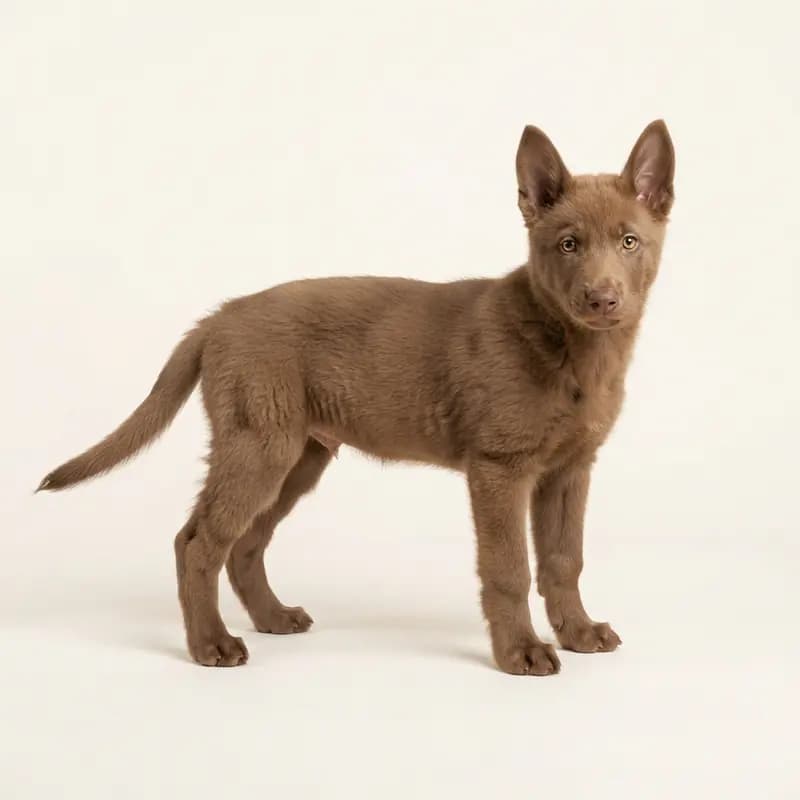 Illustrative image
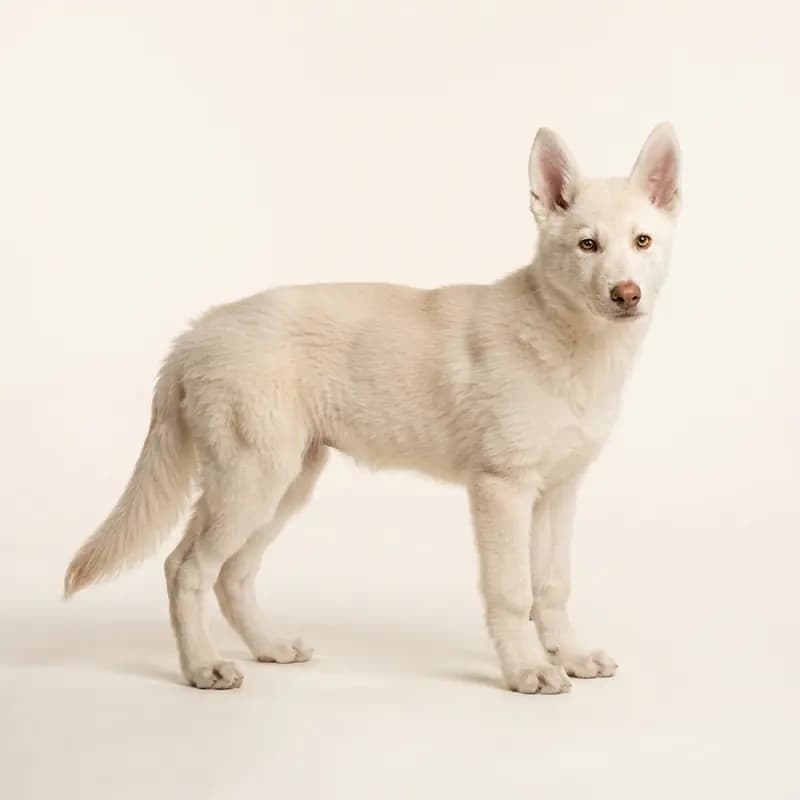 Illustrative image
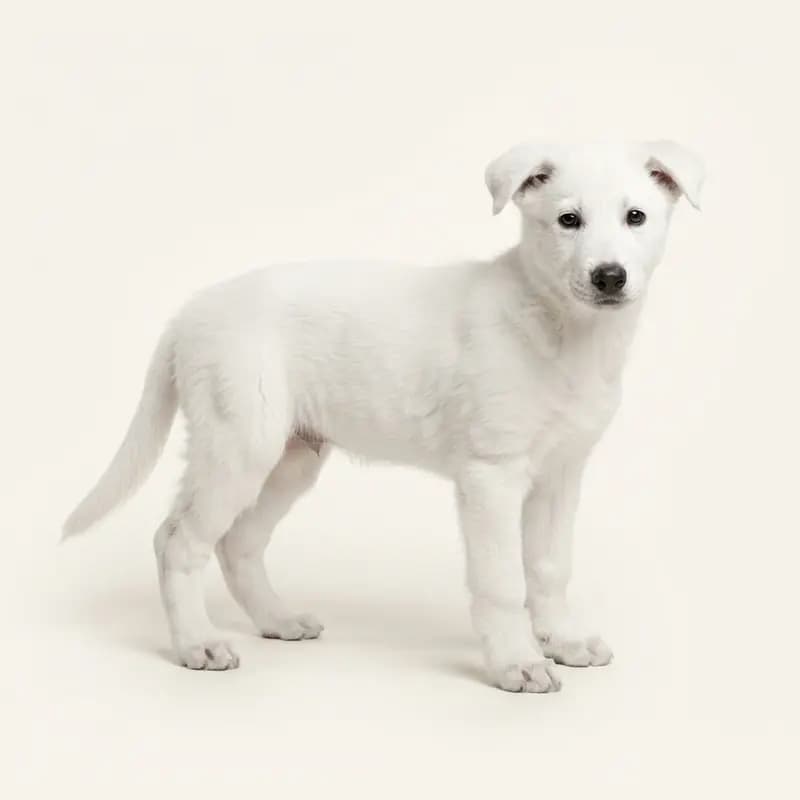 Illustrative image
The Saarloos Wolfhond owes its name to its breeder, Leendert Saarloos, a Dutch breeder who in the 1920s aimed to breed a robust and healthy working dog that combined the best of domestic dogs and wild wolves. Saarloos crossed a Siberian wolf with a female German Shepherd and dedicated his life to breeding and caring for the resulting dogs, now known as the Saarloos Wolfhond. Unfortunately, Saarloos died in 1969 before he could see his dogs recognized as an official breed. It was not until 1975, six years after his death, that the Saarloos Wolfhond was recognized as an independent breed by the FCI. The breed is relatively rare and not well known to the public, but is enjoying growing popularity in the Netherlands and some other European countries.
The Saarloos Wolfhond was created by crossing German Shepherds and wolves to create a robust working dog.
Netherlands
1930
Owners describe the Saarloos Wolfdog in everyday family life as very closely bonded to its "pack," highly sensitive and remarkably calm indoors. Many value the deep, almost telepathic bond and the dog's fine sense for moods. At the same time, forums and owner groups name being left alone as one of the biggest hurdles: when separated, the breed quickly falls into severe stress, panic or destructive behavior at home and in the car. Many owners therefore stress that life with this dog only really runs smoothly if it rarely has to be left alone or if a steady second dog gives it security.
Another recurring everyday topic is its strong reserve toward strangers and unfamiliar surroundings. The Saarloos Wolfdog is not a dog for busy downtown streets or lively garden parties; in unfamiliar situations, many of these dogs show a strong flight instinct. When crowded, they back away rather than step forward like typical guard dogs. Owners consistently recommend a fairly quiet, rural home and a securely fenced property, since some dogs are remarkable climbers and escape artists when they want to flee or follow their family.
Sources:dogorama.appcolwen.detackenberg.dedogforum.deforum.hundund.de
On training, experienced owners agree that conventional training-club methods or harsh pressure fail completely with the Saarloos Wolfdog. The breed has no typical "will to please" and questions whether instructions make sense. Trying to shape this dog through force or harshness usually produces distrust, withdrawal or panic. What it needs instead is calm, completely self-assured leadership, a great deal of patience and trust-building, so that the dog chooses to follow on its own.
According to owner reports, early socialization in puppyhood and adolescence takes a lot of work. Many owners say new experiences have to be introduced in small doses and without force, since a genetically ingrained flight drive can override the dog's behavior. Off-leash time also calls for a lot of careful planning: while some owners have good results from very early recall training, many dogs stay on a long line because of their prey drive or sudden startle reactions when they spot wildlife or people, which is why reliable loose-leash walking is considered a constant challenge.
Sources:dogorama.appzoomalia.deforum.hundund.deuna-neshoba.de
On health, owners and breed experts generally consider the Saarloos Wolfdog a sturdy, primitive breed with a long life expectancy that holds up well in any weather. When it comes to daily feeding, though, some owners report a sensitive digestive system: many dogs don't tolerate conventional, grain-heavy commercial food as well and do better on a gentle diet or raw feeding.
Breed discussions and club health reports also regularly point out that, because of the limited breeding pool and the German Shepherd ancestry, hereditary diseases need watching. These include hip dysplasia (HD), eye diseases such as progressive retinal atrophy (PRA), and degenerative myelopathy (DM). Owners therefore strongly urge newcomers to buy puppies only from breeders who can show transparent genetic tests and health results for the parents.
Paraphrased from real owner reports · translated from German
The Saarloos Wolfdog is an active dog that needs plenty of exercise and mental stimulation. Research the temperament, grooming needs, and space requirements before deciding.
The average life expectancy of a Saarloos Wolfdog is 10-12 years. With proper care and regular vet visits, your dog can live a long, healthy life.
Saarloos Wolfdog grooming requirements include regular brushing, nail trimming, and dental care. HonestDog provides detailed grooming tips for every breed.
The Saarloos Wolfdog can be a great family dog. Proper training and socialization are key. HonestDog provides family suitability information for every breed.
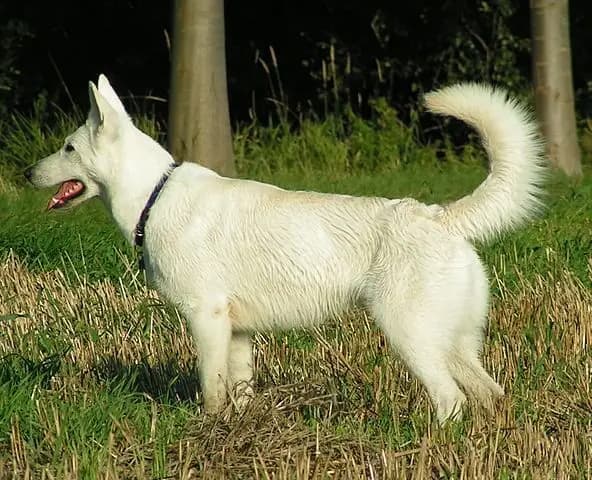
The Saarloos Wolfdog comes in these colors: Wolf grey, Brown, Cream, White.
Showcase your kennel on HonestDog and reach families searching for a responsibly bred Saarloos Wolfdog.