 AI image
Serbian Tricolour Hound
Close relative

Dogs love cookies, and so do we
Cookies for analytics and ads. Privacy
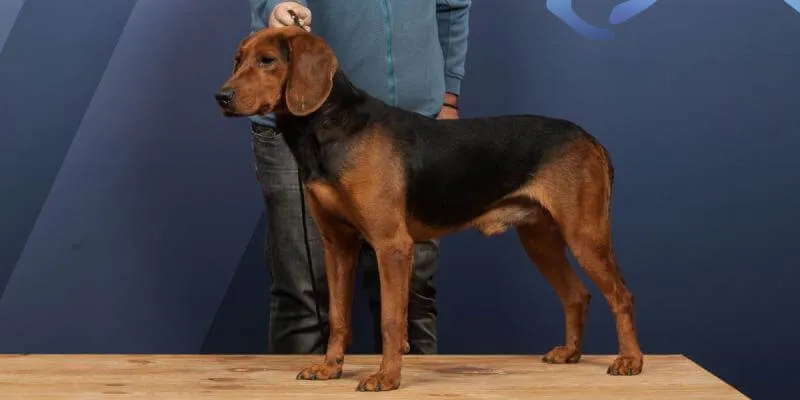
The Serbischer Laufhund (Serbian Hound) is a tireless, spirited pack dog—bred for hunting hare and fox in the rugged Balkans, where it tracks scents loudly and with complete independence.
Self-check
Answer 6 quick questions about your everyday life and see how well the Serbian Hound fits you — including an honest cost estimate per month, per year, and across the dog's lifetime.
Question 1 of 6
Count honestly — the normal day, not the best one.
AI image AI image

At a glance
The essentials — key facts, traits, and health priorities — before you dive deeper.
Lifespan
12–15 yrs
Shoulder height
44–56 cm
Weight
16–22 kg
Practical
Temperament
Daily life
What matters most
Especially with a Serbian Hound, choosing the right breeder is the single most important decision you'll make. Serious breeders consistently test the parents for inherited conditions, prioritize healthy early socialization, and stay accountable long after handover. A cheap puppy without health screening tends to become the most expensive dog later on.
See HonestDog breeder standards →Colors & coat
The coat colors that occur in the Serbian Hound — including which ones fall outside the breed standard and which carry genetic risk.
Eye colors
 Brown
Coat type
 Short
 Double coat
The real vibes check
A Serbischer Laufhund is a loud, tireless tracker with tunnel vision outdoors, but it suddenly becomes a gentle, almost invisible shadow in the living room. You aren't getting a classic command-follower, but a highly specialized woodsman whose respect you must earn through shared scent work. If you accept its wild passion on the trail, you will gain the most relaxed companion at home.
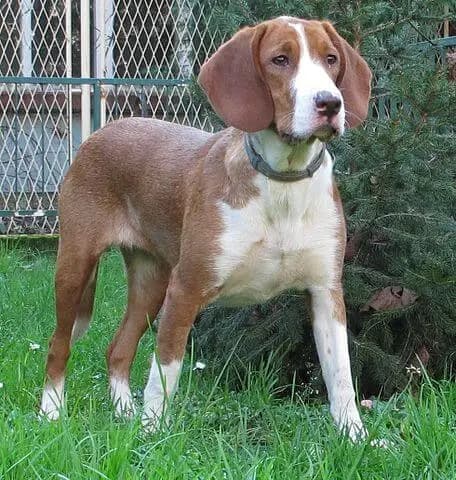
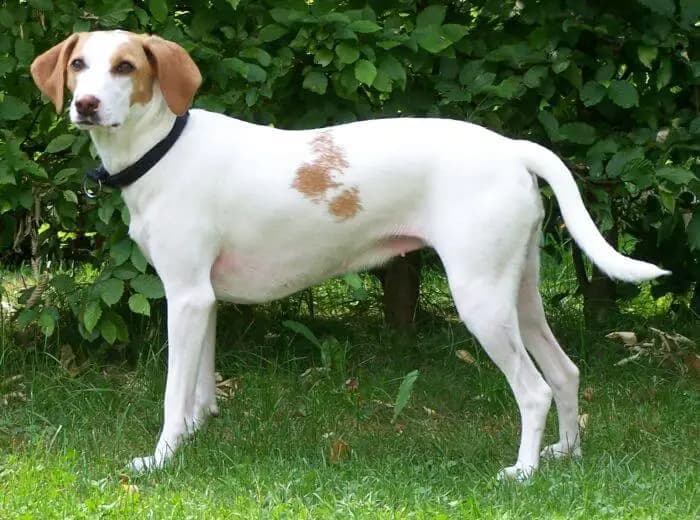
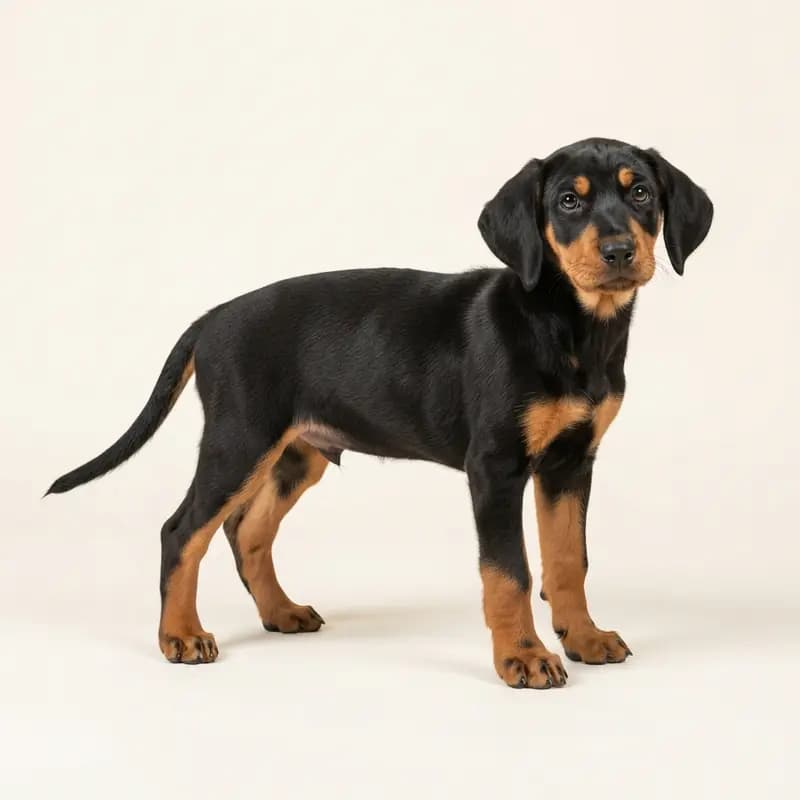
The Serbian Hound is a medium-sized dog breed classified in FCI Group 6, Section 1.2 (Medium-Sized Hounds). Its elegant and at the same time robust appearance gives an idea of its extraordinary endurance and performance. The breed is characterized by its elongated physique, a medium-length neck and drooping ears that reach to the tip of the nose. The head is narrow and elongated with a pronounced stop and the eyes are dark and oval. The tail is set high, strong and broad at the base, carried in a saber shape. This breed does not differentiate between performance and show lines, as it is bred primarily for performance and less for appearance in its homeland. The Serbian Hound is very durable and weather-resistant, making it an excellent working dog for long hunts in a variety of terrain and weather conditions.
The Serbian Hound is a dog with many facets. His work as a hunting dog requires endurance, dedication and a strong desire to please his human companions. Therefore, as a working dog, he is very focused and committed. It can travel long distances over rugged terrain and is known for its keen sense of smell, which allows it to follow tracks over long distances. Despite its hard work disposition, the Serbian Hound is an extremely people-oriented dog that builds a strong bond with its family. He is known for his friendliness and his even-tempered nature. His temperament is rather calm and he is not a hyperactive dog, although of course he has his active moments, especially when he is doing his favorite activity, hunting. But even when he's not hunting, he enjoys long walks and activities that allow him to use his sense of smell. With its strong hunting instincts, it is not surprising that the Serbian Hound exhibits strong prey catching and hunting behavior. This can cause him to chase small animals and he must therefore always be guided in safe terrain or have a good recall command. Inside the house, he tends to be alert and aware of his surroundings, but is usually not an excessive barker. Since the Serbian Hound is a working hunting dog, it can certainly learn to stay alone as long as it receives enough mental and physical stimulation. However, as with any dog, being alone should be trained gradually and positively. The Serbian Hound's independent nature allows it to be content without constant human interaction as long as its basic needs are met. However, that doesn't mean he's a loner. On the contrary, he enjoys the company of his people and is always happy to be part of family experiences.
| Watchfulness A natural watchdog with real protective instinct. | High |
| Openness to Strangers Neither pushily friendly nor suspicious. | Neutral |
| Hunting or Herding Drive This drive runs deep — no amount of training eliminates it. | Very strong |
Fun Fact!
Despite its strong hunting instincts, the Serbian Hound is known for not barking loudly while hunting, which sets it apart from many other hunting dog breeds.
The Serbian Hound is a lively and enduring hunting dog known for its excellent sense of smell. These dogs are friendly and easy to train but require a lot of exercise and mental stimulation. They are especially suitable for active families and hunters looking for a reliable companion in the field. The Serbian Hound shows a strong bond with its owner while remaining alert and attentive.
Although the Serbian Hound is an active and energetic dog, it can adapt to a city apartment as long as it receives enough exercise and mental stimulation. He is not a sofa dog and needs daily exercise to be happy and balanced. Therefore, he is probably better suited to a home that gives him access to a garden or nearby park. Serbian Hounds tend to be good with children and display a gentle and patient nature. However, due to their hunting instincts, they may not get along well with cats and other small pets unless they are socialized with them from an early age.
Loves family life and thrives in a group.
Gets on well with children — with adult supervision.
Actively enjoys the company of other dogs.
Can manage in the city, but only with very active owners.
Owning a dog is a privilege, but it's also a real responsibility. Before you bring one into your life, be honest with yourself about the commitment it takes.
The Serbian Hound is an intelligent animal with a strong desire to please. This makes him relatively easy to train, although he does require a consistent but gentle hand. He responds best to positive reinforcement and reward-based training methods. Given his hard work disposition and strong hunting instincts, activities like mantrailing or search games could be a good way to challenge his mind while satisfying his natural instincts. However, you should be careful not to over-occupy the dog. As with any dog, a balance between activity and rest is important for the Serbian Hound. It's important to encourage frustration tolerance and impulse control in this dog, especially when it comes to counteracting his prey drive. Training alternative behavior, such as focus training, can be very helpful here.
Serbian Hounds are not particularly picky about their food, and they usually do well on a balanced diet of high-quality commercial dog food. It may also be beneficial to supplement their diet with fresh foods such as meat, vegetables and fruits. Due to their propensity for hip dysplasia, a diet that targets maintenance weight and supports joint health could be beneficial. When it comes to care, the Serbian Hound is relatively easy to care for. Its short, dense coat has no undercoat and sheds moderately. A weekly brush should be enough to keep his coat clean and healthy. He copes well with the climate in Germany, although he may need a dog coat in extremely cold weather as he does not have an undercoat to provide additional warmth.
| Care Level Minimal effort — occasional brushing and bathing. | Low-maintenance |
| Exercise Needs Needs several hours of serious exercise every day. | Very active |
| Shedding Regular shedding — dog hair on clothes is now normal. | Moderate |
| Trainability Has its own ideas and will test limits. | Strong-willed |
Our experts are still reviewing this information. Spotted something wrong? Email us at info@honestdog.de.
Solid
Health grade
With a grade of B, the Serbian Hound is considered a breed with an average genetic burden, for which no specific breed-typical hereditary diseases are currently documented. Nevertheless, diligence during mating is crucial to the fitness of your puppy. A responsible breeder pays close attention to the vitality and longevity of their breeding lines. Before purchasing, ask to see the parents' veterinary health certificates and convince yourself of their physical condition.
Grade is relative to other breeds — AI-assisted and editorially reviewed.
Methodology and data: HonestDog Dog Breed Health Report 2026
You should ensure the dog is raised in a way that protects its joints and regularly check and clean its floppy ears to prevent infections.
Reputable breeders have the parents' hips, elbows, eyes, and hearts tested and pay attention to well-ventilated ears to reduce risks in the bloodline.
Note: This health overview is AI-assisted and editorially reviewed. It is for orientation only and does not replace veterinary advice.
No specific health tests are currently available for this breed.
A Serbian Hound costs around ~€170 per month (€90 – €320, depending on your setup). The first year adds up to roughly ~€4,740 including purchase, equipment and puppy school; across the dog's life (13.5 years) it comes to about ~€30,550.
With surgery cover, running costs come to about ~€170 per month — in return, your share of a major operation drops from several thousand euros to around 20 percent.
Per month
~€170
In the first year
~€4,740
Across the dog's life
~€30,550
Estimated purchase price from a breeder: €1,200 – €2,500
Estimate at a mid-range setup (suburban, dry food, 1–2 hours of daily exercise), average German prices, as of July 2026.
HonestDog Concierge
We currently have no breeders for this breed who have passed our verification. Create your short buyer profile: we'll set up your search alert, review a possible source and email you within 28 days.

 Illustrative image
 Illustrative image
The history of the Serbian Hound dates back to the 18th century and is closely linked to the history of the Balkans. Originally he was known under the name "Balkan Hound". It is believed that his ancestors came from the East and influenced the local dog population as they passed through Serbia. These dogs were then crossed with hounds from Western Europe to create the breed we know today. The Serbian Hound was traditionally the companion of hunters, where it displayed its remarkable endurance and keen sense of smell to hunt down game. His popularity increased in the 1900s and he was greatly appreciated in his homeland and in the neighboring Balkans. Despite its exceptional abilities as a working dog, the breed is little known outside of its native region. The breed was recognized by the FCI in 1996.
The Serbian Hound was bred to hunt wild boar and other large game in the mountainous regions of Serbia, known for its endurance and keen sense of smell.
Serbia
Antike
At home, owners overwhelmingly describe the Serbian Hound (Srpski Gonič) as very affectionate, friendly and cuddly. While it's full of energy outside, indoors it is remarkably calm and unobtrusive and sleeps a lot, as long as it gets enough exercise. Many owners appreciate how patient and gentle it is with the family and with children.
At the same time, owners stress that despite its pack-hound roots and easy way with other dogs, this breed needs a close connection to its people. It does have a watchful side and will usually give a short bark when strangers come onto the property, but it doesn't tend to bark nonstop indoors. Problems come up mainly when the dog doesn't get enough to do. Without plenty of mental stimulation and exercise it can become restless or develop separation stress, which is why time alone has to be built up very gradually and in a structured way.
Hunting drive and the urge to follow a trail are the dominant topic for nearly all owners and hunters who work this breed. As soon as the Serbian Hound smells a trail, it famously tunes everything else out. Many owners report that these dogs give loud voice as soon as they pick up a scent (trail voice) and stay on a track for kilometers.
For that reason, experienced owners warn against counting on reliable off-leash time in the woods or in areas with lots of game. Many keep their dogs on a long line most of the time or consistently use GPS trackers out in the field. For training, this means old-school, unquestioning obedience doesn't work with this independent breed. Owners strongly recommend training with positive reinforcement and clear boundaries, plus focused outlets for the drive. Mantrailing, drag trails and intensive scent work in particular are named again and again as essential for keeping the dog mentally satisfied and channeling its hunting drive in a controlled way.
Sources:tackenberg.deforum.wildundhund.dezooroyal.dedogforum.de
In reports on health and care, the breed comes across as very much a natural, tough, weatherproof dog. Owners point out that the short, dense coat with undercoat is very easy to care for and that dirt usually just falls off. Regular brushing is only needed during seasonal shedding. Specific hereditary diseases hardly come up in owner accounts, since the breed was strictly selected for working ability and hardiness over generations in its home region.
The physical strain, however, is something owners need to keep an eye on. Because these dogs seem to know no limits when tracking and running and just keep going, owners occasionally report typical hunting injuries from rough undergrowth or worn paws. Owners also advise checking the drop ears regularly for infections or foreign bodies such as grass awns, since these easily go unnoticed when the dog works through thick brush.
Paraphrased from real owner reports · translated from German
The Serbian Hound is an active dog that needs plenty of exercise and mental stimulation. Research the temperament, grooming needs, and space requirements before deciding.
The average life expectancy of a Serbian Hound is 12-15 years. With proper care and regular vet visits, your dog can live a long, healthy life.
Serbian Hound grooming requirements include regular brushing, nail trimming, and dental care. HonestDog provides detailed grooming tips for every breed.
The Serbian Hound can be a great family dog. Proper training and socialization are key. HonestDog provides family suitability information for every breed.
The Serbian Hound comes in these colors: Bicolor, Black and tan.
Showcase your kennel on HonestDog and reach families searching for a responsibly bred Serbian Hound.