Chow ChowSimilar profile
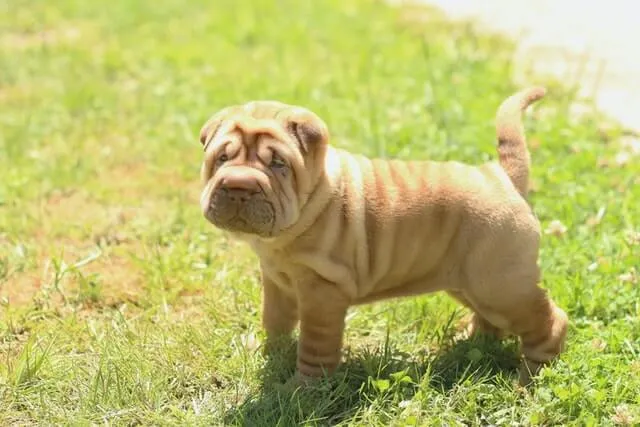
The Shar Pei is a calm, aloof, yet extremely loyal dog—bred as an independent Asian guardian, whose rough coat and loose skin were meant to make him invulnerable during conflicts.
How the health grade is calculated
Sources for required breeding screenings. 1. Deutscher Shar-Pei Club 1985 e.V.
Self-check
Answer 6 quick questions about your everyday life and see how well the Shar-Pei fits you — including an honest cost estimate per month, per year, and across the dog's lifetime.
At a glance
The essentials — key facts, traits, and health priorities — before you dive deeper.
Lifespan
8–12 yrs
Shoulder height
44–51 cm
Weight
18–30 kg
Practical
Temperament
Daily life
What matters most
Especially with a Shar-Pei, choosing the right breeder is the single most important decision you'll make. Serious breeders consistently test the parents for inherited conditions, prioritize healthy early socialization, and stay accountable long after handover. A cheap puppy without health screening tends to become the most expensive dog later on.
See HonestDog breeder standards →Colors & coat
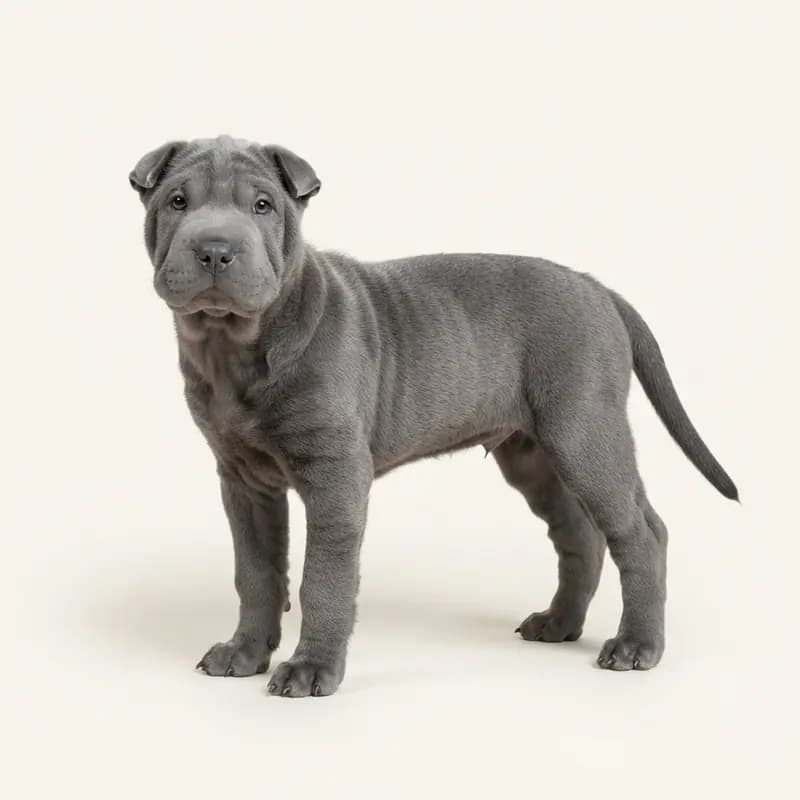
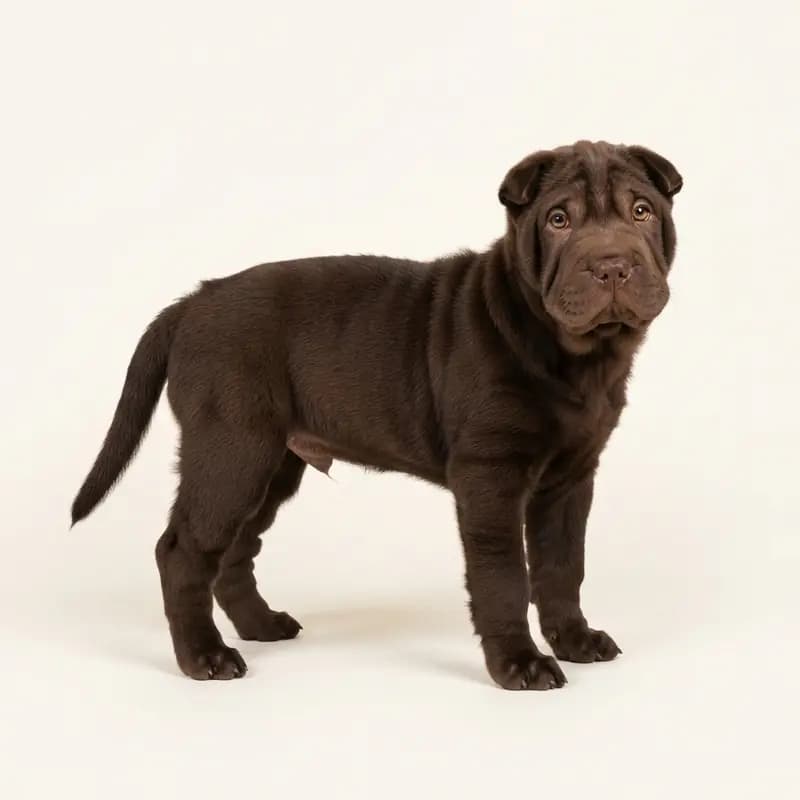
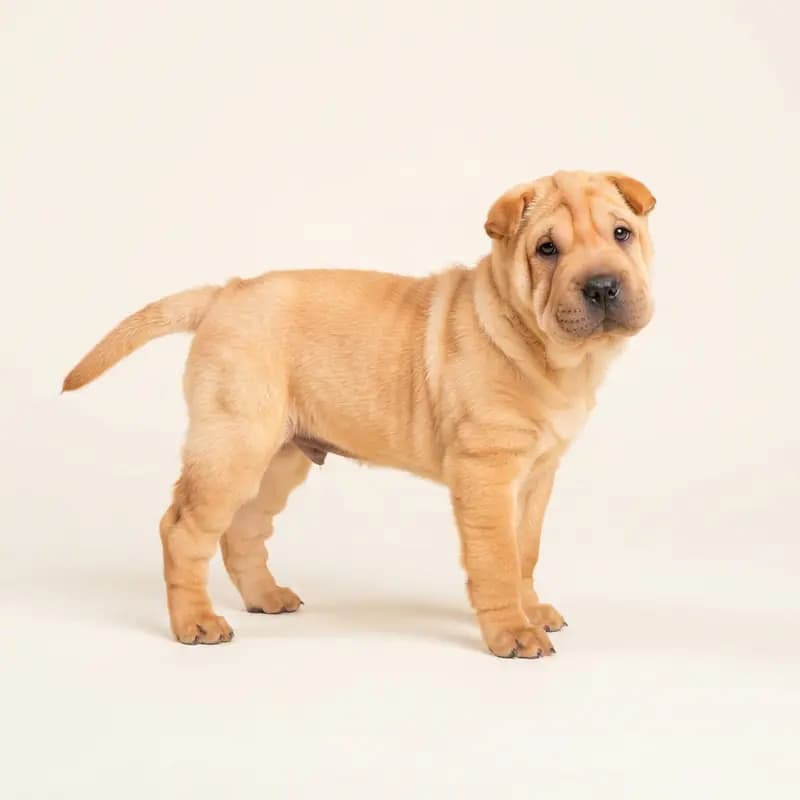
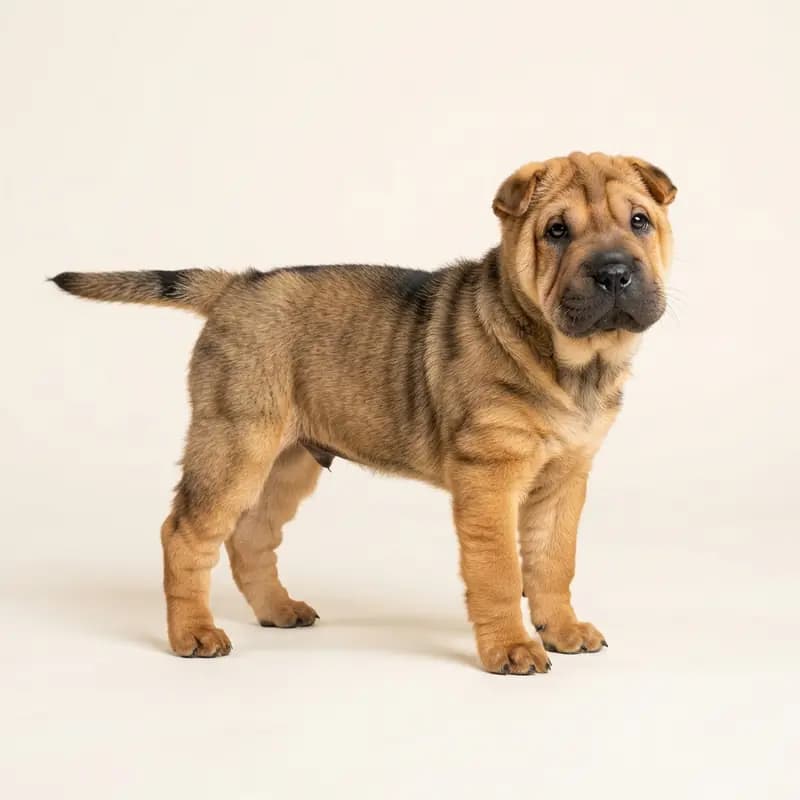
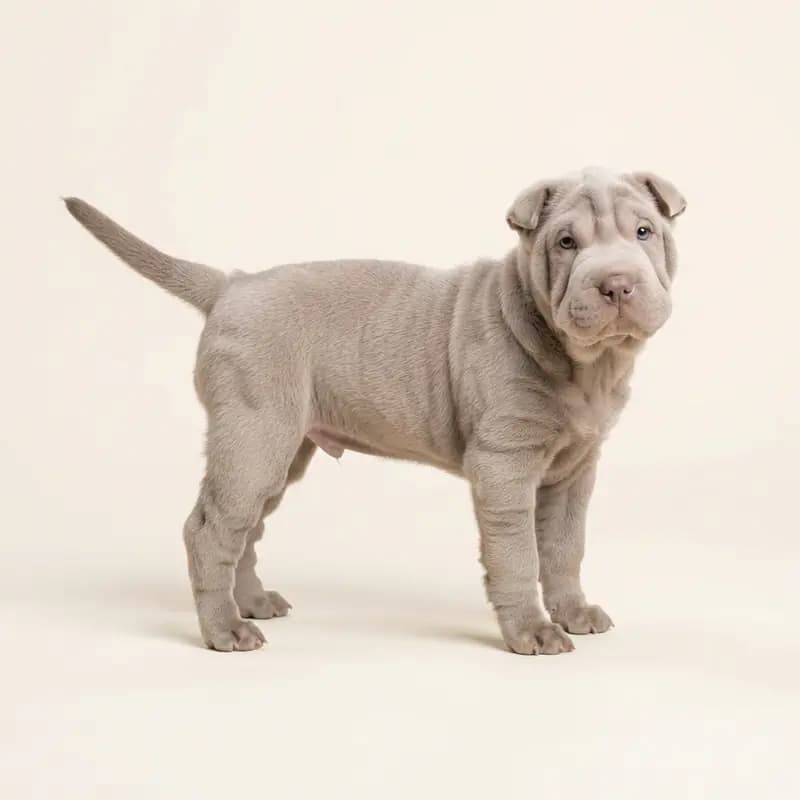
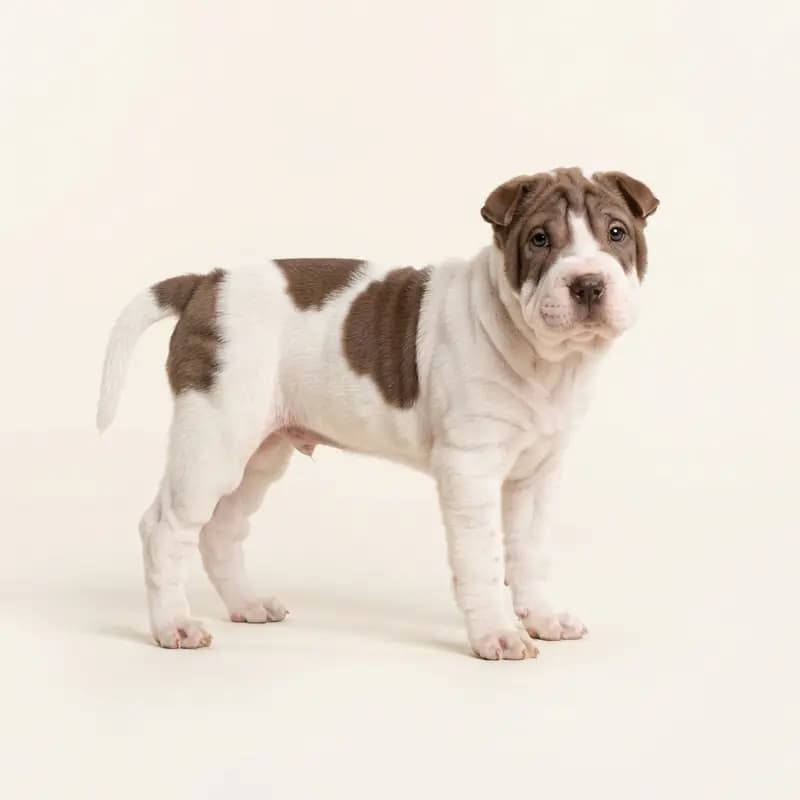
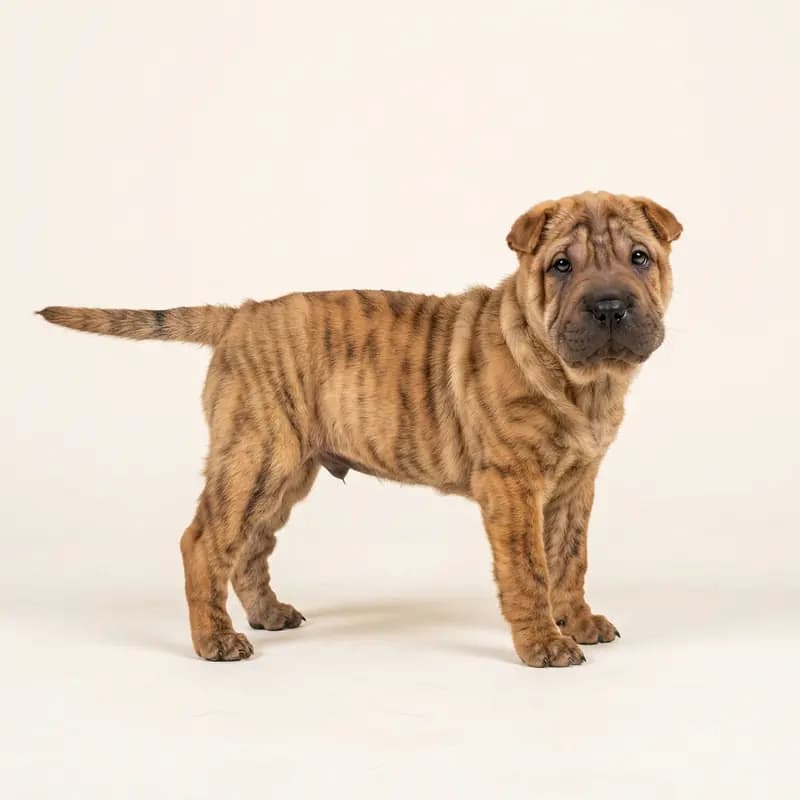
The coat colors that occur in the Shar-Pei — including which ones fall outside the breed standard and which carry genetic risk.
Eye colors
 Brown
 Amber
Coat type
 Short
 Smooth
The real vibes check
In his stoic nature, a Shar Pei often reminds one more of a cat than a dog. He doesn't push himself on you, doesn't demand applause for blind obedience, and watches over his territory quietly but incorruptibly. Once you have earned his loyalty, he will never leave your side—but he will never be the class clown for strangers.
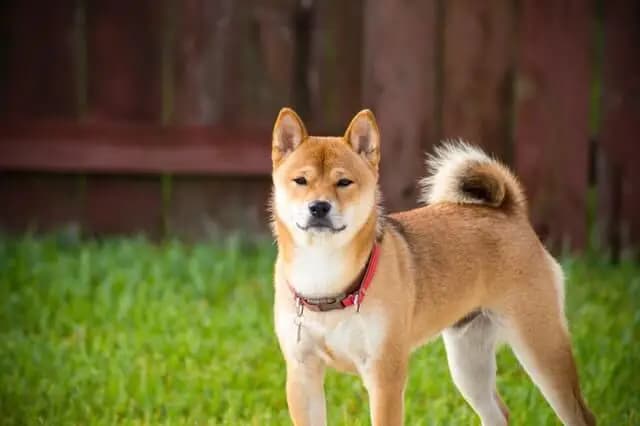
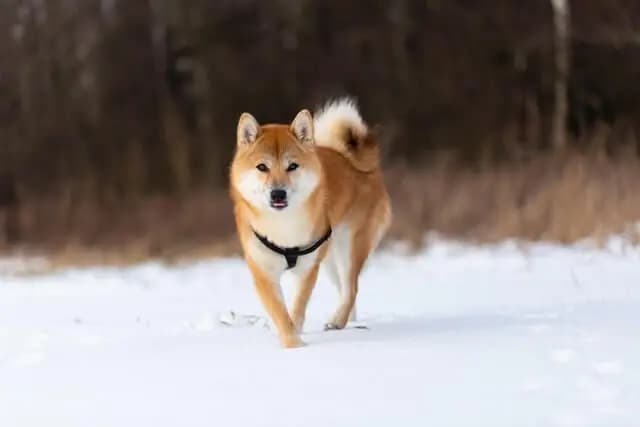
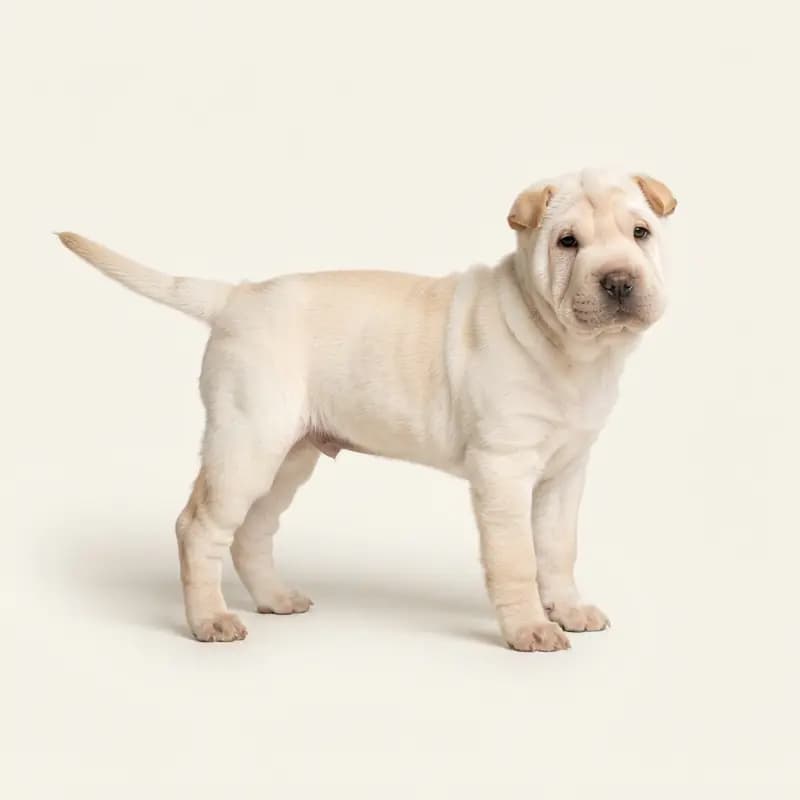
With its wrinkled skin and unique blue tongue, the Shar Pei is a breed that immediately catches the eye. It has a powerful and compact stature that reflects its robust character. The Shar Pei has a broad and flat skull, small ears and a high forehead crease that give it its distinctive "worried" facial expression. He belongs to FCI Group 2, Molossoids, Section 2.1, Mastiff-like dogs. There is no distinction between show and performance lines in this breed.
The Shar Pei is an extremely loyal and people-oriented dog. He develops a strong bond with his family and is known for his love and loyalty towards his owners. However, he can be rather reserved and suspicious when dealing with strangers. He is a vigilant and courageous dog who will vigorously defend his territory and family if he feels they are threatened. Despite its strong guarding instincts, the Shar Pei is a fundamentally calm and balanced dog. He is not hyperactive and does not require as much exercise as some other breeds. Still, he enjoys regular walks and playtime and will benefit from mental stimulation. The Shar Pei is an intelligent dog that learns quickly and responds well to positive reinforcement. However, his intelligence combined with his independence can sometimes be a challenge. He can be stubborn and needs an owner who is consistent and patient. The Shar Pei can learn to stay alone well, but it values the company of its family and should not be left alone for long periods of time. The Shar Pei breed has a moderate prey drive, but is usually good at controlling this instinct, especially when well socialized and trained. He is a playful dog who enjoys playing with toys and spending time with his family. His calm and even-tempered character makes him a great companion dog for older people or families with older children. He can also get along well with other dogs and pets as long as he is well socialized from an early age.
| Watchfulness A natural watchdog with real protective instinct. | High |
| Openness to Strangers Neither pushily friendly nor suspicious. | Neutral |
| Hunting or Herding Drive Mild interest in movement and small animals — easily managed. | Low |
Fun Fact!
Shar Peis have the blue-black tongue, which they share with only one other dog breed - the Chow Chow! Both breeds are originally from China, and this unique tongue color is a notable and unusual feature.
Shar Peis have a very small genetic base and suffer from many hereditary diseases that massively reduce their quality of life. They are therefore often high on lists that list dogs with extreme breeding traits.
Shar Peis are well suited as city dogs because of their size and calm temperament. But they are also guard dogs, and so they can sometimes be a bit loud in an apartment. They are generally good with children as long as they are treated with respect. Shar Peis can also get along well with other pets if they are properly socialized.
Loves family life and thrives in a group.
Takes boisterous and affectionate children in its stride.
Usually gets on fine with other dogs.
Adapts well to city living and urban environments.
Owning a dog is a privilege, but it's also a real responsibility. Before you bring one into your life, be honest with yourself about the commitment it takes.
Shar Peis are intelligent and independent, which can sometimes make them a bit stubborn and difficult to train. But with patience and positive reinforcement they can learn very well. They don't have the high level of exercise like some other breeds, but they still require daily exercise and mental stimulation. Frustration tolerance and impulse control are important skills for Shar Peis to learn since they tend to be territorial and alert. Early socialization and training are important in raising a well-behaved and socially acceptable dog.
Shar Peis require a balanced diet with high-quality proteins and healthy fats to maintain their health and shiny coat. They are prone to food allergies, so a diet with limited ingredients and no fillers or allergens can be helpful. Caring for a Shar Pei is special in that they require special attention due to their unique skin folds. These need to be cleaned and dried regularly to avoid infections. Shar Peis have short, hard hair without an undercoat and shed relatively little. They get along well with the climate in Germany.
| Care Level Regular brushing and occasional professional grooming. | Moderate |
| Exercise Needs Needs 1–2 hours of real exercise daily. | Active |
| Shedding Hair everywhere, always — no white clothing survives. | Very heavy |
| Trainability Has its own ideas and will test limits. | Strong-willed |
Our experts are still reviewing this information. Spotted something wrong? Email us at info@honestdog.de.
Elevated risks
Health grade
In the Shar Pei, Familial Shar-Pei Fever occurs with increased frequency; in the long term, it can lead to kidney damage via amyloidosis, and the breed also frequently struggles with problems such as ectropion / entropion as well as joint dysplasias. The 1. Deutscher Shar-Pei Club 1985 e.V. therefore mandates mandatory examinations for hip dysplasia (HD), elbow dysplasia (ED), ectropion / entropion, autoinflammatory disease (Shar-Pei), and genetic testing for primary open-angle glaucoma and primary lens luxation (PLL). A health-oriented breeder additionally tests for risks such as brachycephalic obstructive airway syndrome (BOAS) or progressive retinal atrophy (prcd-PRA). Before buying a puppy, have the official certificates shown to you: For PLL and primary open-angle glaucoma, carriers may only be mated with demonstrably clear partners, and for HD, results from HD A to C at most are permissible (C only with A).
Grade is relative to other breeds — AI-assisted and editorially reviewed.
Methodology and data: HonestDog Dog Breed Health Report 2026
What matters most for this breed
Tap any item to see details.
You should regularly check his skin folds and ears, and consult a vet immediately in the case of watery eyes or unexplained fever to prevent severe complications.
Responsible breeders test for HD, ED, ectropion / entropion, primary lens luxation (PLL), and autoinflammatory disease (Shar-Pei), and voluntarily screen for brachycephalic obstructive airway syndrome (BOAS).
Note: This health overview is AI-assisted and editorially reviewed. It is for orientation only and does not replace veterinary advice.
What matters most for this breed — what's common, how much it affects the dog's life, and how to protect yourself as a buyer.
Tap a body region to see the inherited conditions linked to it.
The three most important risks
Pick a region on the map to explore other areas.
Tier 1 reflects the tests 1. Deutscher Shar-Pei Club 1985 e.V. actually mandates. Tiers 2 and 3 show how responsible breeders go beyond.
Club standard. 1. Deutscher Shar-Pei Club 1985 e.V. requires these tests for breeding approval. Ask any reputable breeder for the results.
Not health tests, but required for breeding: the club asks for these results too. They don't count toward the risks or the rating.
DNA-Identitätsnachweis
Required by 1. Deutscher Shar-Pei Club 1985 e.V.
Acceptable result: Nachweis eines ISAG2020 Profils (oder ISAG2006 Profils)
Wesensbeurteilung
Required by 1. Deutscher Shar-Pei Club 1985 e.V.
Acceptable result: Bestehen der ZZP (zuchttauglich ohne Auflagen, mit Auflagen oder bedingt zuchttauglich)
Note: This health overview is AI-assisted and editorially reviewed. It is for orientation only and does not replace veterinary advice.
A Shar-Pei costs around ~€190 per month (€100 – €350, depending on your setup). The first year adds up to roughly ~€5,070 including purchase, equipment and puppy school; across the dog's life (10 years) it comes to about ~€25,280.
With surgery cover, running costs come to about ~€190 per month — in return, your share of a major operation drops from several thousand euros to around 20 percent.
Per month
~€190
In the first year
~€5,070
Across the dog's life
~€25,280
Estimated purchase price from a breeder: €1,500 – €2,500
Estimate at a mid-range setup (suburban, dry food, 1–2 hours of daily exercise), average German prices, as of July 2026.

 Illustrative image
 Illustrative image
 Illustrative image
 Illustrative image
The Shar Pei's origins can be traced back to southern China, where the breed has existed for centuries. Its exact history is not well documented, but it is believed that it was originally bred as an all-purpose farm dog, used for hunting, herding livestock, and protecting the home and farm. In Chinese language, "Shar Pei" means as much as "sandskin," indicating the unique, sandpaper-like texture of its fur. The Shar Pei has experienced many ups and downs throughout China's history. In the 1940s and 1950s, when China was under communist rule, the breed was almost wiped out because keeping pets was viewed as bourgeois and wasteful. However, in the 1970s, some Shar Pei enthusiasts managed to export some specimens from China and revive the breed in the United States. The Shar Pei has been recognized by the American Kennel Club since 1992.
The Shar Pei was originally used as a guard dog and for hunting, known for its distinctive skin folds and blue-black tongue pigment.
China
Antike
In everyday family life, owners mostly describe the Shar Pei as a very loyal, calm, devoted shadow. Indoors it is often unobtrusive, almost catlike, and enjoys cozy hours snuggled up close to its people. Many owners like that the breed rarely barks at home, is very clean when it comes to housetraining, and doesn't have an excessive need to move. Normal, long sniffing walks and a bit of brain work are usually plenty for it.
At the same time, owners stress these dogs' strong guarding and protective instincts. With strangers and visitors, the Shar Pei is usually distinctly aloof, reserved or wary. Walks often take some management too: many Shar Peis are indifferent to or dismissive of other dogs, and their stiff posture and deep-set facial expression fairly often lead to misunderstandings with other dogs. Many members of the breed also simply refuse to step out the front door when it's raining or wet.
In training, many owners run into the breed's well-known stubbornness. Shar Pei owners consistently describe their dogs as self-assured and willful. A Shar Pei questions commands and only follows them when it sees a point or is genuinely willing to cooperate. According to community reports, a heavy hand or pressure achieves exactly the opposite, because the dog then digs in completely or loses trust.
Experienced owners therefore advise patient, fully consistent and kind handling with positive reinforcement. Socialization is a top priority from puppyhood on, especially around other dogs and new sights and sounds, because these dogs are naturally suspicious and territorial. Several owners also confirm a moderate to serious prey drive toward small animals or game, which is why recall has to be trained intensively from the start.
Health is the dominant topic in every owner forum, and the reports often speak of a heavy emotional and financial toll. The biggest breed-specific problem named is Shar-Pei fever (Familial Shar-Pei Fever / FSF), which comes with sudden, severe bouts of fever, painful joint swelling and, in the worst cases, early kidney failure. Owners who've been through it report that they always have to keep emergency medication on hand.
Owners also regularly describe chronic eye problems, especially inward-rolling eyelids (entropion), which very often have to be corrected surgically. The skin folds and narrow ear canals are another frequent worry. Many dogs suffer from allergies, food intolerances, skin infections and ear infections that call for constant care and close veterinary monitoring. For this reason, owners strongly advise choosing only breeders who select for a moderate type with fewer wrinkles, and taking out good surgical or health insurance.
Paraphrased from real owner reports · translated from German
The Shar-Pei is an adaptable dog that adjusts well to various lifestyles. Research the temperament, grooming needs, and space requirements before deciding.
The average life expectancy of a Shar-Pei is 8-12 years. With proper care and regular vet visits, your dog can live a long, healthy life.
Shar-Pei grooming requirements include regular brushing, nail trimming, and dental care. HonestDog provides detailed grooming tips for every breed.
The Shar-Pei can be a great family dog. Proper training and socialization are key. HonestDog provides family suitability information for every breed.
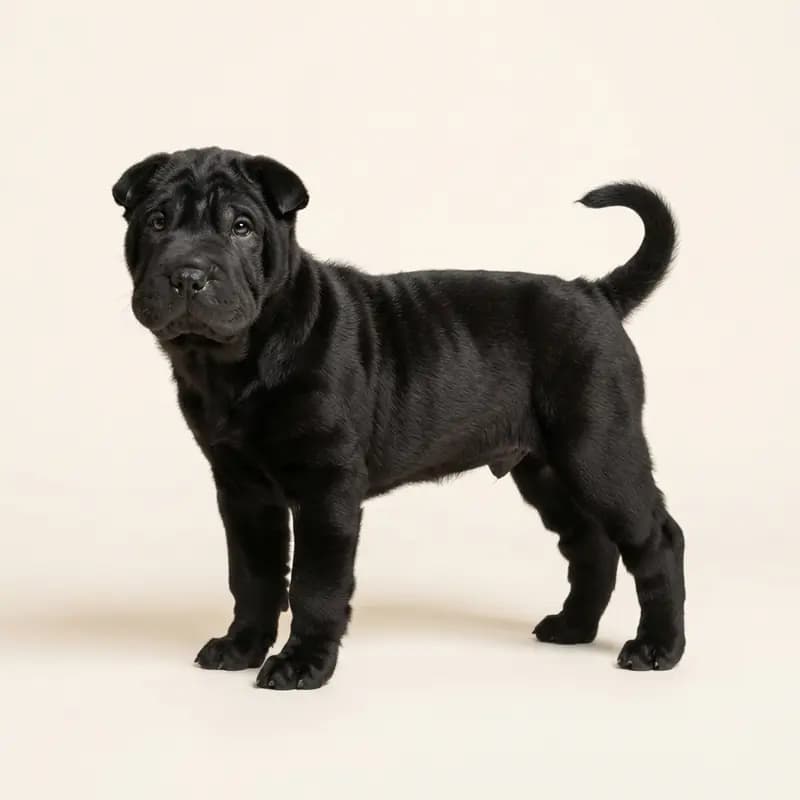
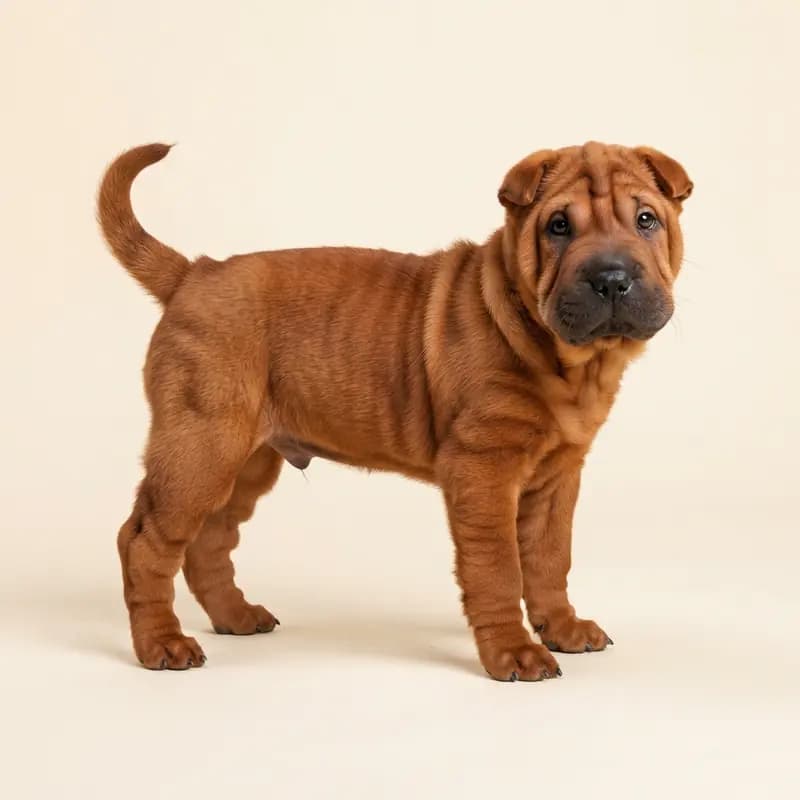
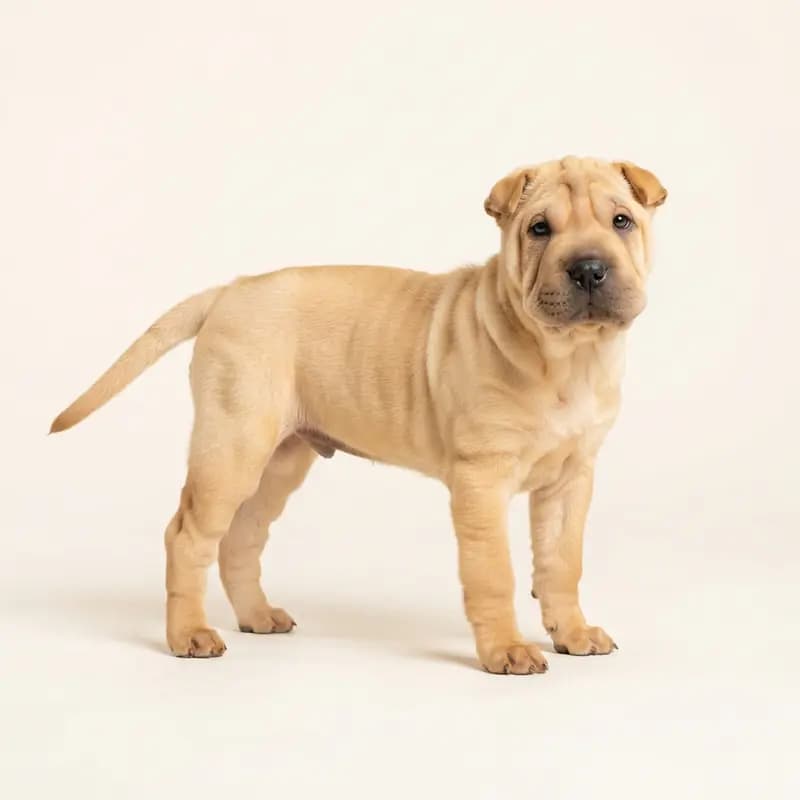
The Shar-Pei comes in these colors: Black, Red, Fawn, Cream, Blue, Chocolate, Apricot, Sable, Isabella, Piebald, Brindle. Colors that fall outside the breed standard are marked as such on the breed page.
Showcase your kennel on HonestDog and reach families searching for a responsibly bred Shar-Pei.