Pembroke Welsh CorgiClose relative

The Welsh Corgi Cardigan is a robust, razor-sharp, and surprisingly feisty droving dog—bred to move Welsh cattle over long distances with precise heel nips. Behind that cute appearance with the big ears lies a serious worker who demands clear rules.
How the health grade is calculated
Sources for required breeding screenings. Club für Britische Hütehunde e.V. (CfBrH)
Self-check
Answer 6 quick questions about your everyday life and see how well the Cardigan Welsh Corgi fits you — including an honest cost estimate per month, per year, and across the dog's lifetime.



At a glance
The essentials — key facts, traits, and health priorities — before you dive deeper.
Lifespan
12–15 yrs
Shoulder height
28–32 cm
Weight
11–17 kg
Practical
Temperament
Daily life
What matters most
Especially with a Cardigan Welsh Corgi, choosing the right breeder is the single most important decision you'll make. Serious breeders consistently test the parents for inherited conditions, prioritize healthy early socialization, and stay accountable long after handover. A cheap puppy without health screening tends to become the most expensive dog later on.
See HonestDog breeder standards →Colors & coat
The coat colors that occur in the Cardigan Welsh Corgi — including which ones fall outside the breed standard and which carry genetic risk.
Eye colors
 Brown
 Blue
 Odd-eyed
 Partial (split eye)
Coat type
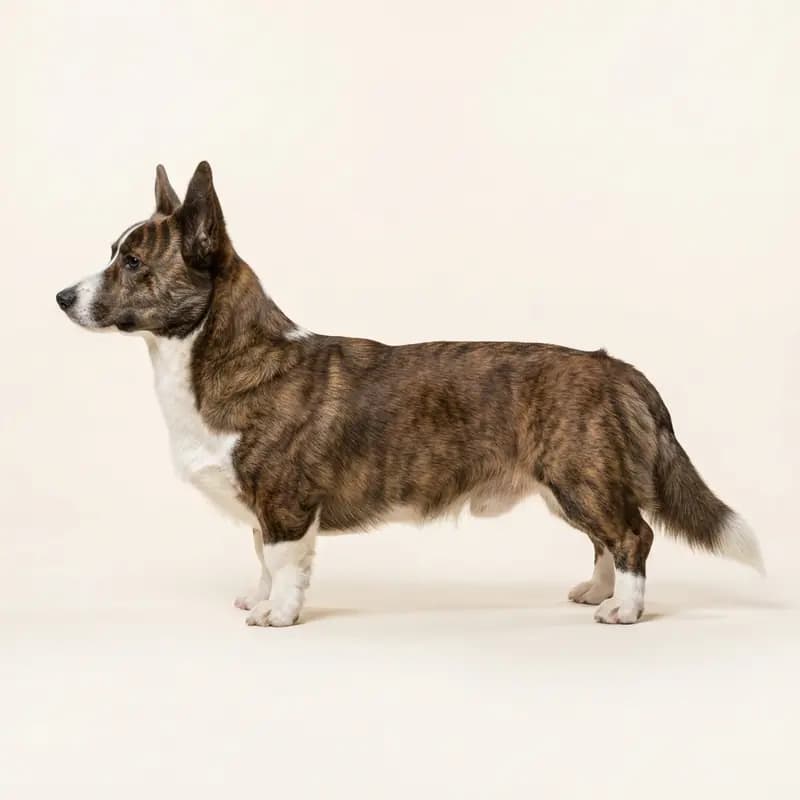 Illustrative image
Short
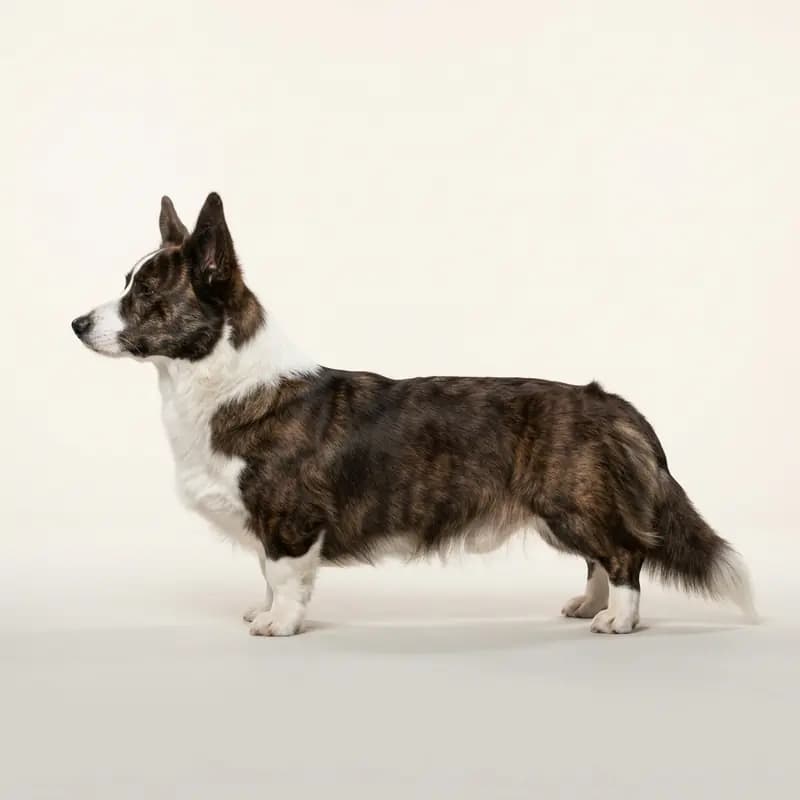 Illustrative image
Medium
 Double coat
 Smooth
The real vibes check
A Corgi is not a cute teddy bear on short legs, but an assertive cattle herder in living-room format. If you channel its intelligence and work ethic into constructive paths, you get an incredibly loyal, humorous partner. However, if you leave the decisions to it, it quickly mutates into the barking traffic cop of your household.
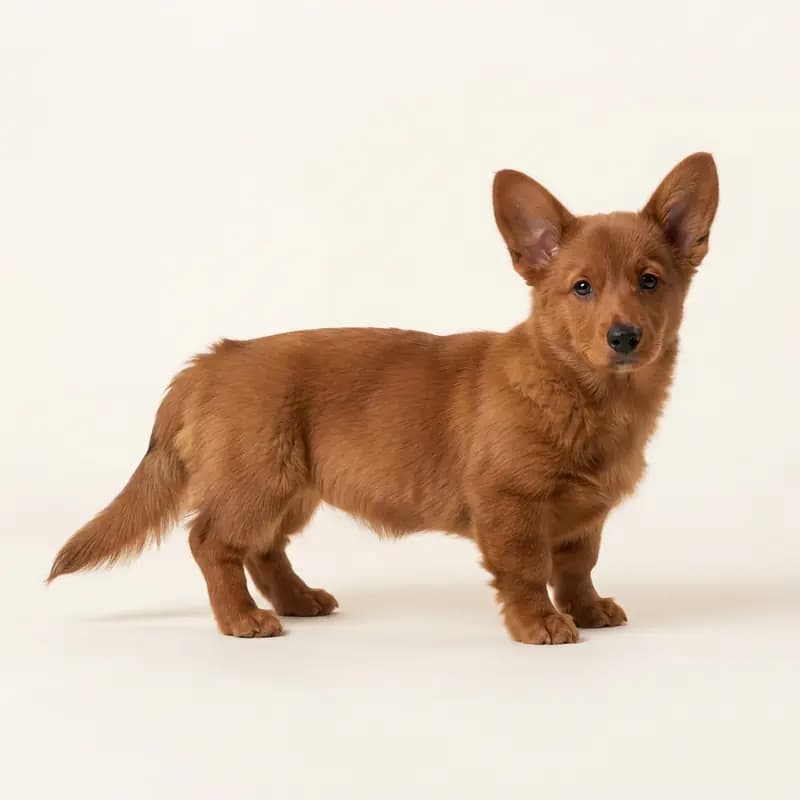
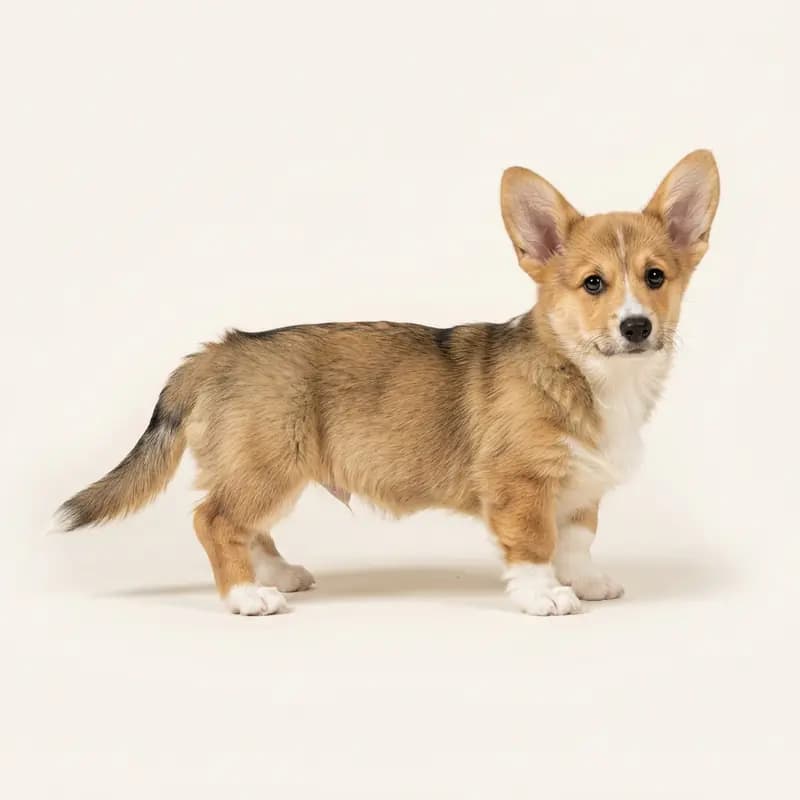
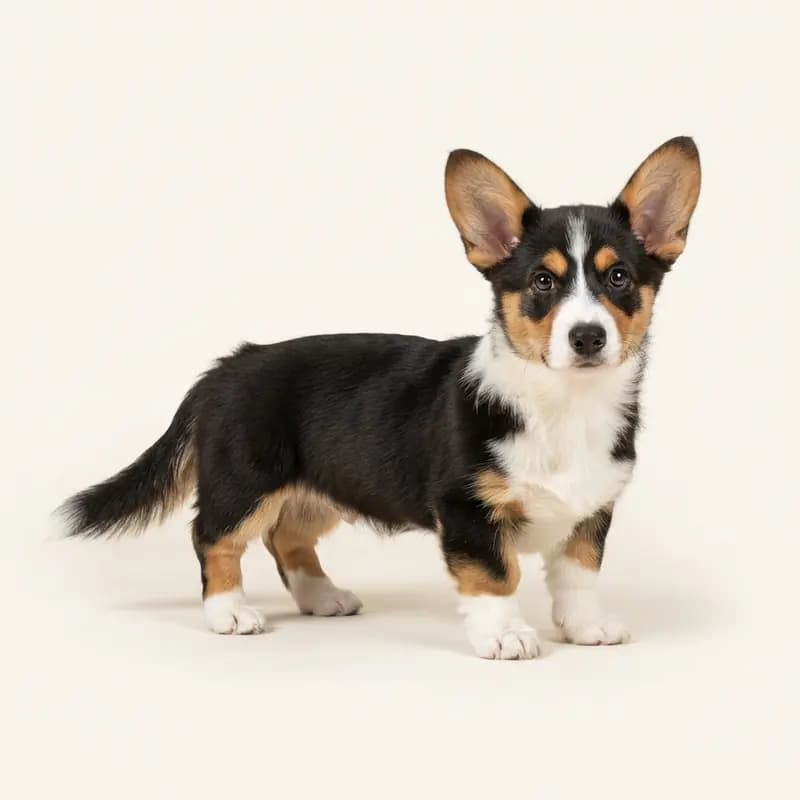
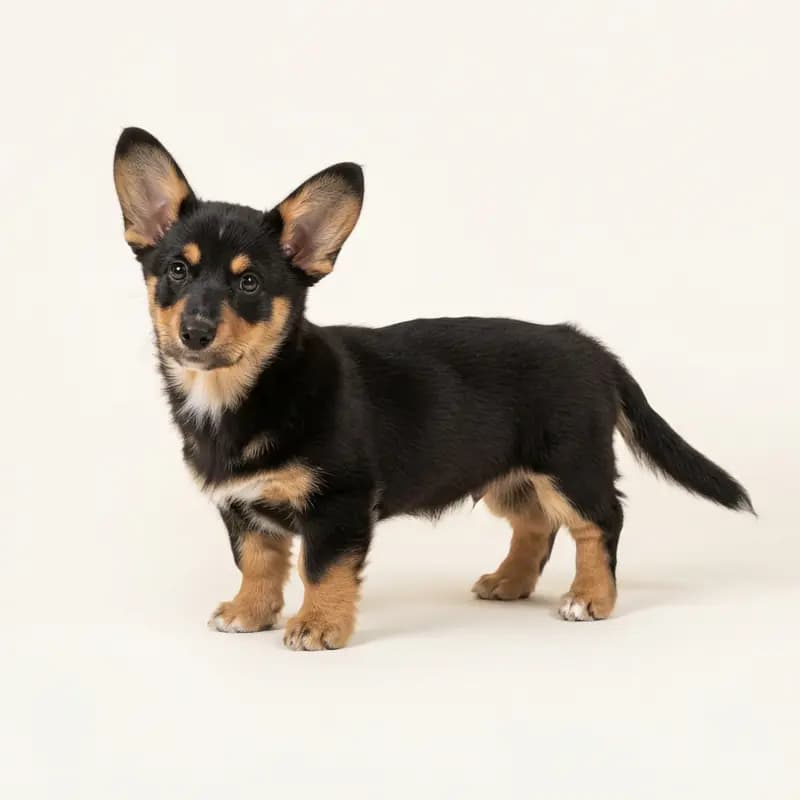
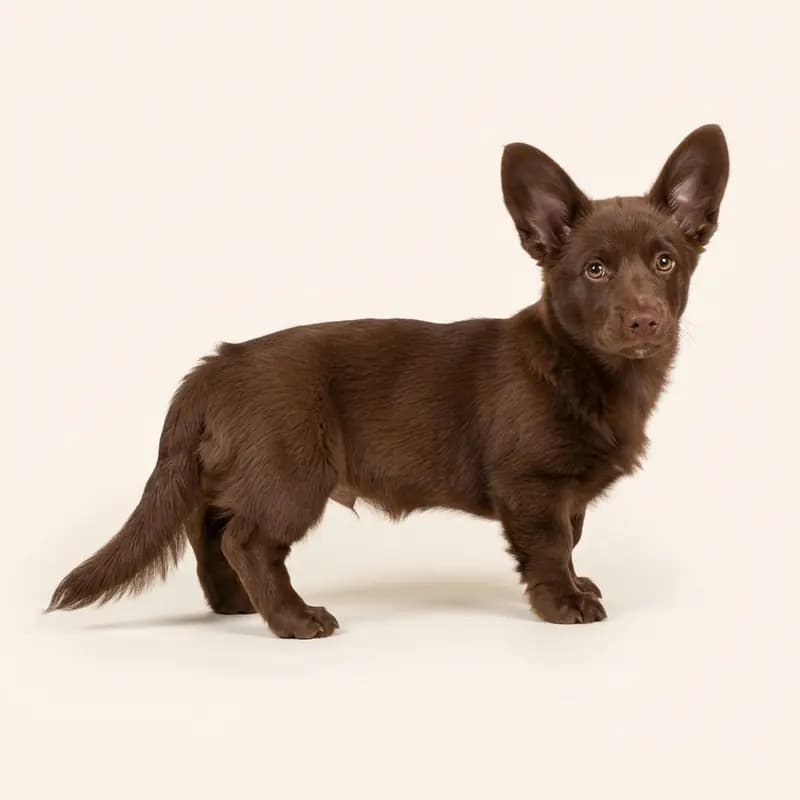
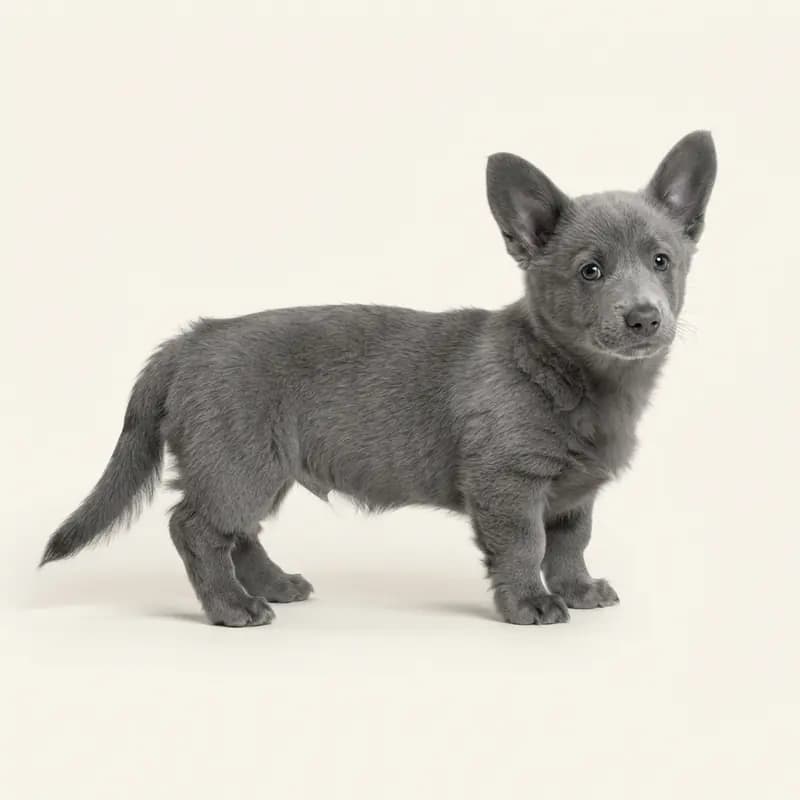
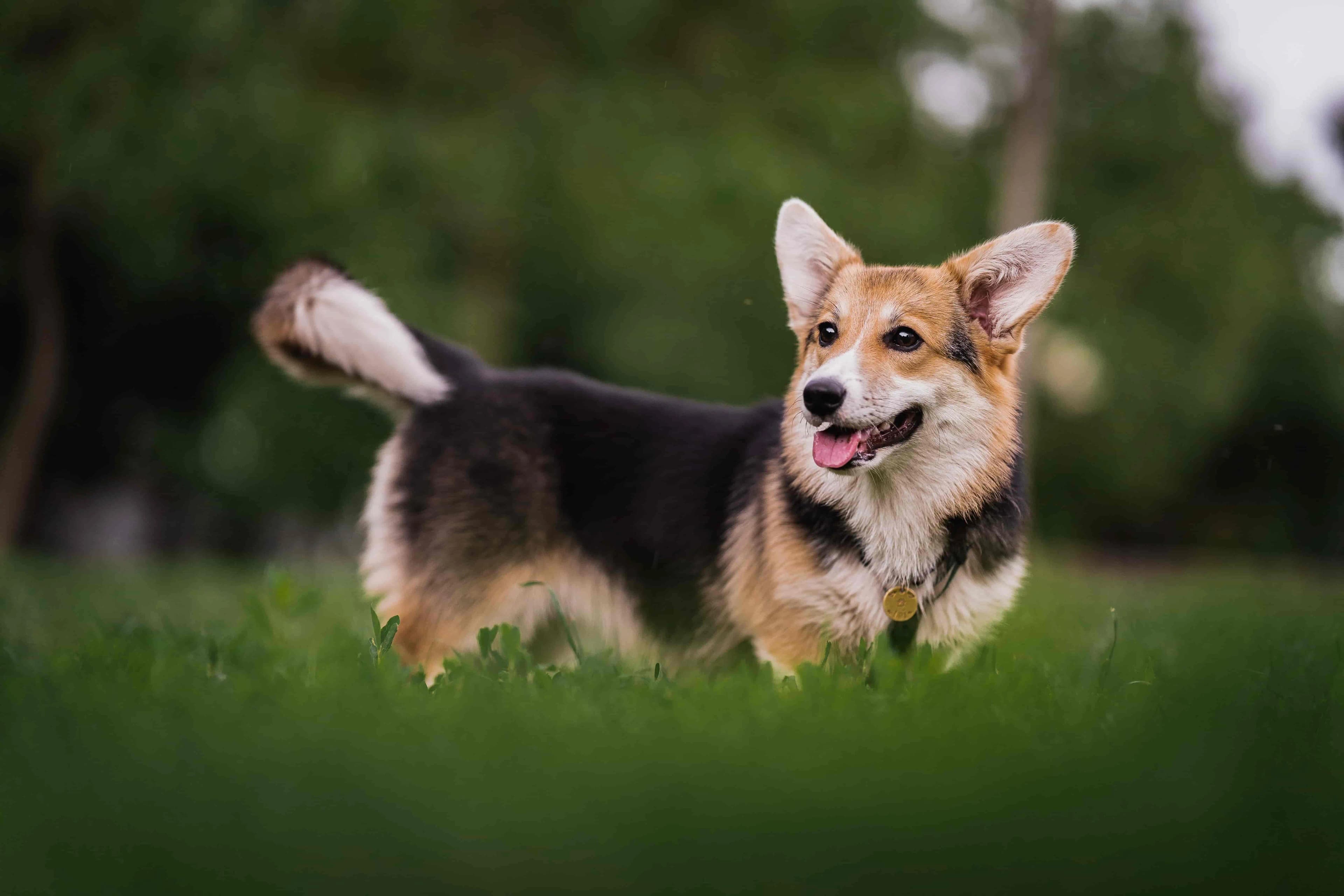
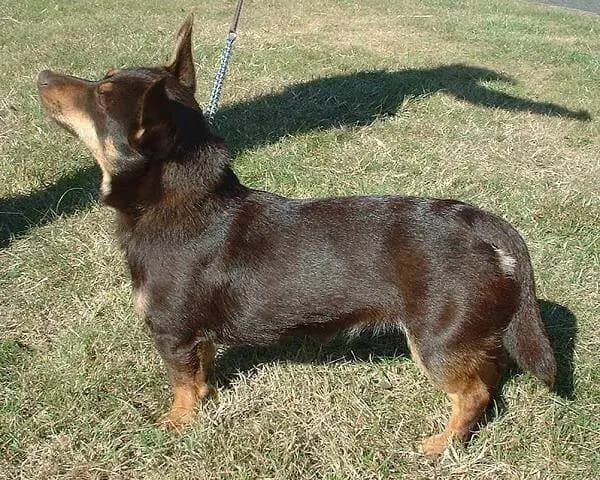
The Welsh Corgi Cardigan is a small but robust and energetic dog that is surprisingly agile and fast despite its short legs. It has a striking, fox-shaped appearance with large, upright ears and expressive, round eyes. Its body is longer than it is tall, which sets it apart from many other small dog breeds. As a member of FCI Group 1, the group of herding dogs and cattle dogs, the Corgi Cardigan has a natural drive to herd. Although he is often kept as a companion and family dog, he still retains his working characteristics and can still be a great herding dog if given the opportunity.
The Welsh Corgi Cardigan is a small dog with a huge personality and a lot of self-confidence. He is very intelligent, energetic and has a natural herding instinct. Cardigans are very active and require both physical and mental stimulation. So if you're looking for a cozy couch potato, the Corgi might not be the best choice. But if you're someone who leads an active lifestyle and is looking for a small but tough companion, the Welsh Corgi Cardigan could be your perfect match. Corgis are people-oriented and build deep bonds with their families, but on the other hand they are also very independent. Their intellect and eagerness to please make them great learning partners, and they are typically open to new experiences and challenges. The Welsh Corgi Cardigan can learn to stay alone, but it is important to practice this gradually as he can be prone to developing separation anxiety and a need for control typical of a herding dog if left alone too often and for too long. Its natural herding instinct may result in it exhibiting some degree of prey-catching behavior, particularly toward smaller animals. It is therefore advisable to get him used to other pets at an early stage and to teach him to control his instincts. When it comes to alertness, Cardigans make excellent watchdogs. They are very alert, territorially motivated and will not hesitate to alert their owners if they notice anything unusual. Their barking can sometimes be excessive, so it is important to teach them when it is appropriate to bark and when it is not. They can also be skeptical of strangers and may try to restrict the visitor's movement by biting their heels.
| Watchfulness A natural watchdog with real protective instinct. | High |
| Openness to Strangers Careful around unfamiliar people — thaws slowly. | Cautious |
| Hunting or Herding Drive This drive runs deep — no amount of training eliminates it. | Very strong |
Fun Fact!
Did you know that a legend says that corgis are the preferred riding horses of fairies and elves? The markings on their fur are said to come from the fairies' bridles and carriages!
The very active Welsh Corgi Cardigan is for experienced dog owners who can train and exercise him appropriately so that he is a pleasant companion.
Corgis are adaptable and can live in both the city and the country as long as the original herding dogs get enough exercise and mental stimulation. To protect his joints, it's better to carry your Corgi on stairs or take an elevator if you don't live on the ground floor. Corgis generally get along well with children, but they should be older. Cardigans can also get along with cats and other pets if they are used to them from an early age.
Loves family life and thrives in a group.
Gets on well with children — with adult supervision.
Usually gets on fine with other dogs.
Adapts well to city living and urban environments.
Owning a dog is a privilege, but it's also a real responsibility. Before you bring one into your life, be honest with yourself about the commitment it takes.
The Welsh Corgi Cardigan is an intelligent and eager-to-learn dog. Its origins as a herding dog make it particularly suitable for dog sports such as hoopers, obedience, treibball, tracking work or mantrailing. It's important to keep your Corgi mentally and physically busy, but be careful not to "over-busy" him. Cardigans can have a tendency to become ball junkies, so it is advisable to moderate ball playing. High jumps are unsuitable for the Corgi due to its body type. Working on frustration tolerance and impulse control is crucial with this breed. Their herding instinct and intelligence can sometimes lead to an excessive need for control. Positive reinforcement and varied training that encourages their natural talents are important to having a happy and well-adjusted Corgi.
Cardigans tend to put on weight, so it's important to maintain a balanced diet. High-quality dog food tailored to the Corgi's needs and regular exercise are crucial. Excess weight can put strain on the joints, especially in a dog with short legs like Cardigan. When it comes to fur care, the Welsh Corgi Cardigan has a dense undercoat and a weatherproof top coat. This makes it relatively well adapted to the German climate. However, he sheds, especially during transition periods. Regular brushing is essential to keep the coat in good condition and minimize shedding.
| Care Level Regular brushing and occasional professional grooming. | Moderate |
| Exercise Needs Needs several hours of serious exercise every day. | Very active |
| Shedding Hair everywhere, always — no white clothing survives. | Very heavy |
| Trainability Willing to learn with clear rules and regular training. | Balanced |
Our experts are still reviewing this information. Spotted something wrong? Email us at info@honestdog.de.
Solid
Health grade
In the Welsh Corgi Cardigan, there are primarily genetic risks for intervertebral disc disease (IVDD), degenerative myelopathy, and progressive retinal atrophy. The Club für Britische Hütehunde e.V. (CfBrH) therefore mandates compulsory testing for these diseases, Von Willebrand disease type I, coat color, merle, and general eye conditions. A responsible breeder also has hip dysplasia (HD) evaluated and, ideally, primary lens luxation (PLL) as well. Before buying a puppy, have the test results of both parents shown to you: For degenerative myelopathy and progressive retinal atrophy, carriers may only be mated with proven clear partners, and for hip dysplasia (HD), the scores should be A to C.
Grade is relative to other breeds — AI-assisted and editorially reviewed.
Methodology and data: HonestDog Dog Breed Health Report 2026
What matters most for this breed
Tap any item to see details.
You should strictly ensure your dog maintains a lean weight and avoid excessive jumping or stair climbing to protect its long back and joints in everyday life.
Responsible breeders test consistently for intervertebral disc disease (IVDD), degenerative myelopathy, and progressive retinal atrophy, and have hips evaluated for hip dysplasia (HD).
Note: This health overview is AI-assisted and editorially reviewed. It is for orientation only and does not replace veterinary advice.
What matters most for this breed — what's common, how much it affects the dog's life, and how to protect yourself as a buyer.
Tap a body region to see the inherited conditions linked to it.
The three most important risks
Pick a region on the map to explore other areas.
Tier 1 is the core standard: the tests Club für Britische Hütehunde e.V. (CfBrH) requires, plus further tests from the recommended health standard for this breed. Tiers 2 and 3 show how responsible breeders go beyond.
Core standard. Tests marked “Club standard” are required by Club für Britische Hütehunde e.V. (CfBrH) for breeding approval; the others are part of the recommended health standard for this breed. Ask any reputable breeder for the results.
Note: This health overview is AI-assisted and editorially reviewed. It is for orientation only and does not replace veterinary advice.
A Cardigan Welsh Corgi costs around ~€170 per month (€90 – €320, depending on your setup). The first year adds up to roughly ~€5,120 including purchase, equipment and puppy school; across the dog's life (13.5 years) it comes to about ~€30,580.
With surgery cover, running costs come to about ~€160 per month — in return, your share of a major operation drops from several thousand euros to around 20 percent.
Per month
~€170
In the first year
~€5,120
Across the dog's life
~€30,580
Estimated purchase price from a breeder: €1,500 – €3,000
Estimate at a mid-range setup (suburban, dry food, 1–2 hours of daily exercise), average German prices, as of July 2026.
 Illustrative imageIllustrative image
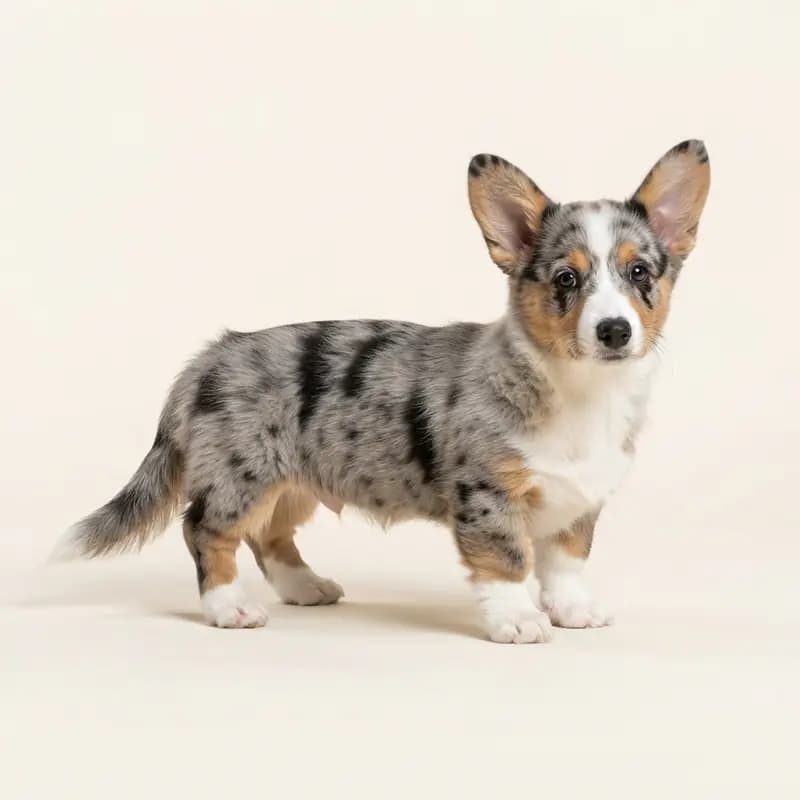 Illustrative image
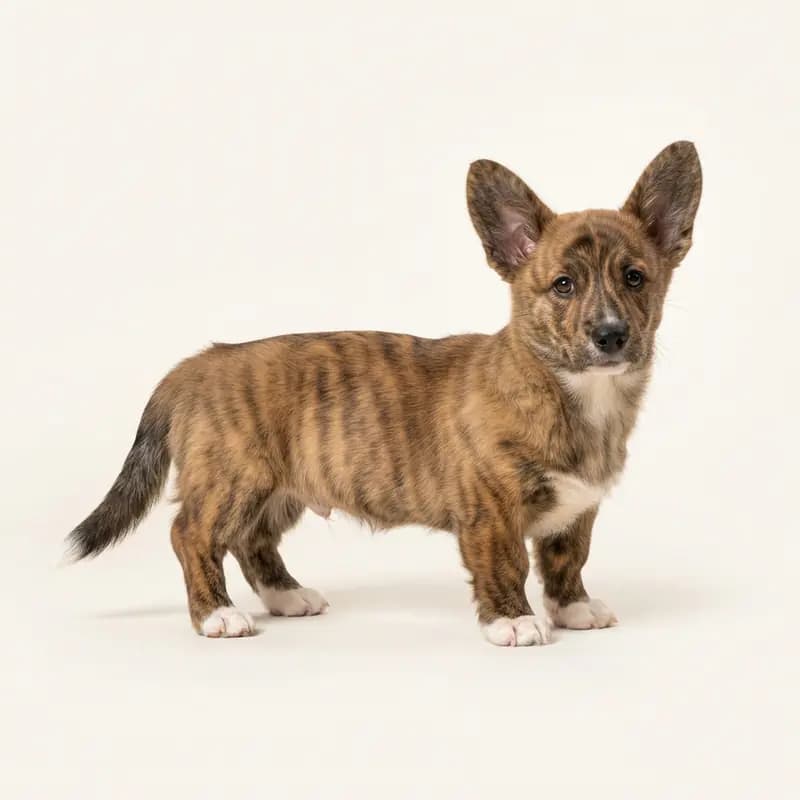 Illustrative image
The Welsh Corgi Cardigan is one of the oldest dog breeds on the British Isles and boasts a much longer history than its relative, the Welsh Corgi Pembroke. Historical evidence suggests that Celtic tribes brought the ancestors of the Cardigan to Wales from Central Europe as early as 1200 BC. There, the breed developed into an indispensable and robust working dog within the rugged, hilly landscape of Cardiganshire. The original purpose of the Cardigan was to work as a cattle drover and a versatile farm dog. Due to its small stature and short legs, it was able to nip at the heels of cattle while simultaneously avoiding targeted kicks by quickly ducking. In addition to herding livestock, it guarded the home and farm and kept pests at bay. In terms of lineage, the Cardigan is classified within the dachshund family, which fundamentally distinguishes it from the spitz-like Pembroke. Although both Corgi varieties were occasionally crossbred in the 19th century, the British Kennel Club officially recognized the Welsh Corgi Cardigan and the Welsh Corgi Pembroke as two completely distinct breeds in 1934. Since then, crossing the two lines has been strictly prohibited. Today, the Cardigan is valued worldwide not only as a capable herding and droving dog but also as a vigilant companion.
The Welsh Corgi Cardigan was used as a cattle drover, known for its stamina and agility.
Wales, Great Britain
Antike
Owners describe the Cardigan Welsh Corgi as an affectionate, loyal and very present companion in everyday family life. Many point out that, compared with the often livelier Pembroke, the Cardigan is more wait-and-see and reserved with strangers at first. It watches newcomers closely and only warms up after a while. Within its own family, it always wants to be close, likes to follow its people from room to room and enjoys quiet cuddle time without being constantly pushy.
At the same time, experienced owners stress that you shouldn't be fooled by the short legs: the Cardigan is a genuine working dog with plenty of stamina and by no means just a lap dog. Without enough physical and mental exercise, many become restless. A recurring hurdle in daily life is its watchfulness. The Cardigan readily and insistently uses its deep voice, which is surprisingly loud for its size, at unfamiliar noises or at the front door, so living in a thin-walled rental apartment calls for training ahead of time. Being left alone also needs to be built up carefully from a young age, since some dogs otherwise tend toward controlling behavior or frustration barking.
Sources:reddit.commit-tier.dewelpen.vdh.derundum.dogwelshcorgi-news.ch
On training, owners consistently report a very smart, eager-to-learn but also independent character. The Cardigan often picks up new cues, tricks or tasks very quickly. Owners regularly stress, however, that it doesn't have the unconditional "will to please" of some other herding breeds. It quickly responds to pointless repetition or pressure with stubbornness. It questions cues and cooperates best with positive reinforcement, humor and clear motivation.
A central topic in owners' accounts is the herding and driving instinct. As a former cattle drover, the Cardigan, especially as a youngster, tends to want to control fast movement. Many owners report that puppies and adolescent dogs try to stop playing children, running people or animals by nipping at their heels or calves ("heeling"). Owners strongly advise stopping this behavior calmly and consistently from the start and redirecting the drive into targeted scent work, tracking or dog sports such as agility or rally obedience.
Sources:mit-tier.dewelpen.vdh.derundum.dogdogforum.depfoetchentraining.com
On health, grooming and physical care, owners mainly point to the breed's build. The long back on short, sturdy legs carries a higher risk of back problems and herniated discs. Owner forums therefore stress again and again that puppies and young dogs should avoid stairs as much as possible and shouldn't jump off furniture or out of the car, to protect their joints and growth plates. The breed also tends to be very food-obsessed, and owners warn that dogs with this build put on weight very quickly, which puts the musculoskeletal system at further risk.
Around the house, owners unanimously warn about the sheer amount of hair. The dense, weatherproof double coat sheds dirt easily, and dried mud can usually just be brushed out, but the Cardigan sheds all year and loses huge amounts of undercoat during the spring and fall shed. According to owners' accounts, daily brushing and a powerful vacuum cleaner are simply basic equipment in every Cardigan household.
Sources:welpen.vdh.dewelshcorgi-news.chirish-pure.demit-tier.deforum.doguniversity.app
Paraphrased from real owner reports · translated from German
The Cardigan Welsh Corgi is an active dog that needs plenty of exercise and mental stimulation. Research the temperament, grooming needs, and space requirements before deciding.
The average life expectancy of a Cardigan Welsh Corgi is 12-15 years. With proper care and regular vet visits, your dog can live a long, healthy life.
Cardigan Welsh Corgi grooming requirements include regular brushing, nail trimming, and dental care. HonestDog provides detailed grooming tips for every breed.
The Cardigan Welsh Corgi can be a great family dog. Proper training and socialization are key. HonestDog provides family suitability information for every breed.
The Cardigan Welsh Corgi comes in these colors: Blue merle, Brindle, Red, Sable, Tricolor, Black and tan, Liver, Blue. Colors that fall outside the breed standard are marked as such on the breed page.
Showcase your kennel on HonestDog and reach families searching for a responsibly bred Cardigan Welsh Corgi.