Osteogenesis imperfecta(OI)
Also known as: Glasknochenkrankheit · Brittle Bone Disease · Canine Osteogenesis Imperfecta · Kollagendefekt der Knochen · Osteogenesis imperfecta Typ II · …
Overview
What it is
Osteogenesis imperfecta, commonly known as brittle bone disease, is an inherited genetic disorder that affects the skeletal system and connective tissues. It is caused by a defect in collagen production, which is the primary structural protein needed to build strong bones and teeth. Without proper collagen, the bones become extremely fragile and prone to breaking under normal, everyday activities.
How it presents
Symptoms usually become noticeable during puppyhood, often as soon as the puppy starts moving around. Owners may observe unexplained bone fractures from minor impacts, severe pain, stunted growth, and marked sensitivity to touch.
Treatment
There is no cure for this severe condition, and treatment is limited to lifelong pain management, diagnostic imaging, and supportive care, which typically costs between 500 and 3,000 EUR. Due to the high frequency of painful fractures and poor quality of life, humane euthanasia is often considered.
How it's tested
Labogen Komplettpaket (rassespezifisch)(Labogen-Panel)
Primary testDNA testRassespezifisches DNA-Panel (Labogen / Laboklin) — bündelt alle relevanten Erbkrankheiten der Rasse in einem Test.
Issuing body: Labogen
Result scheme: Clear/Carrier/Affected
Osteogenesis imperfecta (SERPINH1) DNA-Test(OI (SERPINH1))
Primary testDNA testEin molekularbiologischer DNA-Test (PCR) identifiziert die ursächliche Mutation im SERPINH1-Gen, welche für die fehlerhafte Kollagenfaltung und die daraus resultierende Knochenbrüchigkeit verantwortlich ist.
Issuing body: Labogen
Result scheme: Clear/Carrier/Affected
Osteogenesis imperfecta (OI) DNA-Test(OI)
Primary testDNA testEin Gentest zum Nachweis der Mutation im COL1A1- oder COL1A2-Gen, die zu Glasknochenkrankheit führt.
Issuing body: Labogen
Result scheme: Clear/Carrier/Affected
Feragen Komplettpaket (rassespezifisch)(Feragen-Panel)
DNA testRassespezifisches DNA-Panel (Feragen, Österreich) — gleiches Konzept wie Labogen.
Issuing body: Feragen
Result scheme: Clear/Carrier/Affected
Embark Breed + Health Panel(Embark)
DNA testUS-Anbieter; 250+ genetische Erkrankungen + Abstammung. Anerkennung in DE/AT variiert je nach VDH-Verein.
Issuing body: Embark
Result scheme: Clear/Carrier/Affected
MyDogDNA Panel(MyDogDNA)
DNA testGenoscoper-basiertes Panel (Mars Petcare). 200+ Erkrankungen + Rassenkomposition.
Issuing body: MyDogDNA
Result scheme: Clear/Carrier/Affected
Affected breeds
10 of 10 breeds
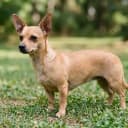 ChiweenieRecommended standard
 DachshundRecommended standard
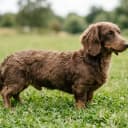 DoxiepooRecommended standard
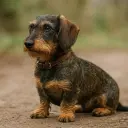 Miniature Wire-haired DachshundMandatory testMandated by Deutscher Teckelklub 1888 e.V. (DTK)
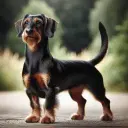 Wire-haired DachshundMandatory testMandated by Deutscher Teckelklub 1888 e.V. (DTK)
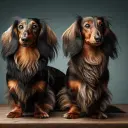 Long-haired DachshundAlso recommended
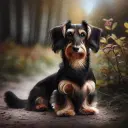 Miniature DachshundAlso recommended
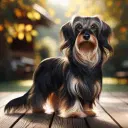 Miniature Long-haired DachshundAlso recommended
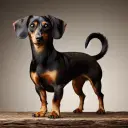 Miniature Smooth-haired DachshundAlso recommended
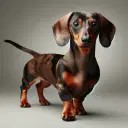 Smooth-haired DachshundAlso recommended
Treatment cost
Estimated range of typical treatment costs. Actual costs depend on severity, clinic and region.
Frequently asked questions
What is Osteogenesis imperfecta?
Osteogenesis imperfecta, commonly known as brittle bone disease, is an inherited genetic disorder that affects the skeletal system and connective tissues. It is caused by a defect in collagen production, which is the primary structural protein needed to build strong bones and teeth. Without proper collagen, the bones become extremely fragile and prone to breaking under normal, everyday activities.
How is Osteogenesis imperfecta tested?
Tests currently in our database: Labogen Komplettpaket (rassespezifisch), Osteogenesis imperfecta (SERPINH1) DNA-Test, Osteogenesis imperfecta (OI) DNA-Test, Feragen Komplettpaket (rassespezifisch), Embark Breed + Health Panel, MyDogDNA Panel.
Which breeds are most affected?
Most commonly affected: Chiweenie, Dachshund, Doxiepoo, Miniature Wire-haired Dachshund, Wire-haired Dachshund, Long-haired Dachshund, Miniature Dachshund, Miniature Long-haired Dachshund.