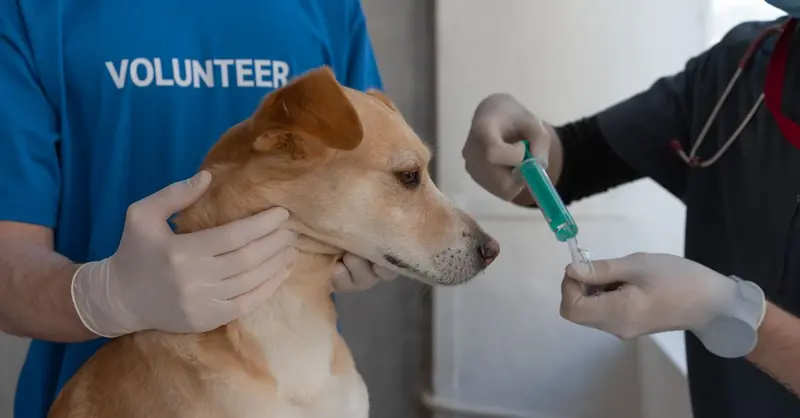
Vaccinating your dog isn't a legal requirement in Germany. However, the Standing Committee on Veterinary Vaccination (Ständige Impfkommission Veterinärmedizin, StIKo Vet) expressly recommends it for three life-threatening diseases: distemper, parvovirus and leptospirosis (core vaccines). All other vaccinations, including rabies for travel abroad, are optional (non-core) and depend on your dog's age, living situation, contact with other dogs and travel plans.
| Criterion | Current recommendation & facts |
|---|---|
| Legal vaccination requirement | Not in Germany; however, rabies vaccination is mandatory for cross-border travel within the EU. |
| Core vaccines (essential protection) | Distemper, parvovirus, leptospirosis – every dog should be protected against these pathogens at all times. |
| Non-core vaccines (optional protection) | Including rabies, hepatitis (HCC), kennel cough (parainfluenza / Bordetella), Lyme disease, leishmaniasis. |
| Puppy primary vaccination | Shots at 8, 12 and 16 weeks of age; completed at around 15 months. |
| Booster intervals | Leptospirosis annually; distemper, parvovirus and rabies usually every 3 years. |
| Cost per vaccination appointment | Typically around 50 to 150 euros (depending on the practice's GOT rate and the vaccines used). |
This guide does not replace veterinary advice.
Vaccinating your dog: yes or no? Core vs. non-core vaccines compared
When it comes to vaccinating dogs, many owners are caught between two worries. On one side is the fear of deadly infectious diseases; on the other, the concern that too many injections might burden their dog's body. Modern veterinary medicine has long since responded to this dilemma. The blanket yearly "full set" of shots against every available pathogen is now considered outdated.
Instead, vets follow the motto: "vaccinate as little as possible, as often as necessary." To strike that balance for each individual dog, the Standing Committee on Veterinary Vaccination (StIKo Vet) divides all available vaccines into two clear categories: essential vaccines (core components) and needs-based optional vaccines (non-core components).
| Criterion | Core vaccines (baseline protection) | Non-core vaccines (individual protection) |
|---|---|---|
| Target group | Every dog in Germany – regardless of age, breed or living situation. | Only dogs with a specific exposure risk (e.g. travel, boarding kennels, hunting). |
| Diseases covered | Distemper, parvovirus, leptospirosis. | Rabies, infectious canine hepatitis (HCC), kennel cough, Lyme disease, leishmaniasis and others. |
| Benefits | Prevents life-threatening epidemics, protects people from zoonoses (leptospirosis) and secures herd immunity. | Targeted protection against regional or situation-specific threats; avoids unnecessary vaccine doses in everyday life. |
| Drawbacks / limits | Leptospirosis requires an annual booster; a low risk of mild vaccine reactions remains. | Sometimes shorter duration of protection or incomplete protection (e.g. only symptom relief for some pathogens); additional costs. |
Why the three core vaccines make sense for every dog
When you ask yourself "should I vaccinate my dog or not?", the answer for the three core components is clear. These pathogens are still present in Germany, are highly contagious, or can be transmitted at any time through wildlife and the environment:
- Parvovirus (canine parvovirosis): Canine parvovirus is extremely resistant in the environment and spreads through the tiniest traces of feces when a dog sniffs the ground. It destroys the intestinal lining, causing bloody diarrhea and severe vomiting, and attacks the immune system and, in very young animals, the heart muscle. Left untreated, the infection is often fatal, especially in puppies and senior dogs.
- Distemper: The distemper virus is closely related to the human measles virus and is spread in the wild by foxes, raccoons and martens, among others. The disease attacks the respiratory tract, the gastrointestinal tract and the central nervous system. Even if a dog survives, lifelong neurological damage ("distemper tic") or tooth enamel defects often remain.
- Leptospirosis (Stuttgart disease): Unlike distemper and parvovirus, leptospirosis is caused by bacteria (leptospires). Infected rodents such as mice and rats shed the pathogens in their urine. Puddles, ponds or damp soil in your own garden are enough to spread the infection. In dogs, the bacteria cause acute kidney and liver failure as well as severe bleeding. Leptospirosis is also a zoonosis: a sick dog can pass the dangerous bacteria on to the people in the household.
Which non-core vaccines make sense and when
Beyond the three basic vaccines, a sensible vaccination plan is tailored in consultation with your vet. The most important non-core vaccines include:
- Rabies: Because classic fox rabies (terrestrial rabies) has been considered eradicated in Germany for years, StIKo Vet no longer classes rabies vaccination as a general core vaccine here. Still, many owners have their dogs vaccinated. One reason is freedom to travel: as soon as you cross a border within the EU with your dog, a valid rabies entry in the EU pet passport is legally required. The other is legal security: under the German Rabies Ordinance, demonstrably vaccinated dogs are in a better legal position should they ever come into contact with a suspected infected animal (such as an illegally imported puppy). For unvaccinated animals, the authorities may order euthanasia in suspected cases.
- Infectious canine hepatitis (Hepatitis contagiosa canis, HCC): Thanks to decades of vaccination, this contagious liver inflammation has become rare in Western Europe, but it is still widespread in Eastern Europe. Since the adenovirus is already included in the standard combination vaccines against distemper and parvovirus (SHP vaccines), HCC is usually vaccinated automatically every three years in practice to maintain protection across the dog population.
- Kennel cough (parainfluenza and Bordetella bronchiseptica): The term kennel cough covers highly contagious respiratory infections. Vaccination doesn't always prevent infection completely, but it significantly reduces the severity of the illness. It's recommended for dogs that have close contact with many other dogs in confined spaces.
- Lyme disease and leishmaniasis: Both vaccines target pathogens transmitted by ticks and sand flies respectively. They never replace consistent parasite prevention (spot-ons, collars or tablets), but they can be a sensible addition for dogs in heavily tick-infested areas or for unavoidable trips to the Mediterranean region.
What matters for your dog: individual factors for the vaccination plan
Whether a dog should be vaccinated, and how extensively, can't be answered the same way for every animal from behind a desk. A responsible veterinary practice performs a thorough general examination and a vaccination consultation before every shot, focusing on the following factors for your dog:
1. Age: from puppy to senior
Puppies are born without a trained immune system of their own. In their first weeks of life, they're protected by so-called maternal antibodies, which they absorb through the first milk (colostrum) of a vaccinated mother. This maternal protection wanes between the 6th and 16th week of life. As long as many maternal antibodies are still circulating in the puppy's blood, they intercept the administered vaccine, so the puppy can't yet build its own protection.
Since nobody knows exactly which week this "immunological gap" opens in an individual puppy without extensive lab tests, young dogs are vaccinated several times at four-week intervals. With older dogs aged ten and up, many owners become less willing to vaccinate. Yet senior dogs, with their naturally weaker immune systems, can become seriously ill from leptospirosis or parvovirus. For older dogs with good primary immunization, though, it makes sense to use a blood test (titer test) to check whether enough antibodies are still present before another SHP booster.
2. Body weight, breed and tolerance
A large dog receives exactly the same vaccine dose as a toy breed, because the immune system needs a certain minimum amount of antigens to respond reliably. Large-scale analyses of millions of vaccination appointments show that adverse vaccine reactions are very rare overall (about 19 cases per 10,000 appointments, or roughly 0.19 percent).
Even so, the statistics show a slightly higher risk of temporary side effects in dogs under five kilograms of body weight and in certain breeds such as the Dachshund or the French Bulldog. Giving several different vaccines at a single appointment also increases the likelihood of lethargy or swelling. If you have a very small or sensitive dog, you can talk to your vet about spacing out necessary vaccinations (such as leptospirosis and rabies) by two to three weeks.
3. Lifestyle, hobbies and surroundings
An active Golden Retriever that drinks from every forest pond in summer, trains at the dog sports field twice a week and comes along on vacation to Italy has a completely different risk profile than an older city dog that's only walked around the block on a leash.
- Boarding kennels, daycare and dog school: Almost all reputable care facilities, clubs and dog shows require a valid rabies vaccination in addition to the core vaccines, and often proof of vaccination against kennel cough too.
- Hunting and forest dogs: Dogs that spend a lot of time rummaging through undergrowth, digging up mouse holes or regularly coming across wildlife traces face a particularly high risk of leptospirosis, distemper and tick-borne diseases.
- Sex and breeding: In everyday life, there's no difference in the vaccination plan between males and females. An exception is intact females intended for breeding: their vaccination status must be optimally topped up before mating so they can pass enough antibodies to their puppies through their milk. There's also a special non-core vaccine for breeding bitches against canine herpesvirus, which can cause puppy deaths.
4. Current state of health
An iron rule of dog vaccination: only a clinically healthy dog may be vaccinated. If your dog is currently suffering from diarrhea, fever, a heavy worm burden or an infection, the immune system is busy elsewhere. The vaccine may then trigger stronger side effects and, at the same time, fail to build reliable protection. That's why it makes sense to have your dog checked for worms, or dewormed, about one to two weeks before the planned appointment. For chronically ill dogs, dogs with allergies or animals with autoimmune diseases, the vet weighs benefit and risk especially carefully and uses antibody titer tests where possible.
When to vaccinate your dog: the recommended vaccination schedule at a glance
If you're wondering when to have your dog vaccinated and when each booster is due, the StIKo Vet vaccination schedule offers a clear timeline. A young dog counts as fully immunized only once it has received all the partial vaccinations in its first year plus the final shot at the start of its second year.
| Dog's age | Recommended core vaccines | Optional non-core vaccines (as needed) |
|---|---|---|
| 8 weeks | Distemper, parvovirus, leptospirosis | Hepatitis (HCC, usually in the combination vaccine), parainfluenza if needed |
| 12 weeks | Distemper, parvovirus, leptospirosis | Rabies (from 12 weeks at the earliest, for later travel), HCC |
| 16 weeks | Distemper, parvovirus | HCC; rabies only if not already vaccinated at 12 weeks |
| 15 months | Distemper, parvovirus, leptospirosis (completes primary vaccination) | HCC, rabies if needed (depending on the vaccine manufacturer's instructions) |
| Adult dogs (annually) | Leptospirosis (every 12 months) | Kennel cough (Bordetella / parainfluenza), Lyme disease (as needed) |
| Adult dogs (every 3 years) | Distemper, parvovirus (or a titer test beforehand) | Rabies (with a three-year manufacturer approval), HCC |
Note for puppies at particular risk: If a puppy grows up under high infection pressure (in an animal shelter, for example) or is rehomed early, an additional early vaccination against distemper and parvovirus can be given as early as 6 weeks of age. StIKo Vet also points out that when a puppy moves from the breeder to its new home, the follow-up shots of the primary vaccination should, where possible, use vaccines from the same manufacturer or with a very similar antigen composition, especially for the leptospirosis component.
What studies and veterinary associations say about vaccinating dogs
Internet forums often claim that a single vaccination in puppyhood is enough for a dog's entire life. This idea usually stems from a misunderstanding of international guidelines. Scientific studies and the guidelines of the World Small Animal Veterinary Association (WSAVA) do show that the duration of immunity (DOI) after successful primary vaccination with modified live vaccines against viral pathogens such as distemper, parvovirus and HCC often lasts many years, and in individual cases even for life.
As the German Federal Veterinary Chamber (Bundestierärztekammer) stresses in its professional assessment of the WSAVA guidelines, this by no means implies that checks or boosters should be dropped altogether. You can't tell from the outside whether a dog's individual immune memory is still working flawlessly after four, seven or ten years.
For the viral core components distemper and parvovirus, the current guideline on vaccinating small animals from StIKo Vet at the Friedrich Loeffler Institute (6th edition) therefore gives dog owners two scientifically sound options once primary vaccination is complete:
- Regular boosters at 3-year intervals: Your dog receives a repeat vaccination against distemper and parvovirus every three years. According to StIKo Vet, giving these components more often brings no additional benefit.
- Antibody testing (titer test) instead of a blanket booster: Since repeat vaccinations don't further raise immunity in animals that are already immune, owners can have their dog's blood tested for antibodies before an upcoming SHP booster. If enough protective antibodies against parvovirus and distemper can still be detected, the vaccination can be skipped and the test repeated later.
Important limitation for bacteria and travel: This principle of multi-year immunity or titer testing does not apply to bacterial vaccines such as leptospirosis or Bordetella. These are mostly killed pathogens (inactivated vaccines) whose protection fades after about twelve months, which is why they must be boosted every year. Modern leptospirosis vaccines (so-called L4 vaccines) cover four different subgroups (serovars) of the bacteria and so offer much broader protection than older products. For rabies, too, a high antibody titer in the blood never legally replaces the valid expiry date in the EU pet passport, which the vet must enter strictly according to the vaccine manufacturer's approval terms (usually three years).
In Germany, the Paul-Ehrlich-Institut (PEI), the federal institute for vaccines and biomedical medicines, is responsible for the safety of approved products. It tests all animal vaccines for efficacy and safety before approval and monitors any side effects that occur as part of pharmacovigilance.
Procedure and costs: what does it cost to vaccinate a dog?
The cost of vaccinating a dog is made up of several items and, in Germany, is billed under the binding fee schedule for veterinarians (Gebührenordnung für Tierärztinnen und Tierärzte, GOT). Because a vaccination may only be given to a healthy animal, a clinical general examination (listening to the heart and lungs, checking the mucous membranes, palpating the lymph nodes, taking the temperature) is a mandatory part of every vaccination appointment.
During regular consultation hours, veterinary practices may bill between one and three times the standard GOT rate, at their own discretion and depending on effort. VAT (19 percent) and the cost of the vaccine itself are added on top.
- General examination with consultation (GOT no. 16): approx. 23.62 euros (1x rate, net) to 70.86 euros (3x rate, net).
- Injection / vaccination (GOT no. 221): from approx. 11.50 euros net per shot at the standard rate.
- Vaccination certificate / entry in the passport (GOT no. 87): from approx. 6.16 euros net at the standard rate.
- Vaccine costs: Depending on whether it's a single or combination product, usually between 15 and 35 euros per dose.
In practice, you typically pay between 50 and 110 euros for a regular single appointment with one combination shot (up to 150 or 180 euros with very high GOT rates or several separate vaccines, such as a combination vaccine plus rabies). For a puppy's complete primary vaccination, with four appointments across the first and second year of life, you should budget roughly 200 to 550 euros in total. If you opt for an antibody titer test instead of an immediate SHP vaccination for an adult dog, the cost of the blood draw and rapid test is often similar to that of the vaccination itself, or slightly higher.
Many dog health insurance policies, and in some plans extended surgery insurance too, include an annual preventive care budget (often between 50 and 100 euros per year) that you can use to claim back bills for vaccinations, deworming or tick protection.
Frequently asked questions
Does vaccinating make sense if my dog has hardly any contact with other dogs?
Yes, at least for the three core vaccines (distemper, parvovirus and leptospirosis), vaccination is strongly advisable even for loners. These diseases don't need direct dog contact: parvoviruses can survive in the soil for months and can even be carried into your home on the soles of your own shoes. Leptospires lurk in puddles or on damp meadows that mice or rats have crossed overnight, and distemper viruses are also spread by wildlife such as foxes. For a dog like this, you can usually skip non-core vaccines such as kennel cough.
When does my dog need to be vaccinated again after primary vaccination?
After primary vaccination is completed at around 15 months, there's an annual health check with the leptospirosis booster (unless other yearly non-core vaccines such as kennel cough are needed). With modern vaccines, the shots against distemper, parvovirus, HCC and, if needed for travel, rabies are usually only due again after three years. The validity date entered in the blue EU pet passport tells you at any time when the next appointment is due.
What side effects and risks does vaccinating dogs carry?
Serious vaccine injuries are extremely rare in dogs. What occasionally happens after a vaccination appointment are normal, harmless reactions that show the immune system is working: your dog is a little tired for a day or two, eats slightly less, or develops a small, painless swelling at the injection site that disappears on its own after a few weeks. True allergic reactions (anaphylaxis) with sudden vomiting, severe trembling, difficulty breathing or a swollen head usually appear within the first few minutes to a few hours after the shot and need immediate veterinary treatment. Let your dog rest on the day of vaccination and skip strenuous dog sports.
How do I catch up on vaccinations for an adult dog without a vaccination record?
If you take in an adult dog from a rescue, or the vaccination record has been lost and the vaccination status is unknown, the dog doesn't need to go through the complete puppy schedule. Since its immune system is already mature, a single vaccine dose (or two doses three to four weeks apart, depending on the manufacturer's instructions) for distemper, parvovirus and rabies is often enough, plus a booster after one year. Only the bacterial leptospirosis vaccine must be given twice, three to four weeks apart, when the status is unclear, to build reliable primary immunity.
How soon after the rabies vaccination can my dog travel abroad?
For travel within the European Union, the dog must be at least twelve weeks old on the day of the rabies vaccination and be clearly identifiable by microchip. After the first vaccination, EU law requires a waiting period of at least 21 days before the protection is legally recognized and the border may be crossed. A puppy can therefore legally enter or be taken to another EU country at 15 weeks of age at the earliest. With uninterrupted repeat vaccinations within the validity period, this 21-day waiting period doesn't apply.
A well-thought-out vaccination decision doesn't call for extremes, just reliable information and a close look at your dog's life. If you keep the three essential core vaccines in view and choose optional ones to suit your daily routine, you protect your dog effectively against serious diseases without burdening their body unnecessarily. If you're still at the very beginning and wondering which four-legged companion fits into your life at all, HonestDog is here as a trustworthy platform: with our Breed Finder, you can work out step by step which dog breed, with its health and temperament traits, truly suits you and your daily life.