
Why SEO Matters for Dog Breeders
Being a dedicated dog breeder takes enormous time and energy, and caring for your breeding dogs requires your undivided attention. Responsible breeders care deeply about their dogs' health and well-being, providing the devoted care required to set every puppy up for a long, healthy, and happy life.
Finding the right homes for your puppies is just as demanding. To reach the best possible puppy buyers, many breeders launch their own website. But what good is a beautiful website if prospective puppy parents can't find it online? That's where SEO comes into play. But what actually is SEO?
"SEO" stands for Search Engine Optimization. It revolves around making your website easier to discover on search engines like Google and Bing—the higher your position in the search results, the better. In a nutshell: SEO ensures you get found whenever someone searches for something specific, like "German Shepherd breeder in California."
To get there, your site has to meet specific criteria, which isn't always straightforward. Naturally, every breeder of every breed wants to land on page 1 in the top 10 search results on Google.
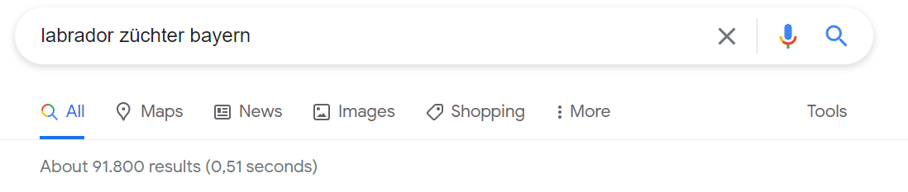
Here's a quick example: type "Labrador breeder Bavaria" into Google, and you'll see around 100,000 results. That's 100,000 web pages from businesses or individuals focusing on Labrador breeders in that specific region.
How Can My Website Rank Better on Search Engines Like Google?
SEO strategies are everywhere. Countless agencies pitch monthly subscriptions promising higher rankings: services offering "keyword research," or providers claiming you need them to manage your breeder profile across Google, Facebook, and Instagram.
Every strategy has pros and cons, but as a breeder, knowing where and how to begin can feel overwhelming. Your precious time is much better spent with your dogs and prospective puppy families than wrestling with Google.
Because we support responsible breeders here at HonestDog and understand how valuable your time is, we've broken down the essential tips to help your breeder website climb into Google's top results.
1. Optimize for the Right Keywords (Search Queries)
Keyword research lays the groundwork for your online presence and guides your SEO strategy. The terms you select determine which search queries will lead prospective buyers straight to you.
When choosing keywords, pick terms that genuinely describe your website's content and match what prospective dog buyers actually type into Google.
What are keywords? A keyword is simply the search phrase users type into the search bar when looking for specific information.

People use keywords to track down information, services, or products. Through keyword research, you can pinpoint phrases with substantial search volume. Optimizing your website's copy around these keywords boosts your chances of climbing the search rankings. When you naturally incorporate related keywords and synonyms, search engines are much more likely to rank your page higher. If someone searches for "Collie breeder Hamburg," those words should feature naturally across your site (assuming you actually breed Collies in Hamburg).
Tip: That's why many successful websites run a dedicated blog. Publishing helpful articles packed with relevant search terms signals valuable topical authority to Google.
You can easily explore search volume and trends for specific keywords using the Google Keyword Planner (which requires setting up a free Google Ads account). Keep in mind: the more popular a keyword is, the tougher the competition to rank at the very top. Breeders of rarer breeds often have a clear advantage here.

2. "Backlinks": Inbound Links from Other Websites to Yours
Backlinks are simply incoming links pointing to your site from other domains. Google treats links from reputable external pages as strong votes of confidence, because valuable content naturally earns recommendations. Search engines evaluate both the quantity and the quality of these inbound links. While having more links generally signals trustworthiness, quality always trumps quantity today. Racking up spammy links is easy, which is why authoritative links from genuine dog communities matter most. Writing a guest post for a reputable dog blog sharing your breeding philosophy is a great way to start building quality links.

3. Make Sure Your Website Works Seamlessly on Mobile
Mobile optimization means designing your web pages so they display smoothly and function effortlessly on phones and tablets. Because responsive mobile design improves user experience, Google treats mobile friendliness as a core ranking signal.
The vast majority of searches now take place on smartphones rather than desktop computers. Browsing behavior on smaller touchscreens is distinctly different from navigating with a mouse and keyboard. If your breeder site isn't showing up in Google's top results yet, making sure it works smoothly on mobile devices is an essential first step.
4. Page Loading Speed
Mobile performance leads directly to site speed: mobile devices often rely on slower data connections, so your site must load efficiently. As a general rule, a web page should load in under two seconds to ensure a seamless visitor experience. Faster is always better—getting under one second is ideal.
You can test your website's performance for free right pagespeed.web.dev.
Your site's loading speed depends on multiple technical elements. These straightforward adjustments will help cut load times on your breeder page:
- Compress your images and photos (aim to keep files well under 1 MB). Helpful free tools like iloveimg make image compression quick and simple.
- Your web hosting provider plays a major role in loading speed. Budget web hosts often deliver sluggish server response times, so upgrading to a quality host is well worth considering.
- While fancy website plugins can be tempting, running too many slows your pages down. Keep your setup lightweight: prioritize speed over decorative extras.
5. Publish Content That Answers Your Visitors' Questions
Many dog breeders stick to a simple "About Us" page paired with photos of their stud, dam, and current litters. While those details are essential on every good breeder website, your hands-on experience lets you share far deeper breed insights. For a Poodle breeder in Munich, practical topic ideas might include:
- Poodle temperament and personality traits
- Proper grooming and coat care for Poodles
- Common Poodle health conditions and proactive health testing
- Why buying a puppy from a responsible breeder matters
- Are Poodles truly hypoallergenic?
- Recommended dog groomers for Poodles in Munich
What matters most is providing genuine value and directly answering what searchers want to know. Google doesn't enforce an arbitrary word count—length alone is not a ranking factor. Make every article just detailed enough to cover the topic clearly and thoroughly. As a breeder, you bring authentic real-world knowledge that can answer common breed questions with depth and authority.
6. Keep Your Website Fresh and Up to Date
Consistently maintaining and updating your website signals to visitors and search engines that your kennel is active and relevant. At the same time, Google continues to rank well-established evergreen guides that deliver proven answers over years. A balanced content approach combines both.
Regular updates give prospective puppy parents a reason to return to your site. You don't need a rigid publishing schedule; search engines reward quality over filler under their helpful content guidelines. A single comprehensive, carefully written article does far more for your visibility than churning out thin posts just to meet a weekly quota.
It's also wise to review existing articles periodically to ensure veterinary and breed guidelines reflect current best practices. For evergreen articles that draw consistent search traffic, confirm that your recommendations remain accurate.
Never simply alter publication dates on older posts to make them look recent. Google easily spots cosmetic date tweaks without real content improvements, which can hurt your search standing.
You don't need to turn into a full-time blogger. Thoughtful breed portraits, care guides, and timely kennel updates are plenty. Think about what prospective puppy owners love to see:
- Weekly updates on your breeding program
- How your puppies are socialized and the outings they enjoy
- Highlights from conformation shows, field trials, or sports competitions
- News and updates from your breed club
- Photo updates showing your puppies' growth and how the parents are doing
- Your perspective on the future and preservation of the breed
- Your insights on canine health and training topics
7. Track Your Progress and Refine Your Strategy
Once you've put these steps into place, monitoring your performance is essential so you can refine your approach. If a particular tweak doesn't deliver results, stay flexible and adjust. Continuous monitoring is part of any solid SEO plan. Even after your pages start ranking, the work isn't finished—competitors and search algorithms keep evolving. SEO is an ongoing commitment to maintaining and improving your visibility. Much like thoughtful breeding, sustainable success comes from staying patient, dedicated, and attentive to detail.
You can track your traffic easily and for free with Google Analytics. It reveals how many people visit your breeder site, which pages they browse, how long they stay, and where they come from.
Another essential free tool is Google Search Console. It lets you monitor indexing status, resolve crawl errors, and check how Google views your site's technical health.
Set aside an afternoon once a month to review your search traffic and plan upcoming updates—like new puppy photos, health announcements, or blog guides. Establishing a consistent rhythm makes online marketing enjoyable as you watch your audience grow.

For breeders looking to optimize their websites specifically for Google, HonestDog offers an introductory online course. Through clear examples, we show you how to structure your breeder site to connect with the right families for your puppies.
Learn more about our SEO online course for breeders
Frequently Asked Questions (FAQ)
Is there a minimum word count required to rank on Google?
No. Google has stated repeatedly that word count alone is not a ranking factor. What matters is satisfying the searcher's intent with clear, comprehensive, and accurate answers.
How often should I publish new content on my breeder website?
There's no mandatory posting schedule. Prioritize quality over quantity: helpful, well-researched guides and timely litter updates are far more effective than publishing frequent posts that offer little real value.
Why is mobile optimization so important for dog breeders?
Most people searching for puppies and reputable breeders browse on their smartphones. Google primarily evaluates and indexes the mobile version of websites using mobile-first indexing.