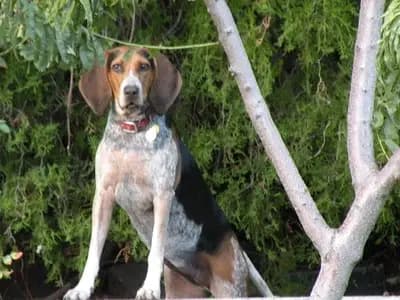
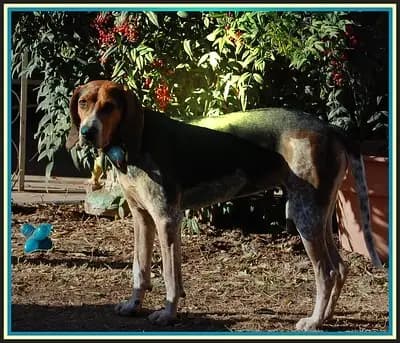
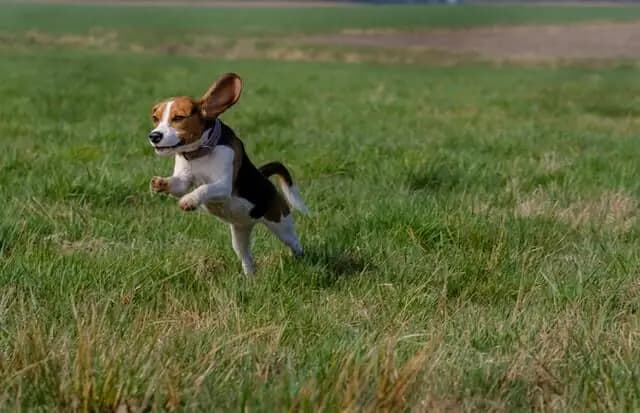
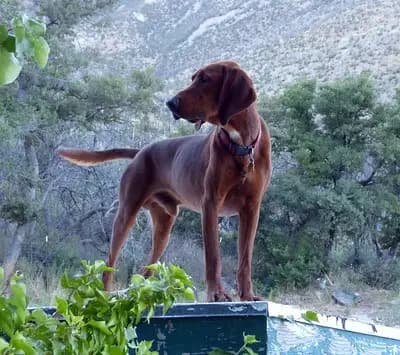
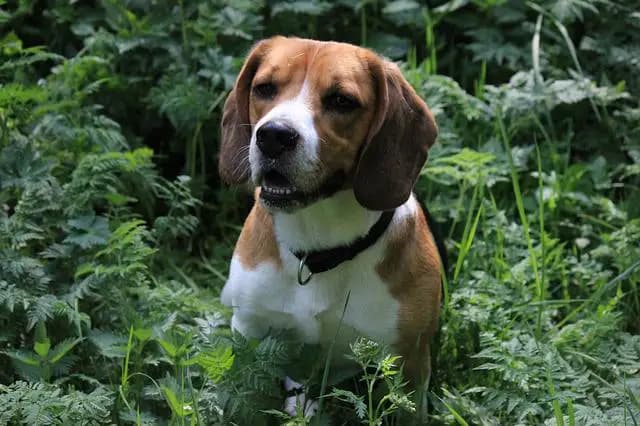
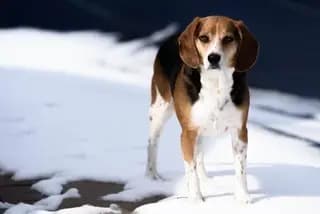
When you look at the breed traits, one value immediately stands out: suitability for city life is 1/5. A Coonhound has a resonant, loud voice (“baying”), which he uses confidently when he is bored or catches interesting scents. In a flat with neighbours close by, this almost inevitably leads to conflict. You need a rural setting with a securely fenced garden.
His energy level is high (4/5), while his trainability is 2/5. That does not mean this dog is not clever – quite the opposite: he was bred to make decisions independently on the trail. Do not expect unquestioning obedience; as soon as his nose is on the ground, he stops listening. For free running, you will often have to use a long line. To truly tire him out, walks alone are not enough: build dedicated nose work such as mantrailing or tracking firmly into your weekly schedule. He is friendly with children and the family (3/5), but needs people who can channel his hunting passion in an orderly direction with patience and fair consistency. His short coat is pleasantly low-maintenance: shedding and grooming needs are a low 2/5, and you only need to check his long, drooping ears regularly and keep them clean to prevent infections.
Your checklist for the first conversation with a breeder
Take your time when you visit the breeding premises and examine the conditions on site carefully. These are the breed-specific points that matter:
- See the joint results: Ask to be shown the original official X-ray scoring for hip dysplasia (HD) and elbow dysplasia (ED) for both parent dogs.
- Check the eye and thyroid results: Ask for current clinical examination results for the eyes (regarding PRA and ectropion/entropion) and for laboratory thyroid values (hypothyroidism).
- Ask about heart health in the line: As there is no simple test to rule out dilated cardiomyopathy (DCM), ask specifically about known heart cases in the parents, grandparents and their littermates.
- Everyday experience rather than kennel-only housing: Make sure the puppies have close contact with the family and get to know everyday noises. A Coonhound raised in isolation in an outdoor kennel will later find it hard to settle into a normal home.
- Honest advice on the hunting drive: A good breeder will ask probing questions about your circumstances and will not play down either the typical howling or their dogs' enormous need for exercise and urge to sniff.
On HonestDog, a breeder profile only goes online once the breeder has completed registration: identity verification by ID and selfie, where applicable proof of club membership or a §11 permit, a knowledge test on breeding and animal welfare, and agreement to the HonestDog breeding standards, which among other things rule out breeding with traits associated with extreme conformation. Health test results for the parent dogs that breeders upload are shown directly in their profile; ask to see the original results when you visit. Your next step: compare the profiles of American English Coonhound breeders on HonestDog, look at the health certificates that have been uploaded and ask directly about the next litter.