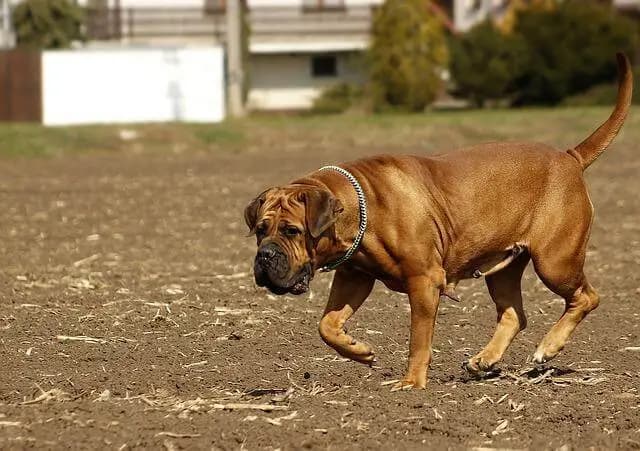
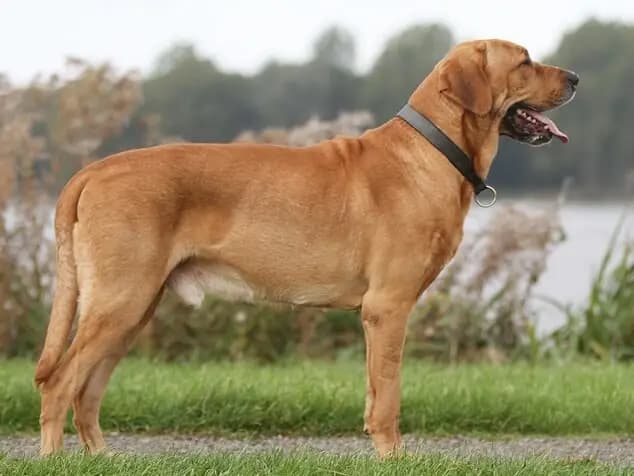
As a heavy, short-muzzled dog, the Bullmastiff comes with significantly increased health risks – particularly affecting the joints, breathing, heart and eyes. Even careful selection of breeding dogs cannot completely eliminate these fundamental risks of the breed, but it does considerably reduce the likelihood of serious illness.
The Club für Molosser e.V. requires X-ray examinations for hip dysplasia (HD) and elbow dysplasia (ED) before a dog is used for breeding. In addition, health-conscious breeders have the parent dogs’ heart, eyes and thyroid clinically examined and specifically select for freer airways. Eye problems such as ectropion or entropion (abnormal positioning of the eyelids), retinal dysplasia and multifocal retinopathy 1 (CMR1) are among the typical issues in the breed, as are Wobbler syndrome (cervical spondylomyelopathy) affecting the cervical spine and the metabolic disorder cystinuria. Rare neurological conditions such as cerebellar abiotrophy and RNF170-associated neuroaxonal dystrophy also occur in the breed. As there are no simple DNA tests for many of these complex issues, open communication about the health of the ancestral lines is crucial.
As an owner, you too carry responsibility from day one: during the first year, be strict about rearing your puppy in a way that protects the joints (no climbing stairs, no jumping out of the car, a suitably moderate growth rate) and consistently limit physical exertion in warm weather to protect the circulation and airways.