Labrador RetrieverSame FCI section
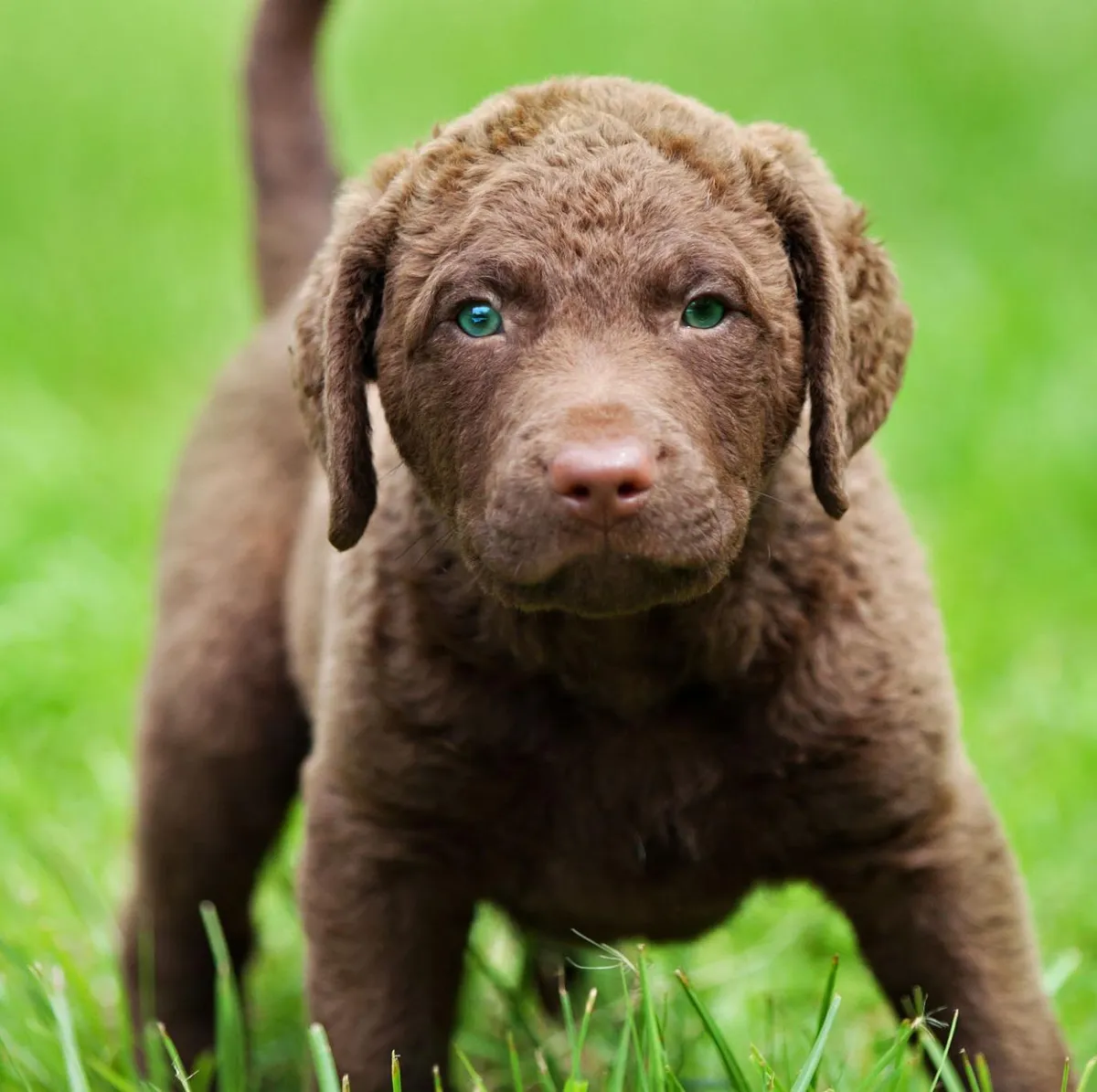
The Chesapeake Bay Retriever is an extremely robust, independent retrieving dog — bred for hours of water hunting in icy conditions, which gives it a toughness and protective instinct that you will usually look for in vain in other retriever breeds.
How the health grade is calculated
Sources for required breeding screenings. Deutscher Retriever Club e.V. (DRC)
Self-check
Answer 6 quick questions about your everyday life and see how well the Chesapeake Bay Retriever fits you — including an honest cost estimate per month, per year, and across the dog's lifetime.




At a glance
The essentials — key facts, traits, and health priorities — before you dive deeper.
Lifespan
10–13 yrs
Shoulder height
53–66 cm
Weight
25–36 kg
Practical
Temperament
Daily life
What matters most
Especially with a Chesapeake Bay Retriever, choosing the right breeder is the single most important decision you'll make. Serious breeders consistently test the parents for inherited conditions, prioritize healthy early socialization, and stay accountable long after handover. A cheap puppy without health screening tends to become the most expensive dog later on.
See HonestDog breeder standards →Colors & coat
The coat colors that occur in the Chesapeake Bay Retriever — including which ones fall outside the breed standard and which carry genetic risk.
Eye colors
 Amber
 Brown
Coat type
 Short
 Double coat
The real vibes check
A 'Chessie' is not a Labrador in a brown curly coat, but a rugged outdoorsman in a wetsuit. He doesn't retrieve primarily to please you, but because it is his deeply ingrained job — and he takes it deadly seriously. If you respect his rough exterior and independence, you will get an unwavering companion; if you expect a clingy cuddle-bear, you will both be frustrated.
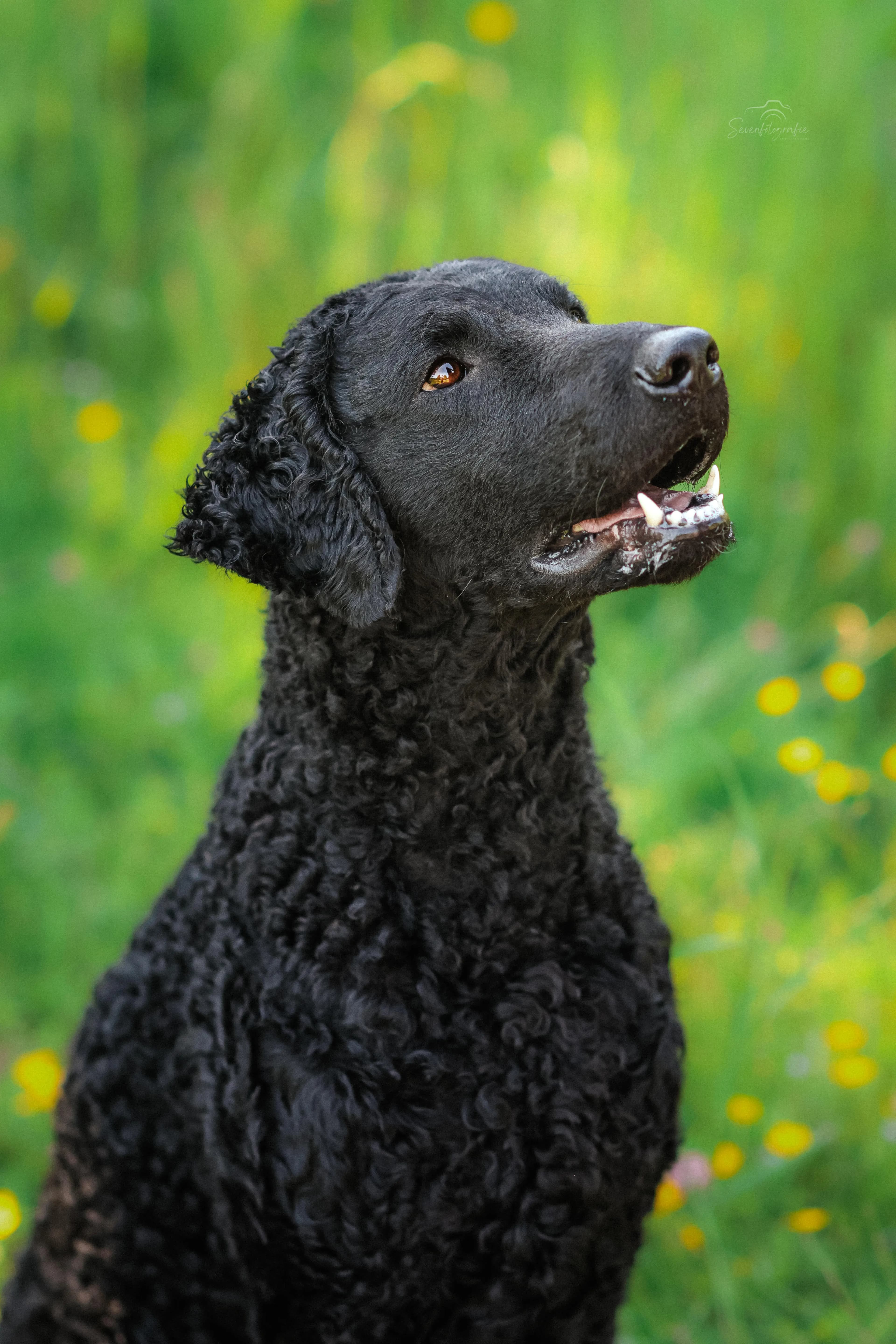
The Chesapeake Bay Retriever is a large, powerful and athletic dog, particularly notable for its water-repellent coat and ability to work in cold water. His appearance shows strength and endurance, with a broad skull, strong jaw and a muscular build. The eyes are a standout feature of this breed as they are often amber in color and have a warm, intelligent aura. The Chesapeake Bay Retriever belongs to FCI Group 8, the retrieving dogs, searching dogs and water dogs. Its fur is short but very dense with a fine, woolly undercoat that protects it from cold temperatures. This undercoat, together with the slightly longer, wavy top coat, makes the fur almost waterproof. This helps him in his work as a water dog, where he often jumps into cold water to retrieve birds.
The Chesapeake Bay Retriever is an incredibly versatile dog. His history as a working dog in rough waters has made him a strong, determined and often independent companion. Something you will immediately notice about this breed is their love of water. They are fantastic swimmers and love retrieving, especially in the water. This preference can be channeled into activities such as water sports and lifesaving, giving them a fulfilling activity that fits their natural behavior. They tend to have strong retrieving behavior and can sometimes display prey drive. When it comes to their bond with people, they are often very loyal and affectionate towards their families, but can be reserved around strangers. This makes them good guard dogs as they tend to be vigilant and protective of their people and territory. The Chesapeake Bay Retriever is also intelligent and can think independently. This was crucial to his work as a retriever, but can sometimes be a challenge when it comes to training certain behaviors. It is important to note that these dogs often require a firmer hand in training as they can sometimes be stubborn. When it comes to energy, Chesapeake Bay Retrievers are active dogs that need regular exercise. They are not hyperactive, but they need meaningful activity to be happy. Long walks, swimming, and games of fetch are great for this breed. Chesapeake Bay Retrievers can get along well with children and other pets if they are socialized from an early age. However, it is always advisable to monitor interactions between dogs and small children. In terms of husbandry, Chesapeake Bay Retrievers are suitable for both rural and suburban life. A home with a large yard and access to water would be ideal for this breed. City apartments are not the best choice for a Chesapeake Bay Retriever unless you are willing to dedicate a lot of time to daily walks and outdoor activities.
| Watchfulness Occasionally alerts but is fundamentally open. | Low |
| Openness to Strangers Neither pushily friendly nor suspicious. | Neutral |
| Hunting or Herding Drive Powerful instinct that can override recall when triggered. | Strong |
Fun Fact!
Did you know that the Chesapeake Bay Retriever was originally bred to retrieve ducks and other waterfowl in the harsh and cold Chesapeake Bay in the USA? This makes him an amazing swimmer and a tireless worker!
The Chesapeake Bay Retriever is a hunting dog that works more independently. These dogs also tend to be protective of their owners. They need a task that makes sense for them and consistent education. Chesapeake Bay Retrievers are not beginner dogs.
The Chesapeake Bay Retriever is an active dog and is better suited to a home with a yard or near natural areas. Living in a city apartment can be too restrictive for him. They are family oriented and generally get along well with children, but it is always advisable to monitor interactions. They can be territorial around other pets, so early socialization is crucial.
Loves family life and thrives in a group.
Takes boisterous and affectionate children in its stride.
Usually gets on fine with other dogs.
Can manage in the city, but only with very active owners.
Owning a dog is a privilege, but it's also a real responsibility. Before you bring one into your life, be honest with yourself about the commitment it takes.
This retriever is intelligent but sometimes independent and stubborn. This makes consistent but loving upbringing important. They love water and games of fetch, so water sports like dock diving are a great way to exercise them physically and mentally. It is important to note that they can become "ball junkies" so it's good to find a balance between playing fetch and other activities. Training in frustration tolerance and impulse control is also crucial to making them well-adjusted and happy family members.
Chesapeake Bay Retrievers need a balanced diet with high-quality food that contains all the necessary nutrients. Because they are active, it is important that their diet contains enough protein and fat to maintain their energy. When it comes to grooming, this dog has a short, dense coat with a fine, woolly undercoat. The water-repellent fur is perfect for the German climate! They shed moderately, so regular brushing is necessary, especially during shedding periods.
| Care Level Regular brushing and occasional professional grooming. | Moderate |
| Exercise Needs Working-dog energy that needs burning off every single day. | High-drive |
| Shedding Hair everywhere, always — no white clothing survives. | Very heavy |
| Trainability Bred to work closely alongside humans. | Highly trainable |
Our experts are still reviewing this information. Spotted something wrong? Email us at info@honestdog.de.
Solid
Health grade
In the Chesapeake Bay Retriever, the primary health risks are joint issues such as hip dysplasia (HD) and elbow dysplasia (ED), as well as hereditary conditions like degenerative myelopathy, exercise-induced collapse (EIC), and progressive retinal atrophy (prcd-PRA). Therefore, the Deutscher Retriever Club e.V. (DRC) mandates radiographic examinations for HD (A to C) and ED (0 to 1), as well as genetic testing for degenerative myelopathy, exercise-induced collapse (EIC), and progressive retinal atrophy (prcd-PRA) for breeding. In addition, responsible breeders often have parent animals tested for von Willebrand disease and eye disorders such as cataracts. Make sure that carriers of hereditary diseases are only mated with demonstrably clear partners, and insist on seeing all original test results without exception.
Grade is relative to other breeds — AI-assisted and editorially reviewed.
Methodology and data: HonestDog Dog Breed Health Report 2026
What matters most for this breed
Tap any item to see details.
You should pay attention to a healthy weight and joint-friendly rearing, as well as avoid extreme physical overexertion, so that your dog remains active for a long time.
Responsible breeders test for HD, ED, degenerative myelopathy, EIC, and prcd-PRA, and consistently rule out hereditary paralysis, joint damage, and blindness through targeted matings.
Note: This health overview is AI-assisted and editorially reviewed. It is for orientation only and does not replace veterinary advice.
What matters most for this breed — what's common, how much it affects the dog's life, and how to protect yourself as a buyer.
Tap a body region to see the inherited conditions linked to it.
The three most important risks
Pick a region on the map to explore other areas.
Tier 1 is the core standard: the tests Deutscher Retriever Club e.V. (DRC) requires, plus further tests from the recommended health standard for this breed. Tiers 2 and 3 show how responsible breeders go beyond.
Core standard. Tests marked “Club standard” are required by Deutscher Retriever Club e.V. (DRC) for breeding approval; the others are part of the recommended health standard for this breed. Ask any reputable breeder for the results.
Note: This health overview is AI-assisted and editorially reviewed. It is for orientation only and does not replace veterinary advice.
A Chesapeake Bay Retriever costs around ~€190 per month (€100 – €370, depending on your setup). The first year adds up to roughly ~€5,160 including purchase, equipment and puppy school; across the dog's life (11.5 years) it comes to about ~€29,600.
With surgery cover, running costs come to about ~€190 per month — in return, your share of a major operation drops from several thousand euros to around 20 percent.
Per month
~€190
In the first year
~€5,160
Across the dog's life
~€29,600
Estimated purchase price from a breeder: €1,500 – €2,500
Estimate at a mid-range setup (suburban, dry food, 1–2 hours of daily exercise), average German prices, as of July 2026.
The Chesapeake Bay Retriever originally comes from the Chesapeake Bay region in the USA. Its story begins in the early 19th century, when a ship from England stranded on the Maryland coast with two Newfoundland puppies on board. These two dogs, a black male named Sailor and a red female named Canton, became known as rescue dogs and are considered the ancestors of today's Chesapeake Bay Retrievers. Over the years, these dogs were crossed with local retrievers and possibly also with coonhounds and Irish water spaniels to improve their water dog skills. They were bred specifically to hunt and retrieve waterfowl and were known for their ability to work hard in the most adverse conditions. The American Kennel Club (AKC) first recognized the Chesapeake Bay Retriever as a separate breed in 1885. Today, the Chesapeake Bay Retriever is still popular as a working dog, but is also valued as a family dog.
The Chesapeake Bay Retriever was bred as a retrieving dog for water hunting ducks and is known for its endurance and water-repellent coat.
USA
1800
At home and with the family, owners describe the Chesapeake Bay Retriever as a very affectionate, loyal and steady-nerved companion. Many stress, though, that it's noticeably different from better-known retrievers like the Labrador or Golden Retriever: the "Chessie" loves its closest family deeply but often meets strangers with neutral to skeptical reserve. The breed also has a natural guarding and protective instinct, plus some tendency toward resource guarding. Owners point out that visitors and meetings with other dogs need to be managed with foresight from puppyhood on, so the dog doesn't decide on its own who gets to enter its territory.
Well-socialized Chessies usually get along very well with sturdy children and are playful and patient with them. Still, experienced owners note that young dogs can be very boisterous and physical and are slow to mature. The breed is also no couch potato: leash walks alone aren't enough. Many owners report that an underchallenged Chessie becomes restless or guards more than it should, so a job in daily life, whether dummy work, search-and-rescue training or mantrailing, is essential for a harmonious family life.
Sources:hundeseite.demit-tier.dehuntingdogs-blog.comsedgegrass.dehunde-fan.de
Owners agree that the Chesapeake Bay Retriever is not one of the easy-to-handle breeds that obey without question. It's considered very intelligent and very keen to work, but it clearly questions commands and has a strong independent streak. Owners stress again and again that harshness or pressure backfires completely with this breed; Chessies often respond with stubborn refusal or by shutting down. Successful training instead takes complete consistency, fairness, clear structure and reliable boundaries set through positive reinforcement.
Frustration tolerance and impulse control come up a lot in owner circles. The breed's great passion for water and retrieving is a big strength in dummy sports or hunting, but in everyday life that drive has to be actively channeled. Many owners warn against choosing the breed as a first dog unless you're ready to put time into training classes and targeted one-on-one work. Owners say, though, that anyone who has earned a Chessie's respect and trust gets an unshakable, focused working partner.
Sources:hundeseite.demit-tier.dehuntingdogs-blog.comkalenderwinkel.nlzooroyal.de
Owners and breed clubs generally describe the Chesapeake Bay Retriever as a hardy, weatherproof breed whose typical slightly oily, water-repellent coat easily stands up to wind and cold. Owners also mention, however, the coat's distinctive smell, which you have to get used to, and the fact that this protective coat shouldn't be stripped of its oils with shampoo if it's to keep doing its job.
On the health side, owners and breed experts especially stress taking puppies only from controlled breeding programs. Routine screening focuses on the typical issues of large working retrievers, above all hip dysplasia (HD), elbow dysplasia (ED) and inherited eye diseases. Owner accounts and guides also mention exercise-induced collapse (EIC), a genetic predisposition in which dogs can show weakness in the hind legs after very intense physical exertion. Careful owners therefore look closely at the parent dogs' genetic and joint tests and keep exercise balanced to protect growing joints.
Paraphrased from real owner reports · translated from German
The Chesapeake Bay Retriever is an active dog that needs plenty of exercise and mental stimulation. Research the temperament, grooming needs, and space requirements before deciding.
The average life expectancy of a Chesapeake Bay Retriever is 10-13 years. With proper care and regular vet visits, your dog can live a long, healthy life.
Chesapeake Bay Retriever grooming requirements include regular brushing, nail trimming, and dental care. HonestDog provides detailed grooming tips for every breed.
The Chesapeake Bay Retriever can be a great family dog. Proper training and socialization are key. HonestDog provides family suitability information for every breed.
The Chesapeake Bay Retriever comes in these colors: Brown.
Showcase your kennel on HonestDog and reach families searching for a responsibly bred Chesapeake Bay Retriever.