
Flat-Coated RetrieverSame FCI section
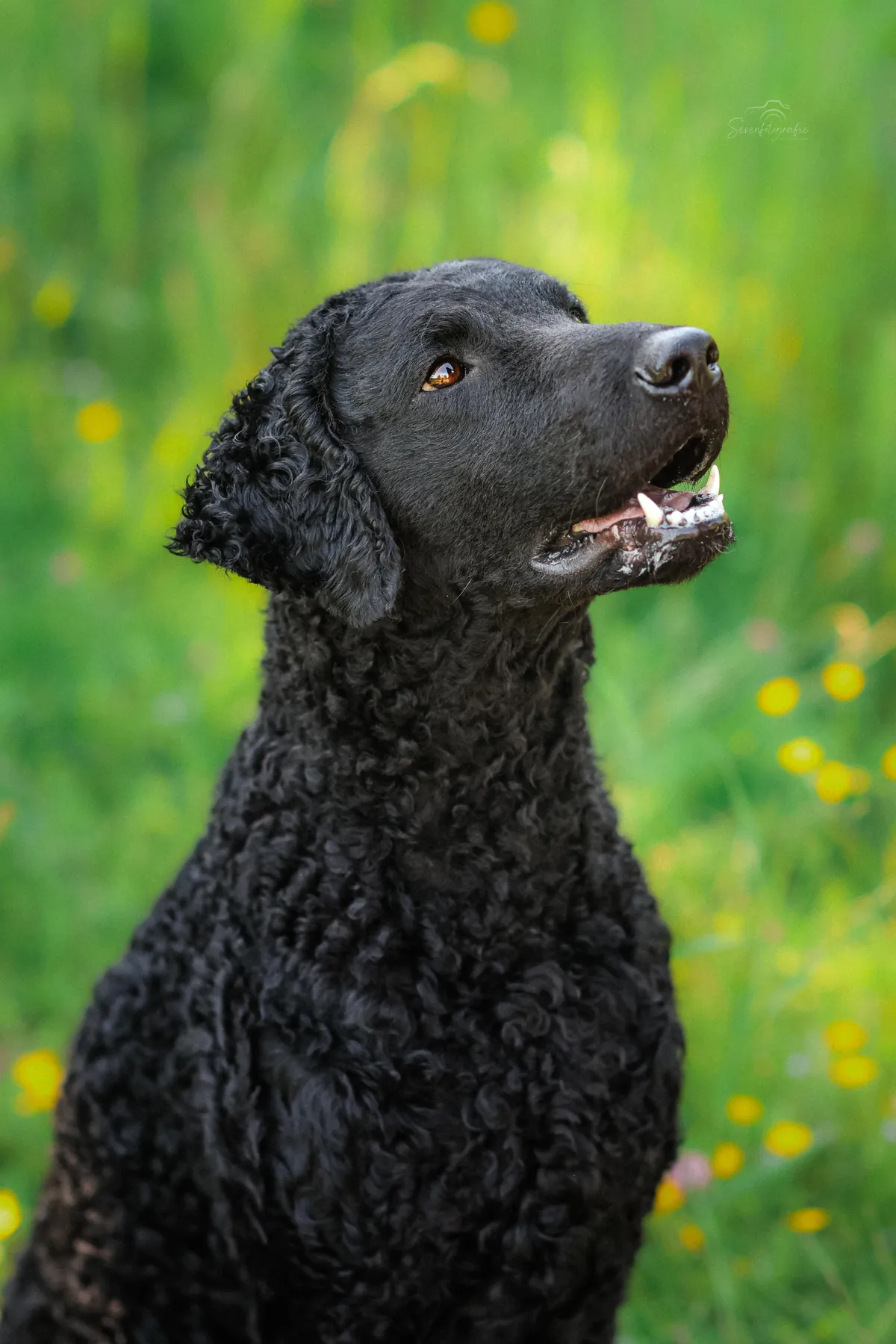
The Curly Coated Retriever is a confident, intelligent retriever bred for endurance work in rough water and dense reeds. Unlike Goldens or Labradors, they bring a healthy dose of independence and a certain reserve toward strangers.
How the health grade is calculated
Sources for required breeding screenings. Deutscher Retriever Club e.V. (DRC) · Deutscher Retriever Club e.V. (DRC)
Self-check
Answer 6 quick questions about your everyday life and see how well the Curly Coated Retriever fits you — including an honest cost estimate per month, per year, and across the dog's lifetime.



At a glance
The essentials — key facts, traits, and health priorities — before you dive deeper.
Lifespan
10–12 yrs
Shoulder height
62–69 cm
Weight
25–40 kg
Practical
Temperament
Daily life
What matters most
Especially with a Curly Coated Retriever, choosing the right breeder is the single most important decision you'll make. Serious breeders consistently test the parents for inherited conditions, prioritize healthy early socialization, and stay accountable long after handover. A cheap puppy without health screening tends to become the most expensive dog later on.
See HonestDog breeder standards →Colors & coat
The coat colors that occur in the Curly Coated Retriever — including which ones fall outside the breed standard and which carry genetic risk.
Eye colors
 Brown
Coat type
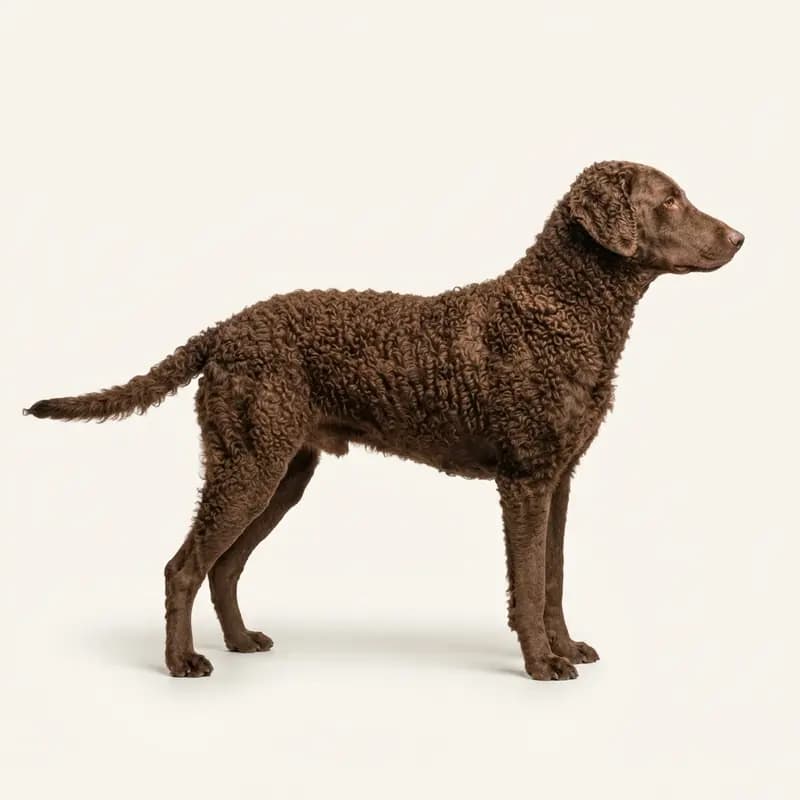 Illustrative image
Curly
 Short
 Smooth
The real vibes check
A Curly Coated Retriever is not a cheerful 'everybody's dog' in a curly coat, but rather an aristocratic worker in a wetsuit. They give their deep affection exclusively to their family, but in return, they expect real tasks and a partner who understands them rather than just giving orders. If you respect this proud character, you will have an unshakable companion by your side.
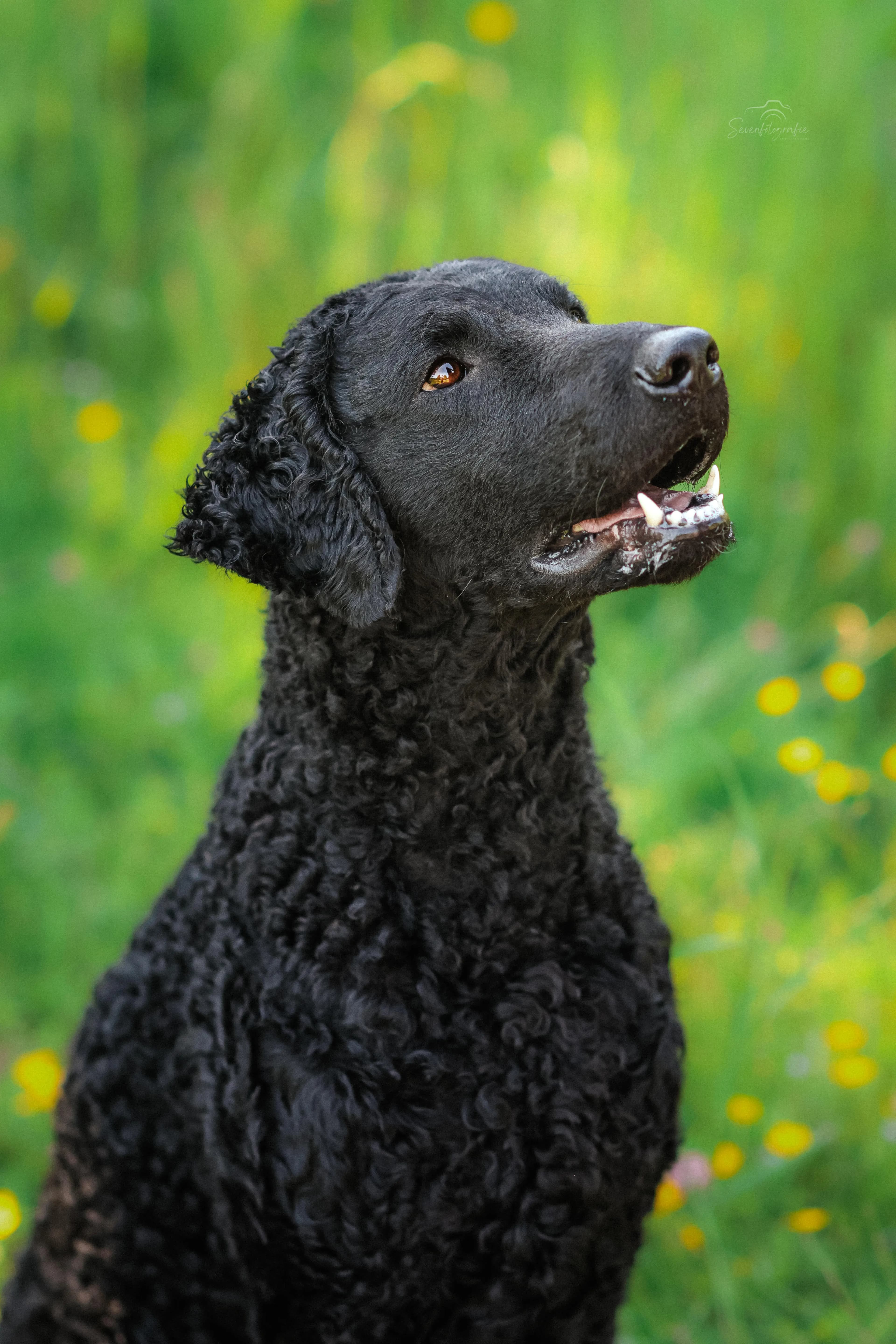
The Curly Coated Retriever has an impressive appearance. He immediately catches the eye with his slender body covered in thick, tight curls that give him his name. The curls are distributed over the entire body, except for the face and front legs, where the fur is smooth. The ears are medium sized and hang close to the head. The eyes are large and show an expressive, intelligent look. The Curly is the largest of the retriever breeds and belongs to FCI Group 8, which also includes retrieving dogs, searching dogs and water dogs. Unlike some other retriever breeds, the Curly Coated Retriever has no distinction between show and working lines, meaning the breed standard is consistent.
The Curly Coated Retriever is a fascinating mix of intelligence and independence. He's certainly not a dog that's constantly looking for affection, but if you win his heart, you'll have a loyal friend for life. He is friendly and reliable, but sometimes a little reserved towards strangers. This also makes him a good watchdog because he will certainly bark if something is wrong. As an original water dog, the Curly naturally loves swimming. If you live near a lake or river, he will be in his element! But even if you don't, he will take every opportunity to jump in puddles or play in the rain. The water is simply a part of his soul. Despite its independence, the Curly Coated Retriever is a very social dog and does not like to be alone for long periods of time. It is possible to get him used to it, but it should be done gradually, and he needs plenty of mental and physical stimulation when you are home. In terms of temperament, the Curly is an active dog, but not hyperactive. He has a quiet dignity, but he is also playful and likes to be challenged. Although he doesn't have the strong hunting behavior of some other retrievers, the prey drive is still there and it's important to work on it when he's young, especially if you have other small pets. When it comes to work, the Curly Coated Retriever loves retrieving. It's a job he was born to do and he really enjoys it. So if you're looking for an activity you can do together, fetch is certainly an option. It keeps him physically and mentally in shape and strengthens your bond.
| Watchfulness Occasionally alerts but is fundamentally open. | Low |
| Openness to Strangers Warms up quickly and is generally welcoming. | Friendly |
| Hunting or Herding Drive Noticeable drive — needs attention around small animals. | Moderate |
Fun Fact!
The Curly Coated Retriever is known for being one of the oldest retrievers and was a recognized breed in England back in the early 19th century!
Curly Coated Retrievers are considered to be rather independent and reserved dogs. They are motivated to hunt and need an activity that is appropriate to their type. Curly Coated Retrievers are not particularly suitable for beginners.
With their friendly and outgoing nature, Curly Coated Retrievers are well suited to families and tend to do well with children. In terms of city living, it is possible, but they require adequate exercise and mental stimulation as they are very active. Therefore, they are best suited to a home with a garden. They are also often compatible with other pets, including cats, if socialized from an early age.
Lives for its family — the born family companion.
Extraordinarily patient and loving — a true family dog.
Actively enjoys the company of other dogs.
City-appropriate with enough exercise and stimulation.
Owning a dog is a privilege, but it's also a real responsibility. Before you bring one into your life, be honest with yourself about the commitment it takes.
Curly Coated Retrievers are intelligent, high-energy dogs that enjoy working and playing. It's important to offer them a variety of activities to keep their minds occupied. They are ideal for dog sports such as agility, obedience, and flyball. Make sure not to over-occupy the dog and offer him enough periods of relaxation. They love ball games, but you should be careful that it doesn't become an obsession. Learning frustration tolerance and impulse control is also very important for this breed so that they are well integrated into society and remain happy.
A balanced and healthy diet is important for every dog, and the Curly Coated Retriever is no exception. A high-quality food that meets the nutritional needs of this active dog is crucial. In terms of care, the Curly Coated Retriever, as the name suggests, has a curly coat that is surprisingly quite easy to care for. The coat has a dense undercoat and a water-repellent upper coat that protects it from most weather conditions - so it copes well with the climate in Germany. The breed sheds moderately, but the curls often hold the hair back, so there is less hair to be found around the house.
| Care Level Regular brushing and occasional professional grooming. | Moderate |
| Exercise Needs Needs several hours of serious exercise every day. | Very active |
| Shedding No or minimal hair loss — suitable for allergy sufferers. | No shedding |
| Trainability Bred to work closely alongside humans. | Highly trainable |
Our experts are still reviewing this information. Spotted something wrong? Email us at info@honestdog.de.
Solid
Health grade
In the Curly Coated Retriever, breed-specific risks exist for hip dysplasia (HD), elbow dysplasia (ED), and eye diseases such as cataracts. The Deutscher Retriever Club e.V. (DRC) therefore mandatorily requires radiographic screening for HD (threshold A–C) and ED (threshold 0–1), as well as proof of freedom from cataracts. In addition, responsible breeders test the parent animals for progressive retinal atrophy, exercise-induced collapse (EIC), and glycogen storage disease IIIa (Curly Coated Retriever), where a carrier status may only be mated if the breeding partner is clear. Before buying, ask to see the official radiographic and eye examination results as well as the corresponding DNA certificates for both parents.
Grade is relative to other breeds — AI-assisted and editorially reviewed.
Methodology and data: HonestDog Dog Breed Health Report 2026
What matters most for this breed
Tap any item to see details.
You should focus on joint-friendly development and monitor your dog's physical limits during intense exercise to identify potential weaknesses early on.
Responsible breeders have parent animals tested for HD, ED, and cataract, and additionally test for Exercise Induced Collapse (EIC) and Glycogen Storage Disease IIIa (Curly Coated Retriever).
Note: This health overview is AI-assisted and editorially reviewed. It is for orientation only and does not replace veterinary advice.
What matters most for this breed — what's common, how much it affects the dog's life, and how to protect yourself as a buyer.
Tap a body region to see the inherited conditions linked to it.
The three most important risks
Pick a region on the map to explore other areas.
Tier 1 is the core standard: the tests Deutscher Retriever Club e.V. (DRC) requires, plus further tests from the recommended health standard for this breed. Tiers 2 and 3 show how responsible breeders go beyond.
Core standard. Tests marked “Club standard” are required by Deutscher Retriever Club e.V. (DRC) for breeding approval; the others are part of the recommended health standard for this breed. Ask any reputable breeder for the results.
Note: This health overview is AI-assisted and editorially reviewed. It is for orientation only and does not replace veterinary advice.
A Curly Coated Retriever costs around ~€200 per month (€100 – €380, depending on your setup). The first year adds up to roughly ~€5,190 including purchase, equipment and puppy school; across the dog's life (11 years) it comes to about ~€28,830.
With surgery cover, running costs come to about ~€200 per month — in return, your share of a major operation drops from several thousand euros to around 20 percent.
Per month
~€200
In the first year
~€5,190
Across the dog's life
~€28,830
Estimated purchase price from a breeder: €1,500 – €2,500
Estimate at a mid-range setup (suburban, dry food, 1–2 hours of daily exercise), average German prices, as of July 2026.
 Illustrative image
 Illustrative image
 Illustrative image
The Curly Coated Retriever comes from England and is one of the oldest retriever breeds. Developed in the early 19th century, it is a mix of the old English Water Dog, the St. John's Dog, the Irish Water Spaniel and possibly some Setter elements. His primary role was retrieving waterfowl, and he was highly regarded for his ability to deftly navigate through dense undergrowth and difficult water. The Curly Coated Retriever was first shown at a dog show in 1854 and has since gained worldwide recognition. It was recognized as an independent breed by the British Kennel Club in 1913 and was recognized by the American Kennel Club in 1924.
The Curly Coated Retriever was bred as a water hunting retriever and is known for its curly, water-repellent coat.
Great Britain
1800
At home and in family life, many owners describe the Curly-Coated Retriever as a surprisingly laid-back housemate that is very calm indoors, as long as it gets enough exercise outside. In clear contrast to retriever breeds like the Labrador or Golden Retriever, it is often described as aloof, neutral or even reserved with strangers. It doesn't throw itself at visitors' feet and can hardly be bribed with treats from people it doesn't know. With its own people, though, the picture changes completely: within the family it is seen as very attached, cuddly and devoted.
Several reports also highlight its alertness. Curlies reliably announce anything unusual in a deep, impressive voice but don't tend toward uncontrolled yapping. For families with children, it is usually described as patient and gentle, provided the children respect its rest times. Owners agree, however, that it is not suited to being a family dog that just runs alongside everyday life: without regular company and mental stimulation it suffers, because it really needs close contact with its people.
Sources:mit-tier.deodeandiefreude-curlycoatedretriever.deschnuffelhof.comreddit.comwildhueter-st-hubertus.de
On training, experienced owners keep pointing out the clear difference from other retrievers: the classic, unconditional "will to please" is noticeably weaker in the Curly, or at least works differently. The breed is very intelligent and quick to learn, but it regularly questions whether a command makes sense and quickly refuses or gets bored with mindless repetition. Owners therefore describe learning as more of a partnership, where you have to win the dog over with patience, creativity and humor.
Given the Curly's often sensitive nature, pressure, harshness or military-style drilling quickly lead to stubborn shutdown. Another recurring point in owner reports is slow maturity: many Curlies are known as real late bloomers that aren't fully grown, physically or mentally, until around three years of age. Adolescence therefore takes a lot of patience and loving consistency from owners. Without clear leadership, the Curly tends to take decisions into its own hands, which can become hard work outdoors given its existing prey and hunting drive.
Sources:mit-tier.deodeandiefreude-curlycoatedretriever.deschnuffelhof.comwildhueter-st-hubertus.detackenberg.de
When it comes to health and care, owners mostly paint a picture of a very hardy, weatherproof breed that has largely been spared extreme overbreeding because it never became a fashion dog. Still, breeders and owners point to the challenges of a fairly small gene pool worldwide, which makes careful breeding selection essential. The breed-typical health risks that come up again and again include, as is common in large working dogs, hip and elbow dysplasia (HD/ED) and inherited eye diseases (such as PRA). In some bloodlines, a tendency toward coat or skin problems such as bald patches (alopecia) is also discussed.
When it comes to grooming, many owners clear up common misconceptions. Contrary to the assumption that the dense, tight curls take a huge amount of work, owners describe the coat as surprisingly low-maintenance and dirt-repellent day to day, as long as you don't brush it out constantly, which would destroy the characteristic curl structure. As for weather, some owners also report that the Curly's dense, insulating coat lets it shrug off cold water and winter weather easily, but in the height of summer it tires noticeably faster in the heat and goes looking for water to cool off in.
Sources:schnuffelhof.comtackenberg.dehorse-gate-forum.comdogforum.de
Paraphrased from real owner reports · translated from German
The Curly Coated Retriever is an active dog that needs plenty of exercise and mental stimulation. Research the temperament, grooming needs, and space requirements before deciding.
The average life expectancy of a Curly Coated Retriever is 10-12 years. With proper care and regular vet visits, your dog can live a long, healthy life.
Curly Coated Retriever grooming requirements include regular brushing, nail trimming, and dental care. HonestDog provides detailed grooming tips for every breed.
The Curly Coated Retriever can be a great family dog. Proper training and socialization are key. HonestDog provides family suitability information for every breed.
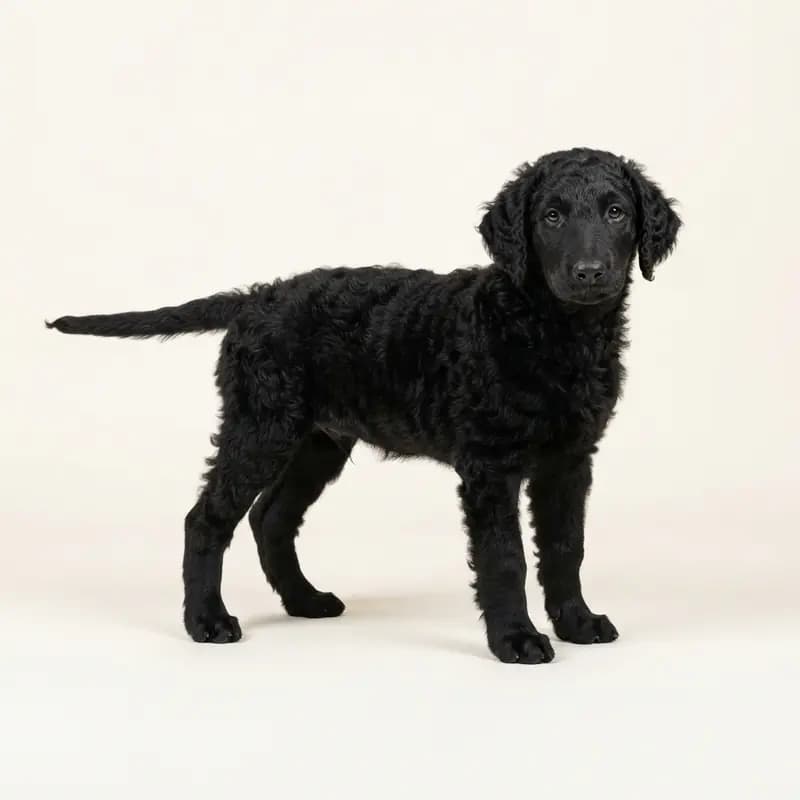
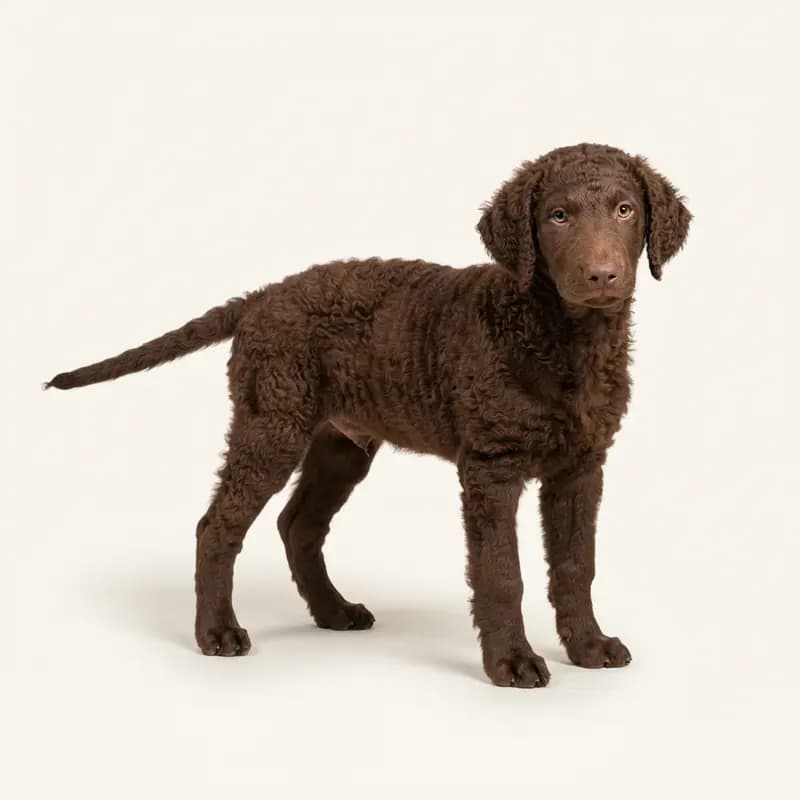
The Curly Coated Retriever comes in these colors: Black, Liver.
Showcase your kennel on HonestDog and reach families searching for a responsibly bred Curly Coated Retriever.