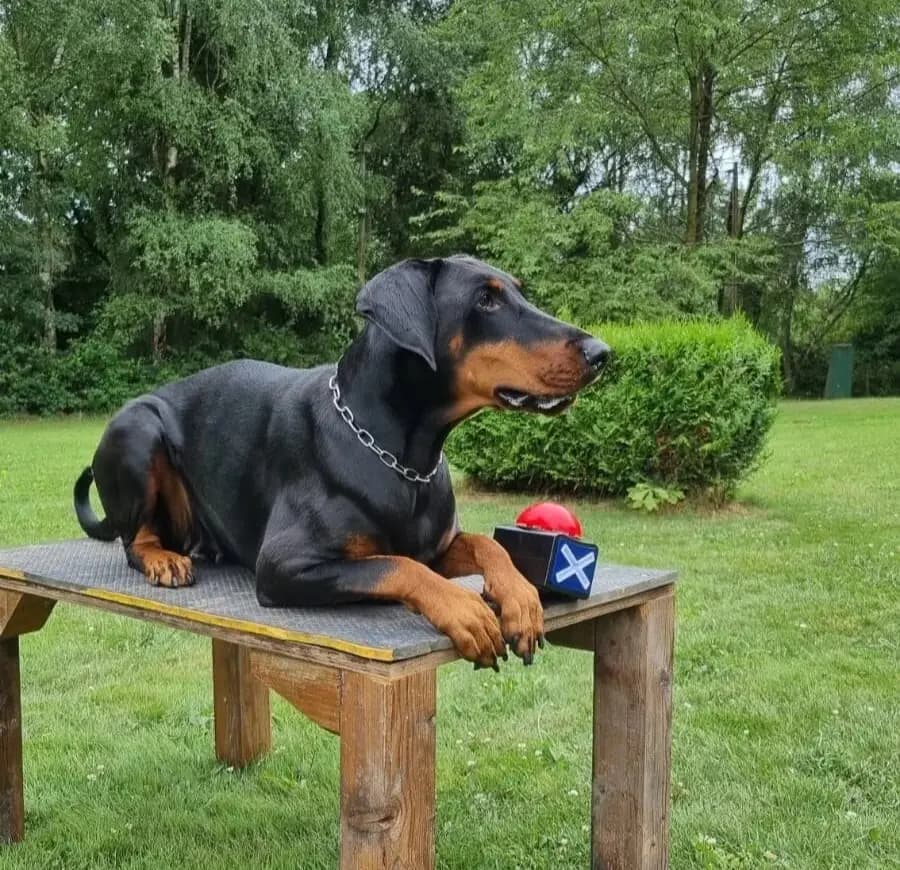
In a shelter, the sensitive Dobermann often shows an unfamiliar side: the noisy kennel routine and the loss of its person take a heavy toll. Some dogs withdraw, others seem boisterous and overexcited at the kennel door. Give the dog time – its high intelligence and willingness to bond often only come through on calm walks away from the hustle and bustle of the shelter.
Health is a central issue when adopting, because with a rescue Dobermann the genetic background is often unknown. The breed carries specific risks for the heart (especially dilated cardiomyopathy and atrial septal defects), blood clotting (von Willebrand disease type I), the joints (hip dysplasia) and the spine (cervical spondylomyelopathy, known as wobbler syndrome, and intervertebral disc disease). A health-focused breeder lowers the risk of these diseases by having the parents' hearts checked by cardiac ultrasound and a long-term ECG (Holter ECG), their hips X-rayed and their eyes examined clinically (for example for cataracts), by selecting lines unaffected by spinal problems and by using a DNA test for von Willebrand disease so carriers are only paired with clear partners – but with dogs of uncontrolled origin, this background knowledge is usually missing.
The breed also has issues such as an underactive thyroid, chronic hepatitis, familial nephropathy, demodicosis or, in dogs with dilute colors such as blue, color dilution alopecia. So our recommendation for you is clear: with an adopted Dobermann, make regular cardiology checkups a fixed part of your plans, choose joint-friendly exercise and always remind your vet about the breed-typical bleeding disorder before any surgery.