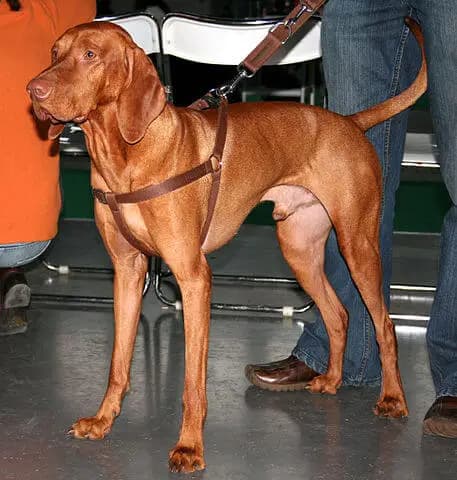
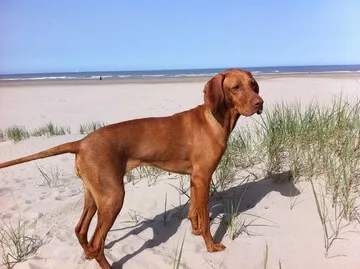
Hungarian VizslaClose relative
The Drahthaariger Ungarischer Vorstehhund is a robust, extremely people-oriented natural athlete—a classic pointing dog (Vorstehhund) bred for close, enduring cooperation during hunting in water and fields, and he needs exactly this kind of work for his inner balance.
Self-check
Answer 6 quick questions about your everyday life and see how well the Wirehaired Vizsla fits you — including an honest cost estimate per month, per year, and across the dog's lifetime.

At a glance
The essentials — key facts, traits, and health priorities — before you dive deeper.
Lifespan
12–14 yrs
Shoulder height
54–62 cm
Weight
20–35 kg
Practical
Temperament
Daily life
What matters most
Especially with a Wirehaired Vizsla, choosing the right breeder is the single most important decision you'll make. Serious breeders consistently test the parents for inherited conditions, prioritize healthy early socialization, and stay accountable long after handover. A cheap puppy without health screening tends to become the most expensive dog later on.
See HonestDog breeder standards →Colors & coat
The coat colors that occur in the Wirehaired Vizsla — including which ones fall outside the breed standard and which carry genetic risk.
Eye colors
 Brown
BrownCoat type
 Wire
Wire Double coat
The real vibes check
Don't be fooled by his rough, weather-resistant shell—underneath that wiry coat beats the heart of a highly sensitive shadow dog. If he is allowed to work cooperatively out in the field, he won't leave your side indoors and will demand the closest physical proximity he can get. You aren't getting a distant hunter, but a buddy who reads your mood before you even notice it yourself.
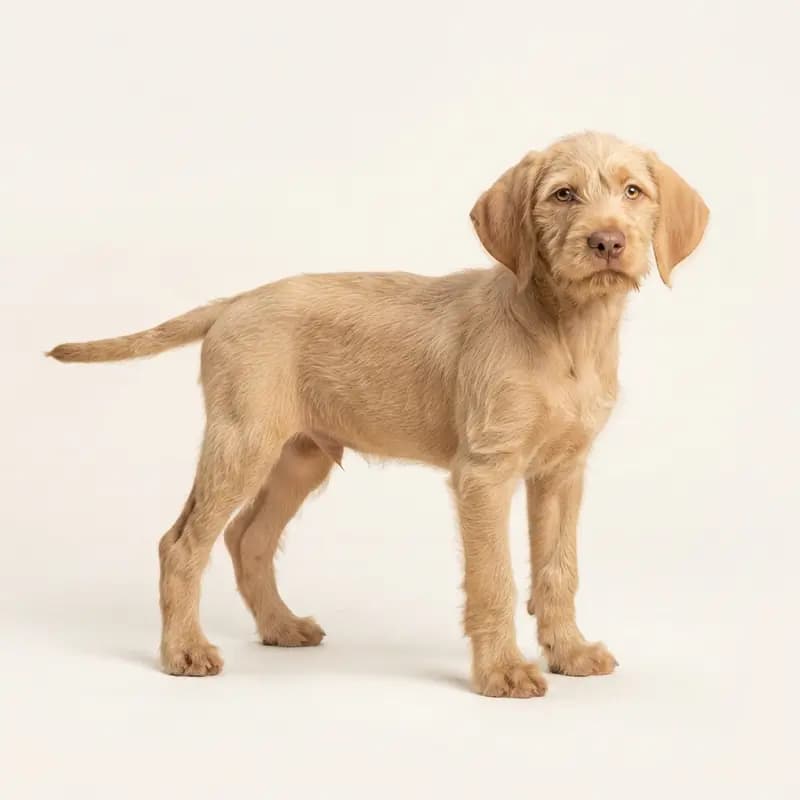
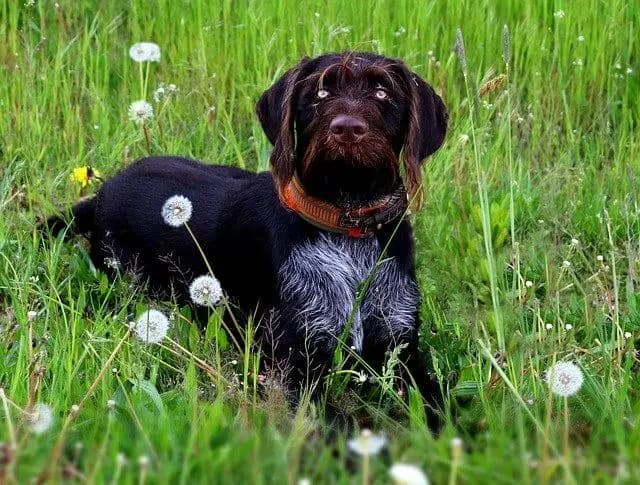
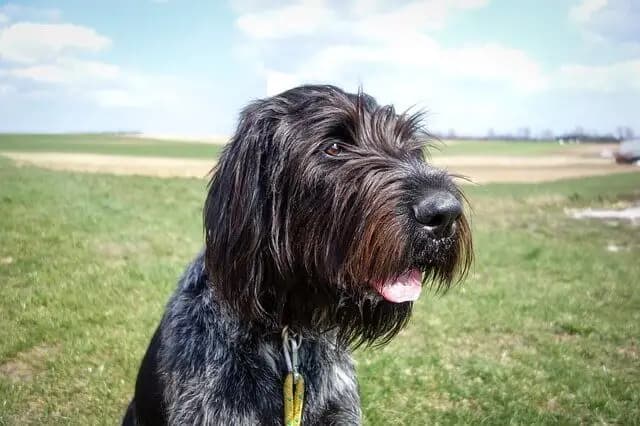
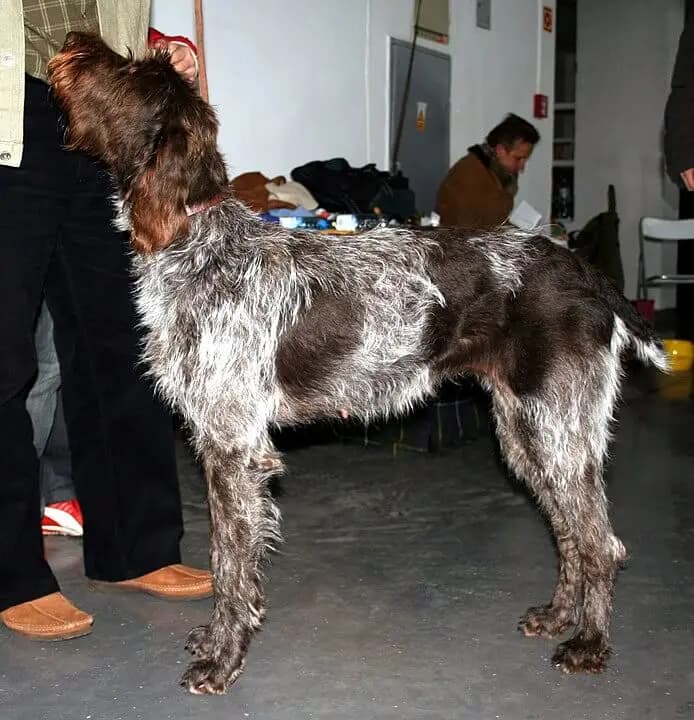
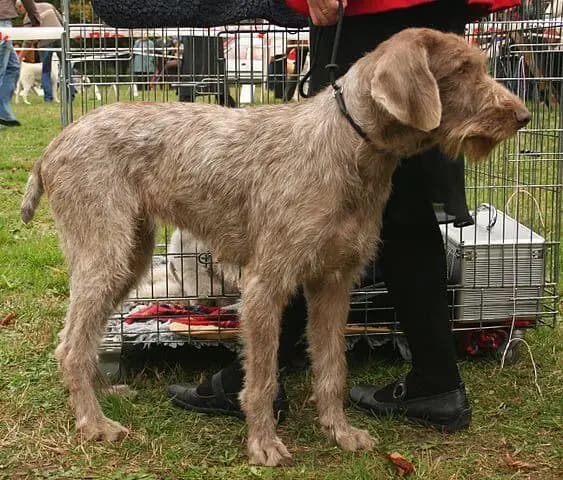
The Wirehaired Hungarian Pointer, also known as the Wirehaired Vizsla, is a medium-sized dog with an elegant appearance and a muscular build. He belongs to FCI Group 7, the group of pointing dogs. His fur is a special feature because it is wiry, dense and protects him from the elements and undergrowth. This dog is characterized by its bushy eyebrows and characteristic beard, which gives its face a distinctive expression. In contrast to the short-haired Hungarian Pointer, the wire-haired dog is rather robust and suitable for various types of hunting.
The Wire-Haired Hungarian Pointer is a real bundle of energy and has a high willingness to work. He is extremely intelligent and has a keen nose, making him an excellent hunting dog. What is particularly noticeable is his passion for working in the water and in the fields. He is not only an excellent retriever, but also a skilled searching and pointing dog. So if you enjoy being out in nature and are perhaps even a passionate hunter, this dog could be your perfect companion. It is important to note that due to his high energy levels and intelligence, he needs plenty of exercise and mental stimulation. A garden to run around in is certainly an advantage, but long walks and activities are essential. The Wirehaired Hungarian Pointer is very people-oriented and forms a close bond with his family. He is loyal and affectionate, but tends to be particularly attached to one person. He is also well suited for families with children as he has a gentle and friendly nature. As far as suitability as a guard dog is concerned, he is rather reserved. He is not a very loud breed by nature, although he can draw attention to unfamiliar noises or people. One point that is particularly important to note with this breed is its strong hunting behavior. Unless kept as a hunting dog, this behavior needs to be managed well, otherwise he may have a tendency to prey on wild animals. This means that safe recall and good leash walking are particularly important. Staying alone is often a challenge for the Wire-Haired Hungarian Pointer. Since he is very affectionate, care should be taken to get him used to being alone slowly and carefully. Overall, the Wirehaired Hungarian Pointer is a wonderful breed for people who spend a lot of time outdoors and are willing to spend a lot of time with their dog. His sweet nature, coupled with intelligence and energy, makes him a great companion for active people who can provide him with the exercise he needs.
| Watchfulness Occasionally alerts but is fundamentally open. | Low |
| Openness to Strangers Neither pushily friendly nor suspicious. | Neutral |
| Hunting or Herding Drive This drive runs deep — no amount of training eliminates it. | Very strong |
Fun Fact!
The Wirehaired Hungarian Pointer is known for its wiry coat, which not only protects it from bad weather, but also ensures that it is often lovingly referred to as "Roughbeard" in Hungary. is referred to.
The Wirehaired Vizsla is an exuberant hunter on land and in water, whose thick, wiry fur distinguishes it from its close cousin, the Vizsla. Indoors, these cheerful Hungarians are calm and gentle and love to run, swim and play.
The Wirehaired Hungarian Pointer is more of a country dog and is not necessarily suited to city life unless it gets enough exercise and mental stimulation. A house with a garden would be ideal. He gets along well with children, but due to his energy, supervision should always be present. He can also get along with cats and other pets if he is accustomed to them from an early age.
Loves family life and thrives in a group.
Gets on well with children — with adult supervision.
Actively enjoys the company of other dogs.
Can manage in the city, but only with very active owners.
Owning a dog is a privilege, but it's also a real responsibility. Before you bring one into your life, be honest with yourself about the commitment it takes.
The Wirehaired Hungarian Pointer is intelligent and docile, but also independent. He needs consistent but loving upbringing. It is important to exercise him mentally and physically without overwhelming him. Sports such as agility, obedience or dummy training are suitable. Since he is originally a hunting dog, he has a strong hunting instinct. It is advisable to offer him alternatives such as search games and to start recall training early. Learning frustration tolerance and impulse control is also important. Ball games should be used in doses to prevent him from becoming a ball junkie.
The Wirehaired Hungarian Pointer's diet should be balanced and nutritious to maintain its energy and health. A high-quality diet tailored to the needs of an active dog is recommended. It is also important to watch your weight, as being overweight can put strain on your joints. In terms of grooming, the Wirehaired Hungarian Pointer has a dense undercoat and a wiry top coat. The fur offers him protection from the weather, so he can cope well with the German climate. However, he sheds moderately, especially during shedding. Regular brushing is recommended to remove loose hair and keep the coat in good condition.
| Care Level Regular brushing and occasional professional grooming. | Moderate |
| Exercise Needs Working-dog energy that needs burning off every single day. | High-drive |
| Shedding Hair everywhere, always — no white clothing survives. | Very heavy |
| Trainability Picks up commands quickly and wants to please. | Eager to learn |
Our experts are still reviewing this information. Spotted something wrong? Email us at info@honestdog.de.
Solid
Health grade
The Wirehaired Vizsla presents itself as a robust working breed with a manageable genetic burden. Severe diseases such as cerebellar ataxia (CA1) and hyperuricosuria (HUU) can be controlled very effectively in breeding through targeted DNA tests. However, as with almost all larger dog breeds, hip dysplasia (HD) remains a serious issue, which is why buyers should strictly insist on the X-ray results of the parents.
Grade is relative to other breeds — AI-assisted and editorially reviewed.
Methodology and data: HonestDog Dog Breed Health Report 2026
What matters most for this breed
Tap any item to see details.
With joint-friendly rearing, a diet adapted to support his metabolism, and regular eye check-ups, your dog will stay fit and active for a long time.
Reputable breeders have the parents' hips, elbows, and eyes examined and pay attention to genetic tests regarding metabolism to reduce risks in the bloodline.
Note: This health overview is AI-assisted and editorially reviewed. It is for orientation only and does not replace veterinary advice.
What matters most for this breed — what's common, how much it affects the dog's life, and how to protect yourself as a buyer.
Tap a body region to see the inherited conditions linked to it.
The three most important risks
Pick a region on the map to explore other areas.
We sort tests into three tiers — from the mandatory club standard to a fully exemplary program.
Club standard. Tests that the relevant breed club (VDH / FCI / AKC parent club) requires. Any serious breeder should be able to show you these.
No entries in this tier.
Note: This health overview is AI-assisted and editorially reviewed. It is for orientation only and does not replace veterinary advice.
A Wirehaired Vizsla costs around ~€190 per month (€100 – €360, depending on your setup). The first year adds up to roughly ~€5,100 including purchase, equipment and puppy school; across the dog's life (13 years) it comes to about ~€32,360.
With surgery cover, running costs come to about ~€190 per month — in return, your share of a major operation drops from several thousand euros to around 20 percent.
Per month
~€190
In the first year
~€5,100
Across the dog's life
~€32,360
Estimated purchase price from a breeder: €1,500 – €2,500
Estimate at a mid-range setup (suburban, dry food, 1–2 hours of daily exercise), average German prices, as of July 2026.
The history of the Wire-Haired Hungarian Pointer is closely linked to that of the Short-Haired Hungarian Pointer. The Vizsla breeds originally come from Hungary and were kept there as hunting dogs as early as the Middle Ages. However, the Wirehaired Hungarian Pointer is a relatively young breed. In the 1930s, targeted breeding programs began to create a more robust pointer that would be better suited to working in dense undergrowth. The Wirehaired Hungarian Pointer was developed by crossing short-haired Hungarian Pointers with other breeds, particularly the German Wirehaired Pointer. The breed was officially recognized in the 1970s.
The Wirehaired Hungarian Pointer, also called the Wirehaired Magyar Vizsla, was bred to be a versatile hunting dog for field work and water work.
Hungary
1936
In daily and family life, owners describe the Wirehaired Vizsla as very affectionate, cuddly and strongly focused on its people. Many stress that, with enough exercise and work, it is a surprisingly calm and gentle housemate that seeks close physical contact. Compared with the smooth-coated Vizsla, owners often say it has a somewhat more laid-back, steadier temperament, although the close bond, up to the typical "Velcro dog" behavior, is very much present here too.
At the same time, owners point out that being left alone often has to be built up carefully and in small steps. If the dog doesn't get enough mental or physical exercise, young dogs tend to get overexcited, greet people with no sense of boundaries or turn destructive at home. By all accounts, it is not suited to being purely a companion or family dog without a regular job, since walks alone can't satisfy its strong drive to be active.
Sources:forum.hundund.dederhund.dede.working-dog.comreddit.comkiezdogs.com
In training and handling, the Wirehaired Vizsla is considered very eager to learn and cooperative, but it needs owners with a sensitive touch. Owners and hunters describe the breed as biddable and strongly people-oriented; unlike some other pointing breeds, it usually doesn't range far to hunt on its own but constantly checks in. Even so, its innate drive to hunt and find game is very strong. To be able to let it off-leash, consistent long-line and recall training is essential from the start.
Owners often warn that the dog reacts very sensitively to harshness, yelling or rough force. With impatient handling, it quickly becomes insecure, shuts down or withdraws fearfully. Training therefore takes a lot of patience, clear boundaries and positive motivation. Hunters and active non-hunters alike report that structured tasks such as dummy work, drag tracks, mantrailing or search-and-rescue work are essential to keep the dog cooperative and focused in daily life.
On hardiness and health, owners are mostly positive and like to point out the advantage of the wirehaired type over the smooth-coated variety. Thanks to its weather-resistant outer coat and dense undercoat, the breed gets much less cold in damp, chilly weather, shows great stamina in water and is better protected from scratches in thick undergrowth. Still, breed clubs and owners stress the importance of checking the parents' health screenings carefully, especially for hip dysplasia (HD) and genetic predispositions such as hyperuricosuria.
One thing that surprises many first-time owners is the grooming effort. While dirt can usually be brushed out easily once dry, the harsh wire coat, depending on its texture, needs regular, skilled hand-stripping. If the dead hair isn't removed, the coat tends to mat or loses its weather-resistant protection. The drop ears also need regular checks after wet walks or water work to prevent infections.
Sources:de.working-dog.comforum.wildundhund.defressnapf.depurina.de
Paraphrased from real owner reports · translated from German
The Wirehaired Vizsla is an active dog that needs plenty of exercise and mental stimulation. Research the temperament, grooming needs, and space requirements before deciding.
The average life expectancy of a Wirehaired Vizsla is 12-14 years. With proper care and regular vet visits, your dog can live a long, healthy life.
Wirehaired Vizsla grooming requirements include regular brushing, nail trimming, and dental care. HonestDog provides detailed grooming tips for every breed.
The Wirehaired Vizsla can be a great family dog. Proper training and socialization are key. HonestDog provides family suitability information for every breed.
The Wirehaired Vizsla comes in these colors: Fawn.
Showcase your kennel on HonestDog and reach families searching for a responsibly bred Wirehaired Vizsla.