StabyhounSame FCI section
The Drentsche Patrijshond is a sensitive pointing dog that works closely with its handler—bred for versatile hunting of upland game, during which it stays within range, points, and retrieves. It is precisely this close bond that makes it a loyal companion, though one that does not forgive harsh words easily.
How the health grade is calculated
Sources for required breeding screenings. Vereniging "De Drentsche Patrijshond" (NL)
Self-check
Answer 6 quick questions about your everyday life and see how well the Drentsche Patrijshond fits you — including an honest cost estimate per month, per year, and across the dog's lifetime.

At a glance
The essentials — key facts, traits, and health priorities — before you dive deeper.
Lifespan
12–14 yrs
Shoulder height
55–63 cm
Weight
25–35 kg
Practical
Temperament
Daily life
What matters most
Especially with a Drentsche Patrijshond, choosing the right breeder is the single most important decision you'll make. Serious breeders consistently test the parents for inherited conditions, prioritize healthy early socialization, and stay accountable long after handover. A cheap puppy without health screening tends to become the most expensive dog later on.
See HonestDog breeder standards →Colors & coat
The coat colors that occur in the Drentsche Patrijshond — including which ones fall outside the breed standard and which carry genetic risk.
Eye colors
 Amber
Coat type
 Medium
 Double coat
The real vibes check
A Drentsche Patrijshond does not work for you, but with you—provided you ask politely. If you try to force it with harshness, this highly intelligent hunter will switch to stubbornness and make its own plan. However, if you treat it as a true partner, you will gain a companion who misses no blade of grass outside and takes no step without you inside.
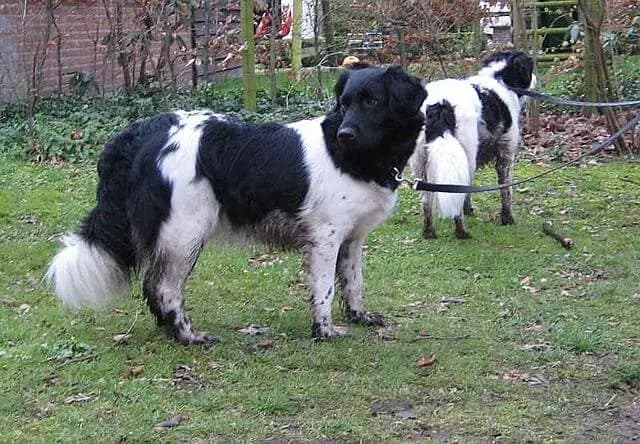
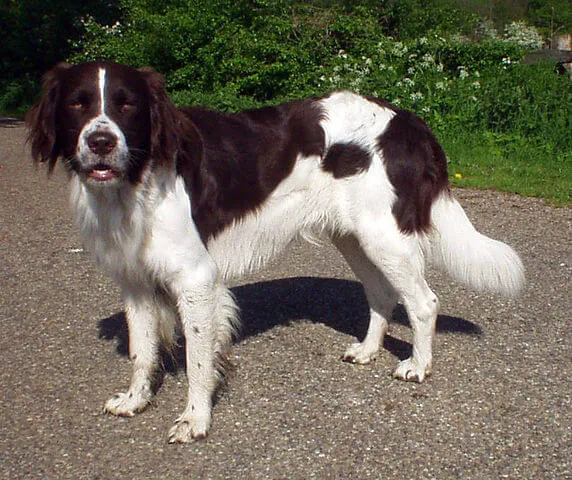
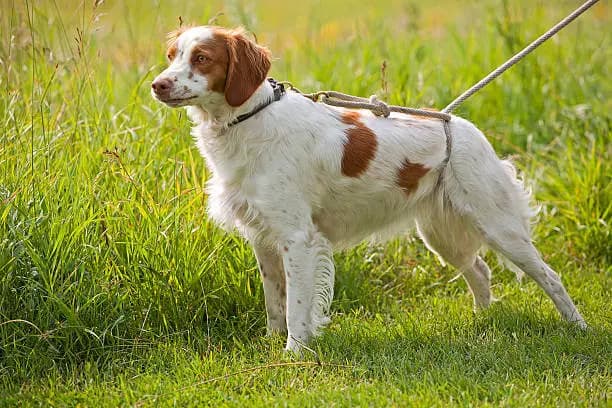
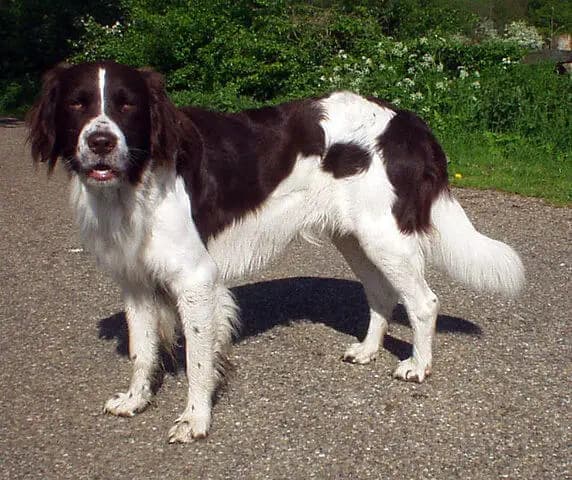
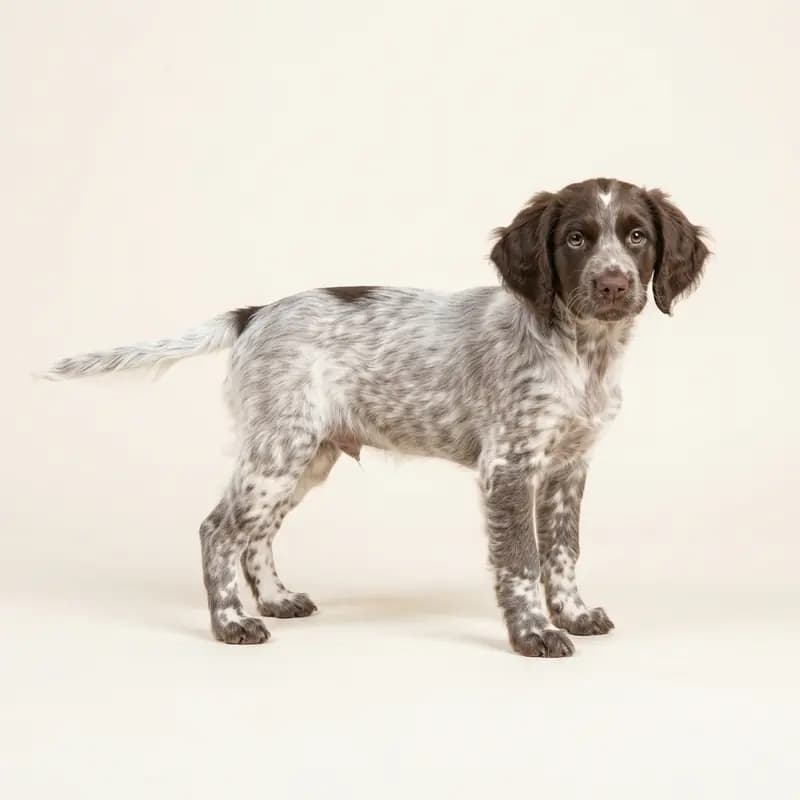
The Drentsche Patrijshond, also called Drent, is a medium-sized dog with a well-proportioned and powerful build. Its appearance is robust but not cumbersome. Its head is broad and slightly domed with medium-sized, high-set ears that lie close to the head. The eyes are almond-shaped and dark brown, giving the Drent a friendly and intelligent expression. Its coat is dense and of medium length with a good undercoat, which protects it from cold and wet conditions. The coat color is usually white with brown spots or roan. The tail is long and carried in an elegant curve. The Drentsche Patrijshond belongs to FCI Group 7, the pointers. There is no distinction between show and working lines as the breed has retained its original working characteristics while being a pleasant family dog.
The Drentsche Patrijshond is known for its friendly and balanced nature. He is affectionate and people-oriented and loves being part of the family. The Drent is an excellent family dog and gets along well with children. His patience and gentleness make him an ideal companion for younger family members. The Drent is a hunting dog by nature from active and energetic, but he is not a hyperactive dog. He needs regular exercise and mental stimulation to stay happy and healthy, but he is also content just relaxing with his family. The Drentsche Patrijshond is an intelligent dog that learns quickly and likes to try new things. He is very eager to learn and enjoys working with his people. His intelligence and desire to please make him a good candidate for various dog sports and activities such as obedience, agility or tracking. A key feature of the Drent is its strong hunting instinct. This means that he likes to run after wild animals and reacts to smells. This behavior can be controlled with training, but you should be aware that it can be challenging, especially in areas where wildlife is common. The Drent can learn to stay alone, but he prefers to be with his family. He is not a dog that should be left alone for hours. He is also not a suitable dog for keeping in a kennel. The Drent is a social dog that enjoys the company of people and other dogs. Although the Drentsche Patrijshond is not a particularly strong watchdog, it is still attentive and vigilant. He will probably bark if he notices something unusual, but he is not an overly loud or aggressive dog. His main goal is to be with his family and accompany them wherever they go. The breed is also known for its health and longevity. With proper care and nutrition, a Drent can be a loyal and lovable companion for many years. When choosing a puppy, it is important to find a reputable breeder who performs health testing and takes care to breed healthy and well-socialized puppies. As with any dog breed, it is important that you have enough time, patience and commitment to raise a puppy and train it to be a well-behaved and happy dog. In summary, the Drentsche Patrijshond is an excellent choice for active people and families looking for a sociable and versatile dog that is both a great companion and a talented working dog. He is a loyal friend and companion who is just waiting to enrich your life.
| Watchfulness Reports unusual activity but stays controlled. | Moderate |
| Openness to Strangers Warms up quickly and is generally welcoming. | Friendly |
| Hunting or Herding Drive This drive runs deep — no amount of training eliminates it. | Very strong |
Fun Fact!
Did you know that the Drentsche Patrijshond gets its name from the Dutch province of Drenthe, where it was originally used as a hunting dog?
The Drent was built by farmers for farmers. As farm dogs, the Drents had to do everything: hunt for feathers and fur, keep the farm free of vermin, deliver milk to the market and much more. The breed has retained its versatility from the start and is extremely intelligent and adaptable. Therefore, the training must be made lively and interesting. Drents are used for all types of hunting, agility, tracking, sled dog racing and skijoring.
The Drentsche Patrijshond is an active and sociable dog that enjoys being with his family. He can also be kept in the city, but he needs sufficient exercise and mental stimulation. It is therefore particularly suitable for active people and families. He gets along well with children and is usually also friendly with other dogs and pets.
Lives for its family — the born family companion.
Extraordinarily patient and loving — a true family dog.
Actively enjoys the company of other dogs.
City-appropriate with enough exercise and stimulation.
Owning a dog is a privilege, but it's also a real responsibility. Before you bring one into your life, be honest with yourself about the commitment it takes.
The Drentsche Patrijshond is an intelligent and willing learner who learns quickly with the right method. He is very motivated and enjoys working with his people. His natural predisposition for hunting and retrieving allows him to excel in various dog sports, such as agility, obedience or tracking. But be careful: ball or fetch games should always be used in moderation to avoid ball or toy addiction. With his innate hunting instinct, it is important that the Drentsche Patrijshond learns to exercise impulse control and develop frustration tolerance. Good recall and leash training are also essential elements in his training. Due to his intelligence and commitment, it is important that he is mentally busy, but rest periods are also essential for his well-being.
As far as the diet of the Drentsche Patrijshond is concerned, there are no specific requirements. A balanced and high-quality dog food is the be-all and end-all, although the exact amount and composition can vary depending on age, weight and activity level. The best thing to do is to get advice from your veterinarian. Caring for the Drentsche Patrijshond is relatively easy. He has a medium-long, dense coat with an undercoat that protects him well from cold and wet conditions. However, this also means that it sheds heavily during the seasonal changes and should then be brushed regularly. Its coat is easy to care for and should only be bathed when necessary. A regular check of his ears, eyes and teeth is of course also part of the care. **3. Attitude** The Drentsche Patrijshond is an active and sociable dog that enjoys being with his family. He can also be kept in the city, but he needs sufficient exercise and mental stimulation. It is therefore particularly suitable for active people and families. He gets along well with children and is usually also friendly with other dogs and pets.
| Care Level Minimal effort — occasional brushing and bathing. | Low-maintenance |
| Exercise Needs Needs several hours of serious exercise every day. | Very active |
| Shedding Hair everywhere, always — no white clothing survives. | Very heavy |
| Trainability Picks up commands quickly and wants to please. | Eager to learn |
Our experts are still reviewing this information. Spotted something wrong? Email us at info@honestdog.de.
Solid
Health grade
In the Drentsche Patrijshond, joint problems as well as neurological and hereditary eye diseases occur in particular; elbow dysplasia (ED), hip dysplasia (HD), progressive retinal atrophy, and cerebellar ataxia (CA1) represent especially serious risks. The breed club Vereniging "De Drentsche Patrijshond" (NL) therefore strictly requires an ED X-ray with an ED 0–1 result. Responsible breeders also have the parent animals X-rayed for HD (result HD A–B) and provide eye examination results for cataracts and progressive retinal atrophy. Furthermore, have them show you genetic tests for cerebellar ataxia (CA1) and hyperuricosuria (HUU) – carriers may only be mated with proven clear partners.
Grade is relative to other breeds — AI-assisted and editorially reviewed.
Methodology and data: HonestDog Dog Breed Health Report 2026
What matters most for this breed
Tap any item to see details.
By ensuring joint-friendly rearing during puppyhood and regular eye check-ups, you lay the best foundation for a long, active life.
Responsible breeders have parent animals screened for HD and ED and additionally voluntarily test for cataracts, progressive retinal atrophy, cerebellar ataxia (CA1), and hyperuricosuria (HUU).
Note: This health overview is AI-assisted and editorially reviewed. It is for orientation only and does not replace veterinary advice.
What matters most for this breed — what's common, how much it affects the dog's life, and how to protect yourself as a buyer.
Tap a body region to see the inherited conditions linked to it.
The three most important risks
Pick a region on the map to explore other areas.
Tier 1 is the core standard: the tests Vereniging "De Drentsche Patrijshond" (NL) requires, plus further tests from the recommended health standard for this breed. Tiers 2 and 3 show how responsible breeders go beyond.
Core standard. Tests marked “Club standard” are required by Vereniging "De Drentsche Patrijshond" (NL) for breeding approval; the others are part of the recommended health standard for this breed. Ask any reputable breeder for the results.
No entries in this tier.
Note: This health overview is AI-assisted and editorially reviewed. It is for orientation only and does not replace veterinary advice.
A Drentsche Patrijshond costs around ~€190 per month (€100 – €360, depending on your setup). The first year adds up to roughly ~€5,080 including purchase, equipment and puppy school; across the dog's life (13 years) it comes to about ~€32,140.
With surgery cover, running costs come to about ~€190 per month — in return, your share of a major operation drops from several thousand euros to around 20 percent.
Per month
~€190
In the first year
~€5,080
Across the dog's life
~€32,140
Estimated purchase price from a breeder: €1,500 – €2,500
Estimate at a mid-range setup (suburban, dry food, 1–2 hours of daily exercise), average German prices, as of July 2026.
HonestDog Concierge
We currently have no breeders for this breed who have passed our verification. Create your short buyer profile: we'll set up your search alert, review a possible source and email you within 28 days.
 Illustrative image
 Illustrative image
The breed comes from the Dutch province of Drenthe, where it has been used as a versatile hunting and farm dog for centuries. The Drent probably has its origins in Spanish hunting dogs, which were introduced by the Spanish during their rule in the Netherlands in the 16th century. These dogs were crossed with local dogs and the result was a hardy and versatile dog suitable for both hunting and farm work. The breed was only recognized as a separate breed in the 20th century. Official recognition by the FCI came in 1943. Today, the Drentsche Patrijshond is still very popular in the Netherlands, but is less well known outside of its home country.
The Drentsche Patrijshond was developed as a versatile hunting dog for field work and retrieving.
Netherlands
1600
In family life, owners mainly value the Drentsche Patrijshond for its gentle, cuddly and patient nature. Many point out how attentively and sensitively it picks up on the mood in the household and how well it gets along with children. Indoors, with enough exercise and work, it is considered pleasantly calm and relaxed; it seeks a lot of physical contact and wants to be part of everything. It usually greets strangers in a friendly way or with brief, wait-and-see reserve. It will alert to anything unusual, but it doesn't tend to bark for no reason.
The flip side of this close bond is how attached it gets. Owners regularly stress that the Drent dislikes being alone and that it really needs to get used to it early and gradually. In owners' experience, it isn't suited to being kept apart from the family or left alone for long stretches every day; it clearly suffers when it isn't part of its human "pack."
Sources:petbook.detackenberg.de
Owner reports on training repeatedly describe the Drentsche Patrijshond as a double-edged sword: it is very quick to learn and wants to please, but it also has a noticeable stubborn streak and a lot of independence. Owners and trainers unanimously warn against using harshness or loud pressure. With unfair treatment or rough handling, this sensitive hunting dog quickly shuts down, withdraws or refuses to cooperate altogether.
According to owners, what works is almost exclusively calm consistency, patience and positive reinforcement. The Drent also occasionally re-tests rules when it doesn't see the point of a task or when its handler seems inconsistent. Owners who pair respect for its sensitivity with clearly set boundaries, however, get a dog that catches on surprisingly fast and works with real enthusiasm.
Sources:petbook.detackenberg.dehondenpage.comdrenten.deedogs.de
On exercise and hunting drive, owners paint a clear picture of an active working dog: outside, its nose is practically always on the ground or in the wind. Unlike some other far-ranging hunting dogs, the Drent naturally tends to hunt "under the gun," staying within a noticeable radius of its person. Even so, its strong drive to find game calls for consistent impulse-control training and a reliable recall. Leash walks alone aren't enough for it.
Owners describe activities that satisfy its urge to work as especially effective: the breed takes to dummy training, tracking and mantrailing with enthusiasm. If this hunting and working drive isn't channeled properly, some dogs tend to go looking for game trails on their own or stop listening to commands when off-leash. Physically, the breed is considered robust and long-lived overall, though owners stress that buyers should insist on reliable breeding screenings (especially for hip dysplasia and eye diseases) when choosing a puppy, to help prevent hereditary disease.
Sources:rundum.dogguter-hund.depeqaboo.comkokogenetics.comtipaw.com
Paraphrased from real owner reports · translated from German
The Drentsche Patrijshond is an active dog that needs plenty of exercise and mental stimulation. Research the temperament, grooming needs, and space requirements before deciding.
The average life expectancy of a Drentsche Patrijshond is 12-14 years. With proper care and regular vet visits, your dog can live a long, healthy life.
Drentsche Patrijshond grooming requirements include regular brushing, nail trimming, and dental care. HonestDog provides detailed grooming tips for every breed.
The Drentsche Patrijshond can be a great family dog. Proper training and socialization are key. HonestDog provides family suitability information for every breed.
The Drentsche Patrijshond comes in these colors: Brown and white, Roan.
Showcase your kennel on HonestDog and reach families searching for a responsibly bred Drentsche Patrijshond.