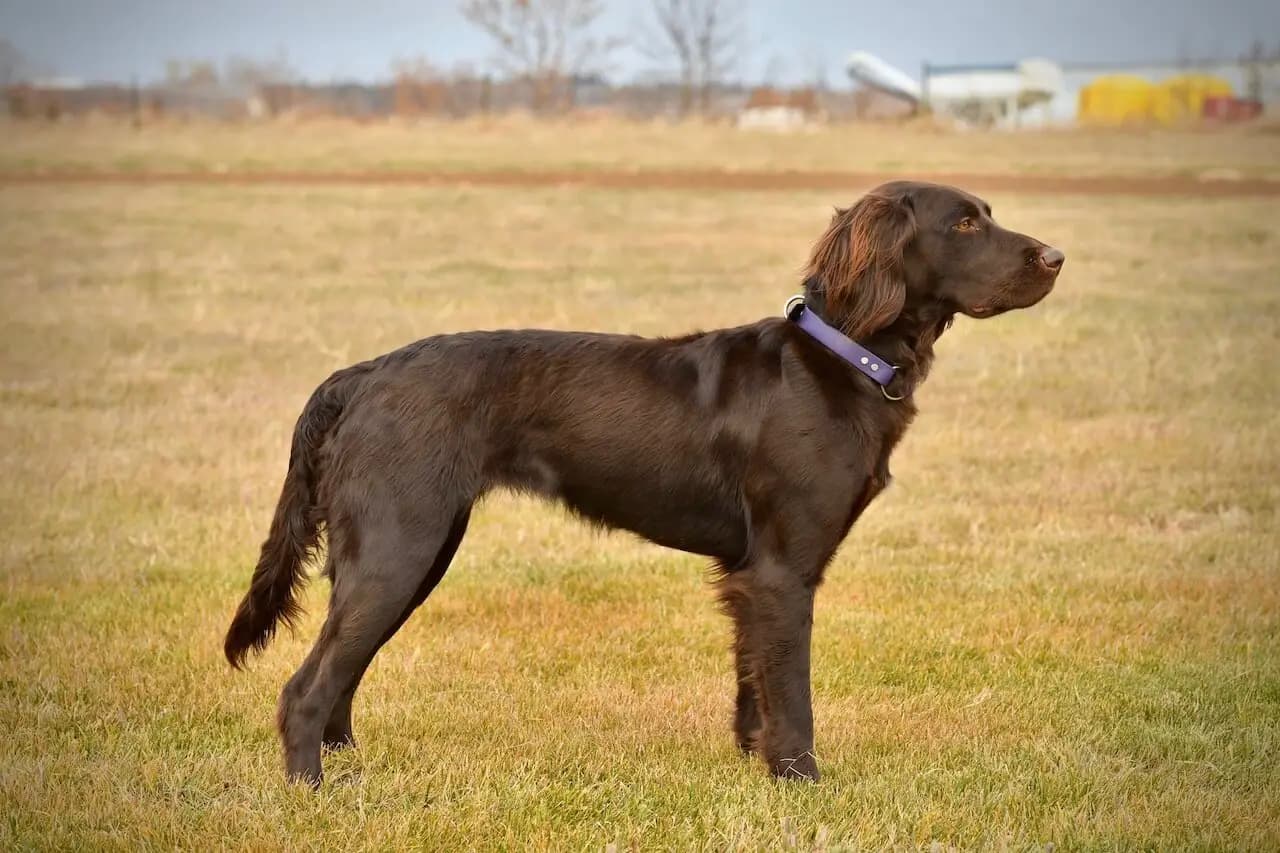
German Longhaired PointerClose relative
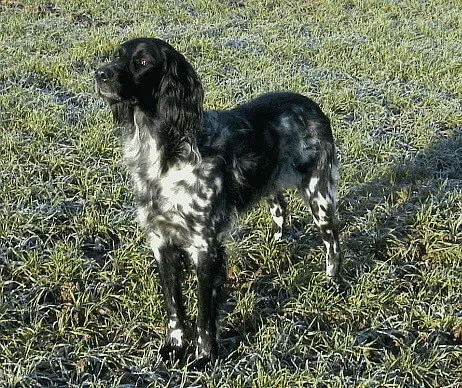
The Large Münsterlander is a tireless, water-loving pointing dog — bred for versatile work both before and after the shot, searching with a deep nose and retrieving reliably. A true working hunting dog that will wither away without a job to do.
Self-check
Answer 6 quick questions about your everyday life and see how well the Large Munsterlander fits you — including an honest cost estimate per month, per year, and across the dog's lifetime.

At a glance
The essentials — key facts, traits, and health priorities — before you dive deeper.
Lifespan
12–14 yrs
Shoulder height
58–65 cm
Weight
25–32 kg
Practical
Temperament
Daily life
What matters most
Especially with a Large Munsterlander, choosing the right breeder is the single most important decision you'll make. Serious breeders consistently test the parents for inherited conditions, prioritize healthy early socialization, and stay accountable long after handover. A cheap puppy without health screening tends to become the most expensive dog later on.
See HonestDog breeder standards →Colors & coat
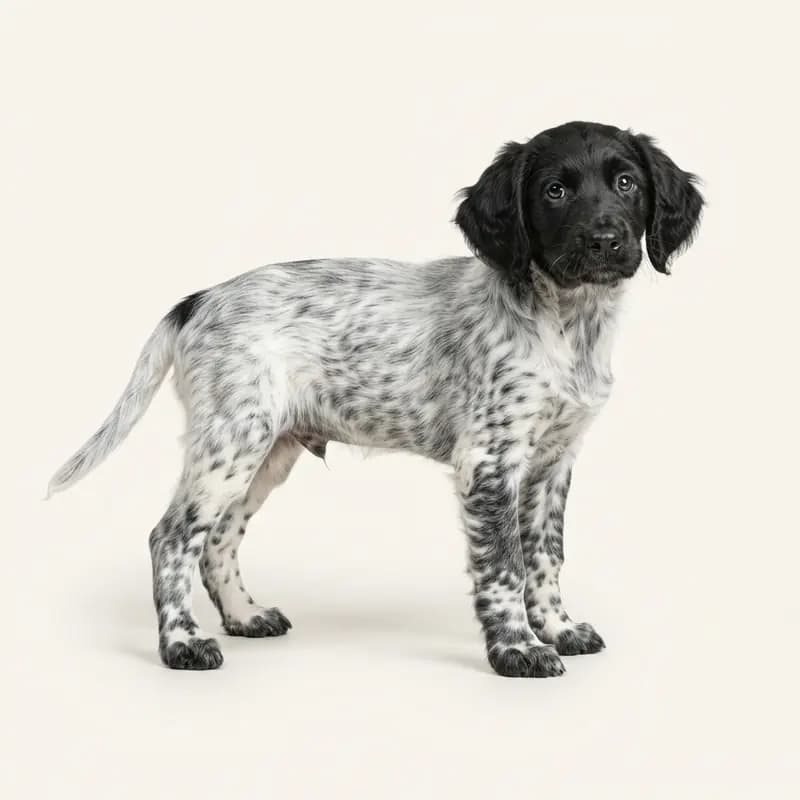
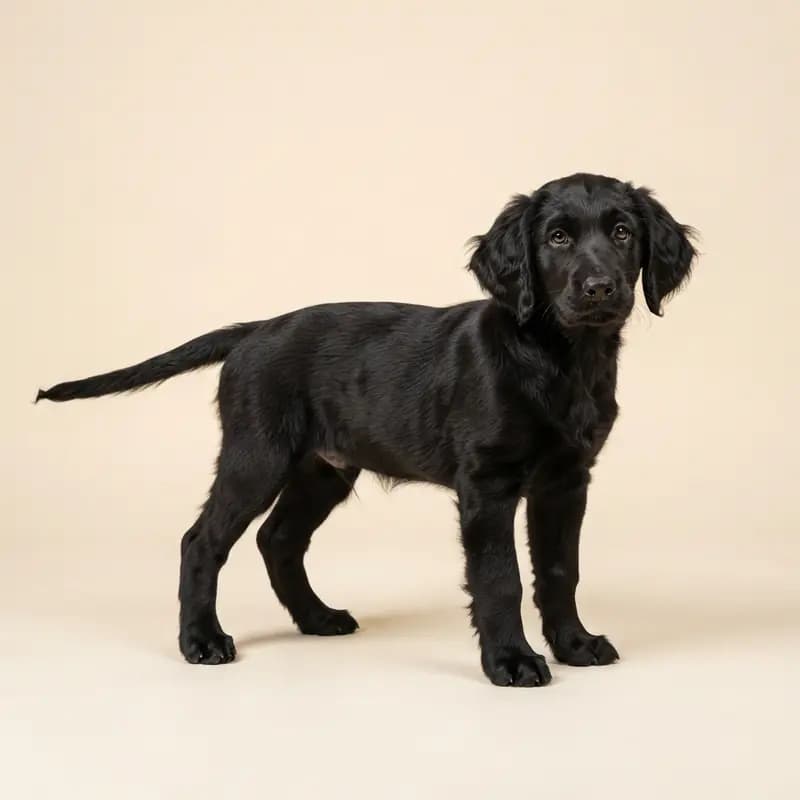
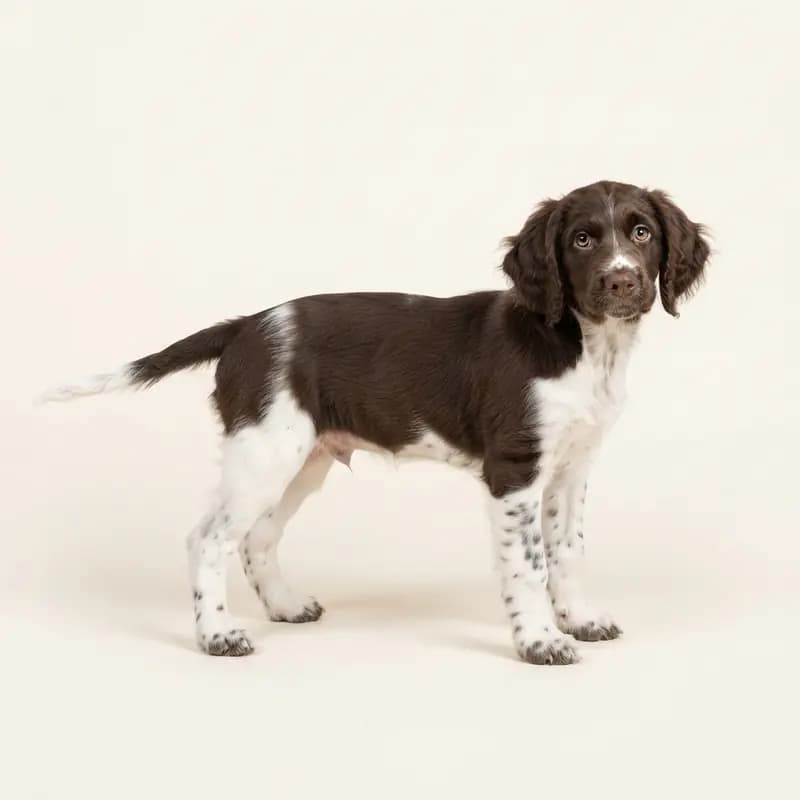
The coat colors that occur in the Large Munsterlander — including which ones fall outside the breed standard and which carry genetic risk.
Eye colors
 Brown
Coat type
 Long
 Double coat
The real vibes check
A Large Münsterlander is the gentlest cuddle-bug in the living room — but as soon as you head outside, he flips the switch and becomes a focused professional. You aren't buying a casual walking buddy, but a highly specialized athlete in a black-and-white suit. If you are ready to trek through the underbrush with him in pouring rain, he will give his all for you.
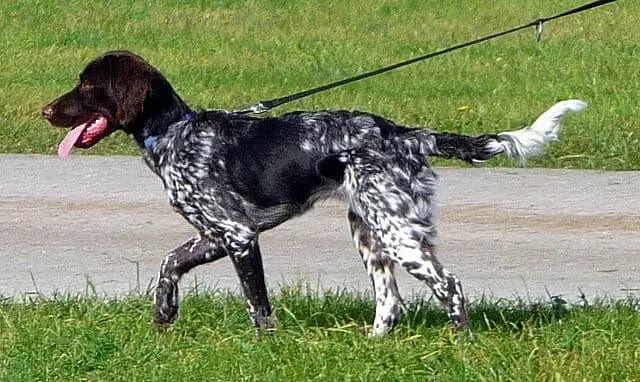
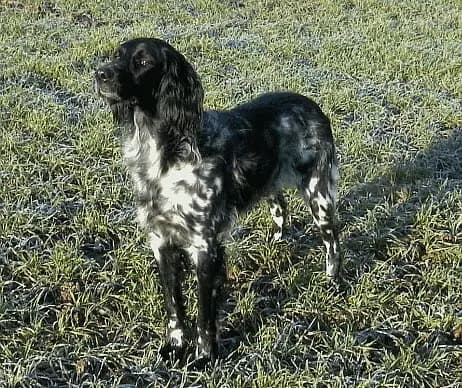
The Great Münsterlander Pointer has an imposing and elegant appearance. As a member of FCI Group 7 "Pointing Dogs" he is valued for his hunting skills. This breed has no specific division into performance and show lines, as both variants are equally used as successful hunting companions.
The Great Münsterlander Pointer is an extremely intelligent dog with a balanced temperament. He is active, eager to work and needs a lot of exercise and mental stimulation. This dog is very people-oriented and friendly, both towards his family and towards strangers. He shows a high willingness to learn and can stay alone well once he has been used to it. Due to its hunting background, the Greater Münsterland Pointer shows pronounced hunting and prey-catching behavior. Therefore, it is important to socialize and train him well from an early age to promote his impulse control. This helps minimize unwanted hunting behavior and strengthens the bond between dog and owner. The Great Münsterlander Pointer is also an alert dog that likes to bark to draw attention to unusual noises or intruders. His natural curiosity and alertness make him a good companion for outdoor activities such as hiking, jogging or cycling.
| Watchfulness Reports unusual activity but stays controlled. | Moderate |
| Openness to Strangers Warms up quickly and is generally welcoming. | Friendly |
| Hunting or Herding Drive This drive runs deep — no amount of training eliminates it. | Very strong |
Fun Fact!
Large Münsterland pointers are not only talented hunters, but also excellent swimmers. They love being in the water and are able to swim long distances thanks to their thick fur and strong legs.
Large Münsterlanders are dogs with a very high hunting motivation. They need the opportunity to work.
The Great Münsterlander Pointer is a versatile dog that can thrive in both rural and urban environments. However, due to his active and exercise-loving nature, he is best suited to owners who can provide him with sufficient exercise and mental stimulation. Longer walks, jogging or active games are important to satisfy his urge to move. A fenced garden offers him the opportunity to let off steam and run. The Large Münsterland Pointer is generally good with children and other pets, provided it is socialized and trained appropriately at an early age. However, small children should always be supervised to avoid accidental injury. Dealing with other pets should be done gradually and carefully to ensure a harmonious interaction.
Loves family life and thrives in a group.
Takes boisterous and affectionate children in its stride.
Actively enjoys the company of other dogs.
City-appropriate with enough exercise and stimulation.
Owning a dog is a privilege, but it's also a real responsibility. Before you bring one into your life, be honest with yourself about the commitment it takes.
The Great Münsterland Pointer is intelligent, eager to learn and eager to work. It is therefore well suited for various activities such as obedience training, agility, mantrailing or even as a hunting dog. Consistent and loving training is important to channel his natural drive to work and minimize unwanted behavior. It is important to challenge the dog both physically and mentally to avoid boredom and restlessness. Regular activities such as search games, retrieving or getting involved in dog sports can provide him with the exercise he needs. However, care should be taken not to overwhelm or overtrain the dog to avoid injury or stress. Frustration tolerance and impulse control should also be encouraged in training to have a balanced and well-behaved dog.
The Great Münsterlander Pointer has a medium-long, dense coat with a double undercoat. It has a natural protective layer that protects it from cold and moisture. It is therefore well adapted to the climate in Germany and can be kept outside even in cold temperatures. However, due to its thick fur, it sheds heavily, especially during shedding. Regular brushing will help remove loose hair and prevent tangles. The diet of the Greater Münsterland Pointer should be balanced and tailored to its energy needs. High-quality dog food that meets the needs of active dogs is recommended. It is important to adjust feed rations accordingly to avoid obesity and maintain healthy body condition.
| Care Level Minimal effort — occasional brushing and bathing. | Low-maintenance |
| Exercise Needs Working-dog energy that needs burning off every single day. | High-drive |
| Shedding Regular shedding — dog hair on clothes is now normal. | Moderate |
| Trainability Bred to work closely alongside humans. | Highly trainable |
Our experts are still reviewing this information. Spotted something wrong? Email us at info@honestdog.de.
Solid
Health grade
The Large Munsterlander receives a grade B. As a robust hunting dog breed, it is in good health, but its joints must be kept in mind: hip dysplasia (HD) and elbow dysplasia (ED) are well controlled through strict selective breeding, but remain an issue. In addition, testing for hyperuricosuria (HUU) should be carried out to minimize the risk of painful urinary stones.
Grade is relative to other breeds — AI-assisted and editorially reviewed.
Methodology and data: HonestDog Dog Breed Health Report 2026
What matters most for this breed
Tap any item to see details.
With joint-friendly rearing during the first year, controlled exercise, and a healthy weight, you lay the best foundation for a long, active dog life.
Reputable breeders have the parents' hips, elbows, and eyes checked and study the pedigrees closely to reduce the risk of neurological conditions in the line.
Note: This health overview is AI-assisted and editorially reviewed. It is for orientation only and does not replace veterinary advice.
What matters most for this breed — what's common, how much it affects the dog's life, and how to protect yourself as a buyer.
Tap a body region to see the inherited conditions linked to it.
The three most important risks
Pick a region on the map to explore other areas.
Tier 1 is the recommended health standard for this breed. Tiers 2 and 3 show how responsible breeders go beyond.
Recommended standard. These tests make up the recommended health standard for this breed — the baseline of any careful breeding program. Ask any reputable breeder for the results.
No entries in this tier.
Note: This health overview is AI-assisted and editorially reviewed. It is for orientation only and does not replace veterinary advice.
A Large Munsterlander costs around ~€190 per month (€100 – €350, depending on your setup). The first year adds up to roughly ~€5,060 including purchase, equipment and puppy school; across the dog's life (13 years) it comes to about ~€31,770.
With surgery cover, running costs come to about ~€190 per month — in return, your share of a major operation drops from several thousand euros to around 20 percent.
Per month
~€190
In the first year
~€5,060
Across the dog's life
~€31,770
Estimated purchase price from a breeder: €1,500 – €2,500
Estimate at a mid-range setup (suburban, dry food, 1–2 hours of daily exercise), average German prices, as of July 2026.
HonestDog Concierge
We currently have no breeders for this breed who have passed our verification. Create your short buyer profile: we'll set up your search alert, review a possible source and email you within 28 days.
 Illustrative image
 Illustrative image
 Illustrative image
 Illustrative image
The Great Münsterlander Pointer comes from Germany and its roots go back to the 19th century. The breed originated from crosses between various pointers and setters. It was first recognized as a separate breed in the second half of the 19th century and quickly became popular with hunters due to its ability to track and report wild birds.
The Great Münsterlander Pointer was bred as a versatile hunting dog for fields, forests and water, known for its joy of retrieving and its friendly nature.
Germany
1900
In everyday family life, owners mostly describe the Large Munsterlander as a very devoted, loyal companion that is surprisingly calm indoors. Many owners highlight how people-oriented it is and how patient it is with children. It seeks close physical contact, likes to follow its people around the house and asks for its share of petting. At the same time, owners often stress its natural alertness: it reliably announces strangers or unfamiliar noises on the property by barking, but it is generally steady-nerved and doesn't sound off without a reason.
The flip side, experienced owners agree, is that this calm at home exists only if the dog is challenged physically and mentally outdoors. Walks on a short leash alone aren't enough for it. Without a job, underchallenged dogs tend to get restless indoors, chew things up or become frustrated. Owners also point out that its long coat regularly brings dirt, burrs and water into the house after walks in all kinds of weather.
Sources:von-koenigsdamm.deheyholy.comforum.hundund.degrossermuensterlaender.com
On training and handling, owners report a very willing, intelligent and cooperative dog that wants to please. Compared with some other hunting breeds, the Large Munsterlander is considered easy to direct and strongly bonded to its handler. But it quickly responds to harsh training methods or pressure with insecurity or by refusing to work; owners consistently recommend a mix of consistent boundaries, patience and positive reinforcement.
The biggest everyday training challenge is its deeply ingrained, genetic hunting drive. Owners report that off-leash walks in woods or fields are hardly possible without intensive anti-hunting training and flawless impulse control. It constantly scans its surroundings, nose high or to the ground, and reacts in a flash to movement and scent. Dogs not used for hunting therefore need substitute work such as dummy training, tracking or mantrailing to channel their drive to work in a controlled way.
Sources:heyholy.comrundum.doggrossermuensterlaender.comgunfinder.deforum.wildundhund.de
In owner accounts on health, the Large Munsterlander is generally considered a hardy, weatherproof breed with few overbreeding problems. Many owners attribute this to the fact that the breed is mostly in the hands of performance-focused hunting-dog clubs with strict breeding-approval tests. With good care and balanced exercise, many dogs reach 11 to 13 years with steady vitality.
Still, owners share some recurring weak spots: as with most larger working dogs, hip dysplasia (HD) and, less often, elbow dysplasia (ED) are issues, and breeding stock needs to be carefully checked to be free of them. The hairy, hanging ears also give many owners trouble, because dirt easily collects there with regular trips into water or thickets, and infections can develop. Injuries to the tail or paw pads from rough vegetation in dense undergrowth also keep happening with active dogs.
Sources:rundum.doggrossermuensterlaender.comzoo-roco.chheyholy.comzoomalia.de
Paraphrased from real owner reports · translated from German
The Large Munsterlander is an active dog that needs plenty of exercise and mental stimulation. Research the temperament, grooming needs, and space requirements before deciding.
The average life expectancy of a Large Munsterlander is 12-14 years. With proper care and regular vet visits, your dog can live a long, healthy life.
Large Munsterlander grooming requirements include regular brushing, nail trimming, and dental care. HonestDog provides detailed grooming tips for every breed.
The Large Munsterlander can be a great family dog. Proper training and socialization are key. HonestDog provides family suitability information for every breed.
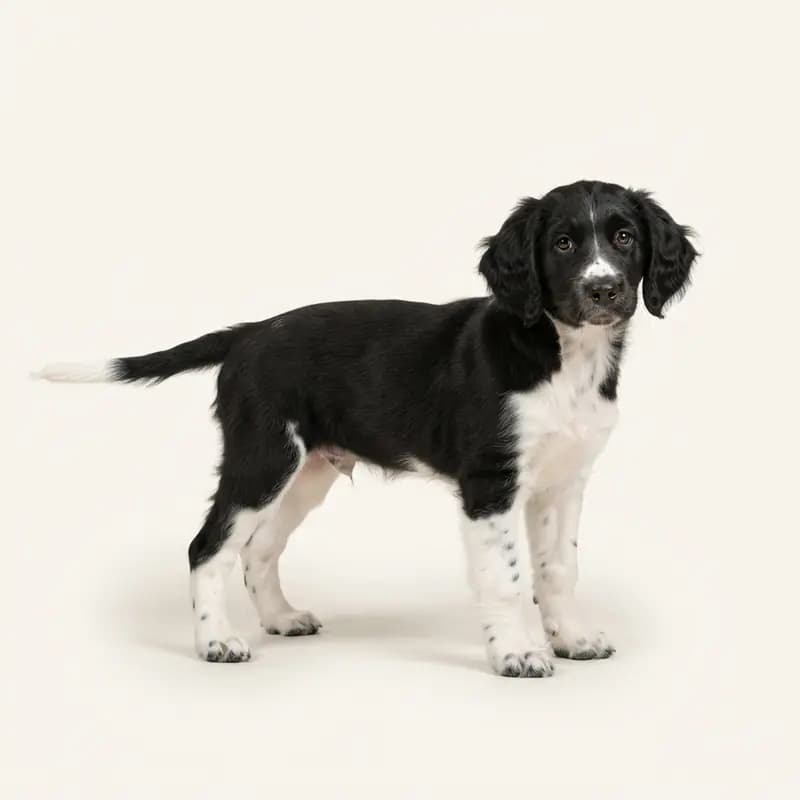
The Large Munsterlander comes in these colors: Black and white, Roan, Black, Brown and white. Colors that fall outside the breed standard are marked as such on the breed page.
Showcase your kennel on HonestDog and reach families searching for a responsibly bred Large Munsterlander.