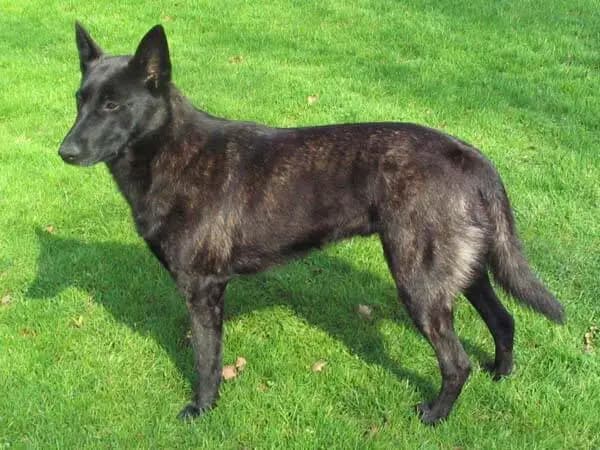
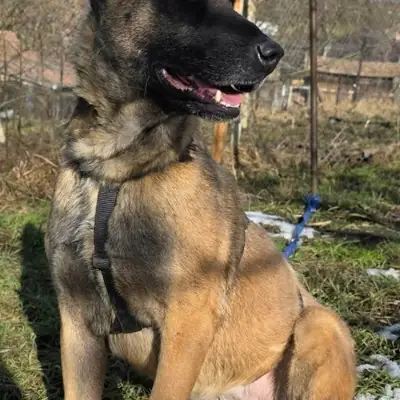
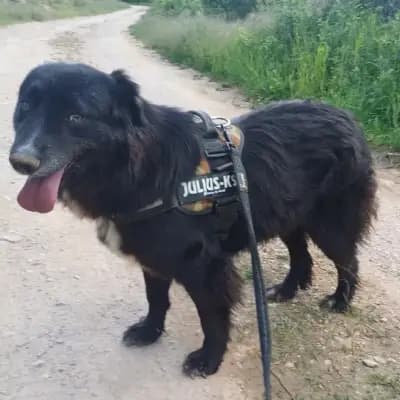
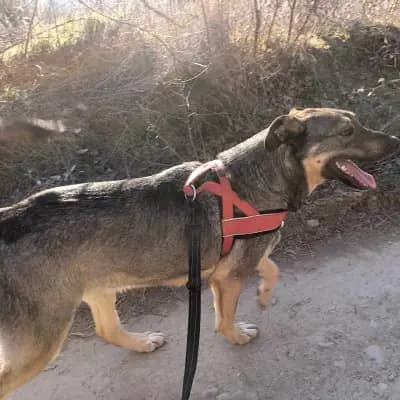
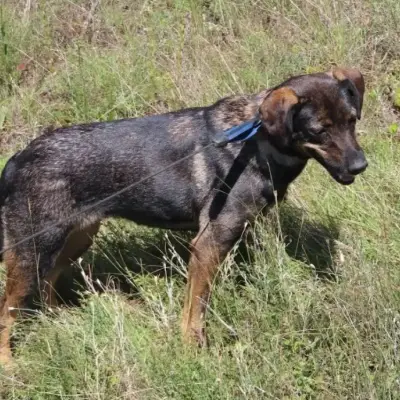
If you want to adopt a Dutch Shepherd (Shorthair), you will meet a very people-oriented dog who forms a strong bond with his main person. Having lost his familiar routine in the rescue centre, he often seems stressed or overexcited at first. However, his high trainability (4/5) helps you enormously to build trust quickly. When meeting other dogs (compatibility 3/5), confident handling is called for.
In terms of health, Dutch Shepherds are considered robust, but they have a clear pattern: joints and eyes often remain an issue for life. A health-focused breeder (for example within the Holländischer Schäferhund Club Deutschland e.V.) has the parent animals X-rayed for hip dysplasia (HD), elbow dysplasia (ED) and transitional vertebrae, has their eyes examined, and uses DNA tests for degenerative myelopathy (DM) and spongy degeneration with cerebellar ataxia 2 (SDCA2). These tests show whether a parent animal is clear or a carrier, and X-ray screening significantly reduces the risk of joint problems in the offspring.
If your rescue dog is of unknown origin or comes from unscrupulous backyard breeders, this targeted preventive care is usually missing. There are also other breed-typical health issues such as epilepsy, generalised progressive retinal atrophy (PRA), dental malformations and, in males, cryptorchidism or monorchidism (undescended testicle). Without conscious management of physical exercise and regular veterinary check-ups, health problems and vet bills rise significantly later on.