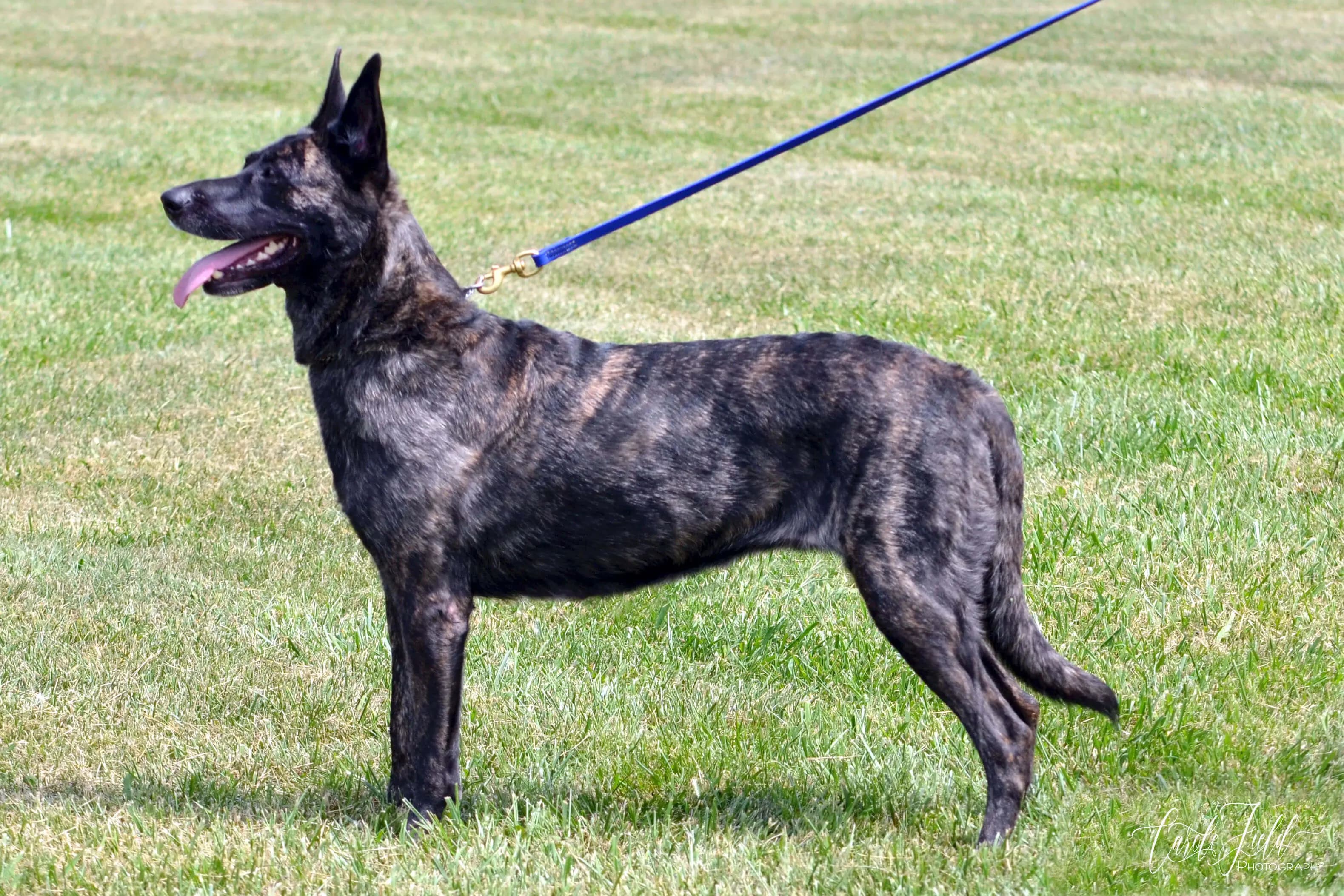
Although the Dutch Shepherd is regarded as a robust working breed with a life expectancy of 12 to 15 years, a clear pattern emerges in the population: joints and eyes often remain a lifelong concern. Because these dogs have an enormous urge to move, an intact musculoskeletal system is essential.
The Holländischer Schäferhund Club Deutschland e.V. (HSCD) therefore prescribes specific health examinations that significantly reduce the risk of hereditary diseases. These include official X-rays for hip dysplasia (HD), elbow dysplasia (ED) and transitional vertebrae of the spine. Targeted DNA tests are also used for neurological diseases such as degenerative myelopathy (DM) and spongy degeneration with cerebellar ataxia 2 (SDCA2). Such a genetic test reliably shows whether a parent dog is genetically clear, a carrier or affected. A reputable breeder will only mate carriers of these recessive diseases with clear partners, in order to minimise the risk for the offspring.
In addition, the Shorthair Herder has other breed-specific health issues, for some of which no genetic tests exist but which require care on the part of the breeder: these include epilepsy, generalised progressive retinal atrophy (PRA) of the eyes, dental malformations and, in males, cryptorchidism or monorchism (undescended testicles). As a buyer, you should also manage your dog’s physical exertion very carefully in everyday life – especially in the first year – because without good preventive care and regular check-ups, signs of wear and tear and vet costs quickly mount up.