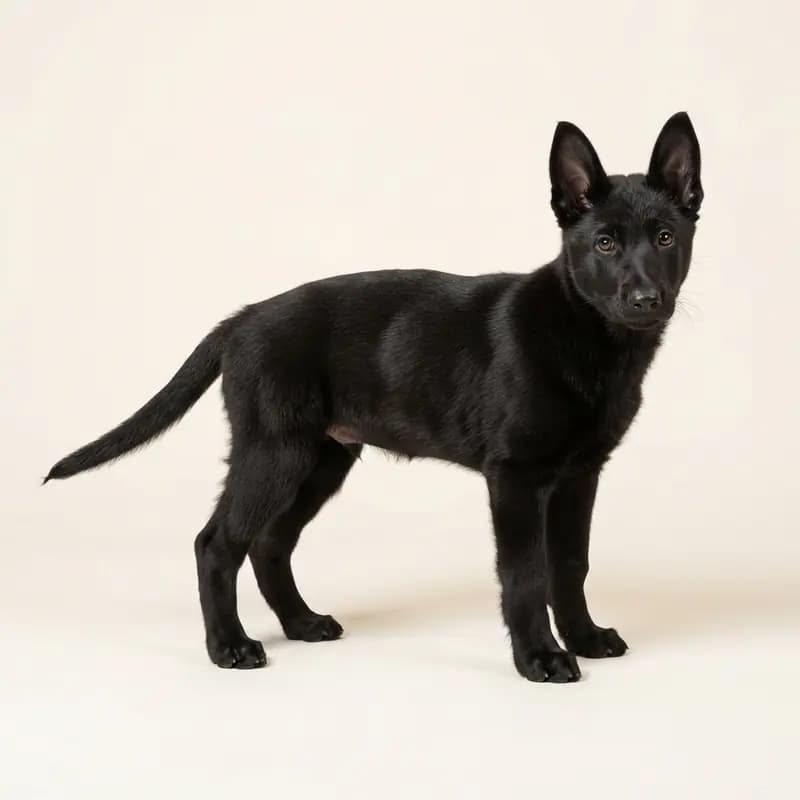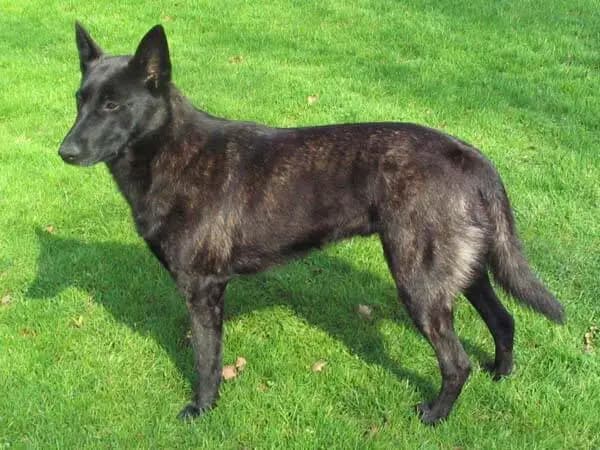
Dutch Shepherd (Shorthair)
Close relative

Dogs love cookies, and so do we
Cookies for analytics and ads. Privacy
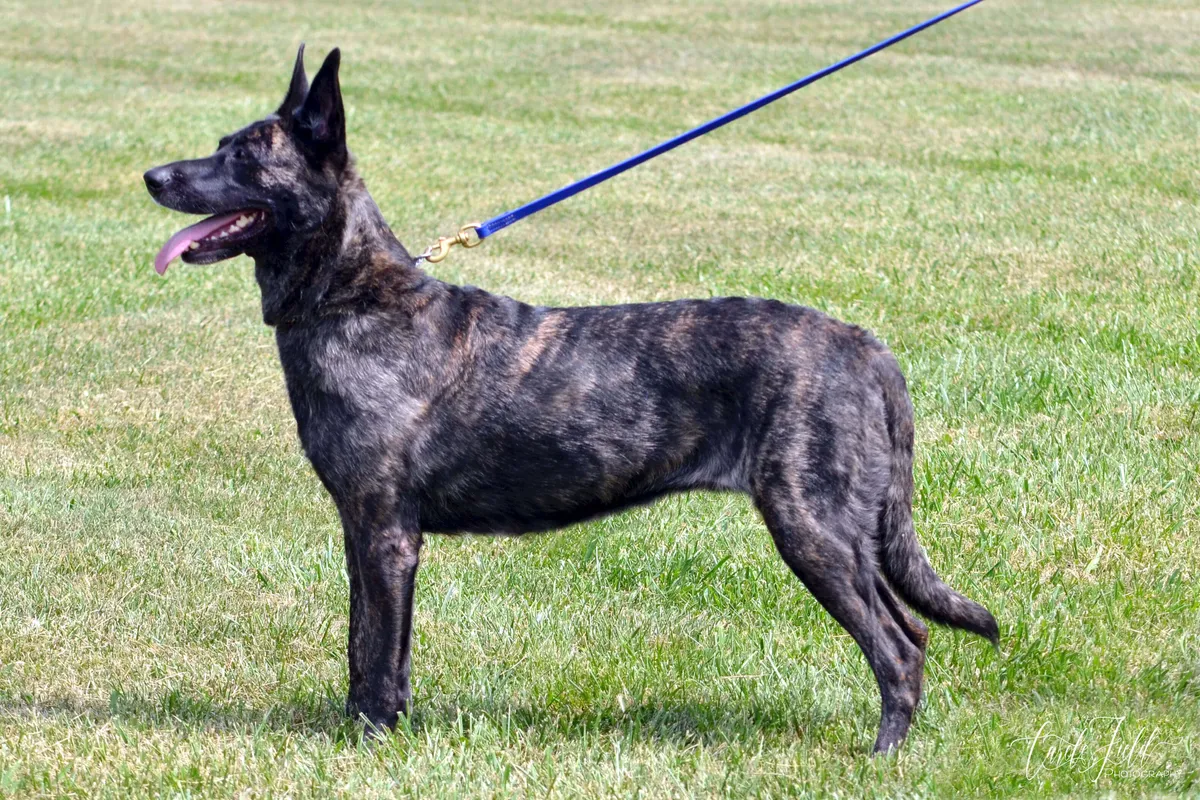
The Hollandse Herdershond is a highly intelligent, extremely responsive Hütehund (herding dog) and working dog—bred to tirelessly guide flocks and now often at home in demanding service dog roles.
How the health grade is calculated
Sources for required breeding screenings. Holländischer Schäferhund Club Deutschland e.V. (HSCD)
Self-check
Answer 6 quick questions about your everyday life and see how well the Dutch Shepherd fits you — including an honest cost estimate per month, per year, and across the dog's lifetime.
Question 1 of 6
Count honestly — the normal day, not the best one.

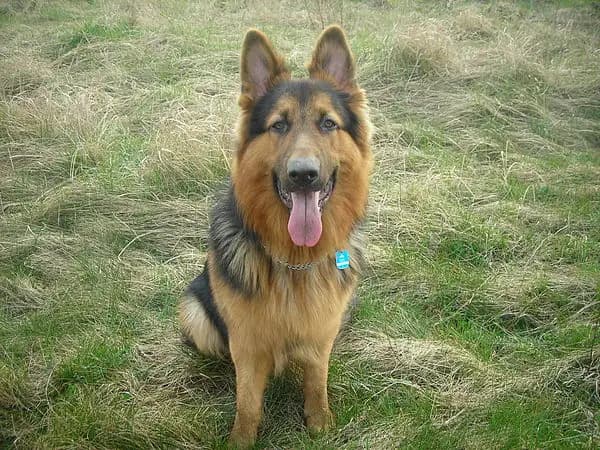
At a glance
The essentials — key facts, traits, and health priorities — before you dive deeper.
Lifespan
12–14 yrs
Shoulder height
55–62 cm
Weight
20–35 kg
Practical
Temperament
Daily life
What matters most
Especially with a Dutch Shepherd, choosing the right breeder is the single most important decision you'll make. Serious breeders consistently test the parents for inherited conditions, prioritize healthy early socialization, and stay accountable long after handover. A cheap puppy without health screening tends to become the most expensive dog later on.
See HonestDog breeder standards →Colors & coat
The coat colors that occur in the Dutch Shepherd — including which ones fall outside the breed standard and which carry genetic risk.
Eye colors
 Brown
Coat type
 Short
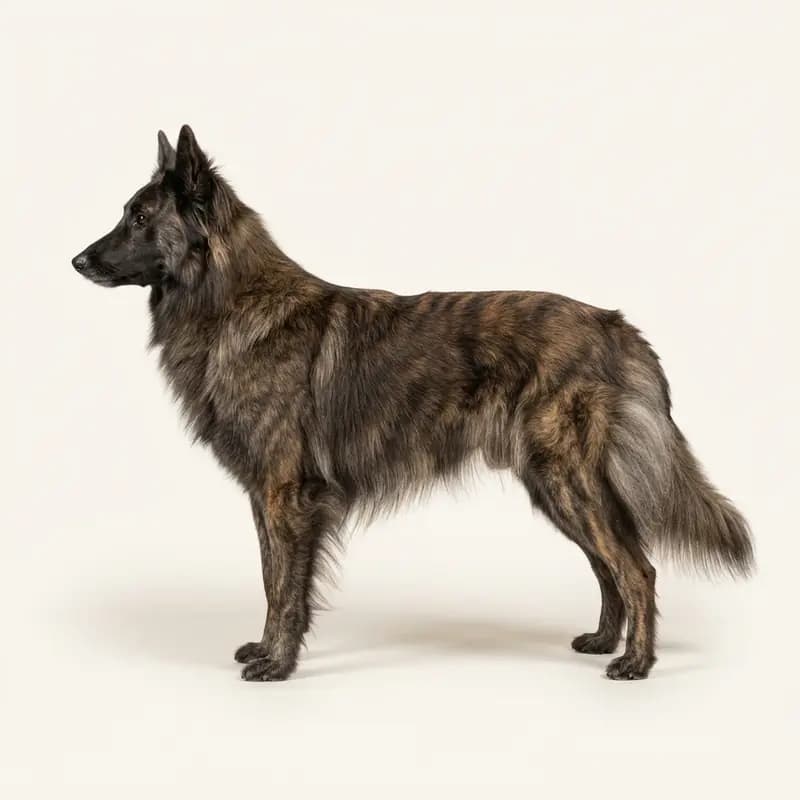 Illustrative image
Long
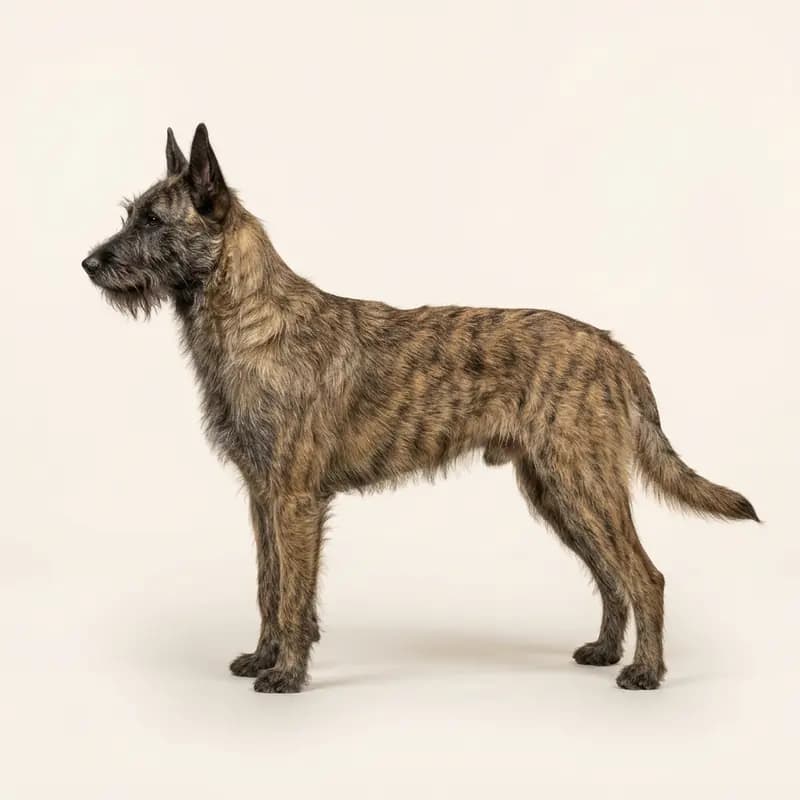 Illustrative image
Wire
 Double coat
The real vibes check
A Hollandse Herdershond is not a dog that just lets life happen—it scans its environment like a radar in search of a task. If you don't channel this intense work ethic into structured paths, it will soon control your daily routine or your guests. However, if you give it a real job, you get an incorruptible team partner that reads your every move.
The Hollandse Herdershond, or Dutch Shepherd, is a medium-sized breed characterized by its athletic build, alertness and adaptable nature. Its body is slightly longer than it is tall, with well-developed muscles, giving it excellent physical conditioning and flexibility. Its eyes are almond-shaped and medium-sized, giving it an intelligent and alert expression. The ears are erect and rather small in relation to the head. The Dutch Shepherd belongs to FCI Group 1, which includes herding and driving dogs. In terms of coat types, there are three lines: short-haired, long-haired and rough-haired, each with its own unique characteristics. While the short-haired line has a smooth, shiny coat that lies close to the body, the long-haired line is characterized by its long, straight coat that lies close to the body. The rough-haired line, on the other hand, has a dense, rough and wiry coat.
The Dutch Shepherd is known for its friendly and even-tempered temperament. He is intelligent, eager to work and very people-oriented. As a real all rounder, he is suitable both as a family dog and as a working dog for various tasks. He is characterized by his high learning ability and his adaptability. Whether as a companion dog, in dog sports or as a service dog, the Dutch Shepherd always shows full commitment. The Dutch Shepherd is an active and energetic dog that needs lots of exercise and mental stimulation. His intelligence and desire to please make him an excellent candidate for various dog sports and training games. He also has a strong protective instinct and is always vigilant without being aggressive. In terms of temperament, the Dutch Shepherd can be described as lively and alert. He is known for his loyalty and his need to be integrated into the family. He gets along well with children and can also get along well with other dogs and pets. His intelligence and willingness to please make him easy to train, and he learns quickly and retains what he learns well. However, he tends to be very attached to his people, so he should learn to stay alone sometimes. The Dutch Shepherd typically does not exhibit strong hunting or prey catching behavior unless encouraged or not properly controlled. Therefore, it is important to start appropriate training early to prevent unwanted behavior. It should be noted that despite his friendly nature, he is a working dog that requires mental and physical challenges to be happy and content.
| Watchfulness A natural watchdog with real protective instinct. | High |
| Openness to Strangers Neither pushily friendly nor suspicious. | Neutral |
| Hunting or Herding Drive Powerful instinct that can override recall when triggered. | Strong |
Fun Fact!
Did you know that the Hollandse Herdershond is one of the few breeds that comes in three different coat styles - short, long and wire-haired?
Dutch Shepherds are intelligent dogs with lots of energy. They must be exercised according to their type and are not beginner dogs.
The Hollandse Herdershond is an active and energetic dog that needs lots of exercise and mental stimulation. For this reason, it is less suitable for keeping in a small apartment or in the city. He needs space to play and run, ideally in a safe garden. Children are usually not a problem for the Hollandse Herdershond. He is a loyal and protective dog that can fit in well with families with children. However, some supervision should always be given as he could accidentally knock over smaller children due to his size and temperament. He usually gets along well with other pets, including cats, especially if he is used to them from an early age. However, initial encounters should be carefully monitored.
Loves family life and thrives in a group.
Takes boisterous and affectionate children in its stride.
Usually gets on fine with other dogs.
City-appropriate with enough exercise and stimulation.
Owning a dog is a privilege, but it's also a real responsibility. Before you bring one into your life, be honest with yourself about the commitment it takes.
As a working dog, the Hollandse Herdershond has a high level of drive and quick comprehension. It is therefore ideal for various dog sports such as obedience, agility, flyball and protection dog training. The breed requires a lot of mental and physical exercise, but it's important to watch out for the signs of overwhelm. An overly stimulated or overworked dog can lead to undesirable behavior. It should also be noted that this breed has the potential to become a "ball junkie." It is therefore important to control play with the ball and to ensure that the dog also has other forms of activity. Because of his hard work and intelligence, it is important that the Hollandse Herdershond learns to control his impulses and develop a certain tolerance for frustration. Training should always be positive and reward-focused to promote learning and build a strong bond between dog and owner.
A balanced diet is vital to the health and well-being of the Hollandse Herdershond. As with any breed, his diet should consist of high-quality proteins, carbohydrates, fats, vitamins and minerals. The exact nutritional needs vary depending on the dog's age, size, weight, activity level and health status. In terms of care, the intensity varies depending on the type of fur. Short-coated dogs only require weekly brushing, while the long-haired and wire-haired varieties require more thorough grooming to prevent matting. The dogs of this breed have an undercoat that protects them from cold weather, so they also cope well with the German climate. However, it should be noted that they can shed more heavily during the seasons between summer and winter.
| Care Level Minimal effort — occasional brushing and bathing. | Low-maintenance |
| Exercise Needs Working-dog energy that needs burning off every single day. | High-drive |
| Shedding Hair everywhere, always — no white clothing survives. | Very heavy |
| Trainability Picks up commands quickly and wants to please. | Eager to learn |
Our experts are still reviewing this information. Spotted something wrong? Email us at info@honestdog.de.
Solid
Health grade
In the Hollandse Herdershond (Dutch Shepherd Dog), the primary health risks are hip dysplasia (HD), elbow dysplasia (ED), and severe neurological disorders such as degenerative myelopathy and spongy degeneration with cerebellar ataxia 2 (SDCA2). A responsible breeder complies with the requirements of the Holländischer Schäferhund Club Deutschland e.V. (HSCD) and additionally tests for spongy degeneration with cerebellar ataxia 1 (SDCA1) and osteochondritis dissecans (OCD). Have the official X-ray results for HD (A or B), ED (0 or 1), and lumbosacral transitional vertebrae (LTV 0–1) presented to you. For genetic tests regarding degenerative myelopathy and SDCA2, make sure that both parents are clear, or that a carrier was bred exclusively to a clear partner.
Grade is relative to other breeds — AI-assisted and editorially reviewed.
Methodology and data: HonestDog Dog Breed Health Report 2026
What matters most for this breed
Tap any item to see details.
Without conscious management of physical exertion and good preventative care—such as regular check-ups—health problems and veterinary costs can rise significantly later on.
Responsible breeders test for hip dysplasia (HD), elbow dysplasia (ED), degenerative myelopathy, and SDCA2, and rule out lumbosacral transitional vertebrae (LTV) prior to breeding.
Note: This health overview is AI-assisted and editorially reviewed. It is for orientation only and does not replace veterinary advice.
What matters most for this breed — what's common, how much it affects the dog's life, and how to protect yourself as a buyer.
Tap a body region to see the inherited conditions linked to it.
The three most important risks
Pick a region on the map to explore other areas.
Tier 1 is the core standard: the tests Holländischer Schäferhund Club Deutschland e.V. (HSCD) requires, plus further tests from the recommended health standard for this breed. Tiers 2 and 3 show how responsible breeders go beyond.
Core standard. Tests marked “Club standard” are required by Holländischer Schäferhund Club Deutschland e.V. (HSCD) for breeding approval; the others are part of the recommended health standard for this breed. Ask any reputable breeder for the results.
No entries in this tier.
Note: This health overview is AI-assisted and editorially reviewed. It is for orientation only and does not replace veterinary advice.
A Dutch Shepherd costs around ~€180 per month (€100 – €350, depending on your setup). The first year adds up to roughly ~€5,040 including purchase, equipment and puppy school; across the dog's life (13 years) it comes to about ~€31,530.
With surgery cover, running costs come to about ~€180 per month — in return, your share of a major operation drops from several thousand euros to around 20 percent.
Per month
~€180
In the first year
~€5,040
Across the dog's life
~€31,530
Estimated purchase price from a breeder: €1,500 – €2,500
Estimate at a mid-range setup (suburban, dry food, 1–2 hours of daily exercise), average German prices, as of July 2026.
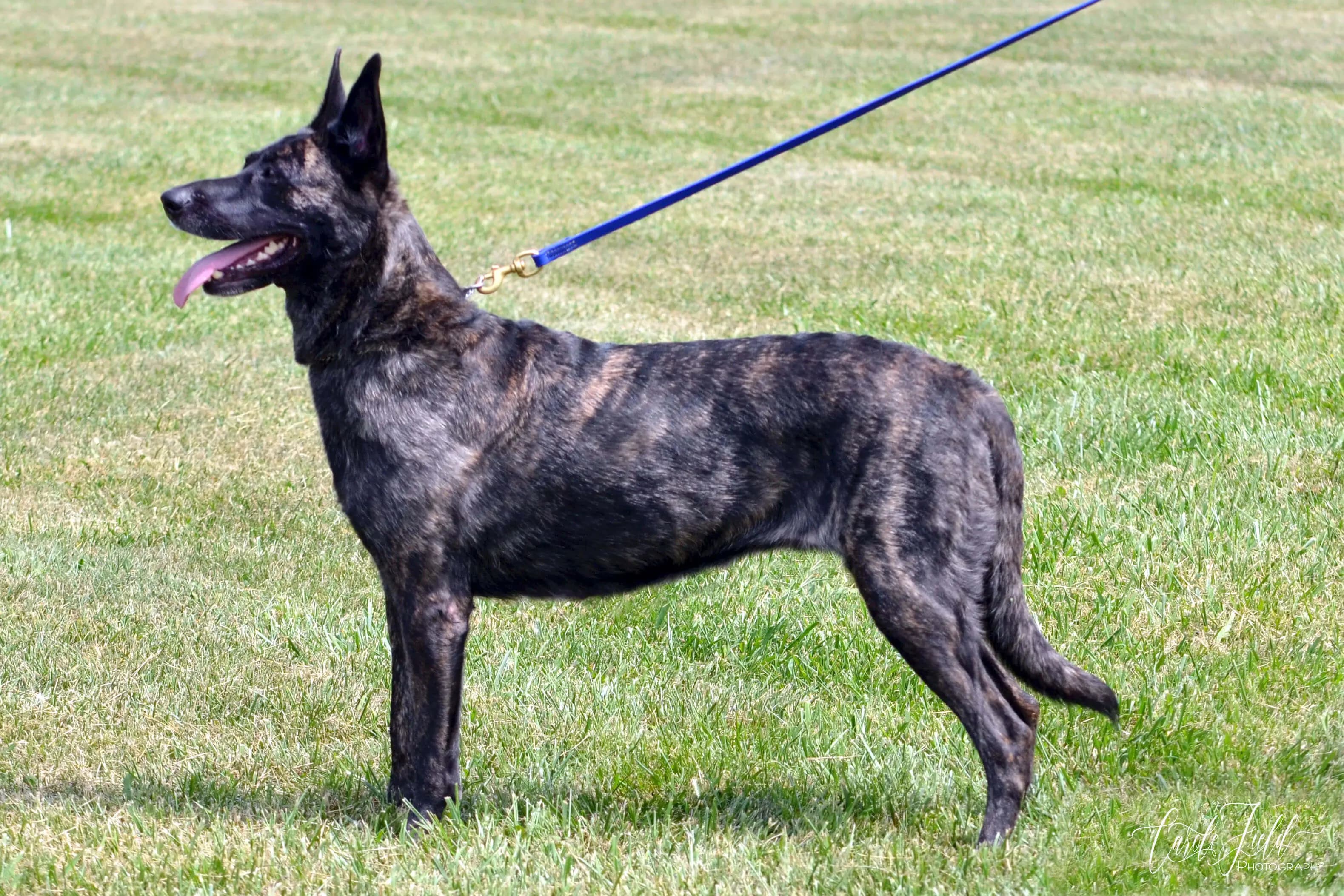
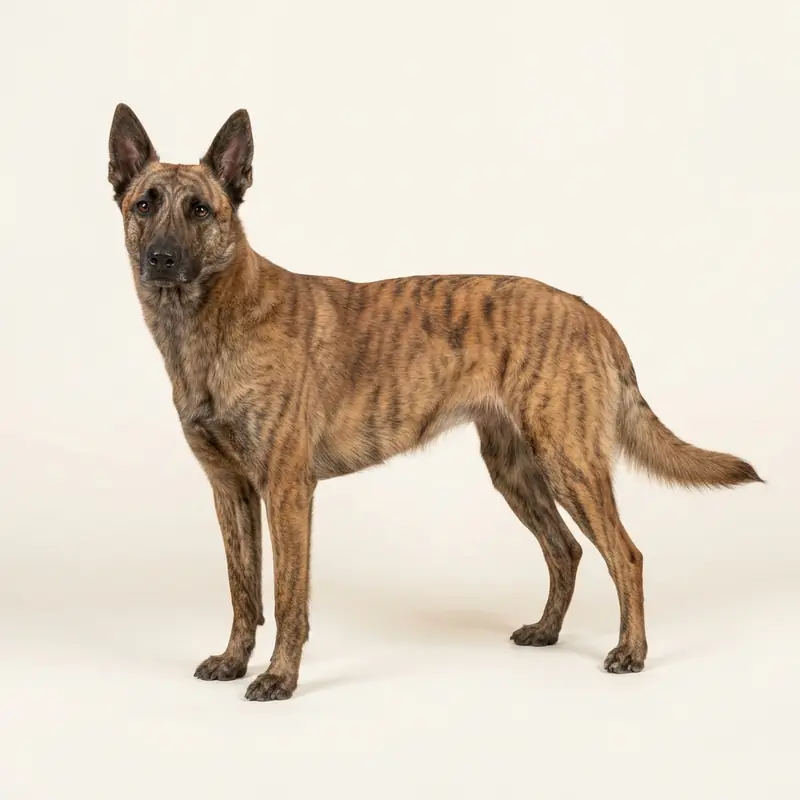 Illustrative imageIllustrative imageIllustrative image
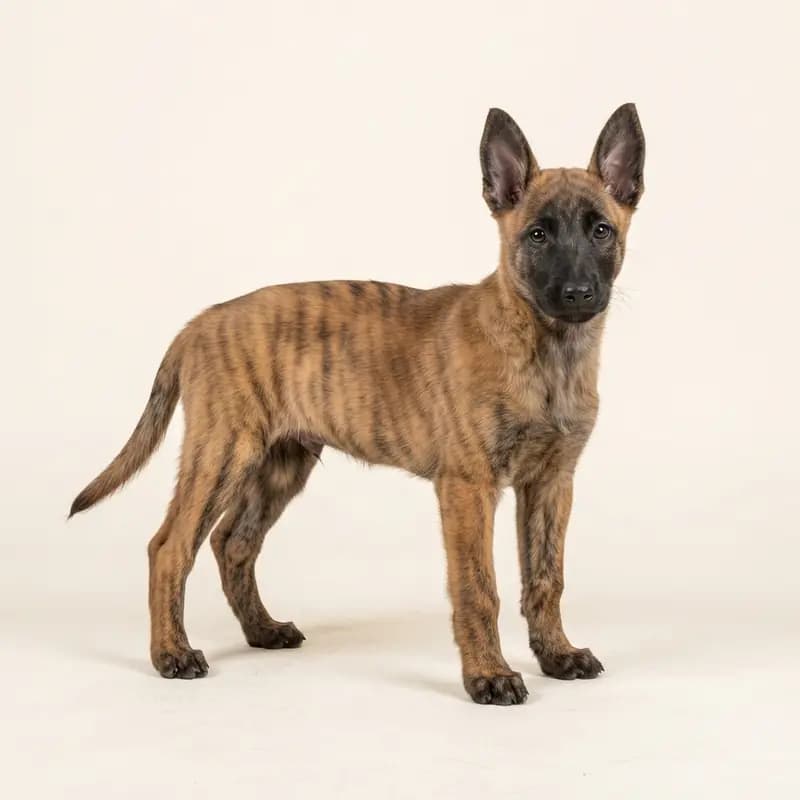 Illustrative image
As the name suggests, the Hollandse Herdershond originates from the Netherlands. It is believed to descend from various local shepherd dog breeds that were used for herding sheep and driving livestock. These dogs were renowned for their versatility, stamina, and intelligence, and were valued as indispensable helpers on farms and in villages. Breeding of the Hollandse Herdershond began in the late 19th century, when the Industrial Revolution made traditional sheep farming less necessary. Breeders began to select dogs based on their abilities and character rather than solely on their working skills. The breed was officially recognized by the Dutch Shepherd Club in 1898.
Herding dog, livestock drover, and farm guard dog
Netherlands
19. Jahrhundert
In everyday family life, owners describe the Dutch Shepherd (Hollandse Herder) as a very loyal, affectionate, and attentive companion. Many owners stress that it wants to be part of everything and bonds very closely with its people. With enough exercise it's considered pleasant and calm at home, but in the yard or around the house it has a noticeable guarding instinct. It is often reserved or aloof with strangers, while keeping a watchful eye on its own family.
At the same time, experienced owners strongly warn against getting a Herder as a dog that just tags along or as a pure family pet. Without enough mental and physical activity, the breed tends to find its own jobs, which can show up as restlessness, destructiveness, or excessive protective and controlling behavior. Owners also often stress that before buying, you should find out exactly which bloodline a dog comes from (show/FCI breeding versus pure working and KNPV lines), since drive and sharpness vary a lot from line to line.
Sources:schnullerfamilie.debild.desecuritytreff.dedogforum.dedas-schaeferhund-forum.de
When it comes to training, many owners highlight the Dutch Shepherd's strong work ethic, quick understanding, and real "will to please." Whether in versatility sports, obedience, search and rescue, or mantrailing, the breed learns in a flash and is very easy to motivate through prey and play drive. Owners stress again and again, however, that this intelligence is a double-edged sword: the Herder learns its owner's mistakes and inconsistencies just as quickly as the cues they want.
Owner accounts regularly warn against harshness in training: the Herder is confident and quick to react, but it often responds to unfair or overly rough treatment with mistrust, avoidance, or pushing back. Clear, fair, and confident leadership is essential. Another central topic on dog forums is learning to be calm. Many owners report that active working dogs like the Herder don't need to be artificially wound up; instead, you should work from puppyhood on regulating how strongly it reacts to stimuli and on building frustration tolerance.
Sources:securitytreff.dereddit.comdas-schaeferhund-forum.dedogforum.de
Owners and breed experts generally see the Hollandse Herdershond as hardier, more athletic, and more natural than some related shepherd breeds. Many owners appreciate its straight back and physical agility. Coat care for all three varieties, shorthaired, longhaired, and wirehaired, is also described as uncomplicated and manageable in daily life, although vigorous brushing is a must during shedding.
Even so, breeders and dedicated owners point to breed-typical health screenings that should never be neglected. Hip and elbow dysplasia (HD/ED) in particular, along with inherited neurological diseases such as degenerative myelopathy (DM) and spongiform leukoencephalopathy (SDCA), are important issues in breeding, which responsible breeders address through genetic testing. Some owners also report that, with its high energy level and all-in attitude at work, the breed tends to ignore pain, which can encourage joint and ligament injuries when it's overworked or in sport.
Sources:schnullerfamilie.debild.dedas-schaeferhund-forum.dedogforum.de
Paraphrased from real owner reports · translated from German
The Dutch Shepherd is an active dog that needs plenty of exercise and mental stimulation. Research the temperament, grooming needs, and space requirements before deciding.
The average life expectancy of a Dutch Shepherd is 12-14 years. With proper care and regular vet visits, your dog can live a long, healthy life.
Dutch Shepherd grooming requirements include regular brushing, nail trimming, and dental care. HonestDog provides detailed grooming tips for every breed.
The Dutch Shepherd can be a great family dog. Proper training and socialization are key. HonestDog provides family suitability information for every breed.
The Dutch Shepherd comes in these colors: Brindle, Black. Colors that fall outside the breed standard are marked as such on the breed page.
Showcase your kennel on HonestDog and reach families searching for a responsibly bred Dutch Shepherd.