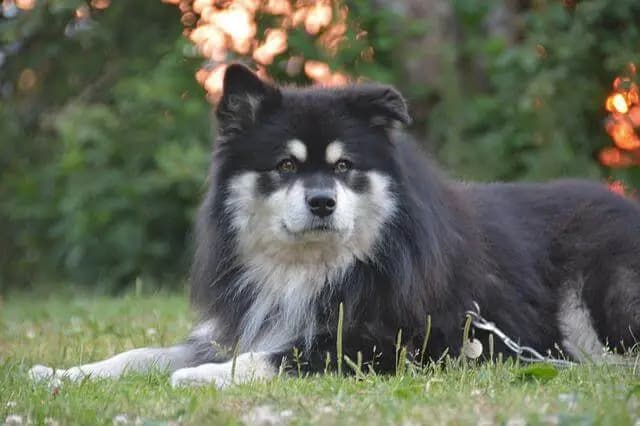
Finnish Lapphunds are considered robust, natural dogs, but they do come with breed-typical health issues affecting the eyes, the joints and the metabolism. For this reason, the Deutscher Club für Nordische Hunde e.V. (DCNH) requires breeding dogs to be tested for progressive retinal atrophy in its prcd-PRA form; the breed's recommended health standard also includes tests for eye anomalies, the generalised form of progressive retinal atrophy (via clinical eye examinations) and hip dysplasia (HD) X-rays.
For the hereditary retinal disease prcd-PRA, there is an established DNA test. It shows whether a parent dog is clear, a carrier or affected. A reputable breeder will only mate carriers with clear partners. That way, no puppy inherits the tested mutation from both parents, and the risk of this one disease is markedly reduced. In addition, responsible breeders have their dogs X-rayed for elbow dysplasia (ED) in order to minimise the risk of joint problems in the offspring.
Beyond this, other health issues occur in the breed, such as glycogen storage disease type II (a severe metabolic disorder, also known as Pompe disease) and degenerative myelopathy (a progressive disease of the spinal cord). Speak openly to the breeder about these issues and about any known cases in their breeding lines. Since males reach 17 to 28 kg (at 46 to 52 cm height at the shoulder) and females 15 to 24 kg (at 41 to 47 cm), you yourself play a major part in keeping your dog healthy during his first year by rearing him in a joint-friendly way, without letting him become overweight or overexerting him too early.