German Shorthaired PointerSame FCI section
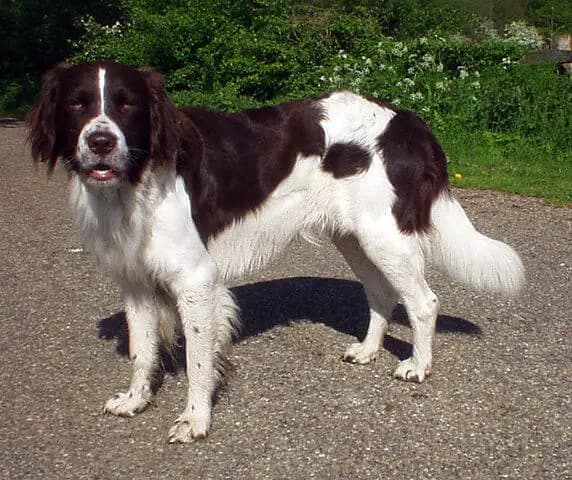
The Gammel Dansk Hønsehund is a calm, extremely cooperative, and robust Vorstehhund (pointing dog)—bred for slow, methodical hunting in confined spaces, where it always maintains close contact with its handler.
Self-check
Answer 6 quick questions about your everyday life and see how well the Old Danish Pointer fits you — including an honest cost estimate per month, per year, and across the dog's lifetime.
At a glance
The essentials — key facts, traits, and health priorities — before you dive deeper.
Lifespan
10–12 yrs
Shoulder height
50–60 cm
Weight
26–35 kg
Practical
Temperament
Daily life
What matters most
Especially with a Old Danish Pointer, choosing the right breeder is the single most important decision you'll make. Serious breeders consistently test the parents for inherited conditions, prioritize healthy early socialization, and stay accountable long after handover. A cheap puppy without health screening tends to become the most expensive dog later on.
See HonestDog breeder standards →Colors & coat
The coat colors that occur in the Old Danish Pointer — including which ones fall outside the breed standard and which carry genetic risk.
Eye colors
 Brown
BrownCoat type
 Short
Short Double coat
The real vibes check
The Gammel Dansk Hønsehund is not a hectic sports car, but rather the reliable tractor among hunting dogs. It works slowly, but with a thoroughness and a nose that misses absolutely nothing. If you share its passion for tracking, you will get a deeply relaxed companion who prefers to sleep on your feet after the work is done.
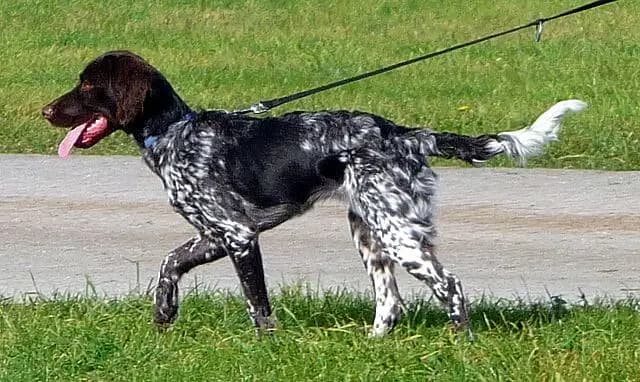
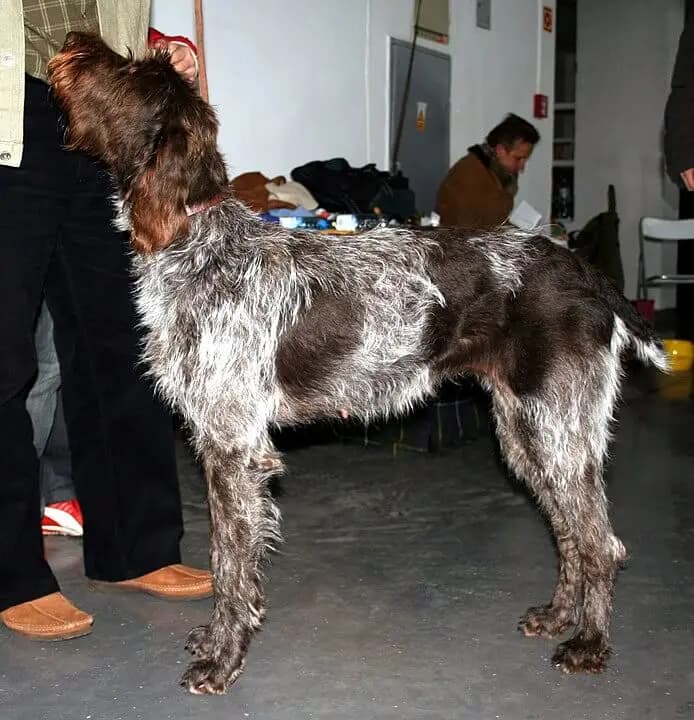
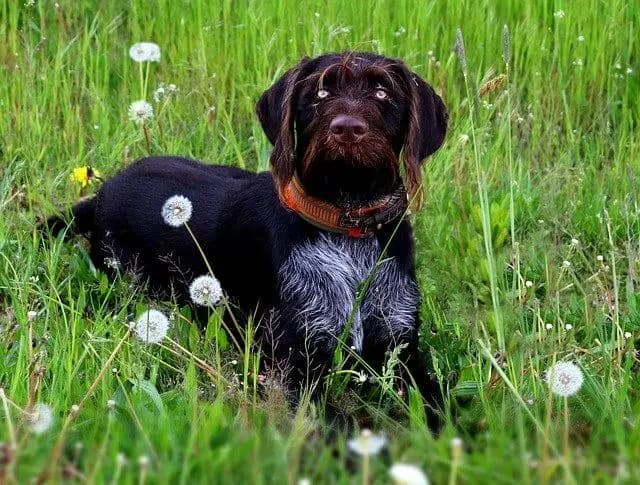
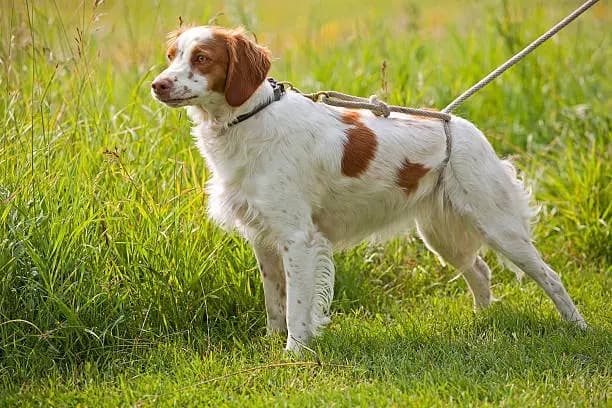
The Gammel Dansk Honsehund, also known as the Old Danish Pointer, is a medium-sized dog with a strong and well-proportioned build. Its head is broad and slightly domed with drooping ears and dark brown eyes that have an attentive and intelligent expression. Its body is compact with a deep chest and well-arched ribs, and its tail is of medium length and carried straight or slightly upward. The Gammel Dansk Honsehund belongs to FCI Group 7, the pointing dogs. Within the breed there is no distinction between performance and show lines; all dogs are equally suitable for work and exhibition. Its short, dense coat with an undercoat provides protection from the elements and requires minimal grooming.
The Gammel Dansk Honsehund is an active and energetic dog with a strong hunting instinct. He is known for his perseverance and enthusiasm at work. Despite his passion for hunting, however, he is not a hyperactive dog and can adapt well to a quieter life as long as he gets enough physical and mental exercise. In terms of temperament, the Gammel Dansk Honsehund is rather calm and balanced. He is very people-oriented and close to his family. The Gammel Dansk Honsehund is loyal and tends to form a close bond with his human. He is very playful and enjoys activities with his family, but can also work independently and complete tasks on his own. The Gammel Dansk Honsehund is generally a good guardian. He is alert and alert and will defend his family and territory if he feels they are threatened. However, despite his alertness, he is not an overly barking dog and tends to be quiet and reserved when not working. Like most hunting dogs, the Gammel Dansk Honsehund also has a strong prey and hunting instinct. It can therefore be a challenge if the family has smaller pets such as cats or rabbits. However, with careful introduction and training, this tendency can usually be managed well. In general, the Gammel Dansk Honsehund is an independent dog that can stay alone well. However, it is important that he gets used to it from an early age and that he always has enough activities to avoid boredom and associated behavioral problems.
| Watchfulness Reports unusual activity but stays controlled. | Moderate |
| Openness to Strangers Warms up quickly and is generally welcoming. | Friendly |
| Hunting or Herding Drive Mild interest in movement and small animals — easily managed. | Low |
Fun Fact!
Despite its name, which translates to "old Danish chicken dog" means, the Gammel Dansk Honsehund is not only known for hunting poultry, but was originally also used to hunt rabbits and foxes!
The Gammel Dansk Honsehund is a robust and enduring hunting dog, specially bred for work in Danish terrain. It is characterized by its high enthusiasm for work and pronounced sense of smell. These dogs are intelligent and eager to learn but require consistent leadership and sufficient activity. The Gammel Dansk Honsehund is a loyal companion, well suited as a family dog if given enough exercise and mental challenges.
Although the Gammel Dansk Honsehund is an active and energetic dog, he can also adapt well to city life under the right conditions. However, he needs plenty of exercise and mental stimulation, so a home with a secure garden or regular access to a park or similar open space is ideal. If he gets enough exercise, he is usually calm and balanced at home. The Gammel Dansk Honsehund is a loyal and family-oriented dog that generally gets along well with children. However, any interaction between dogs and small children should always be supervised by an adult to ensure the safety of both. When it comes to other pets, the Gammel Dansk Honsehund can get along well with them, provided he has been properly socialized from an early age. However, his hunting instinct may cause him to prey on smaller pets, so careful introduction and supervision is necessary when living with small animals.
Loves family life and thrives in a group.
Takes boisterous and affectionate children in its stride.
Usually gets on fine with other dogs.
City-appropriate with enough exercise and stimulation.
Owning a dog is a privilege, but it's also a real responsibility. Before you bring one into your life, be honest with yourself about the commitment it takes.
The Gammel Dansk Honsehund is an intelligent and alert dog that usually responds quite well to training. However, he is also an independent worker with a strong will, so a patient, consistent and positive approach to training is essential. Although originally bred as a hunting dog, the Gammel Dansk Honsehund can also enjoy a number of other activities and dog sports, such as: B. Agility, Obedience, Tracking and Rally-O. These activities can be a great way to challenge your body and mind and utilize your natural instincts and abilities in a controlled environment. It is important to note that the Gammel Dansk Honsehund is an active and work-oriented breed that requires plenty of activity and mental stimulation. Without sufficient exercise and activity, he can become bored and develop unwanted behaviors. However, it is also important to make sure that you do not “over-occupy” the dog. As with any breed, training and employment should be provided in appropriate amounts and in a manner that meets the dog's individual needs and abilities. It is also important for this breed that the dog learns frustration tolerance and impulse control. Training techniques such as "Stay" and "Wait" can be helpful here. Learning “rest times” in which the dog can relax and wind down is also essential.
A balanced and nutritious diet is essential for the health and well-being of the Gammel Dansk Honsehund. Since this is an active breed, he needs a diet rich in proteins and healthy fats to maintain his energy. Make sure you choose a high-quality dog food that provides all the necessary nutrients. The exact amount of food your dog needs depends on his size, age, weight and activity level. It is always advisable to follow the feeding recommendations on the food packaging and the advice of your veterinarian. Grooming the Gammel Dansk Honsehund is generally quite straightforward. Its short and smooth coat should be brushed regularly to remove dead hair and keep its skin healthy. This breed has a dense undercoat, which protects him from bad weather, but can also cause him to shed heavily, especially during the shedding periods in spring and autumn. Therefore, it may be helpful to brush more frequently during these times to minimize the amount of hair in your home. In Germany, the Gammel Dansk Honsehund copes well with the climate. Its thick fur protects it from cold and wet conditions, but can be a challenge in high temperatures. It is therefore important to provide sufficient shade and fresh water on hot days and to postpone physical activities to cooler times of the day.
| Care Level Minimal effort — occasional brushing and bathing. | Low-maintenance |
| Exercise Needs Needs 1–2 hours of real exercise daily. | Active |
| Shedding Regular shedding — dog hair on clothes is now normal. | Moderate |
| Trainability Picks up commands quickly and wants to please. | Eager to learn |
Our experts are still reviewing this information. Spotted something wrong? Email us at info@honestdog.de.
Solid
Health grade
The Old Danish Pointer is classified as a robust hunting breed and receives a grade of B. Hip dysplasia (HD) and elbow dysplasia (ED) are the breed's best-known vulnerabilities, but they are well monitored through two mandatory breeding tests. Buyers should consistently insist on the parents' X-ray results to prevent joint problems in the puppy.
Grade is relative to other breeds — AI-assisted and editorially reviewed.
Methodology and data: HonestDog Dog Breed Health Report 2026
What matters most for this breed
Tap any item to see details.
By ensuring joint-friendly rearing, maintaining a healthy weight, and scheduling regular eye exams, you lay the best foundation for a long, active dog life.
Reputable breeders have the hips, elbows, and eyes of the parent animals tested and pay particularly strict attention to diverse bloodlines due to the small gene pool.
Note: This health overview is AI-assisted and editorially reviewed. It is for orientation only and does not replace veterinary advice.
What matters most for this breed — what's common, how much it affects the dog's life, and how to protect yourself as a buyer.
Tap a body region to see the inherited conditions linked to it.
The three most important risks
Pick a region on the map to explore other areas.
We sort tests into three tiers — from the mandatory club standard to a fully exemplary program.
Club standard. Tests that the relevant breed club (VDH / FCI / AKC parent club) requires. Any serious breeder should be able to show you these.
No entries in this tier.
Note: This health overview is AI-assisted and editorially reviewed. It is for orientation only and does not replace veterinary advice.
A Old Danish Pointer costs around ~€190 per month (€100 – €360, depending on your setup). The first year adds up to roughly ~€5,090 including purchase, equipment and puppy school; across the dog's life (11 years) it comes to about ~€27,730.
With surgery cover, running costs come to about ~€190 per month — in return, your share of a major operation drops from several thousand euros to around 20 percent.
Per month
~€190
In the first year
~€5,090
Across the dog's life
~€27,730
Estimated purchase price from a breeder: €1,500 – €2,500
Estimate at a mid-range setup (suburban, dry food, 1–2 hours of daily exercise), average German prices, as of July 2026.
HonestDog Concierge
We currently have no breeders for this breed who have passed our verification. Create your short buyer profile: we'll set up your search alert, review a possible source and email you within 28 days.
The breed, as the name suggests, comes from Denmark and was originally used to hunt game birds. The Gammel Dansk Honsehund is an ancient breed that has existed since the 18th century. He was bred by Danish farmers who needed a reliable, versatile and hardy hunting dog. However, the breed was not officially recognized by the FCI until 1980. Although the Gammel Dansk Honsehund is still highly valued in Denmark, it is relatively unknown outside of its home country.
The Gammel Dansk Honsehund was bred for hunting and tracking wild birds.
Denmark
1700
Many owners and hunters point out that the Old Danish Pointer differs noticeably from many other continental pointing breeds off leash. Instead of racing far across the fields, it searches at a calmer, methodical pace and instinctively stays close and within sight of its person. Its exceptionally fine nose and real love of retrieving make it a highly focused worker in the field.
At the same time, owners keep stressing that this strong drive to find game has to be channeled in daily life. Encounters with game, birds, or small animals instantly fire up its eagerness to work, which is why solid anti-hunting and long-line training from an early age is essential. Walks on a short leash alone aren't enough for it; if its nose isn't challenged through tracking, dummy work, or search work, it will quickly find its own things to do.
Sources:sabinemiddelhaufeshundundnatur.netknaekogbraek.comdeerhunter.eutackenberg.depetbook.de
At home, owners consistently describe the Old Danish Pointer as remarkably gentle, laid-back, and affectionate. It forms a very close bond with its people, enjoys being right next to its family, and is usually very patient and hard to rattle around children. Despite a certain baseline watchfulness on its property, it doesn't bark for no reason and is pleasantly low-key indoors.
Its strong focus on people is named as an everyday challenge, though: many dogs of the breed find it hard to be left alone unless this is built up gently from puppyhood. When isolated or neglected, they clearly suffer. Owners also report that the dense, short coat is weatherproof, but during shedding the fine white hairs stubbornly embed themselves in upholstery and carpets.
Sources:sabinemiddelhaufeshundundnatur.netknaekogbraek.comdeerhunter.eunetnatur.dk
In training, many owners find the Old Danish Pointer very cooperative and strongly eager to please its person ("will to please"). It learns quickly and responds very well to positive reinforcement, clear structure, and calm praise.
At the same time, the breed is considered sensitive. Owners warn against working with pressure, loud punishment, or harshness, since the dog may respond with insecurity, avoidance, or stubborn refusal to work. Even if it seems easier to handle than some other hunting breeds, it remains a powerful, independent hunting dog that needs consistency and isn't suited to being an undemanding dog on the side for owners who want an easy ride. People who know the breed also point out that it's rare outside Denmark and that, because of the limited gene pool, buyers should pay close attention to inherited conditions such as hip or elbow dysplasia.
Sources:deerhunter.eutackenberg.depetbook.denetnatur.dkhunderassen.de
Paraphrased from real owner reports · translated from German
The Old Danish Pointer is an adaptable dog that adjusts well to various lifestyles. Research the temperament, grooming needs, and space requirements before deciding.
The average life expectancy of a Old Danish Pointer is 10-12 years. With proper care and regular vet visits, your dog can live a long, healthy life.
Old Danish Pointer grooming requirements include regular brushing, nail trimming, and dental care. HonestDog provides detailed grooming tips for every breed.
The Old Danish Pointer can be a great family dog. Proper training and socialization are key. HonestDog provides family suitability information for every breed.
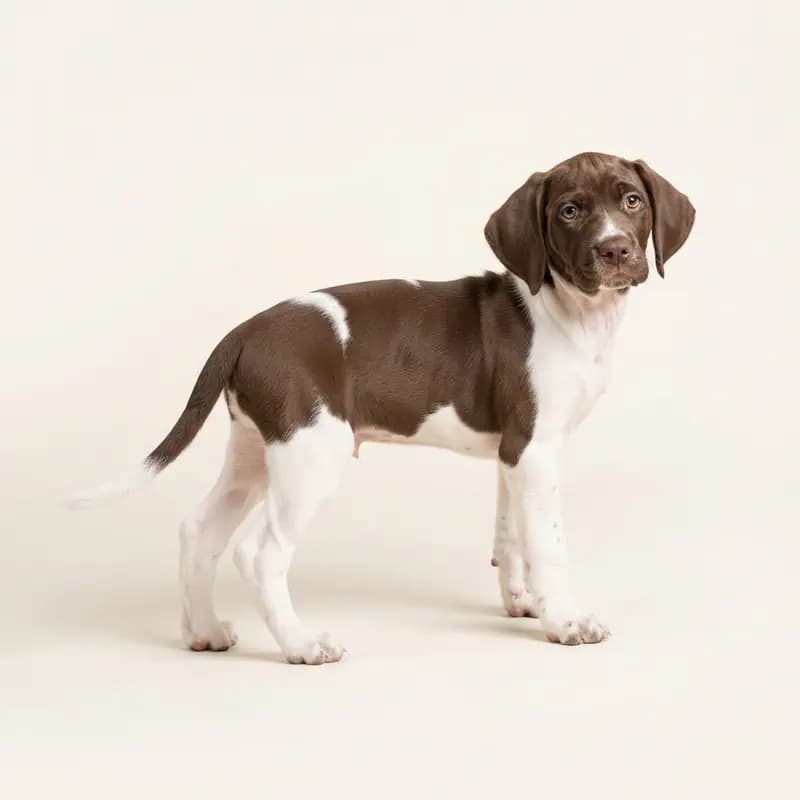
The Old Danish Pointer comes in these colors: Brown and white.
Showcase your kennel on HonestDog and reach families searching for a responsibly bred Old Danish Pointer.