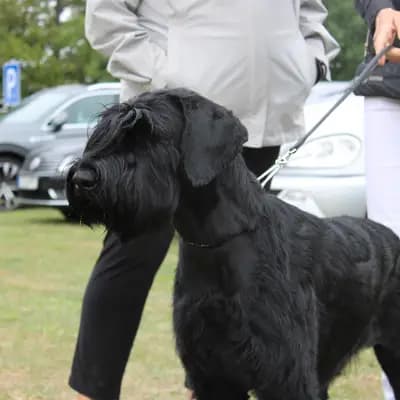
Giant Schnauzers have a life expectancy of 10 to 12 years and are generally considered robust. Even so, the breed has specific health risks affecting the joints, eyes, thyroid, heart and urinary tract. The Pinscher-Schnauzer-Klub 1895 e.V. therefore requires testing for hip dysplasia (HD), the DNA test for hyperuricosuria (HUU) and an eye examination; further tests are also recommended. You should use both as a guide when buying a puppy.
A key issue for a dog of this size is hip dysplasia (HD); reputable breeders have the parents' hips X-rayed and often their elbows too, in order to reduce the risk of joint problems in the offspring. As for the eyes, eye abnormalities typical of the breed occur, such as generalised progressive retinal atrophy (PRA) and retinal dysplasia – an examination of the parent dogs by a veterinary eye specialist provides answers here. There is also a risk of primary hypothyroidism and of heart disease such as dilated cardiomyopathy (DCM). Responsible breeders keep an eye on thyroid values through blood tests and have their breeding dogs' hearts examined by a cardiologist.
Particularly important in the Giant Schnauzer is hyperuricosuria (HUU), an inherited metabolic disorder that can lead to urolithiasis (urinary stones). There is an established DNA test for HUU: it shows clearly whether a parent dog is clear, a carrier or affected. A reputable breeder only mates carriers with tested, clear partners, to reduce the risk of puppies developing the condition. Later, throughout your dog's life, make sure he is reared in a way that protects his joints, keep him lean and plan regular veterinary check-ups for his heart, eyes and thyroid.