Basset Fauve de Bretagne
Close relative

Dogs love cookies, and so do we
Cookies for analytics and ads. Privacy
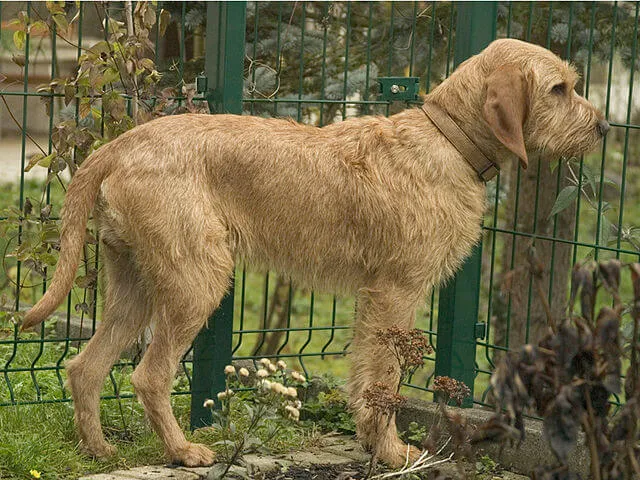
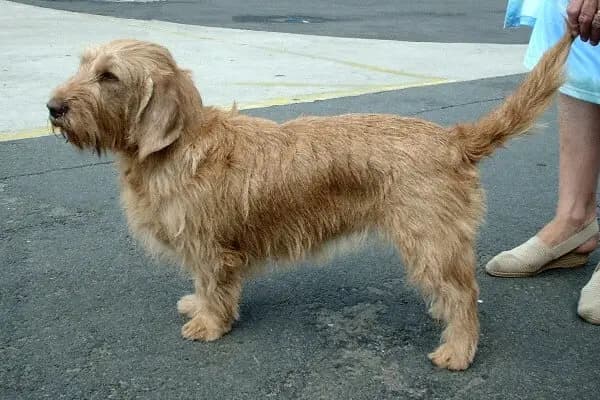
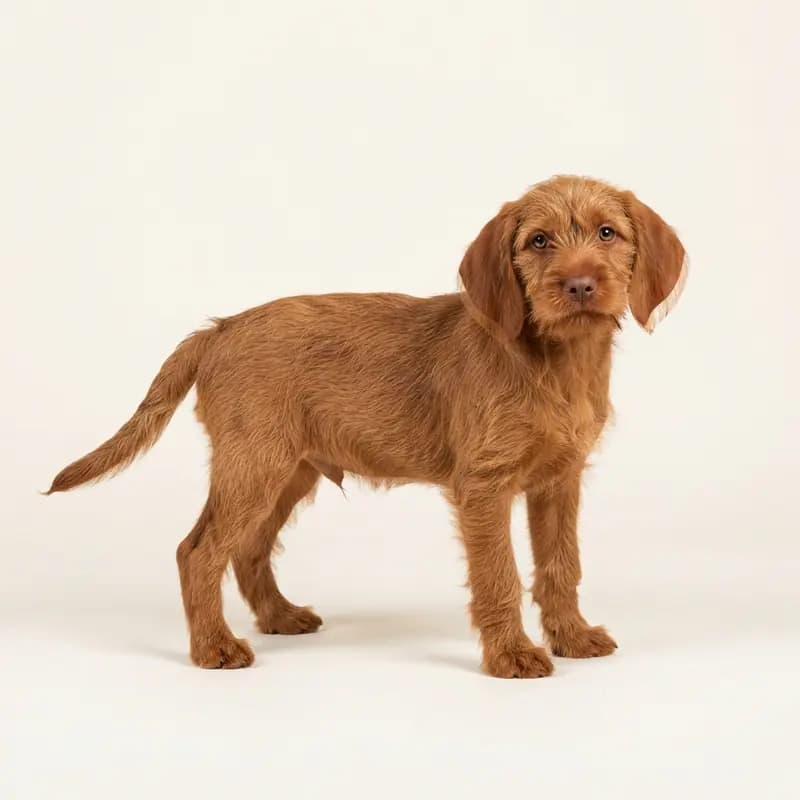
The Griffon fauve de Bretagne is an intrepid, tough scent hound—bred as a wire-haired specialist for endurance hunting in dense, thorny thickets. Extremely affectionate indoors, he immediately switches to autopilot outdoors the moment his nose catches the scent of game.
Self-check
Answer 6 quick questions about your everyday life and see how well the Griffon Fauve de Bretagne fits you — including an honest cost estimate per month, per year, and across the dog's lifetime.
Question 1 of 6
Count honestly — the normal day, not the best one.
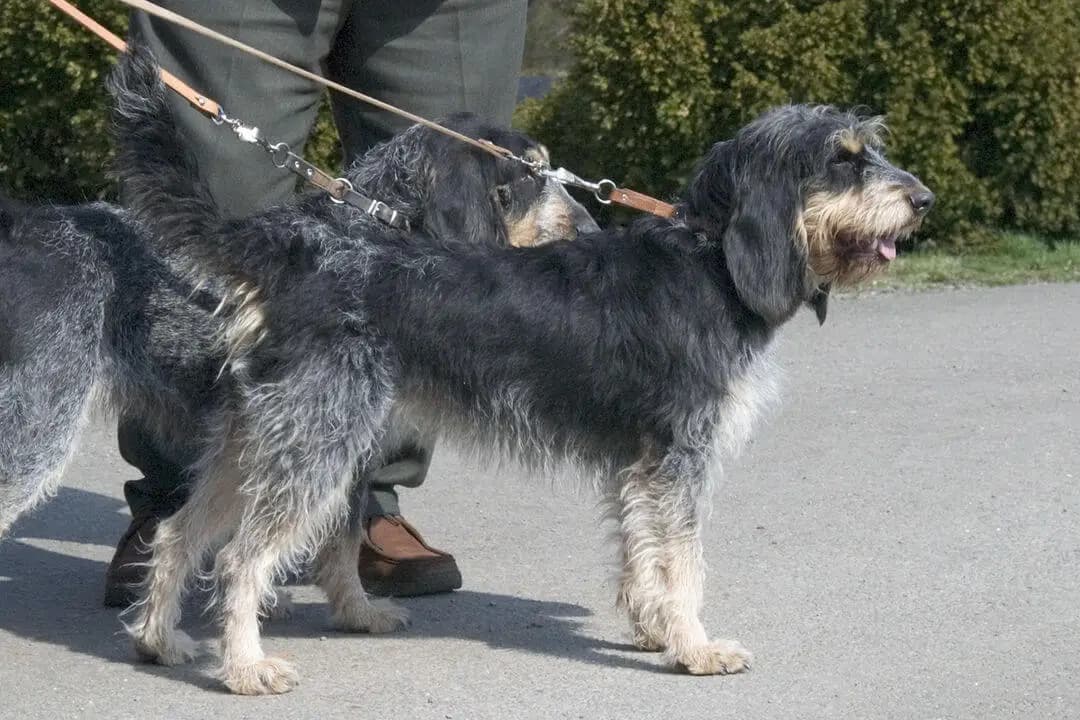
 AI image
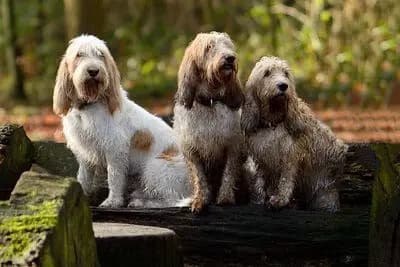
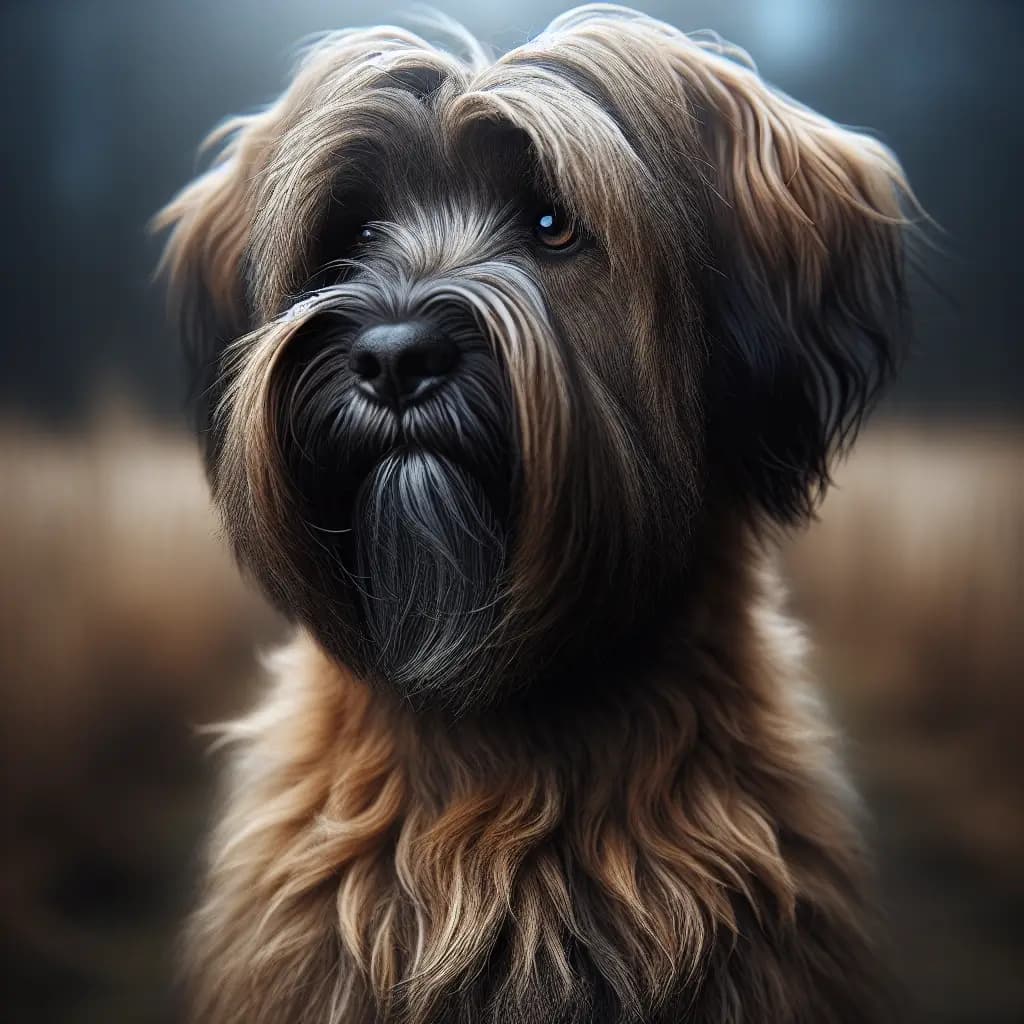 AI image
At a glance
The essentials — key facts, traits, and health priorities — before you dive deeper.
Lifespan
12–14 yrs
Shoulder height
48–56 cm
Weight
18–22 kg
Practical
Temperament
Daily life
What matters most
Especially with a Griffon Fauve de Bretagne, choosing the right breeder is the single most important decision you'll make. Serious breeders consistently test the parents for inherited conditions, prioritize healthy early socialization, and stay accountable long after handover. A cheap puppy without health screening tends to become the most expensive dog later on.
See HonestDog breeder standards →Colors & coat
The coat colors that occur in the Griffon Fauve de Bretagne — including which ones fall outside the breed standard and which carry genetic risk.
Eye colors
 Brown
Coat type
 Illustrative image
Wire
 Short
The real vibes check
A Griffon fauve de Bretagne is the most relaxed cuddler indoors, but outdoors he transforms into a highly specialized all-terrain vehicle with a built-in game radar. His rough exterior hides an extremely soft heart, but once he is on a trail, there is no turning back for him. You aren't buying a dog that will blindly read your every wish; you are getting a passionate hunter who needs a real job to do before he can happily snore on the sofa in the evening.
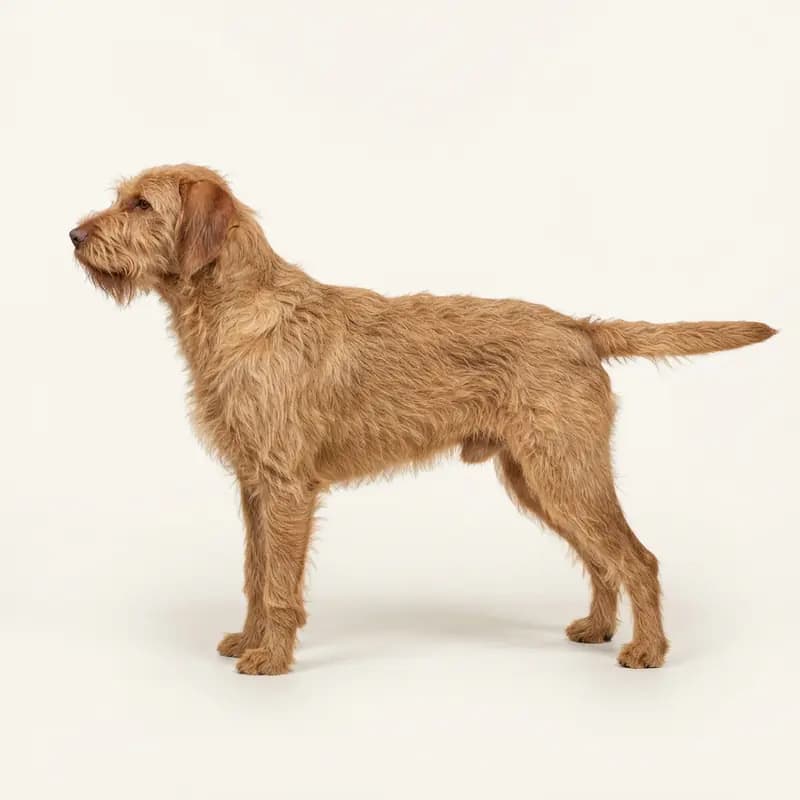
The Griffon Fauve de Bretagne is a medium-sized dog with a charming and lively appearance. It belongs to FCI Group 6 (hounds, bloodhounds and related breeds). This breed is known for its excellent hunting skills and is characterized by its robust build and distinctive wiry coat. There is no special distinction between performance and show lines.
The Griffon Fauve de Bretagne is a lively and active dog. He is friendly, intelligent and has a strong hunting instinct. Due to his independent nature, he can sometimes be stubborn, but he is generally good-natured and adaptable. This breed is people-oriented and enjoys the company of their family. They are happy dogs who love to play and have fun. Although they are independent, they are also affectionate and appreciate the attention and affection of their owners. The Griffon Fauve de Bretagne can learn to stay alone, but it is important to teach him the right habits from the start and provide him with enough mental and physical stimulation. Due to his strong hunting instinct, he tends to have a strong interest in smells and tracks. Therefore, caution should be exercised during walks and excursions in open areas to ensure that he does not hunt or drift uncontrollably. This breed is also alert and tends to announce strangers. They are good watchdogs and will sound the alarm if anything out of the ordinary occurs.
| Watchfulness Occasionally alerts but is fundamentally open. | Low |
| Openness to Strangers Warms up quickly and is generally welcoming. | Friendly |
| Hunting or Herding Drive This drive runs deep — no amount of training eliminates it. | Very strong |
Fun Fact!
The Griffon Fauve de Bretagne is one of the oldest French running dogs and existed as early as the 13th century.
The Griffon Fauve de Bretagne is a lively and enduring hunting dog with a rough, fawn-colored coat. It is characterized by its high enthusiasm for work and its pronounced sense of smell. These dogs are friendly and affectionate but require a lot of exercise and consistent training. The Griffon Fauve de Bretagne is especially suitable for active families and hunters who are looking for a reliable companion in the field.
The Griffon Fauve de Bretagne can be kept in urban areas provided he receives adequate exercise and mental stimulation. It is important that he has regular exercise and the opportunity to explore, as he is a hunting dog and has a certain need for freedom and exercise. Dealing with small children is generally not a problem as long as they treat the dog respectfully and appropriately and are supervised. It is important to introduce children to the correct handling of dogs at an early age and to teach them how to treat animals with respect. In terms of compatibility with cats and other pets, it depends on the individual socialization of the dog. An early and positive introduction to dealing with other animals can help ensure harmonious cooperation.
Loves family life and thrives in a group.
Takes boisterous and affectionate children in its stride.
Actively enjoys the company of other dogs.
City-appropriate with enough exercise and stimulation.
Owning a dog is a privilege, but it's also a real responsibility. Before you bring one into your life, be honest with yourself about the commitment it takes.
The Griffon Fauve de Bretagne is an intelligent dog that loves to learn. However, he is also independent and can have a strong hunting instinct. Therefore, it is important to start education and training early to channel his instincts and encourage good behavior. It is recommended to use positive reinforcement methods such as rewards, praise and playful interaction to motivate the dog and gain his attention. The Griffon Fauve de Bretagne can be suitable for various dog sports such as agility, mantrailing or nose work, which offer him both physical and mental exercise. Because the Griffon Fauve de Bretagne is a hunting dog, it can show a strong interest in smells and prey-catching behavior. It is important to provide him with appropriate alternatives and activities to express his natural instincts while promoting his frustration tolerance and impulse control.
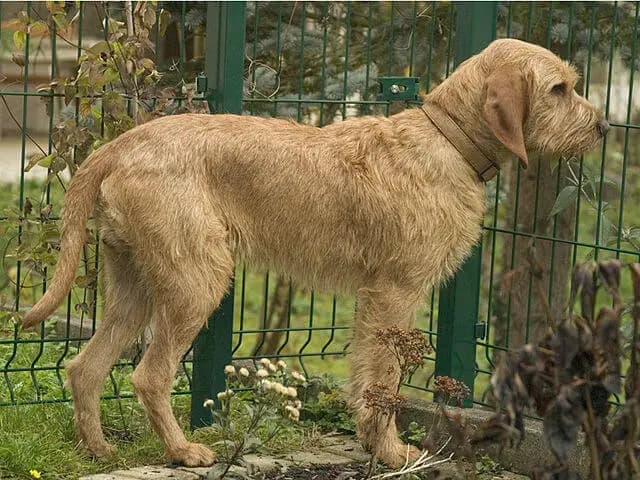
The Griffon Fauve de Bretagne's diet should be balanced and tailored to its needs. High-quality dog food that contains all the necessary nutrients is recommended. The amount of food should be adjusted according to the dog's activity level and weight to ensure healthy weight control. The Griffon Fauve de Bretagne's coat is hard, wiry and medium long, without an undercoat. It requires regular brushing to remove loose hair and prevent tangles. Thorough care of the coat is particularly important during shedding. It is recommended to check and clean the ears regularly to prevent infections. When it comes to the climate in Germany, the Griffon Fauve de Bretagne is adaptable. Its fur provides some insulation against the cold, while it has no overheating problems in warmer months. It copes well with the climatic conditions.
| Care Level Minimal effort — occasional brushing and bathing. | Low-maintenance |
| Exercise Needs Needs several hours of serious exercise every day. | Very active |
| Shedding Regular shedding — dog hair on clothes is now normal. | Moderate |
| Trainability Has its own ideas and will test limits. | Strong-willed |
Our experts are still reviewing this information. Spotted something wrong? Email us at info@honestdog.de.
Solid, watch carefully
Health grade
The Griffon Fauve de Bretagne receives a C grade because it exhibits an above-average number of health issues that are often inherited in a complex manner. In particular, the risk of congenital blindness and primary open-angle glaucoma (POAG) requires careful breeding monitoring of the eyes. Furthermore, problems such as congenital deafness occur more frequently in the breed, which is why buyers should strictly insist on the corresponding examination results of the parent animals.
Grade is relative to other breeds — AI-assisted and editorially reviewed.
Methodology and data: HonestDog Dog Breed Health Report 2026
What matters most for this breed
Tap any item to see details.
You should focus on joint-friendly development and maintaining a healthy weight, as well as having his eyes and heart checked regularly by a vet to detect any issues early on.
Reputable breeders have the parents' hips, elbows, eyes, and hearts tested and pay close attention to genetic diversity to lower the risk of neurological diseases in the bloodline.
Note: This health overview is AI-assisted and editorially reviewed. It is for orientation only and does not replace veterinary advice.
What matters most for this breed — what's common, how much it affects the dog's life, and how to protect yourself as a buyer.
Tap a body region to see the inherited conditions linked to it.
The three most important risks
Pick a region on the map to explore other areas.
Tier 1 is the recommended health standard for this breed. Tiers 2 and 3 show how responsible breeders go beyond.
Recommended standard. These tests make up the recommended health standard for this breed — the baseline of any careful breeding program. Ask any reputable breeder for the results.
No entries in this tier.
Note: This health overview is AI-assisted and editorially reviewed. It is for orientation only and does not replace veterinary advice.
A Griffon Fauve de Bretagne costs around ~€170 per month (€90 – €330, depending on your setup). The first year adds up to roughly ~€5,660 including purchase, equipment and puppy school; across the dog's life (13 years) it comes to about ~€30,680.
With surgery cover, running costs come to about ~€170 per month — in return, your share of a major operation drops from several thousand euros to around 20 percent.
Per month
~€170
In the first year
~€5,660
Across the dog's life
~€30,680
Estimated purchase price from a breeder: €2,000 – €3,500
Estimate at a mid-range setup (suburban, dry food, 1–2 hours of daily exercise), average German prices, as of July 2026.
HonestDog Concierge
We currently have no breeders for this breed who have passed our verification. Create your short buyer profile: we'll set up your search alert, review a possible source and email you within 28 days.
 Illustrative image
 Illustrative image
 Illustrative image
 Illustrative image
The Griffon Fauve de Bretagne comes from France and is a very old breed. Its roots are believed to date back to the 13th century. It was originally bred as a hunting dog to hunt wild boars and other small game in the rocky regions of Brittany. The breed was recognized by the FCI (Fédération Cynologique Internationale) in 1949.
The Griffon Fauve de Bretagne was bred to hunt wolves and later wild boars, known for its robustness and fauve coat.
France
Mittelalter
From an owner's experience
Ich hatte von 2004 bis 2018 eine Griffon-Hündin, zusammen mit einem Basset fauve de Bretagne. Charakterlich war sie ein Traum: lieb, verschmust, verspielt, gut mit Kindern und anderen Hunden. Sie bellte kaum und war überall eine angenehme Begleiterin – auch im Restaurant.
Aber der Jagdtrieb ist extrem. Wir mussten unser 2000 m² großes Grundstück mit 2 m hohen Zäunen sichern – und sie fand trotzdem jedes Schlupfloch. War sie einmal weg, blieb sie mindestens 7 Stunden in Feld und Wald und kam völlig ausgelaugt zurück. Freilauf, Hundeplatz, teure Hundeschule – nichts hat den Jagdtrieb wirklich in den Griff bekommen.
Mein Fazit für alle, die über diese Rasse nachdenken: Charakter super, lieb und familienfreundlich – aber man braucht starke Nerven und sehr viel Zeit. Den Jagdtrieb treibt man dieser Rasse nicht aus. Wer ein lockeres Hund-Mensch-Leben ohne ständige Sicherung möchte, sollte sich das gut überlegen.
— Hanna A., Halterin aus Mettmann (Griffon-Hündin, 2004–2018)
At home, owners find the Griffon Fauve de Bretagne a remarkably devoted, gentle and easygoing companion. Outdoors it is full of energy, but indoors it is usually calm, almost unobtrusive, and seeks close physical contact with its people. Many owners highlight its great patience and friendliness with children. Thanks to its heritage as a French pack hound, it also usually lives very harmoniously and sociably with other dogs.
Still, people who know the breed stress that this calm at home depends closely on the dog getting the right amount of exercise and activity. Life purely as a city dog or short walks around the block won't meet its needs; owners report restlessness when the dog is left mentally or physically underchallenged. Its watchdog instinct also shows through now and then: strangers or unfamiliar noises on the property are readily announced in the typical full, ringing voice of a hound.
Sources:welpen.dezooroyal.dehundeseite.deedogs.detackenberg.de
On walks and in training, owners describe a real transformation: as soon as the Griffon Fauve de Bretagne catches a scent outdoors, it often switches instantly into independent work mode. Its very strong hunting drive and passion for flushing game mean that reliable off-leash time in areas with lots of game is very hard or impossible. Many owners therefore keep their dogs on a long line at all times or secure them with GPS trackers, because these dogs will follow a game trail through any thicket with tremendous stamina and toughness.
Training this breed takes a lot of patience, humor and complete consistency. Don't expect blind obedience; the Griffon likes to weigh up commands and shows the typical stubbornness of a dog bred to hunt on its own. Yet owners report that it shuts down completely and reacts sensitively to a heavy hand or pressure. According to owner accounts, the key to success is positive reinforcement and targeted substitute activities: these dogs can be motivated with great enthusiasm for nose work, mantrailing, drag trails or dummy work.
Sources:welpen.dezooroyal.dehundeseite.dezoomalia.dechien.ouest-atlantis.com
On health and grooming, owners value the Griffon Fauve de Bretagne as a very weatherproof, hardy and vigorous breed. Its wiry, harsh coat is self-cleaning and reliably protects it from wet, cold and sharp thorns. Day-to-day grooming is described as pleasantly low; regular brushing and occasional stripping of the dead topcoat are usually all it needs.
Its physical weak spots mainly involve the hanging ears, which owners say need regular checks, since dirt, moisture and poor air circulation can lead to ear infections. Because these are active dogs that often don't spare themselves when crashing through undergrowth, owners also occasionally report minor cuts or scrapes, as well as the need for a thorough tick check after every walk in the woods. Apart from that, the Griffon Fauve de Bretagne is considered a long-lived outdoor type with no extreme signs of overbreeding when kept responsibly.
Sources:welpen.dezooroyal.dehundeseite.detackenberg.dechien.ouest-atlantis.com
Paraphrased from real owner reports · translated from German
The Griffon Fauve de Bretagne is an active dog that needs plenty of exercise and mental stimulation. Research the temperament, grooming needs, and space requirements before deciding.
The average life expectancy of a Griffon Fauve de Bretagne is 12-14 years. With proper care and regular vet visits, your dog can live a long, healthy life.
Griffon Fauve de Bretagne grooming requirements include regular brushing, nail trimming, and dental care. HonestDog provides detailed grooming tips for every breed.
The Griffon Fauve de Bretagne can be a great family dog. Proper training and socialization are key. HonestDog provides family suitability information for every breed.
The Griffon Fauve de Bretagne comes in these colors: Fawn, Wheaten, Red.
Showcase your kennel on HonestDog and reach families searching for a responsibly bred Griffon Fauve de Bretagne.