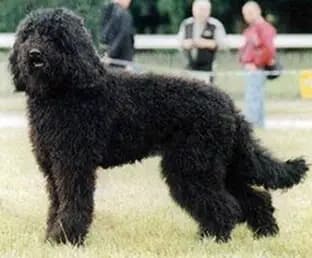
With careful breeding selection, the Lagotto Romagnolo is considered long-lived, but it does carry breed-specific risks affecting the nervous system, the musculoskeletal system and the eyes. A health-focused breeder – for example, one following the requirements of the Lagotto Romagnolo Wasserhunde Deutschland e.V. – uses targeted diagnostics to reduce these risks in their line.
Breed-specific neurological conditions are particularly important, such as benign familial juvenile epilepsy (BFJE) and lysosomal storage disease (LSD). Established genetic tests exist for these: they reliably show whether a parent dog is clear, a carrier or affected. A reputable breeder only mates carriers with genetically clear partners, in order to control the risk for the offspring in a targeted way. Neuroaxonal dystrophy and general epilepsy are also among the neurological issues in the breed, which you should ask about in the breeder’s lines.
Where the skeleton is concerned, the main issues are hip dysplasia (HD), patellar luxation (kneecap displacement), transitional vertebrae and elbow dysplasia (ED). These cannot be detected by a DNA test, but require official X-ray and clinical examinations of the parent dogs. Since you can influence this yourself through a joint-friendly upbringing, avoid heavy stair climbing and overexertion during the first year of life.
The Lagotto is also affected by various eye conditions. In addition to the compulsory examinations for general eye abnormalities, conditions that occur in the breed include cataracts, progressive retinal atrophy (PRA), lens luxation, primary open-angle glaucoma, collie eye anomaly (CEA), PHTVL/PHPV and eyelid and eyelash abnormalities (entropion, ectropion, distichiasis). Regular clinical eye examinations of breeding dogs by specialist vets significantly reduce the risk.