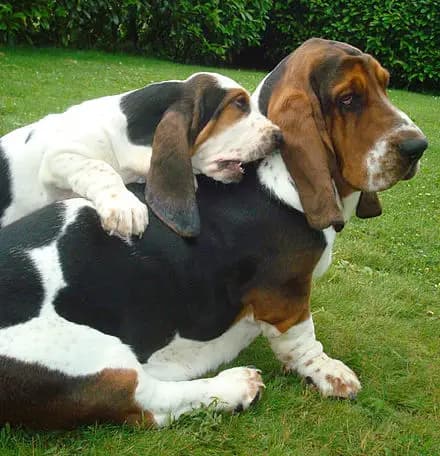
With thoughtful breeding, Otterhounds are generally considered robust and reach a life expectancy of 10 to 13 years. Because of the extremely small gene pool, however, the breed carries specific risks of joint problems, blood clotting disorders and neurological diseases, and you need to know about these thoroughly before you buy.
Joint health in heavy scent hounds
With a height at the withers of 67 to 71 cm in males (36–54 kg) and 59 to 63 cm in bitches (29–48 kg), a lot of weight is placed on the musculoskeletal system. The responsible breed club, the Basset-Hound-Club von Deutschland e.V. (BHC), therefore requires screening for hip dysplasia (HD) and elbow dysplasia (ED) before a dog is used for breeding. These X-ray examinations of the parent dogs significantly reduce the risk of serious joint problems in the offspring. After you buy, your job is to rear your puppy in a consistently joint-friendly way: in the first year, keep your puppy away from stairs and avoid sudden stops and excess weight.
Blood clotting and nerves
A health issue typical of the breed is Glanzmann’s thrombasthenia, an inherited platelet function disorder that leads to impaired blood clotting. A well-established DNA test exists for this breed-specific mutation, showing whether a breeding dog is clear, a carrier or affected. A health-conscious breeder mates carriers only with tested clear partners. This way, no puppy inherits the tested mutation from both parents, and the risk of this one disease falls significantly. Because the Otterhound also has a general breed-typical tendency towards blood clotting disorders and neurological diseases, you should not only ask the breeder specifically about the bloodline, but also inform your vet early about the clotting issue, so that injuries or planned operations can be prepared for and treated safely.