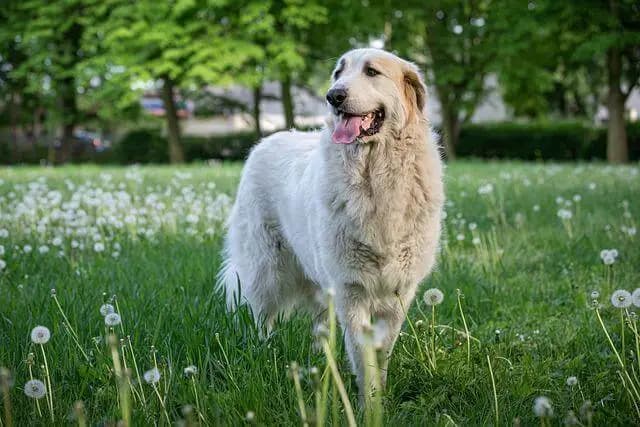
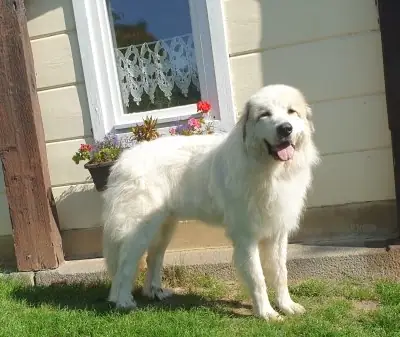
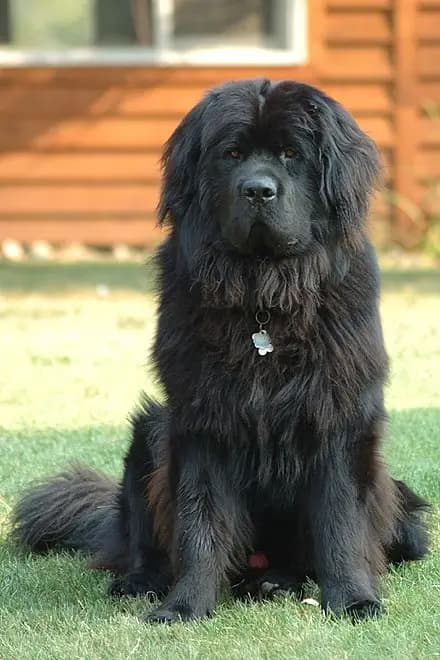
With a life expectancy of 10 to 12 years, the Great Pyrenees, as a giant breed, comes with specific health weak spots, above all affecting the musculoskeletal system, the eyes and the nervous system. A health-focused breeder – for example, one belonging to the Klub für Ungarische Hirtenhunde e.V. (KfUH), which keeps the studbook for the Great Pyrenees in Germany – subjects their breeding dogs to strict mandatory tests in order to reduce these risks in a targeted way.
The focus is on joint and bone conditions: X-ray examinations for hip dysplasia (HD), elbow dysplasia (ED) and osteochondritis dissecans (OCD, a disorder of cartilage and bone development), as well as a clinical examination for patellar luxation (PL), are mandatory. They do not rule out a condition in a puppy, but by deliberately selecting healthy parents they significantly lower the risk. For the eyes, clinical examinations are carried out for general eye abnormalities such as ectropion or entropion (malpositions of the eyelids). In addition, there is a validated DNA test for multifocal retinopathy 1 (CMR1), a hereditary retinal disease. It shows whether a parent is clear, a carrier or affected. If the breeder mates carriers only with clear partners, no puppy inherits the tested mutation from both parents; the risk of this one condition falls significantly.
Beyond the mandatory programme, responsible breeders often go further and voluntarily have their dogs examined by heart ultrasound for tricuspid valve dysplasia (TVD). Other breed-specific health issues that you should raise with the breeder are cervical spondylomyelopathy (wobbler syndrome), congenital deafness, SLC13A1-associated chondrodysplasia (a form of dwarfism), as well as blood clotting disorders and thrombopathia (a disorder of platelet function).
Important for your first year: even the best genetics need the right management. In the first year of life, it is essential to ensure joint-friendly rearing and a precisely tailored diet for giant breeds. The puppy must not shoot up in height too quickly, so as to protect its bones and joints during growth.