Great PyreneesSame working temperament
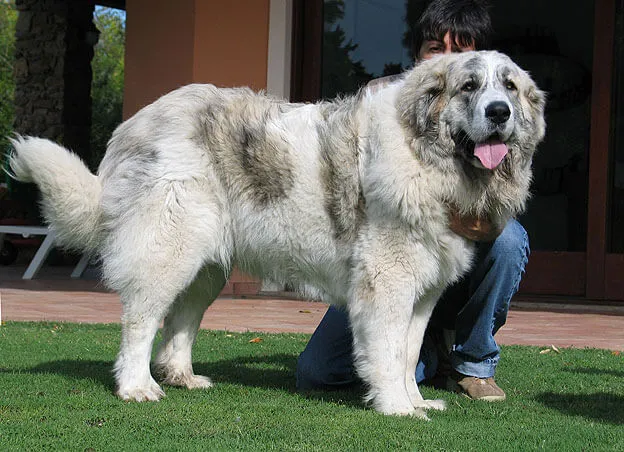
The Mastín del Pirineo is a massive, territorial, and self-reliant Herdenschutzhund (livestock guardian dog) — bred to independently defend sheep flocks in the rugged Pyrenees against wolves and bears. He is a gentle giant within his own family, but makes no compromises when it comes to outsiders.
How the health grade is calculated
Sources for required breeding screenings. Club für Molosser e.V.
Self-check
Answer 6 quick questions about your everyday life and see how well the Pyrenean Mastiff fits you — including an honest cost estimate per month, per year, and across the dog's lifetime.


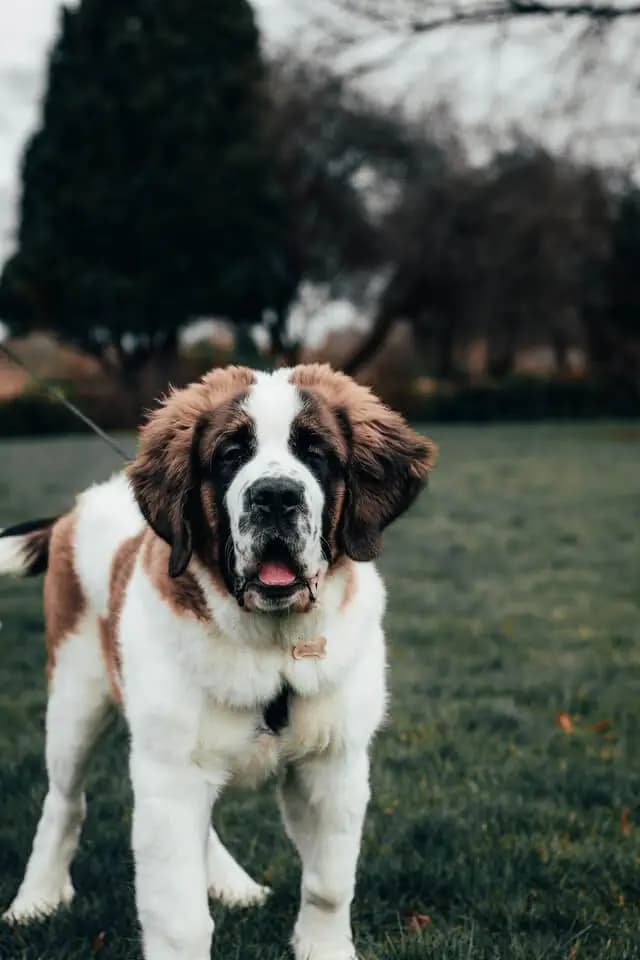
At a glance
The essentials — key facts, traits, and health priorities — before you dive deeper.
Lifespan
10–13 yrs
Shoulder height
72–81 cm
Weight
52–80 kg
Practical
Temperament
Daily life
What matters most
Especially with a Pyrenean Mastiff, choosing the right breeder is the single most important decision you'll make. Serious breeders consistently test the parents for inherited conditions, prioritize healthy early socialization, and stay accountable long after handover. A cheap puppy without health screening tends to become the most expensive dog later on.
See HonestDog breeder standards →Colors & coat
The coat colors that occur in the Pyrenean Mastiff — including which ones fall outside the breed standard and which carry genetic risk.
Eye colors
 Brown
Coat type
 Medium
 Double coat
The real vibes check
A Mastín del Pirineo is not a follower of commands, but an autonomous security professional. He may lie in the garden seemingly dozing for hours, but if he identifies a real threat, 80 kilos of teddy bear can transform in a split second into an unstoppable wall. You aren't getting a dog you control with quick commands, but an uncompromising guardian you must convince through absolute composure and mutual respect.
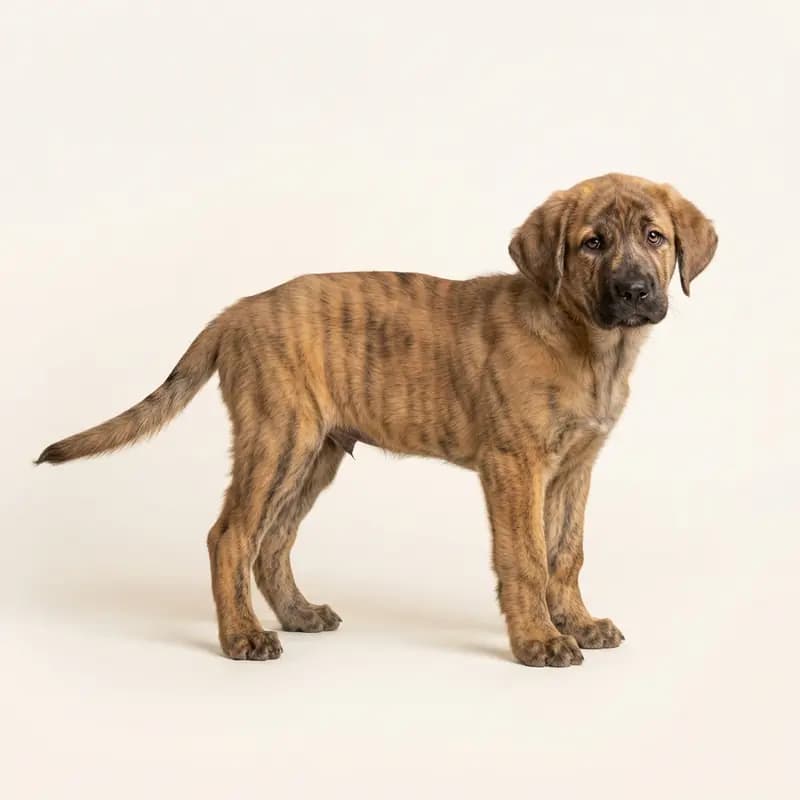
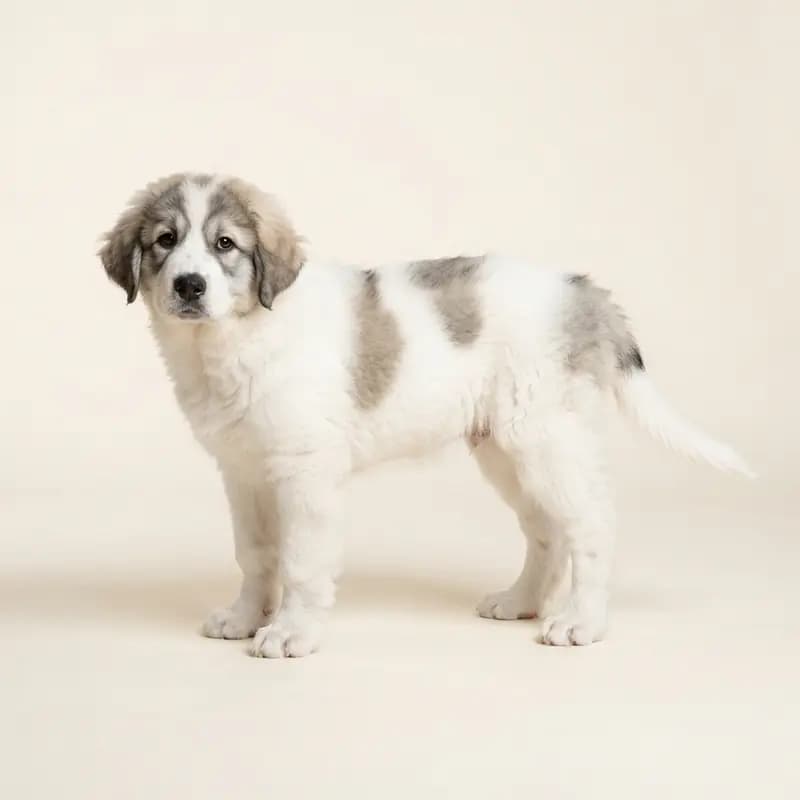
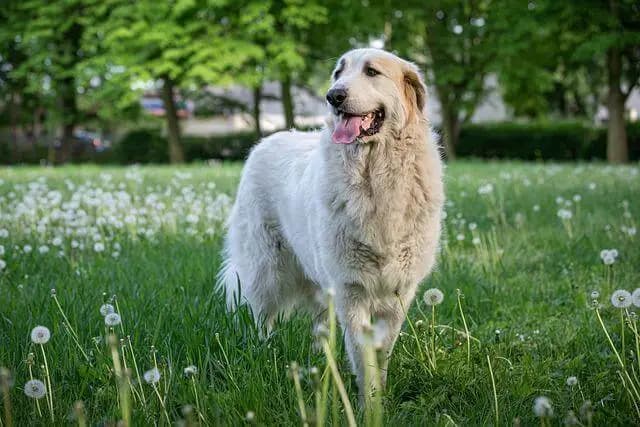
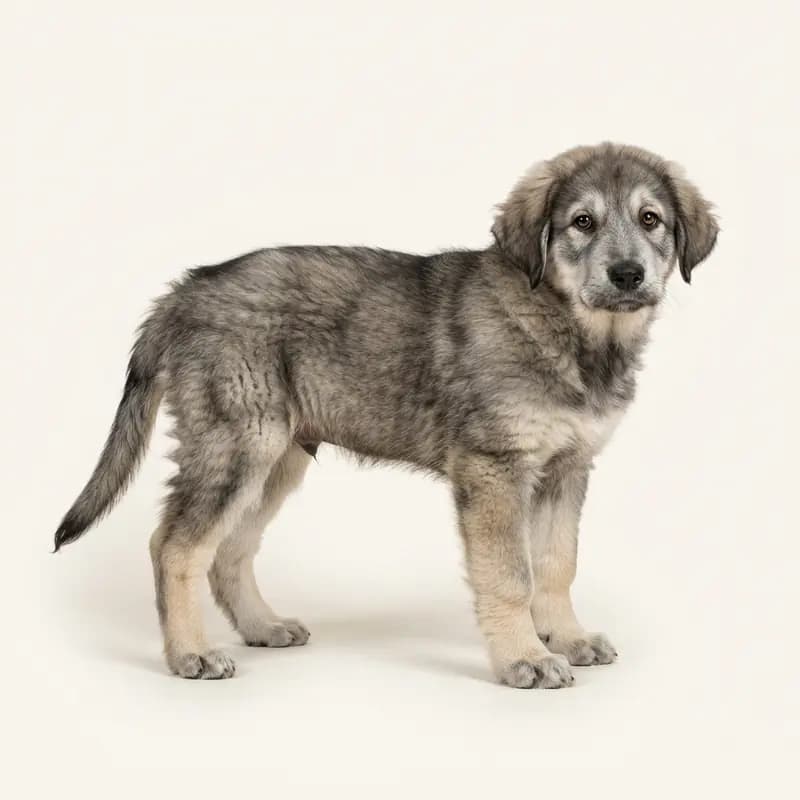
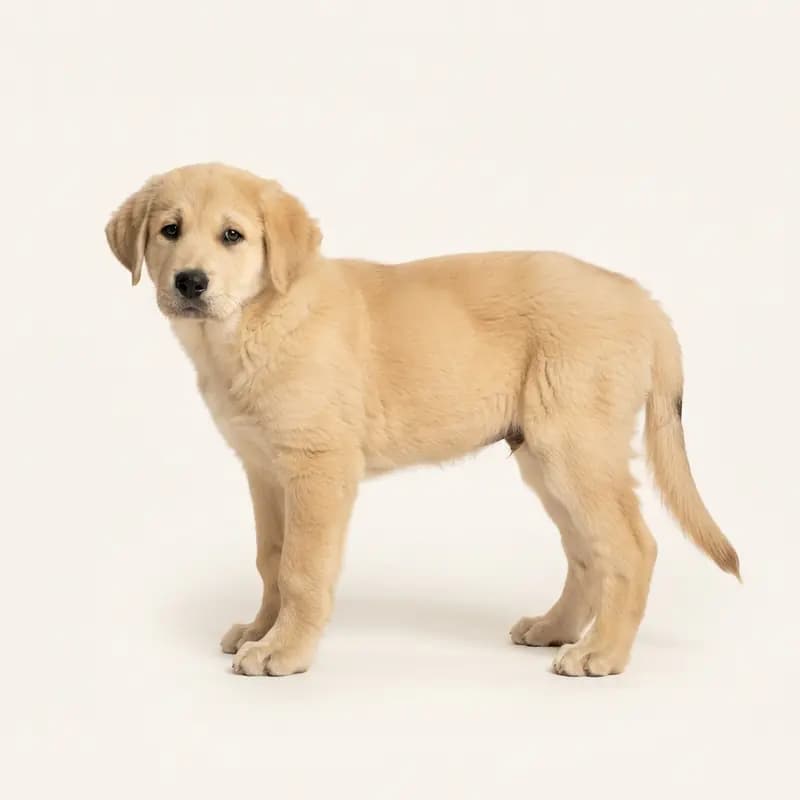
The Mastín del Pirineo, or Pyrenean Mastiff, is an impressive breed of dog that originates from the Spanish Pyrenees. It belongs to FCI Group 2, the Molossians and the Mountain Dogs. The Mastín del Pirineo is a powerful and robust dog with a strong physique that conveys both size and elegance. Its head is large and imposing with a pronounced stop and a black nose. Its eyes are almond-shaped and medium-sized, ranging in color from amber to dark brown. The ears are medium sized, set high and hang down to the sides. The Mastín del Pirineo has a dense, medium-length coat with a thick undercoat, which protects it particularly well against the cold winters in the Pyrenees. Its coat is mostly white, often with gray, yellow, brown, black or wolf-gray markings.
The Mastín del Pirineo is an independent and self-confident dog with a strong protective instinct. He is loyal to his family and alert towards strangers. His original purpose as a guard dog for herds and properties is still evident in his character today. Despite his size and strength, the Mastín del Pirineo is not an aggressive dog. He tends to deter threats with his impressive size and presence rather than attacking outright. However, one should not underestimate the fact that, if necessary, he is ready to courageously defend his family and his territory. Regarding that Temperamentally, the Mastín del Pirineo is rather calm and balanced. He is not hyperactive and does not need constant activity, which makes him a pleasant housemate. But that does not mean that he wants to just lie around all day. He needs regular physical and mental activity to stay healthy and happy. Walks, light games and tasks where he can use his head are ideal for this breed. The Mastín del Pirineo is an independent dog that does not constantly seek human attention. It enjoys being with its family, but can also stay alone as long as it is sufficiently occupied. Its hunting and prey-catching behavior is usually not strong, although it would certainly be capable of doing so due to its size and strength. It has more of an instinct to protect its family and its territory. Although the Mastín del Pirineo is not a classic family dog, it can still be a loving and loyal companion for the right person or family. It needs someone who respects and values its independence and protective instincts. The Mastín del Pirineo is not a dog for everyone, but for those who understand and appreciate it, it can be a wonderful companion.
| Watchfulness Strong territorial instinct — may actively confront intruders. | Very high |
| Openness to Strangers Neither pushily friendly nor suspicious. | Neutral |
| Hunting or Herding Drive Mild interest in movement and small animals — easily managed. | Low |
Fun Fact!
Did you know that the Mastín del Pirineo was originally bred to protect flocks of sheep against wolves and bears? Today it is still used in this role as a working dog in some regions.
The Mastín del Pirineo is a livestock guard dog. These dogs are also rather unsuitable for the city or for beginners.
The Mastín del Pirineo is not necessarily suitable as a city dog. It needs enough space and exercise and can therefore quickly become underchallenged in an urban apartment. A house with a garden or a life in the country would be ideal for this breed. The Mastín del Pirineo is a good family dog and usually gets along well with children. However, his size and guarding instincts mean he could accidentally knock over small children. Therefore, interactions between dogs and children should always take place under supervision. The Mastín del Pirineo can also get along well with other pets as long as he is used to them from an early age.
Loves family life and thrives in a group.
Takes boisterous and affectionate children in its stride.
Usually gets on fine with other dogs.
Can manage in the city, but only with very active owners.
Owning a dog is a privilege, but it's also a real responsibility. Before you bring one into your life, be honest with yourself about the commitment it takes.
Raising and training the Mastín del Pirineo can be a challenge due to his independence and strong protective instincts. It is important to give him clear and consistent rules from the start and to enforce them consistently. Positive reinforcement and patience are key to success when training this dog. It is important to keep the Mastín del Pirineo mentally and physically busy without overwhelming him. Keep in mind that this breed tends to do things at its own pace and doesn't always respond immediately to commands. Frustration tolerance and impulse control are important aspects in raising the Mastín del Pirineo and should be promoted through appropriate exercises.
The Mastín del Pirineo's diet should be tailored to its nutritional needs as a large and active dog. A balanced diet with high-quality proteins and fat sources as well as fruits, vegetables and carbohydrates is important. Puppies need special puppy food that is tailored to the needs of rapidly growing large dog breeds. The Mastín del Pirineo has a dense, medium-length coat with a thick undercoat that protects it from the cold. This coat requires regular care. The coat should be brushed at least once a week to avoid tangles and remove dead hair. During the coat change periods in spring and autumn, it may be necessary to brush the coat daily. The Mastín del Pirineo is generally well adapted to the climate in Germany, but it can Summer are quite sensitive to heat. It is important to provide it with enough shade and water.
| Care Level Regular brushing and occasional professional grooming. | Moderate |
| Exercise Needs Needs several hours of serious exercise every day. | Very active |
| Shedding Hair everywhere, always — no white clothing survives. | Very heavy |
| Trainability Has its own ideas and will test limits. | Strong-willed |
Our experts are still reviewing this information. Spotted something wrong? Email us at info@honestdog.de.
Solid
Health grade
In the heavy Mastín del Pirineo, orthopedic problems such as hip dysplasia (HD) and elbow dysplasia (ED), as well as hereditary eye conditions like ectropion / entropion, represent the central health risks. The Club für Molosser e.V. strictly mandates radiographic examinations for HD and ED for breeding clearance, allowing a maximum score of C for HD (only when mated with A or B) and scores 0 to 2 for ED. A responsible breeder additionally has the eyes examined for ectropion / entropion and breeds exclusively with unaffected parent animals. Before buying a puppy, demand to see the complete official findings for HD, ED, as well as proof of clear eye status for the parent animals.
Grade is relative to other breeds — AI-assisted and editorially reviewed.
Methodology and data: HonestDog Dog Breed Health Report 2026
What matters most for this breed
Tap any item to see details.
You should control his enormous growth during the first year through strict feeding management, consistently protect his joints, and always keep an eye on his eyes and potential signs of gastric torsion.
Responsible breeders have dogs X-rayed as required for hip dysplasia (HD) and elbow dysplasia (ED) in accordance with club regulations, and additionally screen for ectropion / entropion.
Note: This health overview is AI-assisted and editorially reviewed. It is for orientation only and does not replace veterinary advice.
What matters most for this breed — what's common, how much it affects the dog's life, and how to protect yourself as a buyer.
Tap a body region to see the inherited conditions linked to it.
The three most important risks
Pick a region on the map to explore other areas.
Tier 1 reflects the tests Club für Molosser e.V. actually mandates. Tiers 2 and 3 show how responsible breeders go beyond.
Club standard. Club für Molosser e.V. requires these tests for breeding approval. Ask any reputable breeder for the results.
No entries in this tier.
Note: This health overview is AI-assisted and editorially reviewed. It is for orientation only and does not replace veterinary advice.
A Pyrenean Mastiff costs around ~€250 per month (€130 – €480, depending on your setup). The first year adds up to roughly ~€6,530 including purchase, equipment and puppy school; across the dog's life (11.5 years) it comes to about ~€37,550.
With surgery cover, running costs come to about ~€250 per month — in return, your share of a major operation drops from several thousand euros to around 20 percent.
Per month
~€250
In the first year
~€6,530
Across the dog's life
~€37,550
Estimated purchase price from a breeder: €2,000 – €3,500
Estimate at a mid-range setup (suburban, dry food, 1–2 hours of daily exercise), average German prices, as of July 2026.
HonestDog Concierge
We currently have no breeders for this breed who have passed our verification. Create your short buyer profile: we'll set up your search alert, review a possible source and email you within 28 days.
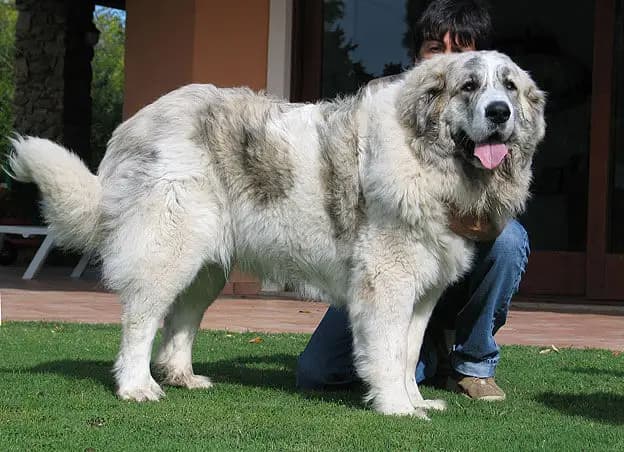
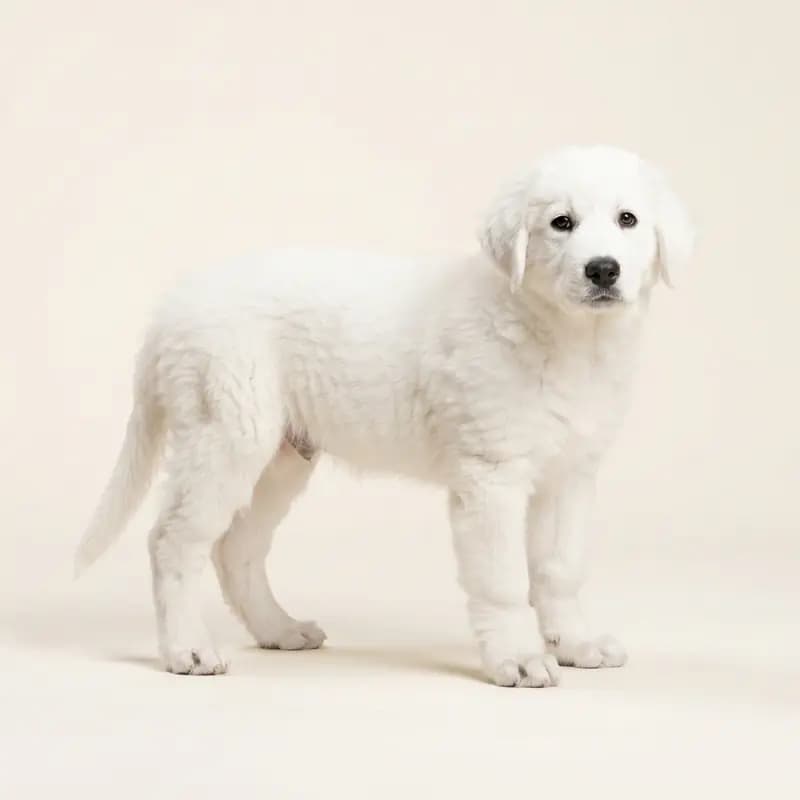 Illustrative image
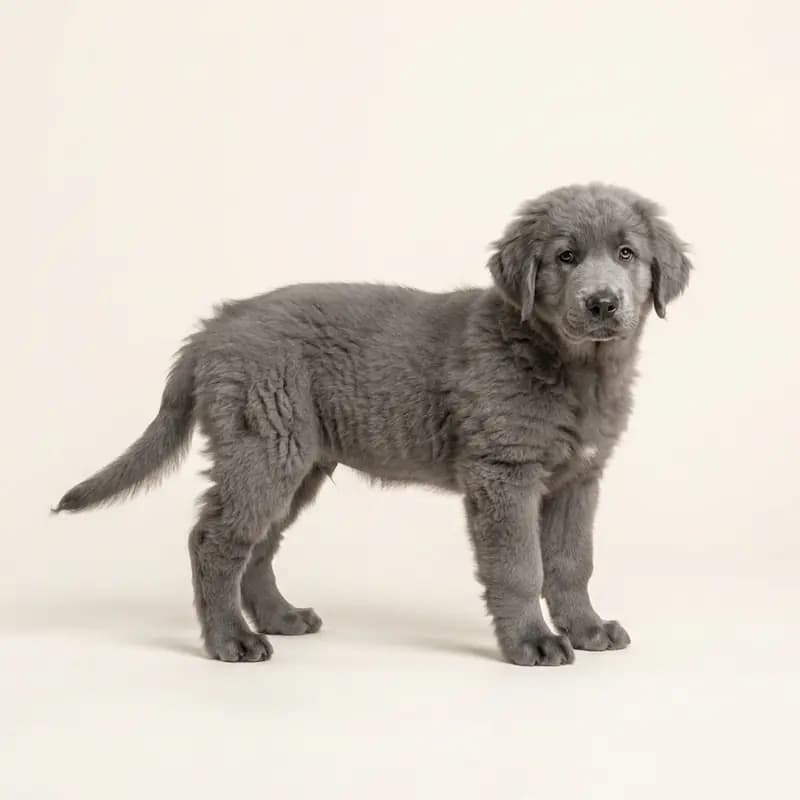 Illustrative image
 Illustrative image
 Illustrative image
The Mastín del Pirineo has a long history and originates from the Spanish Pyrenees. It was originally bred to protect livestock herds from predators such as wolves and bears. Its size and strength made it particularly well suited to this task. The Mastín del Pirineo was also used as a guard dog for homes and properties. The breed has been mentioned in documents since the Middle Ages, but it may be even older. The breed was officially recognized by the FCI in 1977.
The Mastín del Pirineo was used as a livestock guard dog in the Pyrenees to protect livestock from predators.
Spain
Antike
Many owners describe living with a Pyrenean Mastiff as an experience of contrasts. Indoors and with its trusted people, the giant is considered surprisingly unobtrusive, calm, and deeply relaxed. These dogs often seek out their people's company without pestering or always wanting to be the center of attention. With the family's own children they are usually patient and calm once they are used to them, helped by the breed's traditionally very high threshold for stimulation.
At the same time, experienced owners stress that the breed's typical protective and territorial behavior should never be underestimated. On their own property these dogs instinctively keep watch and like to pick raised spots to keep an eye on their surroundings. Their watchfulness wakes up noticeably at dusk and at night: unfamiliar sounds or passersby at the fence are answered with a deep bark that carries a long way. Experienced owners therefore consider keeping one in a rental apartment or a densely built row-house development hardly workable; these dogs need plenty of space and a securely fenced area in a fairly rural setting.
Sources:zooroyal.dedogpackapp.comagila.deedogs.dewelpen.vdh.de
Owner accounts of training stress again and again that the Pyrenean Mastiff has no strong urge to submit ("will to please"). As a traditional livestock guardian dog, it was selected over generations to size up situations on its own and make its own decisions. Commands are therefore often questioned and followed only if the dog sees a point in them or trusts its person. Blind obedience or timed dog sports are simply not realistic with this breed.
Owners point out that excessive harshness, yelling, or pressure are completely wrong for this sensitive giant and, if anything, lead to total refusal. The foundation for obedience is calm, unshakable, and loving consistency. According to owners, very early and thorough exposure to the world and socialization are a must: if a puppy doesn't learn in time to calmly tolerate neutral everyday stimuli, strangers, and other dogs, a full-grown 70- to 80-kilo colossus on a leash can hardly be controlled physically.
Sources:agila.deedogs.dewelpen.vdh.dezooplus.deguauandcat.com
In everyday life, owners report that the Pyrenean Mastiff needs surprisingly little athletic exercise. Its heavy build isn't made for long runs, agility, or long bike rides. What matters much more to it are leisurely but long patrol walks, sniffing rounds, and the chance to move freely outdoors. Most of these dogs have little to no prey drive in the sense of chasing or catching game, which is why walks in quiet areas often go smoothly.
On the flip side, many owners stress the considerable practical and financial demands. The dense, weatherproof coat lets dirt fall off easily once dry, but it tends to mat, especially on the britches and behind the ears, and needs regular brushing. On top of that come the drooling typical of some molossers and the huge food portions. On health, owner circles warn against exaggerated type and extreme giant size: to help prevent joint conditions such as hip or elbow dysplasia, owners need to watch closely for moderate weight gain, high-quality nutrition, and joint-friendly exercise during the rapid growth phase. Vet and medication costs are also significantly higher than for normal-sized breeds, simply because of the dog's body weight.
Paraphrased from real owner reports · translated from German
The Pyrenean Mastiff is an active dog that needs plenty of exercise and mental stimulation. Research the temperament, grooming needs, and space requirements before deciding.
The average life expectancy of a Pyrenean Mastiff is 10-13 years. With proper care and regular vet visits, your dog can live a long, healthy life.
Pyrenean Mastiff grooming requirements include regular brushing, nail trimming, and dental care. HonestDog provides detailed grooming tips for every breed.
The Pyrenean Mastiff can be a great family dog. Proper training and socialization are key. HonestDog provides family suitability information for every breed.
The Pyrenean Mastiff comes in these colors: White, Grey, Yellow, Brown, Black, Wolf grey, Fawn, Brindle, Piebald.
Showcase your kennel on HonestDog and reach families searching for a responsibly bred Pyrenean Mastiff.