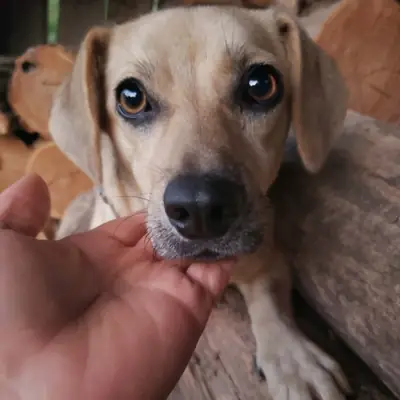
If you are looking for a Russian Toy in a shelter, you will mostly meet sensitive dogs who are hit hard by the loss of their person. In a kennel or a noisy shelter environment, they often seem reserved or nervous at first. Give the dog time: once it begins to trust you, its loving, cuddly nature quickly blossoms again.
Health also plays a central role in adoption. When well bred, Russian Toys are regarded as adaptable companions with a life expectancy of 12 to 15 years, but because of their small size they come with breed-typical weak spots in the knees, teeth, eyes and bone structure. Known risks include patellar luxation (the kneecap slipping out of place) and cataracts. Health-focused breeders have the parents’ knees – an examination required by the breed club – and eyes clinically tested, check the teeth and avoid extreme miniaturisation in order to reduce these risks in the line, whereas some shelter dogs come from unregulated breeding or from irresponsible puppy farmers. So pay close attention to your new charge’s gait and dental health.
Cost comparison: adoption fee vs. buying from a breeder
A puppy from a breeder costs between 1,000 and 2,500 euros. The adoption fee at a shelter is considerably lower and is usually a few hundred euros. With an adoption, vaccinations, microchip and an initial veterinary examination are usually already covered; ask the shelter to show you the relevant paperwork. Set aside the money you save for good-quality essentials and a cushion for any dental treatment or orthopaedic check-ups.