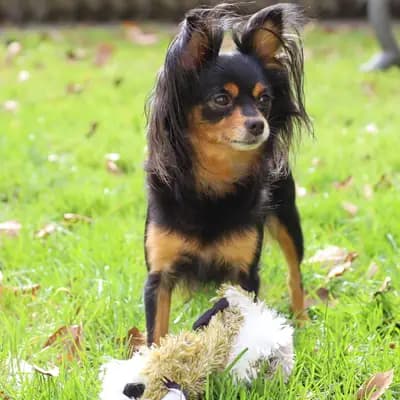
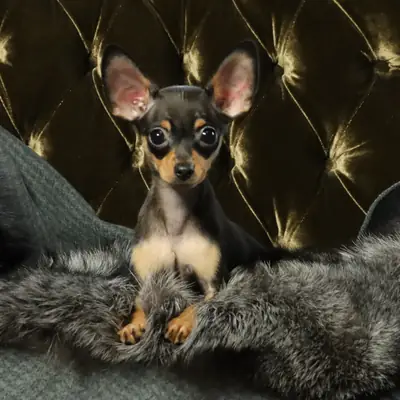
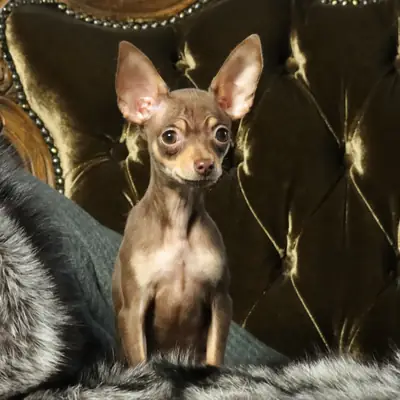
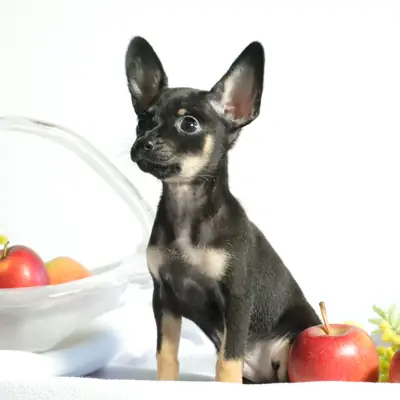
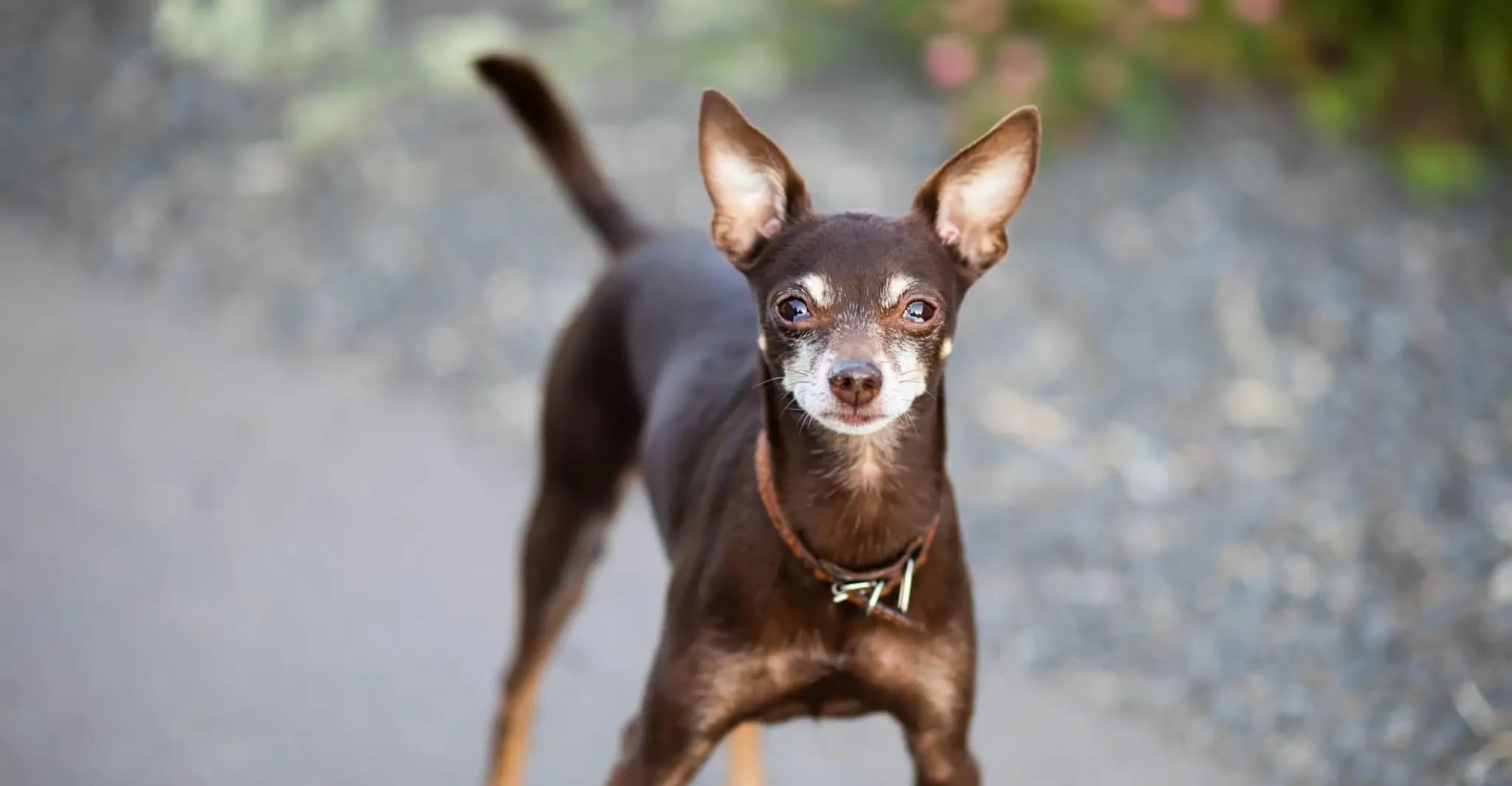
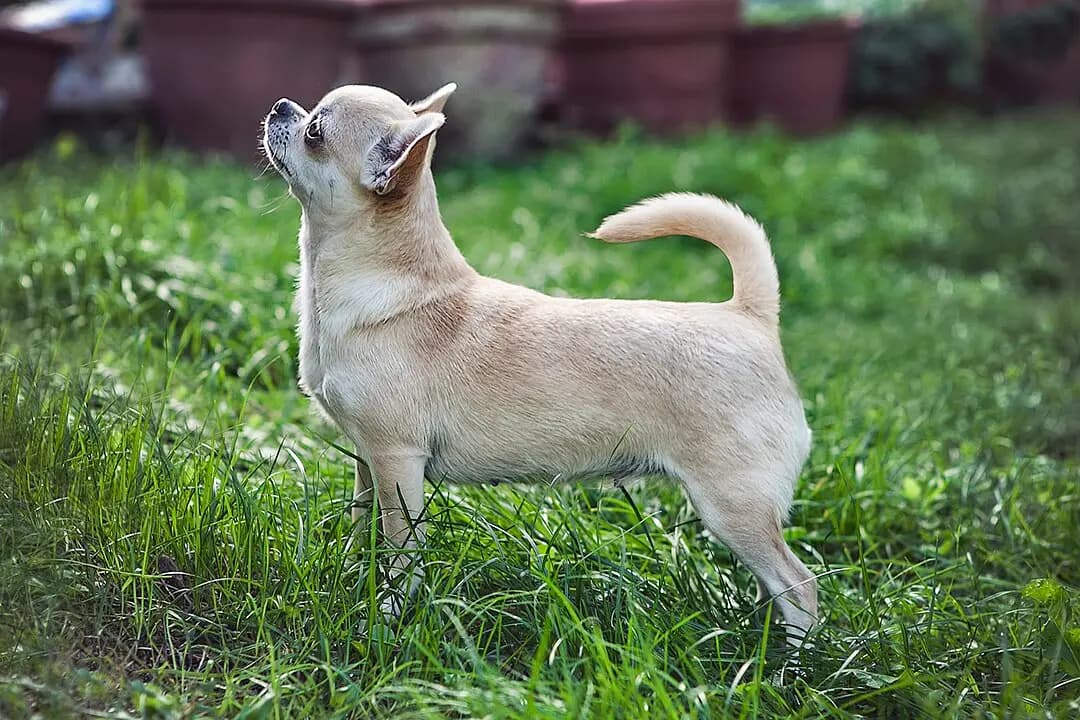
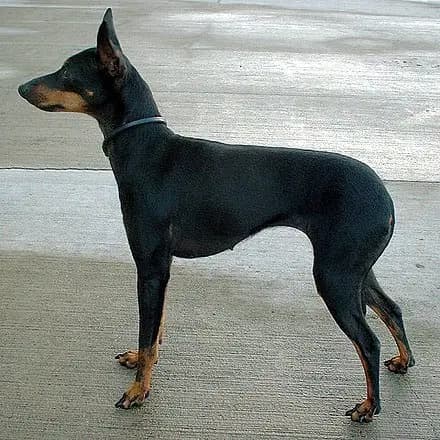
With a score of 5 out of 5 for both suitability for city life and family-friendliness, the Russian Toy fits seamlessly into almost any living situation – even a small city flat. His moderate energy level (3/5) makes him an ideal companion for varied walks and mental work, without you having to plan hours-long forced marches every day. With children (4/5) he is playful and friendly. Even so, children must understand that a dog weighing two to three kilograms is not a toy and has to be handled very gently.
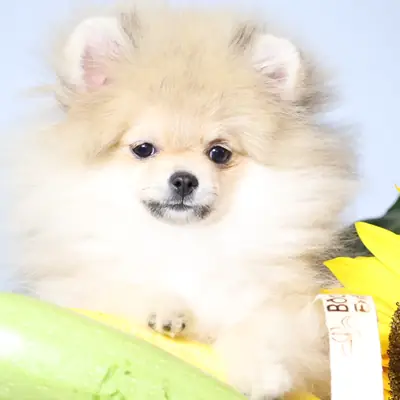
Grooming is wonderfully uncomplicated for both the smooth-haired and the long-haired variety, at 2 out of 5 for effort, and shedding is minimal (1/5). However, in both coat varieties the Russian Toy has no undercoat. For autumn and winter, you should therefore definitely plan for well-fitting dog coats, as your four-legged friend will get chilled immediately in wet and cold weather. When it comes to training (trainability 3/5) and dealing with much larger dogs (sociability 3/5), the clever little dog needs your confident leadership: take him seriously as a fully fledged dog, so that he does not start loudly defending you or himself out of insecurity.
Your checklist for the first conversation with the breeder
When buying a puppy, do not rely on mere assurances; check the facts on the spot. During your visit, pay particular attention to the following points:
- Patellar luxation results: Ask to see the written veterinary examination reports for the parent dogs, which prove that their knee joints were checked before they were used for breeding.
- Eye examination and line history: Ask specifically about the parents’ current clinical eye results and about any known cases of cataracts in the breeding line.
- Build of the parent dogs: Take a close look at the dam. She should weigh between 2 and 3 kg, stand steadily on her legs and have clean, strong teeth. Steer clear of breeders who use extremely tiny, fragile-looking parent dogs.
- Checking the puppy’s teeth: Ask the breeder to show you the puppy’s dental status and to explain what to look out for during the later change of teeth (milk teeth often remain in the small jaw).
- Behaviour of the dogs: A well-socialised Russian Toy is curious, lively and people-oriented. If the puppies or the mother seem panicky or apathetic, or tremble constantly from stress, that is a clear warning sign.
On HonestDog, a breeder’s profile only goes online once the breeder has completed registration: identity verification by ID and selfie, where applicable proof of club membership or a §11 permit, a knowledge test on breeding and animal welfare, and agreement to the HonestDog breeding standards, which rule out, among other things, breeding from dogs with traits that cause suffering. Any health test results for the parent dogs that breeders upload are shown directly on the profile; ask to see the original reports when you visit. Your next step: compare the profiles of the Russian Toy breeders on HonestDog, look at the health certificates they have uploaded and ask directly about the next litter.