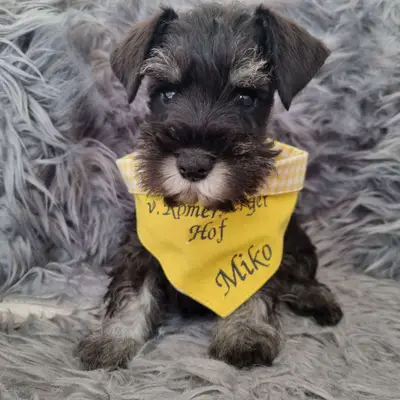
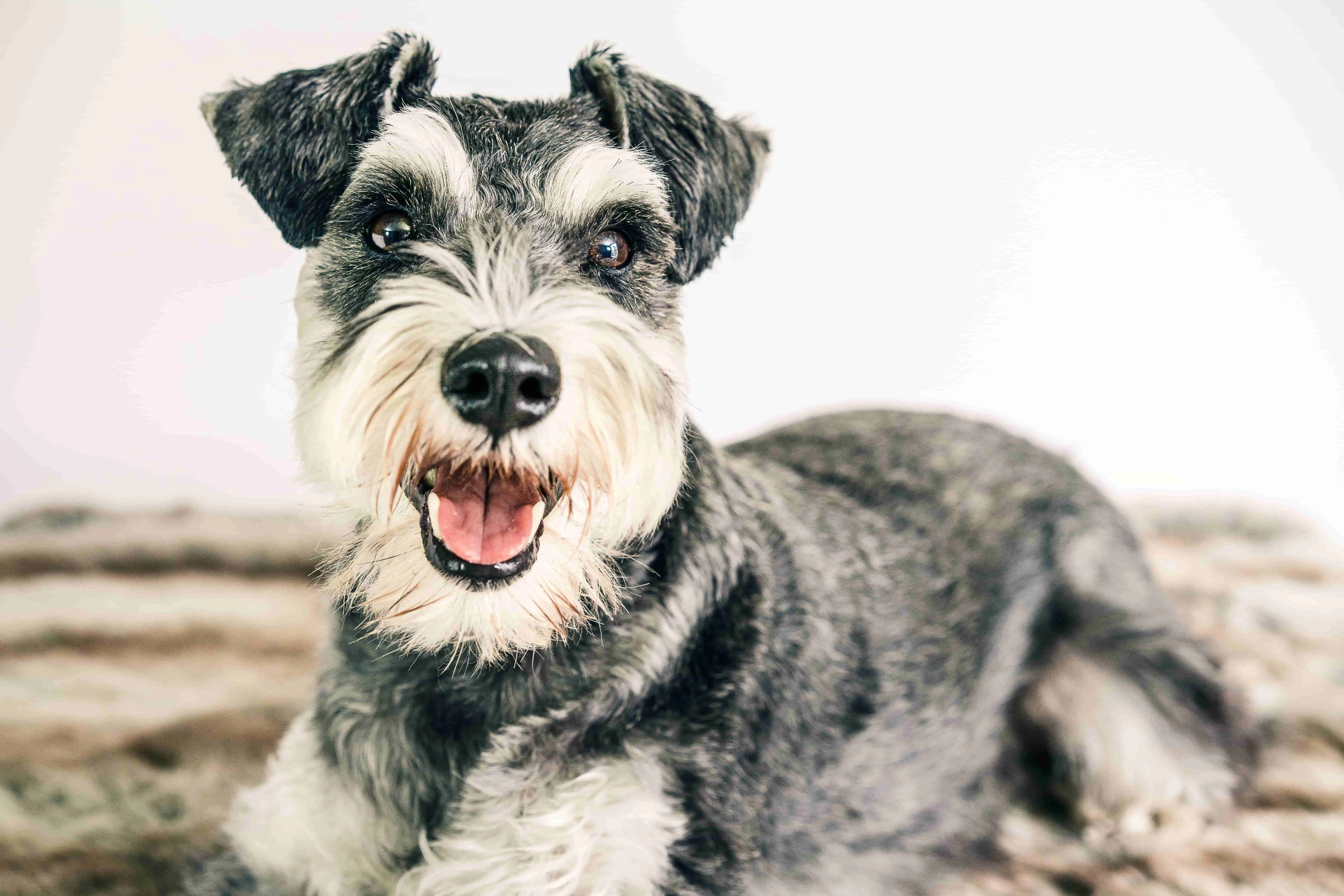
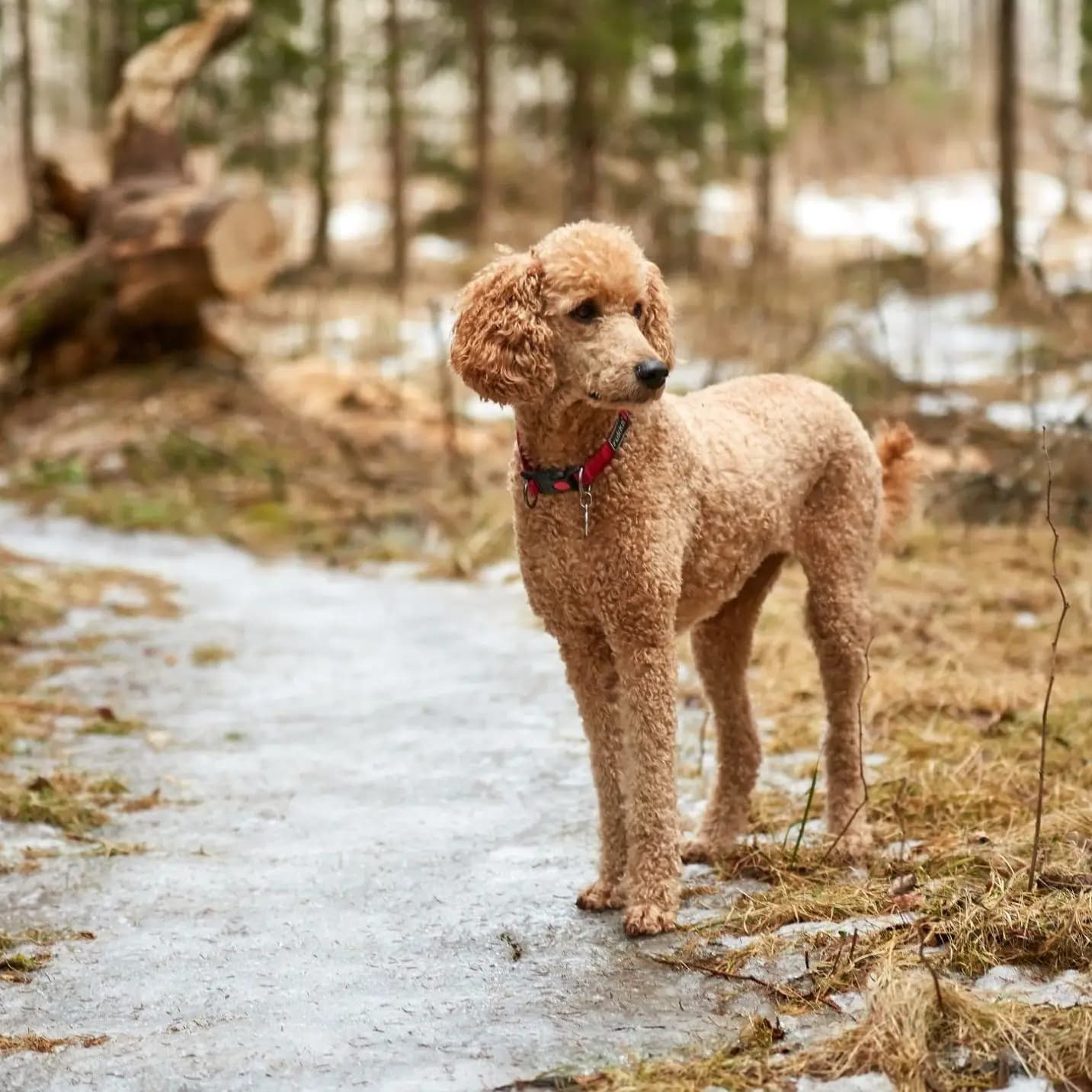
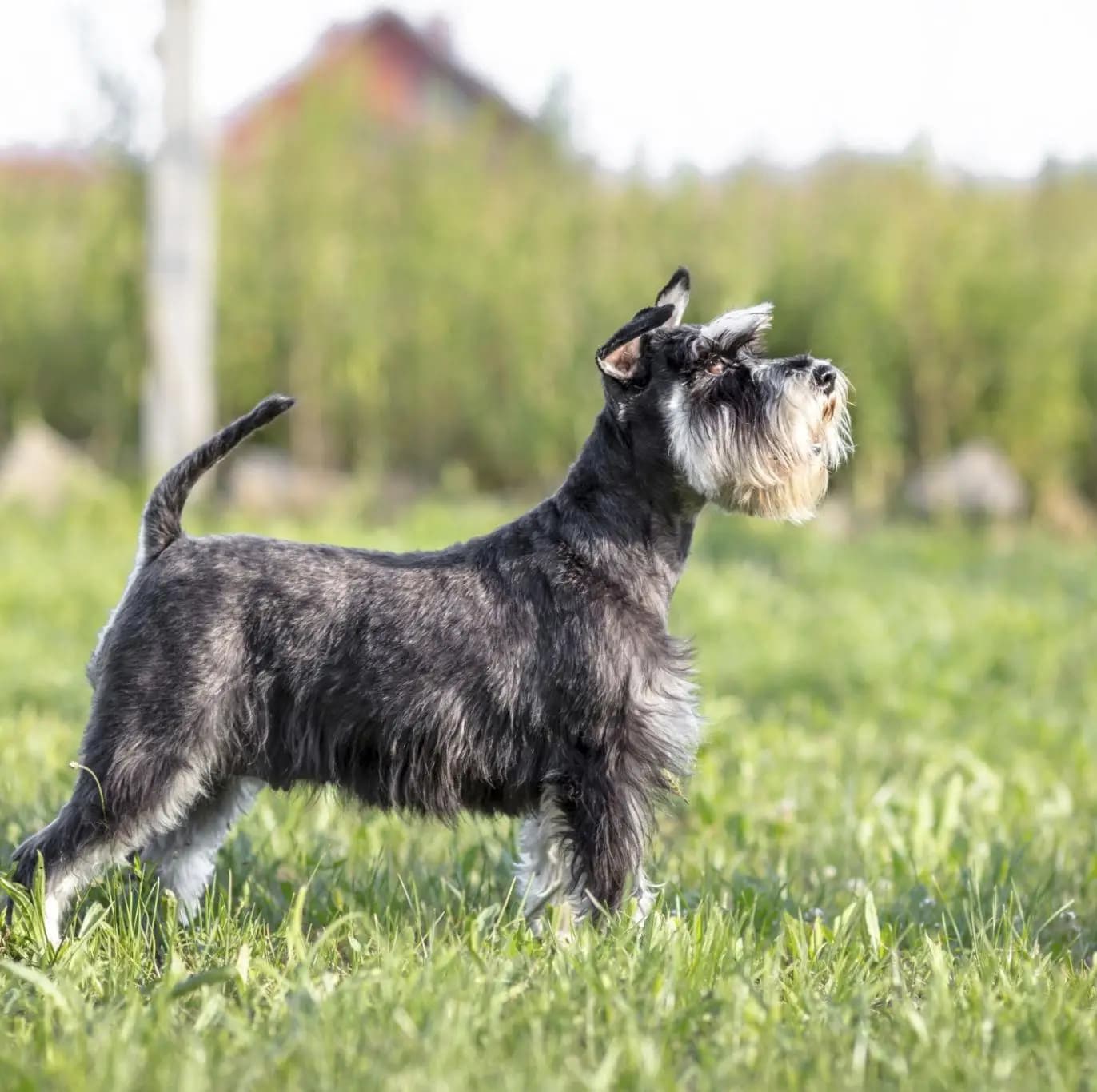
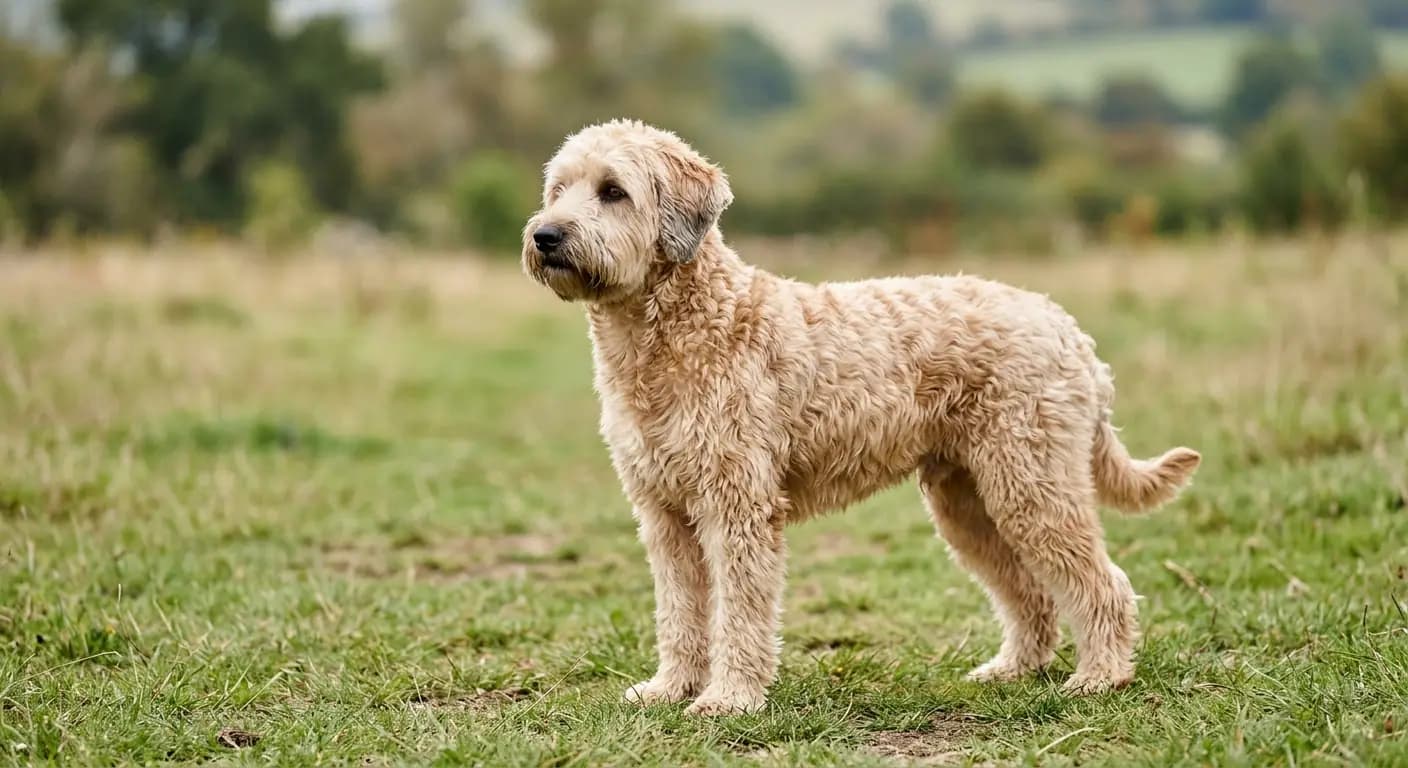
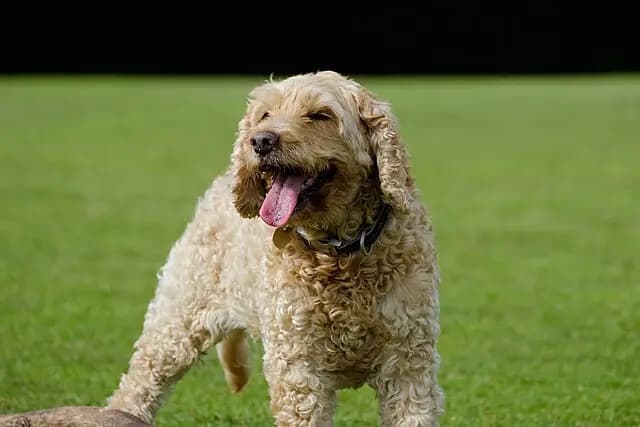
With its high family-friendliness (5/5) and very good compatibility with children and other dogs (4/5 each), the Schnoodle fits seamlessly into a lively family life. It also copes well in a city flat (suitability for city life: 4/5), as long as you cater for its medium energy level (3/5) and its alert mind. Thanks to its high trainability (4/5), it learns extremely quickly – so be sure to challenge it with search games, trick training or dog sports. At the same time, the Schnauzer heritage often shines through: it is watchful, reliably announces visitors and sometimes shows a charming stubborn streak that calls for loving consistency.
The biggest challenge in everyday life is coat care (grooming effort: 4/5). The Schnoodle sheds very little (shedding: 2/5), but the soft, often wavy or curly coat of Poodle wool and Schnauzer hair is very prone to matting. Plan on thorough brushing down to the skin several times a week, as well as regular clipping or trimming. If you are looking for a low-maintenance dog that you only need to give a quick rub-down after a woodland walk, you won't be happy with a Schnoodle.
Your checklist for the first conversation with a breeder
To make an informed decision when you visit in person, ask to see the following documents and pay attention to these details:
- Written results for the parent dogs: Ask to see the original laboratory report of the genetic test for von Willebrand's disease, as well as the veterinary examination report for patellar luxation.
- Joint screening: For medium-sized and large Schnoodles, ask about the parents' X-ray results for hip dysplasia (HD).
- Estimating adult size: As Schnoodles can weigh between 3 and 30 kg, meet the mother in person and ask for precise details of the size, weight and generation (e.g. F1 or F1b) of both parents.
- Coat quality and introduction to grooming: Look at the condition of the mother's coat and ask the breeder how the puppies are already being accustomed to the brush, the clippers and having the hair around their eyes trimmed.
- Checking temperament: Watch whether the puppies come up to you curiously and openly – a good sign of the typically people-oriented Schnoodle temperament, without excessive shyness or nervous yapping.
On HonestDog, a breeder profile only goes online once the breeder has completed registration: identity verification by ID and selfie, where applicable proof of club membership or a §11 permit, a knowledge test on breeding and animal welfare, and agreement to the HonestDog breeding standards, which among other things rule out breeding from dogs with traits that cause suffering (extreme breeding). You can see the parent dogs’ health tests uploaded by breeders directly in the profile; you should ask to see the original results when you visit. Your next step: compare the profiles of the Schnoodle breeders on HonestDog, look at the health records they have uploaded and ask directly about the next litter.