Finding a Standard Poodle breeder: what to look for in health and rearing
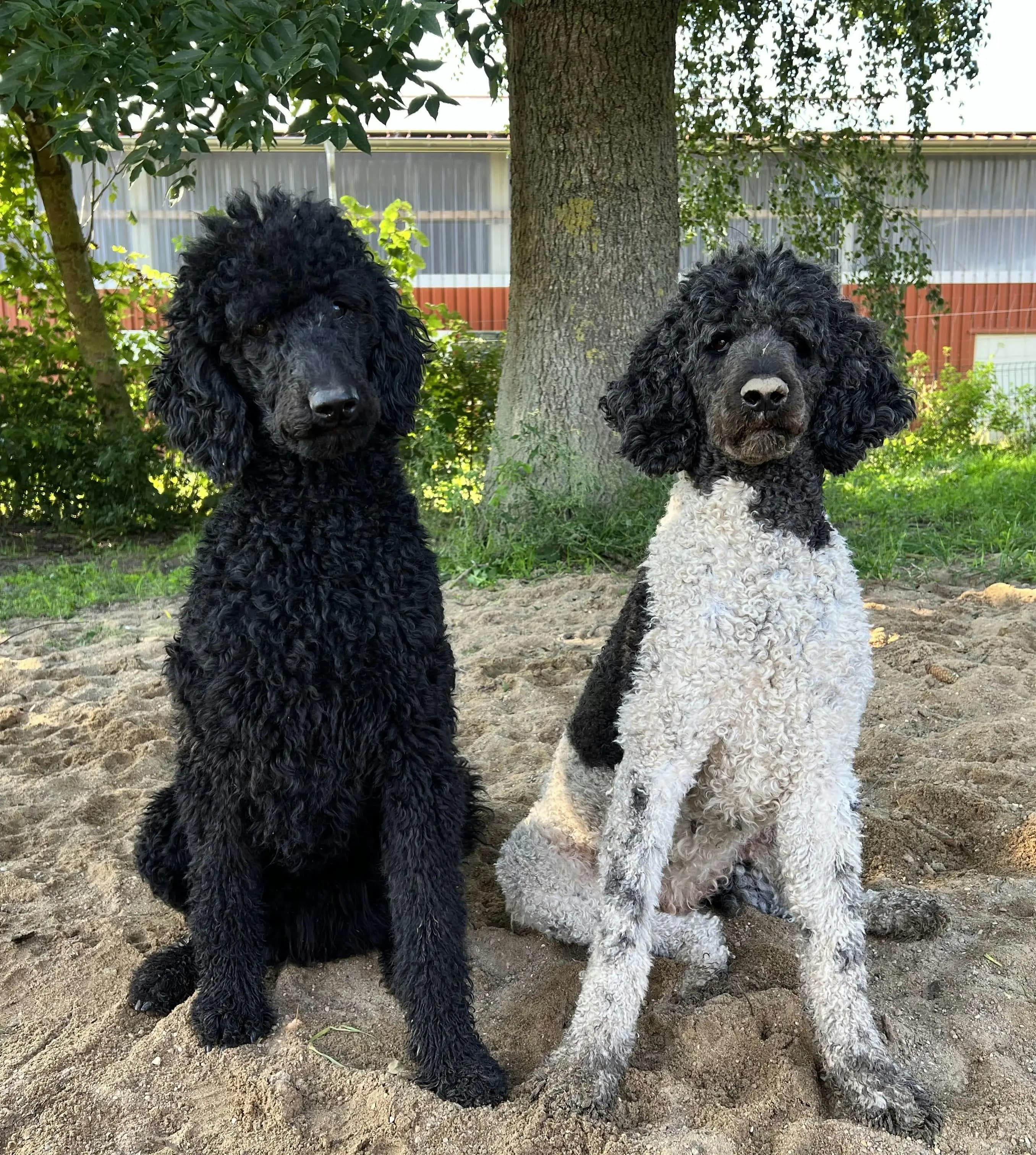
The Standard Poodle – known in German as the Großpudel or Königspudel ("king poodle") – combines a proud appearance with outstanding intelligence and a love of work. Originally bred for the demanding job of hunting ducks in water, this companion dog, standing 45 to 60 cm tall and weighing 18 to 28 kg, now delights active people and families alike. With a life expectancy of 12 to 15 years, choosing a puppy is a long-term decision. To help your dog reach that age in good health, choosing a competent Standard Poodle breeder is the most important step before you buy.
Why choosing the right breeder matters with the Standard Poodle
Standard Poodles are considered robust dogs at heart, but they have a clear breed-typical risk profile: the musculoskeletal system with its large joints, the eyes and the risk of life-threatening gastric torsion (bloat) often remain central issues throughout a dog's life. On top of that come genetic predispositions for neurological diseases and skin problems. Puppy mills pair dogs without knowing their genetic status or joint results. A health-focused breeder, by contrast, selects their breeding dogs strictly using X-rays, specialist clinical exams and targeted DNA tests to safeguard hereditary health in their line and significantly lower the risk of serious disease for the puppies.
Specific health tests: what a reputable breeder will show you
When buying a puppy, never rely on sweeping statements like "the parents have been checked by a vet". The Deutscher Pudel-Klub e.V. (Germany's Poodle club) requires breeding dogs to be examined for HD, patellar luxation, cataracts and prcd-PRA; the other tests are part of the breed's recommended health standard. Before you decide, ask to see the original written results of these tests for both parents:
- Joint exams (X-ray and clinical): Because of its size, the Standard Poodle is prone to hip dysplasia (HD) and elbow dysplasia (ED), which are assessed with official X-rays. In addition, a clinical palpation checks for patellar luxation (the kneecap slipping out of place). Deliberately pairing parents with good results lowers the risk of painful joint problems in old age.
- Eye exams and eye DNA tests: A veterinary ophthalmologist examines the parents clinically for cataracts, generalized progressive retinal atrophy (PRA) and eyelid malpositions such as ectropion and entropion. In addition, there's an established DNA test for the specific progressive rod-cone degeneration (prcd-PRA).
- Neurological DNA tests: Precise DNA tests exist for neonatal encephalopathy with seizures (NEWS) and degenerative myelopathy (DM). They show whether a parent dog is genetically clear, a carrier or affected. A reputable breeder pairs carriers only with tested, clear partners. No puppy can then inherit any of these mutations from both parents.
Sebaceous adenitis – an inflammatory disease of the skin's sebaceous glands – also plays a role in the Standard Poodle. Because there's no simple DNA test for it, careful breeders minimize the risk through detailed knowledge of their ancestral lines.
Signs of responsible rearing
A very clever, active and people-oriented dog like the Standard Poodle needs to be fully part of the family from the start. Make sure the puppies grow up in the house and get to know everyday noises. Because the dense, curly coat with no undercoat hardly sheds but requires the highest level of grooming (5/5), a good breeder gets the puppies used to the brush, the clippers and having their paws and eye area trimmed early and playfully.
6 specific questions for the Standard Poodle breeder
Use your first conversation or your visit to ask the breeder these specific questions:
- Can you show me the official X-ray evaluations for HD and ED and the patellar luxation results for both parents?
- Are there current clinical eye exam forms for the parents (including cataracts) and the DNA test for prcd-PRA?
- What is the parents' genetic status for neonatal encephalopathy (NEWS) and degenerative myelopathy (DM)?
- Have there been any cases of sebaceous adenitis, eyelid malpositions (ectropion/entropion) or gastric torsion in your lines?
- How do you get the puppies used to regular clipping and grooming in their first weeks?
- What advice will you give me on joint-friendly exercise in the first year?
Warning signs: how to spot a puppy mill straight away
A responsibly bred Standard Poodle has its price: budget between 1,500 and 2,800 EUR. Turn away immediately if a seller advertises puppies at supposed bargain prices without proof of pedigree. Other clear warning signs are a lack of official evaluation forms for hips and eyes, excuses when you ask about DNA certificates, or refusal to let you meet the mother. You should also walk away if the puppies grow up purely in kennels without family contact, or if the seller doesn't ask about your living situation and how much time you have for the intensive grooming and mental exercise.
On HonestDog, every breeder goes through a sign-up process before their profile goes live: an identity check with ID and selfie, proof of club membership or a §11 permit (the breeding license under Germany's Animal Welfare Act) where applicable, a knowledge test on breeding and animal welfare, and agreement to the HonestDog breeding standards – including no breeding with extreme-breeding traits and no breeding dogs under 18 months. Without a verified §11 permit, a breeder can list at most two breeding females there, and you can flag anything odd on a breeder profile directly via "Report content". When you visit, ask to see the parents' original results. You'll find current litters among the Standard Poodle puppies on HonestDog.