Rhodesian RidgebackSimilar profile

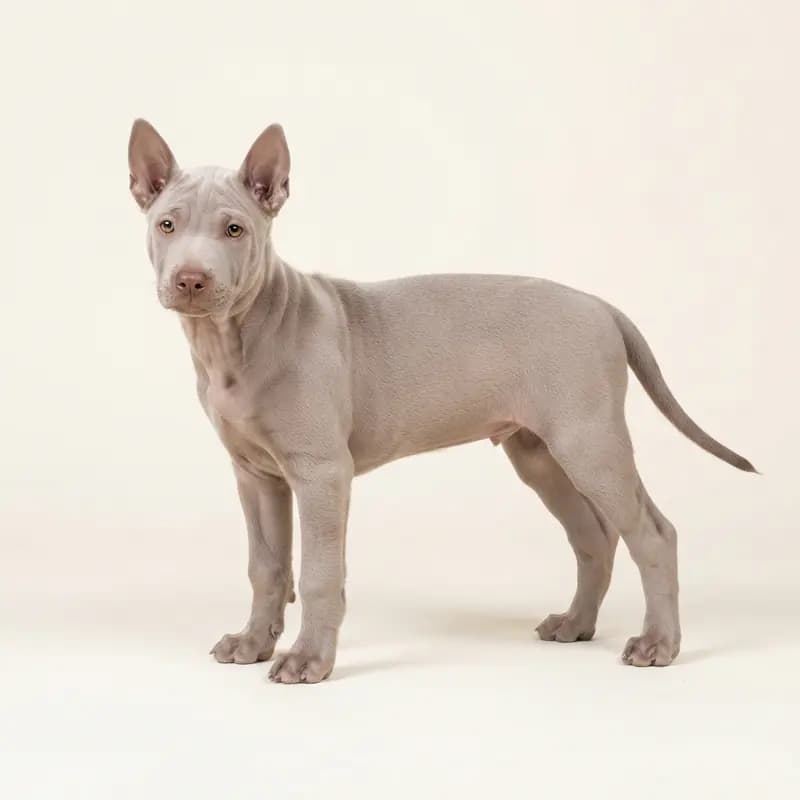
The Thai Ridgeback is an athletic, extremely independent primitive breed—bred as a self-sufficient hunter and guardian that survived in isolated regions of Thailand and prefers to make its own decisions rather than waiting for commands.
How the health grade is calculated
Sources for required breeding screenings. Club für Exotische Rassehunde e.V.
Self-check
Answer 6 quick questions about your everyday life and see how well the Thai Ridgeback fits you — including an honest cost estimate per month, per year, and across the dog's lifetime.




At a glance
The essentials — key facts, traits, and health priorities — before you dive deeper.
Lifespan
10–12 yrs
Shoulder height
51–61 cm
Weight
16–34 kg
Practical
Temperament
Daily life
What matters most
Especially with a Thai Ridgeback, choosing the right breeder is the single most important decision you'll make. Serious breeders consistently test the parents for inherited conditions, prioritize healthy early socialization, and stay accountable long after handover. A cheap puppy without health screening tends to become the most expensive dog later on.
See HonestDog breeder standards →Colors & coat
The coat colors that occur in the Thai Ridgeback — including which ones fall outside the breed standard and which carry genetic risk.
Eye colors
 Brown
 Amber
Coat type
 Short
 Smooth
The real vibes check
A Thai Ridgeback is not a dog that wants to please you—he is a cat-like roommate on equal footing who must trust you before he forms a bond. If you respect his aloof nature and deep-rooted hunting instinct as his operating system, he will give you unconditional, quiet loyalty. However, if you try to force him into the mold of a classic companion dog, you will hit a wall every single day.
The Thai Ridgeback can be a loyal, loving pet. As a guard dog, he is naturally protective of his home and can be reserved and suspicious of strangers. Thai Ridgebacks need a patient, consistent and experienced owner who is knowledgeable about dog behavior; they are not for dog beginners. The Thai Ridgeback is robust and active and can jump excellently. He is highly intelligent, has a strong survival instinct and is a loyal family dog. Rather atypical for large dogs like the Thai Ridgeback Dog, the breed is very active and the energy level is correspondingly high. Lots of outdoor running, exercise, play and sport are essential if you decide to get a Thai Ridgeback Dog puppy. You should also be aware that the breed sheds. But don't worry, because with the right care and a fur brush, all the hair won't cause you any problems. Do you already have some experience with dogs? Perfect! Because for this breed it is important to have certain previous knowledge. The average life expectancy of the Thai Ridgeback Dog is approximately 13 years.
The Thai Ridgeback is an independent and intelligent dog with a strong protective instinct. It is characterized by its independence and strong character, which requires consistent and experienced leadership. Despite its vigilance towards strangers, it is loyal and affectionate towards its family. This dog needs a lot of exercise and mental stimulation to remain balanced. Due to its natural hunting and protective drive, early socialization and consistent training are particularly important. The Thai Ridgeback is willing to learn but also shows a certain stubbornness, which calls for patience and consistency. Its pronounced need for movement makes it an ideal companion for active people who can provide it with sufficient exercise. It is not a typical lap dog but prefers clear structures and tasks. With the right leadership, the Thai Ridgeback becomes a loyal and reliable partner who convinces both as a guard dog and as a family dog.
| Watchfulness A natural watchdog with real protective instinct. | High |
| Openness to Strangers Careful around unfamiliar people — thaws slowly. | Cautious |
| Hunting or Herding Drive This drive runs deep — no amount of training eliminates it. | Very strong |
Fun Fact!
The Thai Ridgeback is known for his jumping ability and agility, making him a natural athlete. He can jump incredibly high and is very skilled in his movement.
The Thai Ridgeback can be a loyal, loving pet. As a guard dog, he is naturally protective of his home and can be reserved and suspicious of strangers. Thai Ridgebacks need a patient, consistent and experienced owner who is knowledgeable about dog behavior; they are not for dog beginners. The Thai Ridgeback is robust and active and can jump excellently. He is highly intelligent, has a strong survival instinct and is a loyal family dog.
Thai Ridgebacks are confident and independent dogs that require consistent but loving training. They are very alert and make good guard dogs, but show a close bond and loyalty to their family. Due to their strong hunting drive and independence, early socialization is important to enable harmonious coexistence with other dogs and pets. Thai Ridgebacks need a lot of exercise and mental stimulation, which makes them especially suitable for active people or families with enough time outdoors. They are only conditionally happy in city apartments, as they need space to explore and run. They are usually compatible with children but should always be supervised due to their temperament and strength.
Gets on well with different people and varying routines.
Gets on well with children — with adult supervision.
Can get on with dogs it knows — strangers are a different story.
Can manage in the city, but only with very active owners.
Owning a dog is a privilege, but it's also a real responsibility. Before you bring one into your life, be honest with yourself about the commitment it takes.
The Thai Ridgeback is an independent and intelligent dog that requires consistent but loving training. Compared to Labradors or German Shepherds, it often shows greater independence and can sometimes be stubborn, which is why patience and perseverance in training are especially important. The Thai Ridgeback learns best through positive reinforcement and clear structures, with short, varied training sessions being useful to maintain its attention. It needs mental and physical challenges to stay balanced but is less focused on constant retrieving or intensive dog sports than Labradors or Shepherds. Frustration tolerance should be encouraged early on, as the Thai Ridgeback tends to make its own decisions and does not always obey immediately. Good socialization and building a trusting bond are essential to positively channel its protective instincts and independence. Overall, the Thai Ridgeback requires an experienced owner who respects its peculiarities and approaches it with consistency and patience. Those who keep this in mind will have a loyal, watchful, and versatile companion who brings much joy with the right support.
The Thai Ridgeback requires a balanced diet with high-quality food that contains all essential nutrients. Due to its active nature, it is important to monitor calorie intake to avoid overweight. A protein-rich diet supports its muscle development and overall health. The coat of the Thai Ridgeback is short and dense, which makes grooming relatively easy. Regular brushing, about once a week, is sufficient to remove loose hair and keep the skin healthy. Increased shedding can occur during the coat change, in which case more intensive brushing is advisable. The Thai Ridgeback is accustomed to tropical climate conditions and copes well with warm temperatures. However, in cold weather, it needs additional protection, as its short coat provides little insulation. Make sure to protect it accordingly in extreme weather conditions.
| Care Level Occasional brushing is all it takes. | Very low-maintenance |
| Exercise Needs Working-dog energy that needs burning off every single day. | High-drive |
| Shedding Hair everywhere, always — no white clothing survives. | Very heavy |
| Trainability Bred to make decisions without human direction. | Very independent |
Our experts are still reviewing this information. Spotted something wrong? Email us at info@honestdog.de.
Solid, watch carefully
Health grade
In the Thai Ridgeback, breed-typical risks exist for congenital dermoid sinus as well as joint disorders such as hip dysplasia (HD) and elbow dysplasia (ED). The Club für Exotische Rassehunde e.V. prescribes for breeding approval that parent animals must be free of dermoid sinus, have an HD rating from A to C (C only mated with A or B), ED 0 to 2, and patellar luxation (PL) from 0 to 1, and undergo a dental and bite evaluation. Responsible breeders additionally test for progressive retinal atrophy, with carriers only permitted to be mated with clear partners. Before purchasing a puppy, insist on seeing the complete official certificates for dermoid sinus, HD, ED, and PL of the parent animals.
Grade is relative to other breeds — AI-assisted and editorially reviewed.
Methodology and data: HonestDog Dog Breed Health Report 2026
What matters most for this breed
Tap any item to see details.
With joint-friendly rearing and a watchful eye on skin and coat, this athletic dog usually stays fit and active for a long time.
Responsible breeders have parent animals examined for dermoid sinus, HD, ED, and patellar luxation (PL), and ideally tested for progressive retinal atrophy, in order to breed healthy puppies.
Note: This health overview is AI-assisted and editorially reviewed. It is for orientation only and does not replace veterinary advice.
What matters most for this breed — what's common, how much it affects the dog's life, and how to protect yourself as a buyer.
Tap a body region to see the inherited conditions linked to it.
The three most important risks
Pick a region on the map to explore other areas.
Tier 1 reflects the tests Club für Exotische Rassehunde e.V. actually mandates. Tiers 2 and 3 show how responsible breeders go beyond.
Club standard. Club für Exotische Rassehunde e.V. requires these tests for breeding approval. Ask any reputable breeder for the results.
Not health tests, but required for breeding: the club asks for these results too. They don't count toward the risks or the rating.
DNA-Identitätsnachweis
Required by Club für Exotische Rassehunde e.V.
Acceptable result: DNA-Profil eingereicht
Dental and bite evaluation
Required by Club für Exotische Rassehunde e.V.
Acceptable result: Bestimmung des Zahnstatus mittels CER-Zahnschema
Note: This health overview is AI-assisted and editorially reviewed. It is for orientation only and does not replace veterinary advice.
A Thai Ridgeback costs around ~€180 per month (€90 – €330, depending on your setup). The first year adds up to roughly ~€4,940 including purchase, equipment and puppy school; across the dog's life (11 years) it comes to about ~€26,060.
With surgery cover, running costs come to about ~€180 per month — in return, your share of a major operation drops from several thousand euros to around 20 percent.
Per month
~€180
In the first year
~€4,940
Across the dog's life
~€26,060
Estimated purchase price from a breeder: €1,500 – €2,500
Estimate at a mid-range setup (suburban, dry food, 1–2 hours of daily exercise), average German prices, as of July 2026.

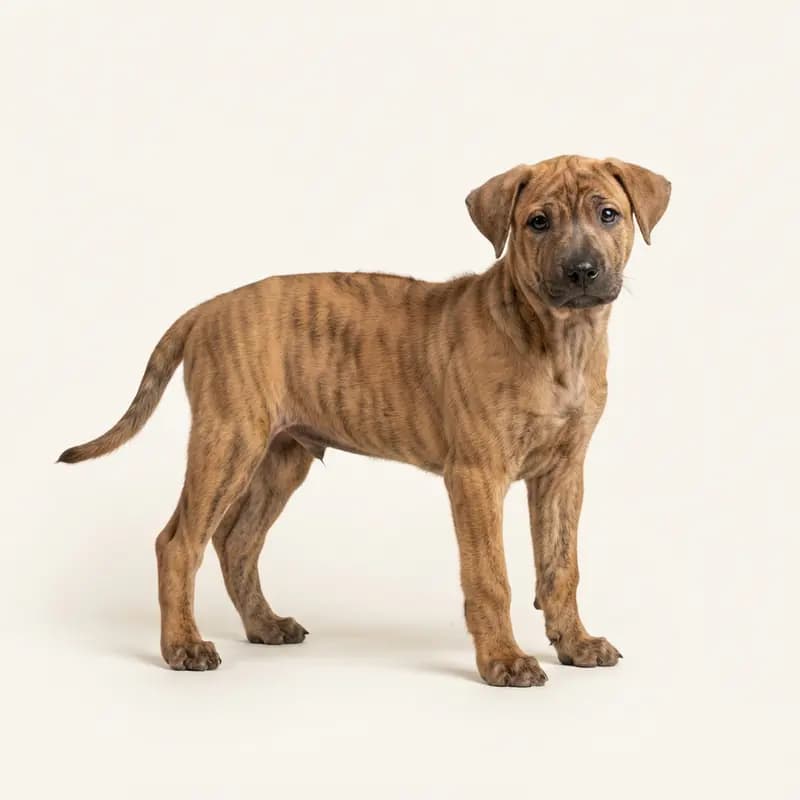
 Illustrative image
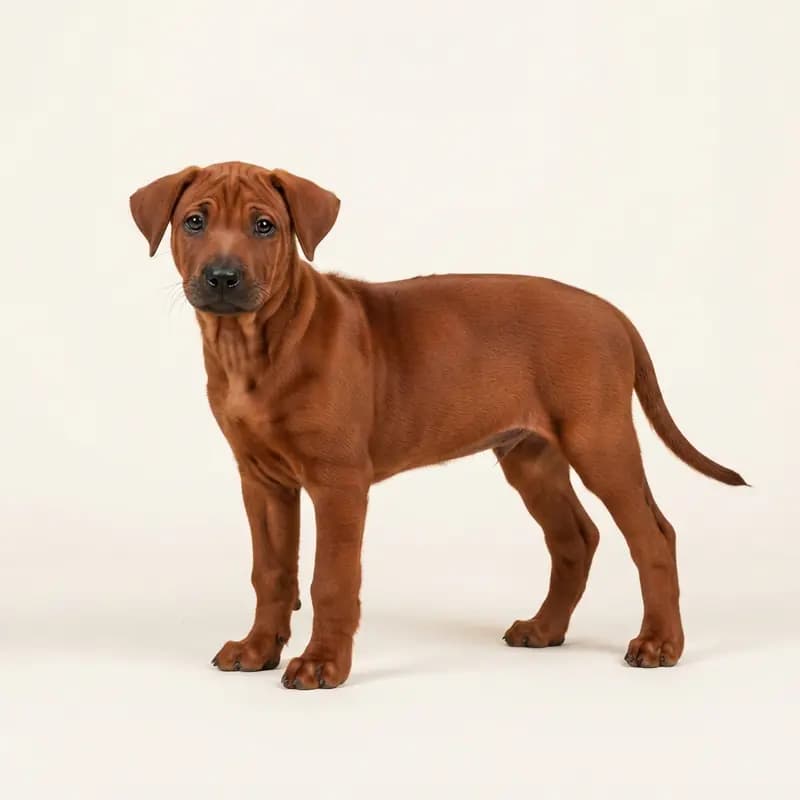
 Illustrative image
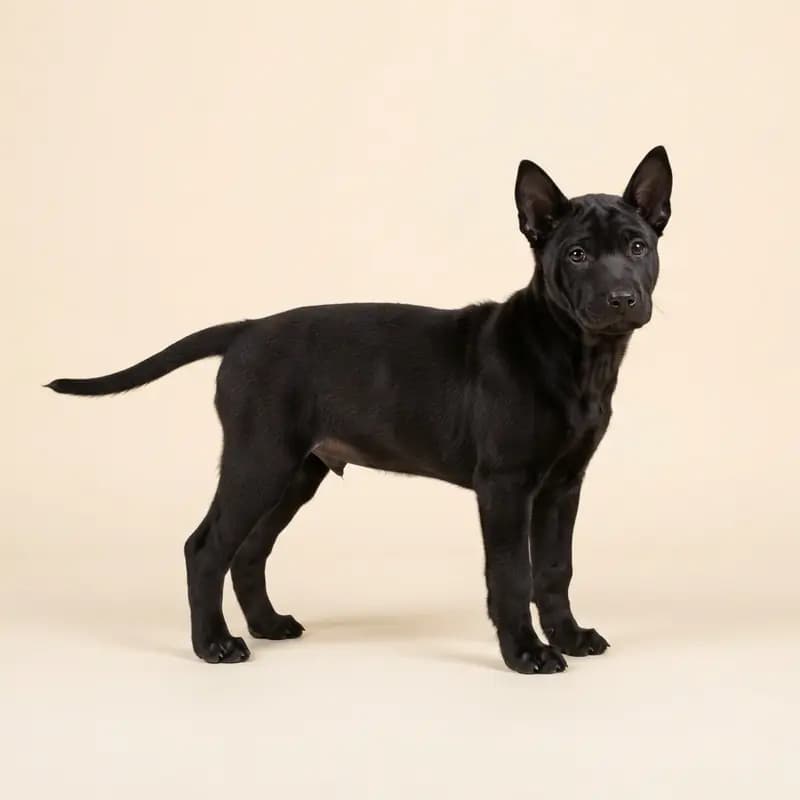
 Illustrative image
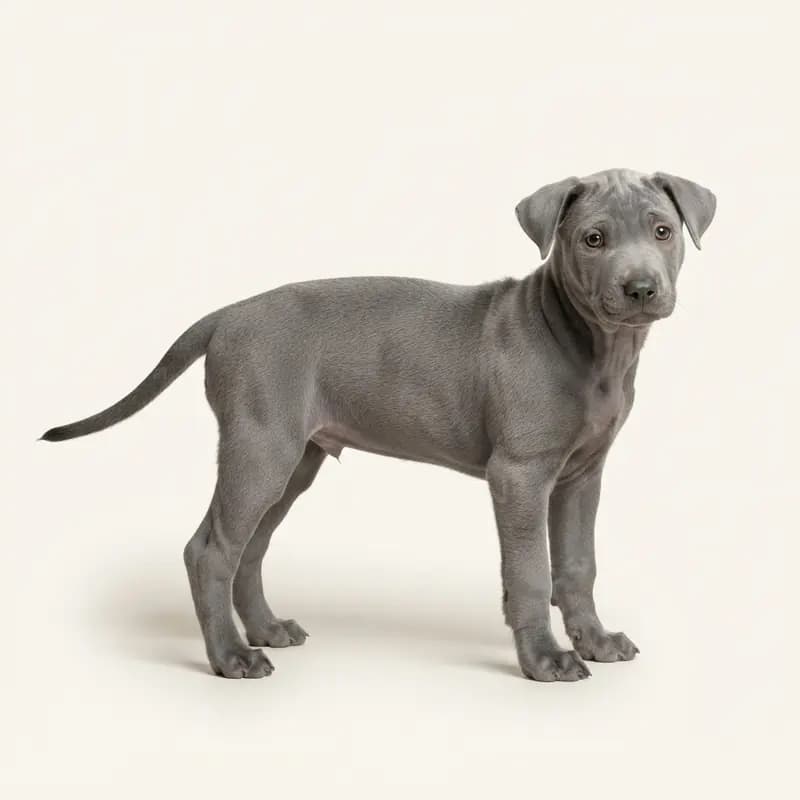
 Illustrative image
The history of the Thai Ridgeback goes back many centuries and is closely linked to the culture of Thailand. These dogs were originally kept by the indigenous peoples as guard and hunting dogs. Particularly striking is the characteristic ridge of hair along the back, which gives the breed its name. The Thai Ridgeback is one of the oldest dog breeds in Asia and has been bred over generations in rural areas of Thailand. Only in recent decades has the breed gained international attention, while preserving its original character and robustness.
The Thai Ridgeback was used as a hunting and guard dog, known for its distinctive dorsal crest.
Thailand
Antike
At home with the family, owners describe the Thai Ridgeback as a very loyal, cuddly and clean housemate. Given enough exercise, the breed is usually surprisingly calm indoors, almost catlike, and likes to stay close to its people. These dogs often bond very closely with one or two particular people, whom they trust unconditionally.
At the same time, many owner reports point out that the Thai Ridgeback is a primitive breed with a strong wariness of strangers. Not every dog greets visitors happily; instead many are distant, reserved or watchful. Children and hectic everyday situations also call for foresight: because they are highly reactive and sensitive, many Thais avoid overly chaotic situations and need a dedicated retreat where they can rest undisturbed.
Sources:dasfutterhaus.atelbpfoten.nettierwelt.chfressnapf.dethaigermoon.de
When it comes to training and handling, owners keep stressing that the Thai Ridgeback is not a dog with a classic "will to please." Owners report very independent thinking: the dog questions whether a cue makes sense and, when in doubt, decides for itself how to respond. Any kind of pressure, harshness or loud scolding usually leads to mistrust and complete refusal in this sensitive primitive dog. Owners agree that working together successfully only happens through patience, positive reinforcement and a dependable, calm bond.
On top of that, the breed has very subtle, primitive body language that inexperienced people or unfamiliar dogs at the dog park often misread. Owners therefore agree that the breed is not a dog for beginners. Handling its mix of caution, self-confidence and stubbornness with confidence takes a good feel for dog behavior.
Sources:elbpfoten.nettierwelt.chthaigermoon.depetbook.deedogs.de
On walks and outdoor activities, owners find the biggest challenge in the breed's strong hunting and sighthound-style chase behavior. Thai Ridgebacks react in a flash to visual movement; wildlife or birds taking off rarely escape their notice. Many owners therefore report that reliable off-leash freedom in areas with a lot of wildlife is possible only rarely or after years of intensive training, which is why the long line often stays a constant companion.
Owners also report the dogs' surprising athleticism, agility and jumping power, which lets them clear many standard fences with ease or wriggle cleverly out of simple harnesses. On the health side, the breed is considered naturally hardy with an easy-care coat, but owners and people who follow the breeding repeatedly point to breed-typical issues such as sensitivity to cold in winter (because it lacks an undercoat) and the occurrence of skin and spinal conditions (such as dermoid sinus) that buyers need to watch for before getting a dog.
Sources:dasfutterhaus.atelbpfoten.netfressnapf.dethaigermoon.demartinruetter.com
Paraphrased from real owner reports · translated from German
The Thai Ridgeback is an active dog that needs plenty of exercise and mental stimulation. Research the temperament, grooming needs, and space requirements before deciding.
The average life expectancy of a Thai Ridgeback is 10-12 years. With proper care and regular vet visits, your dog can live a long, healthy life.
Thai Ridgeback grooming requirements include regular brushing, nail trimming, and dental care. HonestDog provides detailed grooming tips for every breed.
The Thai Ridgeback can be a great family dog. Proper training and socialization are key. HonestDog provides family suitability information for every breed.
The Thai Ridgeback comes in these colors: Red, Black, Blue, Isabella, Fawn, Brindle. Colors that fall outside the breed standard are marked as such on the breed page.
Showcase your kennel on HonestDog and reach families searching for a responsibly bred Thai Ridgeback.