BrandlbrackeSame FCI section
The Tiroler Bracke is a robust, sure-footed scent hound (Laufhund) and blood tracker (Schweißhund) — bred for demanding tracking work in the mountains, where it must hunt completely independently and with a distinct baying sound (spurlaut). A highly specialized professional that is usually placed exclusively in the hands of hunters.
How the health grade is calculated
Sources for required breeding screenings. Klub Tirolerbracke e.V.
Self-check
Answer 6 quick questions about your everyday life and see how well the Tyrolean Hound fits you — including an honest cost estimate per month, per year, and across the dog's lifetime.
At a glance
The essentials — key facts, traits, and health priorities — before you dive deeper.
Lifespan
12–14 yrs
Shoulder height
42–50 cm
Weight
15–25 kg
Practical
Temperament
Daily life
What matters most
Especially with a Tyrolean Hound, choosing the right breeder is the single most important decision you'll make. Serious breeders consistently test the parents for inherited conditions, prioritize healthy early socialization, and stay accountable long after handover. A cheap puppy without health screening tends to become the most expensive dog later on.
See HonestDog breeder standards →Colors & coat
The coat colors that occur in the Tyrolean Hound — including which ones fall outside the breed standard and which carry genetic risk.
Eye colors
 Brown
Coat type
 Short
 Double coat
The real vibes check
A Tiroler Bracke is not a dog for the local dog park, but a highly specialized colleague for the forest. When it picks up a trail, its brain switches into work mode — and from that moment on, you are just a passenger. If you don't provide an outlet for this primal passion, you will spend more time searching for this dog on walks than leading it.
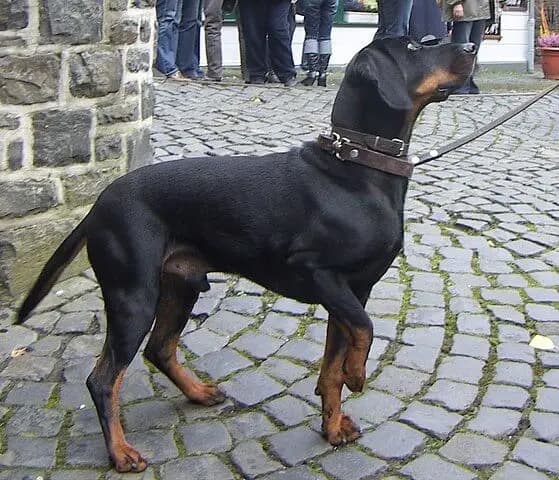
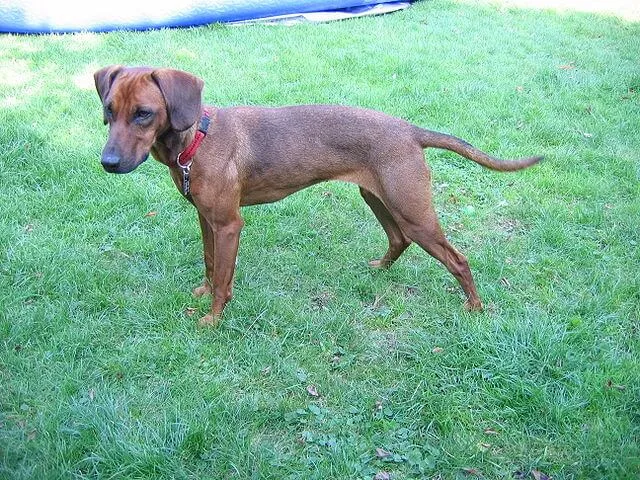
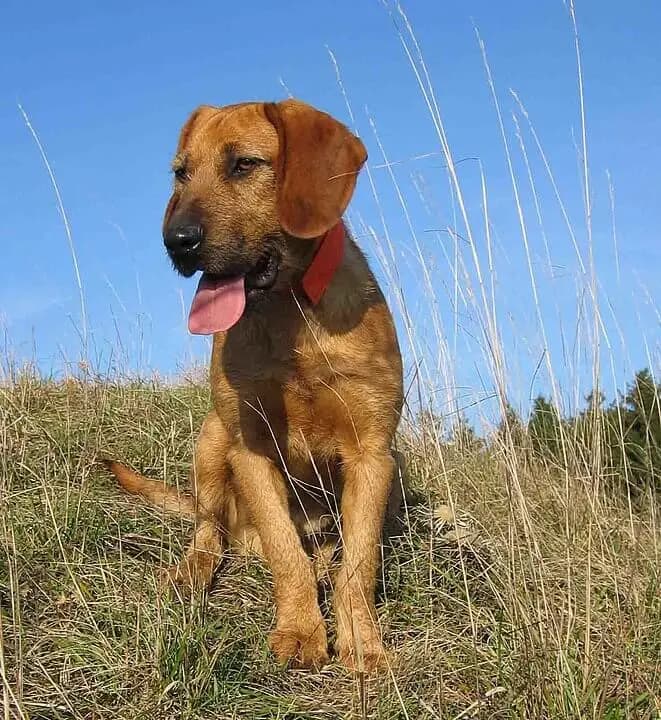
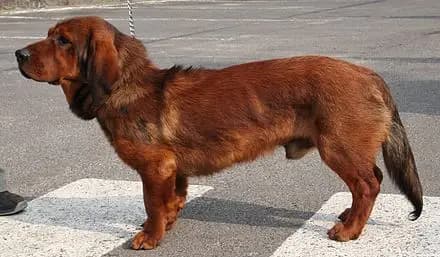
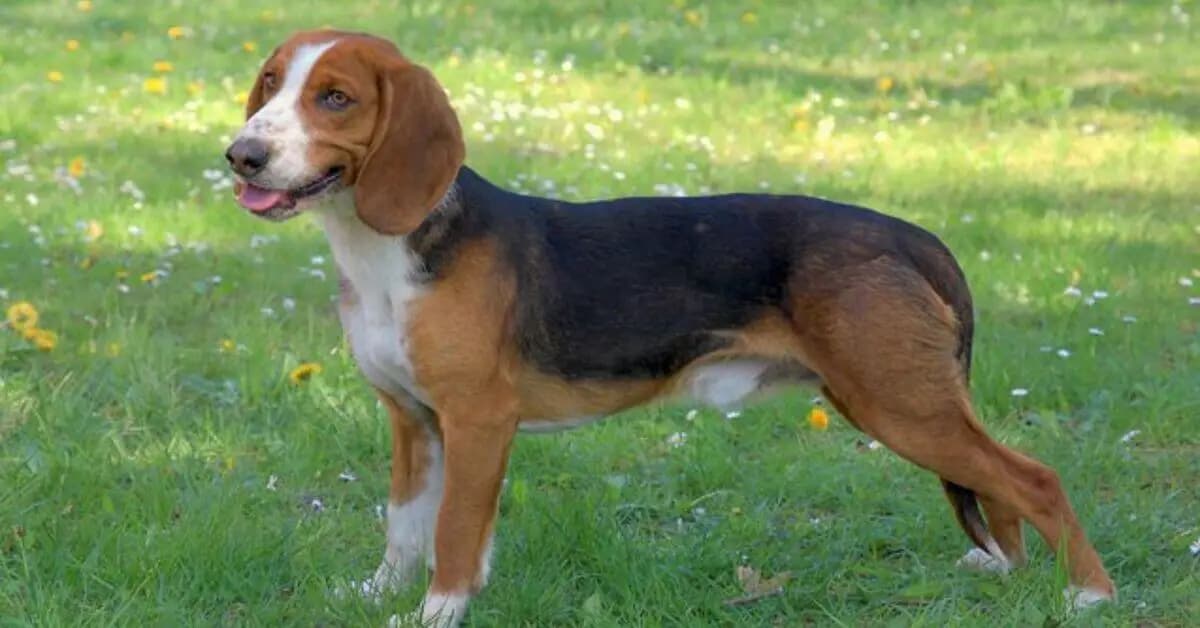
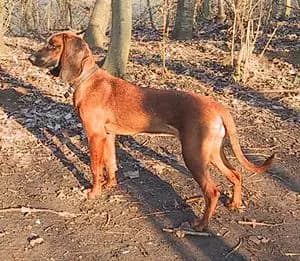
The Tiroler Bracke, also known as the Tyrolean Hound, is a medium-sized, muscular and athletic dog. It belongs to FCI Group 6, the scent hounds, bloodhounds and related breeds. Their appearance is striking and impressive, with a combination of proud posture and powerful physique. Their ears are medium-sized, wide and drooping, giving the dog an attentive and friendly facial expression. The eyes are dark and vivid, and the tail is long and carried either straight or slightly upward. The Tyrolean Hound is known for its extraordinary endurance and good sense of smell.
The Tyrolean Bracke is a breed with a versatile and balanced character. She is known for her loyalty and devotion to her family, but also her independence and natural hunting instinct. As a traditional hunting dog, the Tyrolean Hound is naturally active and persistent. She loves being outside and has a strong urge to move. She is not hyperactive, but she needs regular physical and mental activity to be happy and content. A long hike in nature, a game of fetch or an exciting search for clues can make them happy. Despite its independence, the Tyrolean Hound is a very people-oriented breed. She bonds closely with her family and is always ready to please her people. She is also good with children and can be a wonderful family dog provided she receives the attention and activity she needs. The Tyrolean Bracke is an intelligent dog that learns quickly and enjoys mastering new tasks. She can stay alone just fine as long as she has been kept sufficiently busy and her people aren't away for too long. Like all dogs, however, she should be trained to stay alone from an early age. Regarding their hunting instinct, it should be noted that the Tyrolean Bracke was originally bred for hunting and therefore has a strong hunting and prey instinct. She is always on the lookout for interesting smells and can be easily distracted when she picks up a scent. A securely fenced garden and leash management in areas with game are therefore essential. Despite her hunting instinct, however, with good upbringing and training, she can learn to control her behavior. The Tyrolean Hound is also an alert dog. She is not aggressive, but she will defend her family and territory if she feels it is necessary. She is likely to bark if she notices anything unusual and can therefore also serve as a good guard dog.
| Watchfulness A natural watchdog with real protective instinct. | High |
| Openness to Strangers Neither pushily friendly nor suspicious. | Neutral |
| Hunting or Herding Drive This drive runs deep — no amount of training eliminates it. | Very strong |
Fun Fact!
The Tyrolean Hound is purely a working hunting dog and is used in its native Tyrol primarily for hare hunting (Brackieren) and blood tracking (Schweißarbeit), meaning the recovery of wounded game.
The Tyrolean Hound is a lively and enduring hunting dog, especially known for its excellent sense of smell. These dogs are very eager to work and require a lot of exercise as well as meaningful activity. They are friendly with people and other dogs but show a strong hunting instinct. The Tyrolean Hound is well suited for active families and hunters looking for a reliable companion in the field.
The Tyrolean Hound can be kept well in both the city and the country, provided it gets enough exercise and activity. She is an active dog who needs a lot of exercise, so a house with a garden is ideal, but not a must. She usually gets along well with children and can be a great family dog. She can do well with other pets, including cats, as long as she has been well socialized from an early age.
Loves family life and thrives in a group.
Gets on well with children — with adult supervision.
Actively enjoys the company of other dogs.
Can manage in the city, but only with very active owners.
Owning a dog is a privilege, but it's also a real responsibility. Before you bring one into your life, be honest with yourself about the commitment it takes.
The Tyrolean Bracke is an intelligent and eager-to-learn animal that enjoys being challenged mentally and physically. It is suitable for various dog sports such as agility, mantrailing or search games. Despite their intelligence and willingness to work, it is important not to overwhelm them. She needs enough rest periods and should learn to relax sometimes. An important point in the training of the Tyrolean Hound is the management of their strong hunting instinct. It is important to work with a professional trainer from the beginning to build alternative behavior and train reliable recall. Learning frustration tolerance and impulse control is also an important aspect of training this breed.
The Tyrolean Hound is an active dog and therefore requires a balanced, nutritious diet to maintain its energy and health. A high-quality, protein-rich food with enough fat and carbohydrates is ideal. Fresh water should be available at all times. In terms of care, the Tyrolean Bracke is quite easy to care for. She has short, dense fur with an undercoat that should be brushed regularly to remove dead hair and keep the skin healthy. This breed sheds more hair, especially during the shedding period. She copes well with the German climate, although she may need a little more protection in the cooler months.
| Care Level Regular brushing and occasional professional grooming. | Moderate |
| Exercise Needs Needs several hours of serious exercise every day. | Very active |
| Shedding Regular shedding — dog hair on clothes is now normal. | Moderate |
| Trainability Has its own ideas and will test limits. | Strong-willed |
Our experts are still reviewing this information. Spotted something wrong? Email us at info@honestdog.de.
Robust
Health grade
The Tyrolean Hound is considered a robust hunting dog breed; however, the risk of hip dysplasia (HD) must be kept in mind. Responsible breeders therefore have their breeding animals carefully X-rayed in advance to systematically prevent joint damage in offspring. Klub Tirolerbracke e.V. strictly prescribes this HD X-ray and only permits dogs with HD ratings from A to C for breeding, whereby animals with HD C may solely be mated with HD A. Make sure you are shown the official HD X-ray results of both parent dogs before purchasing a puppy.
Grade is relative to other breeds — AI-assisted and editorially reviewed.
Methodology and data: HonestDog Dog Breed Health Report 2026
What matters most for this breed
Tap any item to see details.
For a long and active life as a scent hound, you should ensure joint-friendly rearing and schedule regular eye and heart check-ups with your vet.
Responsible breeders have their breeding dogs examined for hip dysplasia (HD) to minimize the risk of hereditary joint problems in the puppies.
Note: This health overview is AI-assisted and editorially reviewed. It is for orientation only and does not replace veterinary advice.
What matters most for this breed — what's common, how much it affects the dog's life, and how to protect yourself as a buyer.
Tap a body region to see the inherited conditions linked to it.
The three most important risks
Pick a region on the map to explore other areas.
Tier 1 reflects the tests Klub Tirolerbracke e.V. actually mandates. Tiers 2 and 3 show how responsible breeders go beyond.
Club standard. Klub Tirolerbracke e.V. requires these tests for breeding approval. Ask any reputable breeder for the results.
No entries in this tier.
No entries in this tier.
Note: This health overview is AI-assisted and editorially reviewed. It is for orientation only and does not replace veterinary advice.
A Tyrolean Hound costs around ~€180 per month (€100 – €340, depending on your setup). The first year adds up to roughly ~€4,840 including purchase, equipment and puppy school; across the dog's life (13 years) it comes to about ~€30,820.
With surgery cover, running costs come to about ~€180 per month — in return, your share of a major operation drops from several thousand euros to around 20 percent.
Per month
~€180
In the first year
~€4,840
Across the dog's life
~€30,820
Estimated purchase price from a breeder: €1,200 – €2,500
Estimate at a mid-range setup (suburban, dry food, 1–2 hours of daily exercise), average German prices, as of July 2026.
HonestDog Concierge
We currently have no breeders for this breed who have passed our verification. Create your short buyer profile: we'll set up your search alert, review a possible source and email you within 28 days.
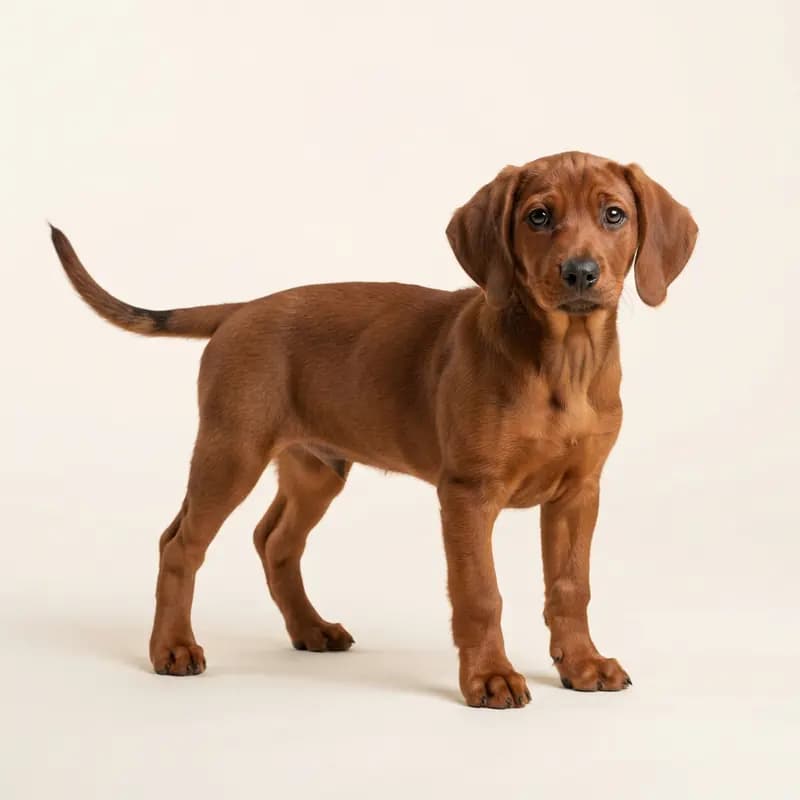 Illustrative image
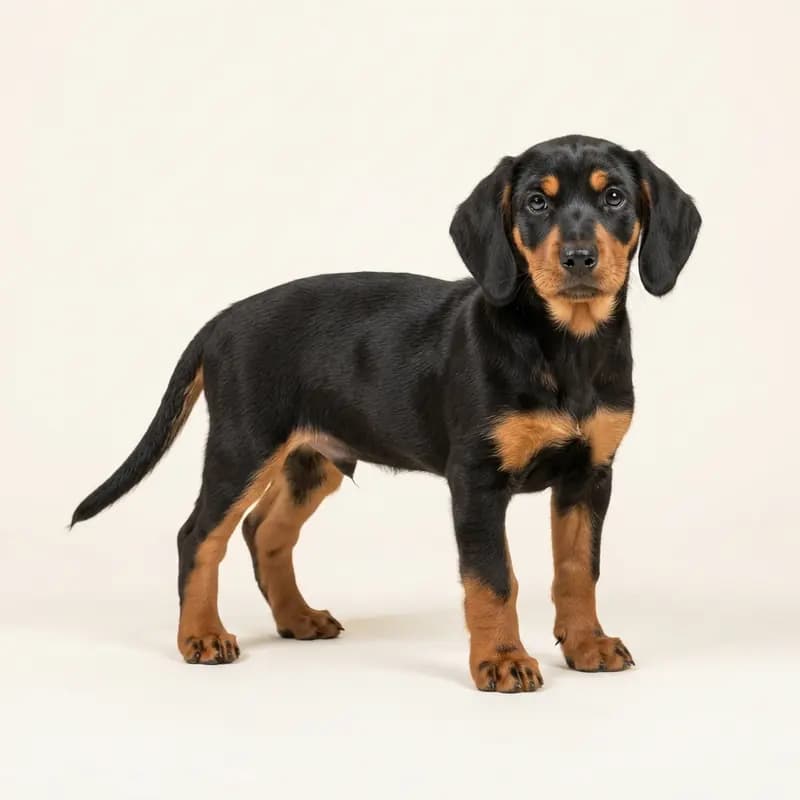 Illustrative image
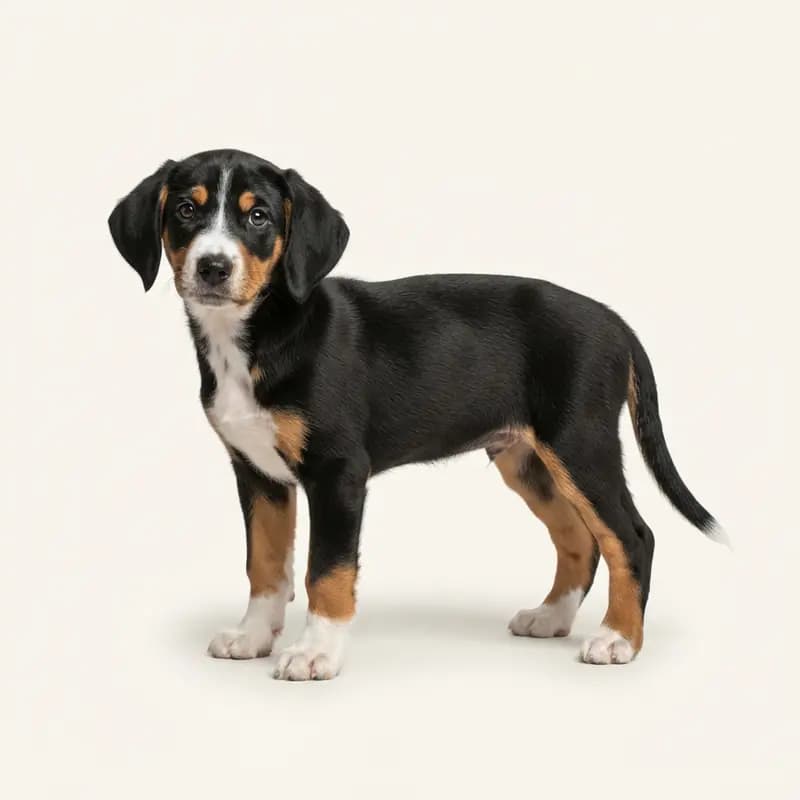 Illustrative image
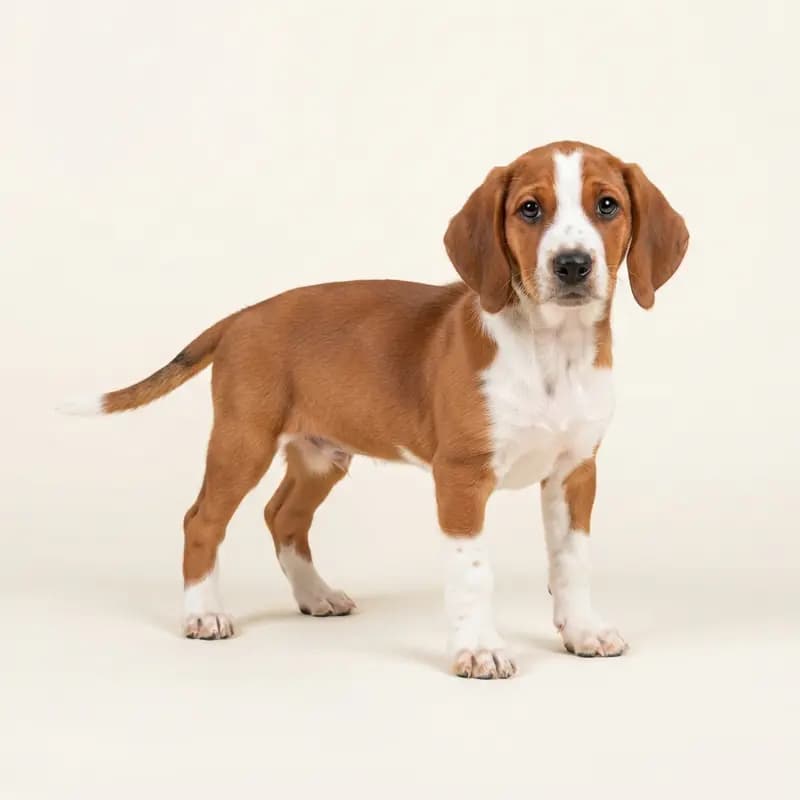 Illustrative image
The Tiroler Bracke is a traditional Austrian hunting dog breed whose origins trace back to the ancient Celtic hounds. As early as the Middle Ages, similar scent hounds were prized in the Alpine region, particularly in modern-day Tyrol, for their exceptional tracking ability and stamina. Emperor Maximilian I is said to have used such hounds for hunting in the Tyrolean mountains around 1500. Targeted pure breeding of the breed began in the second half of the 19th century. Hunters required a robust, sure-footed, and weather-hardy dog capable of handling the extreme climatic and topographical conditions of the high mountains. The Tiroler Bracke was primarily bred for hunting hare and fox with a loud bay, as well as for tracking wounded game. The first official breed standard was established in Innsbruck in 1896, and the breed received official recognition in Austria in 1908. The Tiroler Bracke was officially recognized by the Fédération Cynologique Internationale on August 31, 1954. To this day, it is kept almost exclusively by hunters, as it possesses a strong hunting instinct and a high level of willingness to work.
The Tiroler Bracke was bred for hunting hare and fox, as well as for tracking wounded game in the Alpine regions.
Austria
1860
At home, many owners describe the Tyrolean Hound as a surprisingly calm, gentle and affectionate housemate. While the breed is bursting with energy out in the field, it reliably switches off within its own four walls when it has had enough exercise and work. With its own family, including children, it is usually very patient, cuddly and friendly. Its watchfulness mostly shows in alert barking at noises or visitors, without the dogs tending toward aggression for no reason.
At the same time, reports stress that a life purely as a companion dog without serious activity hardly works. The Tyrolean Hound needs long daily outings in all weather and must have mental work, ideally through trailing and tracking. Owners advise caution with small pets or cats in the same household, since its instinctive hunting drive is hard to suppress. A securely fenced yard with a high fence is also mentioned again and again as a necessity.
Sources:fressnapf.dezooroyal.de
In training, many owners run into the typical dilemma of an independently working scent hound. On one hand, the Tyrolean Hound is considered smart, willing to learn and closely bonded to its people. On the other, it was selected over generations to follow trails across rough terrain over long distances completely on its own. As soon as it catches a fresh game scent, many dogs stop cooperating, which is why reliable off-leash freedom in areas with a lot of wildlife is often possible only with a great deal of training, or not at all.
Experienced handlers stress that harsh drill methods or rough force have no place with this breed, since Tyrolean Hounds are sensitive to pressure and respond by refusing stubbornly. What they need is calm, consistent leadership combined with positive reinforcement. Owners name building a rock-solid recall early, along with alternative anti-hunting and nose work (such as mantrailing or dummy blood-tracking), as essential building blocks of daily life.
Sources:fressnapf.detackenberg.dezooroyal.dedogorama.appforum.wildundhund.de
From a health perspective, owners and breeders consider the Tyrolean Hound a very primitive, hardy and resilient working breed. Because breeding is still strongly focused on performance, toughness and the ability to handle rough mountain terrain, breed-typical hereditary diseases are rare. The dense coat with its undercoat reliably protects the dogs from wet weather, snow and thorny brush; grooming is largely limited to regular brushing during shedding.
The hanging ears are what need the most attention. Many owners point out that they have to be checked and cleaned regularly, since they are prone to infection or to foreign bodies getting lodged in them after trips through dense thickets. The breed's high physical stamina also calls for a watchful owner, because very driven dogs tend to ignore exhaustion or minor injuries while working.
Sources:fressnapf.dezooplus.dezooroyal.dezoomalia.deforum.wildundhund.de
Paraphrased from real owner reports · translated from German
The Tyrolean Hound is an active dog that needs plenty of exercise and mental stimulation. Research the temperament, grooming needs, and space requirements before deciding.
The average life expectancy of a Tyrolean Hound is 12-14 years. With proper care and regular vet visits, your dog can live a long, healthy life.
Tyrolean Hound grooming requirements include regular brushing, nail trimming, and dental care. HonestDog provides detailed grooming tips for every breed.
The Tyrolean Hound can be a great family dog. Proper training and socialization are key. HonestDog provides family suitability information for every breed.
The Tyrolean Hound comes in these colors: Red, Black and tan, Tricolor, Red and white.
Showcase your kennel on HonestDog and reach families searching for a responsibly bred Tyrolean Hound.