Congenital Stationary Night Blindness (Briard)(CSNB)
Also known as: Congenital Stationary Night Blindness · Briard Retinal Dystrophy · RPE65-associated night blindness · Kongenitale stationäre Nachtblindheit · Stationäre Nachtblindheit des Briards · …
Overview
What it is
This inherited eye condition affects the retina, which is the light-sensitive tissue at the back of the eye. It specifically impairs the rod cells, the photoreceptors responsible for vision in low-light environments. Because the condition is stationary, the visual impairment does not worsen over the dog's life, and daytime vision remains mostly normal.
How it presents
Symptoms are present from birth and typically become noticeable in puppyhood. Owners will observe their dog hesitating, bumping into obstacles, or showing fear and disorientation in dim light or darkness.
Treatment
There is no cure for this lifelong condition, but it is non-progressive and does not cause pain. Management focuses on keeping the dog safe in the dark, with lifetime veterinary support and diagnostic costs ranging from 100 to 500 EUR.
How it's tested
ECVO Augenuntersuchung (DOK)(ECVO-DOK)
Primary testEye examAugenuntersuchung durch ECVO-zertifizierten Augentierarzt (Dortmunder Kreis). Erkennt PRA, Katarakt, Entropium, CEA, MPP, RD u.a.
Issuing body: ECVO
Result scheme: Eye-ECVO
Labogen Komplettpaket (rassespezifisch)(Labogen-Panel)
DNA testRassespezifisches DNA-Panel (Labogen / Laboklin) — bündelt alle relevanten Erbkrankheiten der Rasse in einem Test.
Issuing body: Labogen
Result scheme: Clear/Carrier/Affected
Feragen Komplettpaket (rassespezifisch)(Feragen-Panel)
DNA testRassespezifisches DNA-Panel (Feragen, Österreich) — gleiches Konzept wie Labogen.
Issuing body: Feragen
Result scheme: Clear/Carrier/Affected
Embark Breed + Health Panel(Embark)
DNA testUS-Anbieter; 250+ genetische Erkrankungen + Abstammung. Anerkennung in DE/AT variiert je nach VDH-Verein.
Issuing body: Embark
Result scheme: Clear/Carrier/Affected
MyDogDNA Panel(MyDogDNA)
DNA testGenoscoper-basiertes Panel (Mars Petcare). 200+ Erkrankungen + Rassenkomposition.
Issuing body: MyDogDNA
Result scheme: Clear/Carrier/Affected
Affected breeds

Treatment cost
Estimated range of typical treatment costs. Actual costs depend on severity, clinic and region.
Frequently asked questions
What is Congenital Stationary Night Blindness (Briard)?
This inherited eye condition affects the retina, which is the light-sensitive tissue at the back of the eye. It specifically impairs the rod cells, the photoreceptors responsible for vision in low-light environments. Because the condition is stationary, the visual impairment does not worsen over the dog's life, and daytime vision remains mostly normal.
How is Congenital Stationary Night Blindness (Briard) tested?
Tests currently in our database: ECVO Augenuntersuchung (DOK), Labogen Komplettpaket (rassespezifisch), Feragen Komplettpaket (rassespezifisch), Embark Breed + Health Panel, MyDogDNA Panel.
Which breeds are most affected?
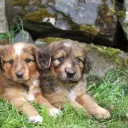
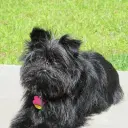
Most commonly affected: Briard, Wäller, Affenpinscher.