Lens luxation(PLL)
Also known as: Primary Lens Luxation · Linsenluxation · Ectopia lentis · Dislocation of the lens · Linsenluxation beim Hund · …
Overview
What it is
Lens luxation is an inherited eye disorder where the lens slips out of its normal position because the supporting fibers holding it in place weaken or break. When the lens shifts, it can block the natural drainage of fluid within the eye. This blockage causes a rapid, painful buildup of pressure called glaucoma, which can lead to permanent blindness if left untreated.
How it presents
Owners typically notice sudden signs of eye pain, such as squinting, redness, excessive tearing, or a cloudy appearance in one or both eyes. These symptoms most commonly appear when the dog is between 3 and 8 years of age.
Treatment
This condition is a medical emergency that usually requires surgery to remove the displaced lens or the affected eye, followed by lifelong daily eye drops. The total cost for emergency surgery, diagnostics, and follow-up care typically ranges from 1,500 to 5,000 EUR.
How it's tested
ECVO Augenuntersuchung (DOK)(ECVO-DOK)
Primary testEye examAugenuntersuchung durch ECVO-zertifizierten Augentierarzt (Dortmunder Kreis). Erkennt PRA, Katarakt, Entropium, CEA, MPP, RD u.a.
Issuing body: ECVO
Result scheme: Eye-ECVO
PLL DNA-Test(PLL)
Primary testDNA testEin molekularbiologischer DNA-Test zum Nachweis der Mutation im ADAMTS17-Gen, die für die Primäre Linsenluxation verantwortlich ist.
Issuing body: Labogen
Result scheme: Clear/Carrier/Affected
Labogen Komplettpaket (rassespezifisch)(Labogen-Panel)
DNA testRassespezifisches DNA-Panel (Labogen / Laboklin) — bündelt alle relevanten Erbkrankheiten der Rasse in einem Test.
Issuing body: Labogen
Result scheme: Clear/Carrier/Affected
Feragen Komplettpaket (rassespezifisch)(Feragen-Panel)
DNA testRassespezifisches DNA-Panel (Feragen, Österreich) — gleiches Konzept wie Labogen.
Issuing body: Feragen
Result scheme: Clear/Carrier/Affected
Embark Breed + Health Panel(Embark)
DNA testUS-Anbieter; 250+ genetische Erkrankungen + Abstammung. Anerkennung in DE/AT variiert je nach VDH-Verein.
Issuing body: Embark
Result scheme: Clear/Carrier/Affected
MyDogDNA Panel(MyDogDNA)
DNA testGenoscoper-basiertes Panel (Mars Petcare). 200+ Erkrankungen + Rassenkomposition.
Issuing body: MyDogDNA
Result scheme: Clear/Carrier/Affected
Affected breeds
24 of 82 breeds
 AkitaRecommended standard
 American Hairless TerrierRecommended standard
 American Staffordshire TerrierRecommended standard
 Biewer TerrierMandatory testMandated by Verband Deutscher Kleinhundezüchter e.V.
 Border TerrierRecommended standard
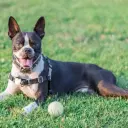 Boston TerrierRecommended standard
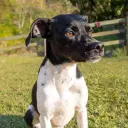 Brazilian TerrierRecommended standard
 Chinese Crested DogRecommended standard
 Danish-Swedish FarmdogRecommended standard
 Dutch SchapendoesRecommended standard
 East Siberian LaikaRecommended standard
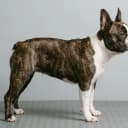 FrenchtonRecommended standard
 Greenland DogRecommended standard
 HokkaidoRecommended standard
 Icelandic SheepdogRecommended standard
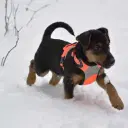 JagdterrierMandatory testMandated by Deutscher Jagdterrier-Club e.V. (DJT)
 JämthundRecommended standard
 Karelian Bear DogRecommended standard
 Kintamani-Bali DogRecommended standard
 KishuRecommended standard
 KomondorRecommended standard
 Korean JindoRecommended standard
 Lancashire HeelerRecommended standard
 LapinporokoiraRecommended standard
Treatment cost
Estimated range of typical treatment costs. Actual costs depend on severity, clinic and region.
Frequently asked questions
What is Lens luxation?
Lens luxation is an inherited eye disorder where the lens slips out of its normal position because the supporting fibers holding it in place weaken or break. When the lens shifts, it can block the natural drainage of fluid within the eye. This blockage causes a rapid, painful buildup of pressure called glaucoma, which can lead to permanent blindness if left untreated.
How is Lens luxation tested?
Tests currently in our database: ECVO Augenuntersuchung (DOK), PLL DNA-Test, Labogen Komplettpaket (rassespezifisch), Feragen Komplettpaket (rassespezifisch), Embark Breed + Health Panel, MyDogDNA Panel.
Which breeds are most affected?
Most commonly affected: Akita, American Hairless Terrier, American Staffordshire Terrier, Biewer Terrier, Border Terrier, Boston Terrier, Brazilian Terrier, Chinese Crested Dog.