
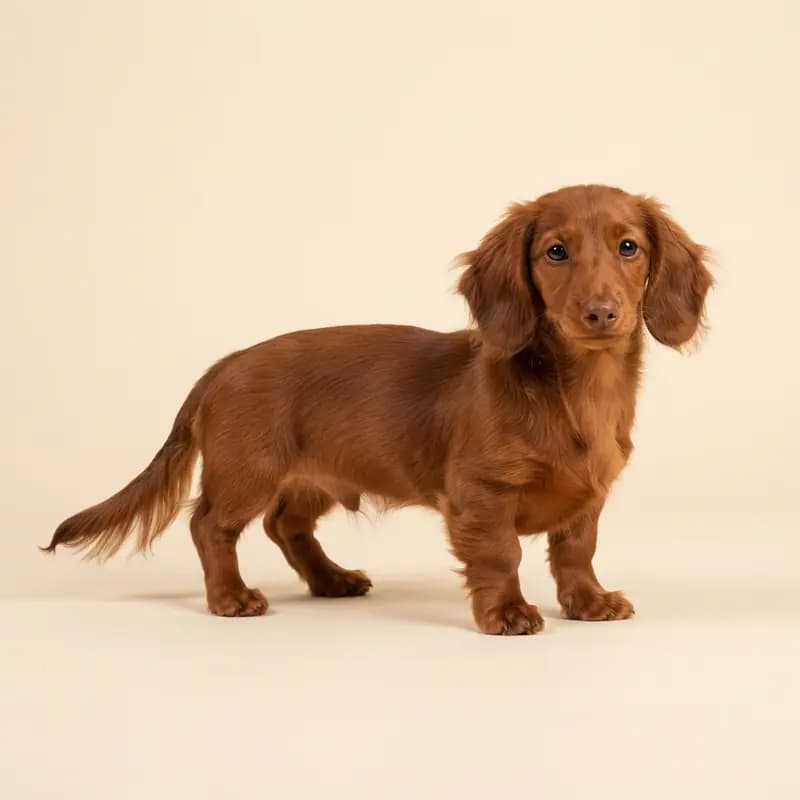


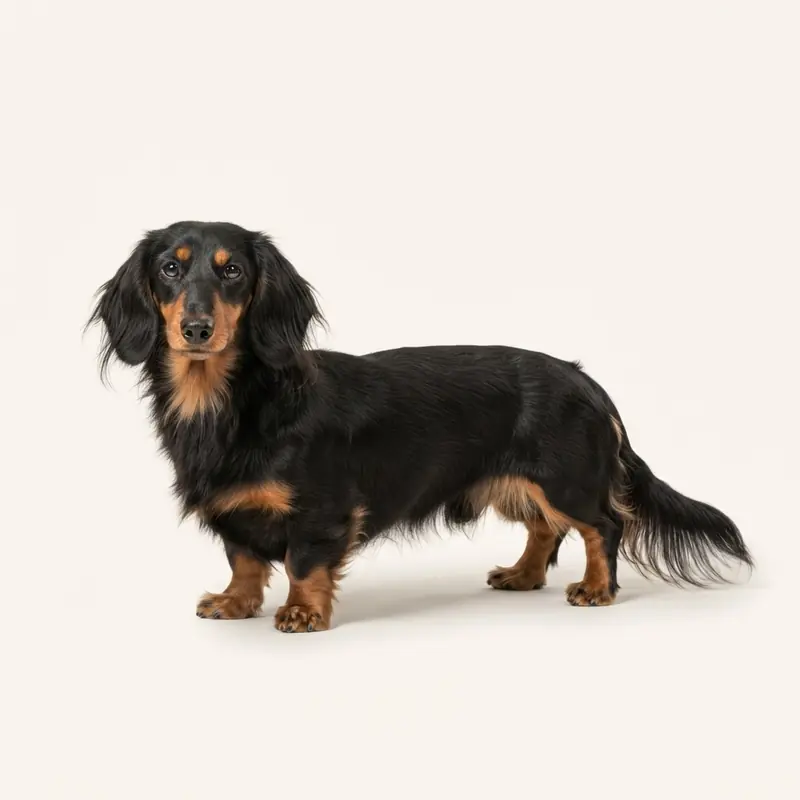
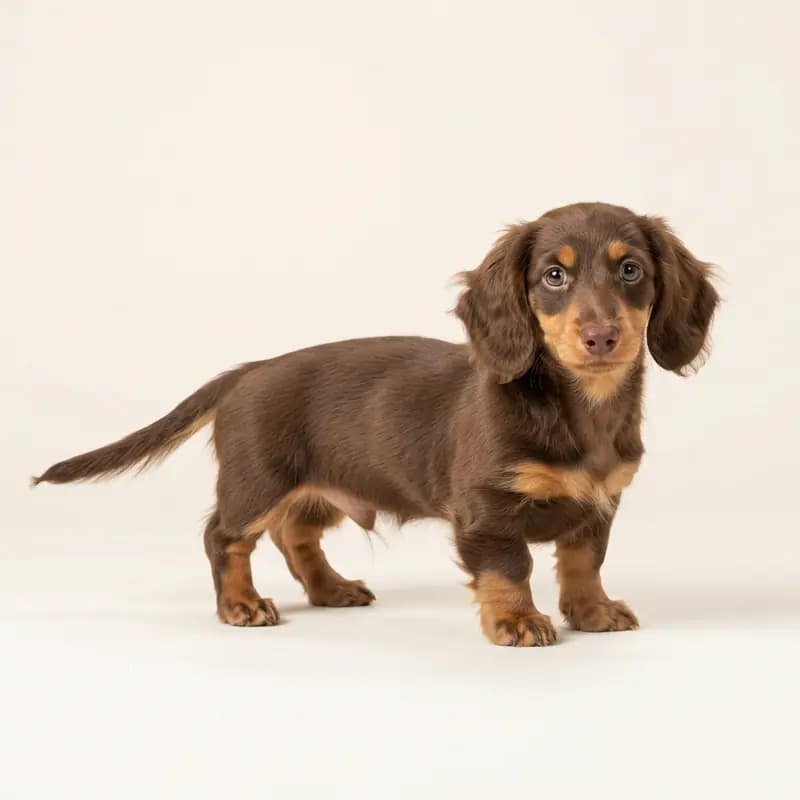
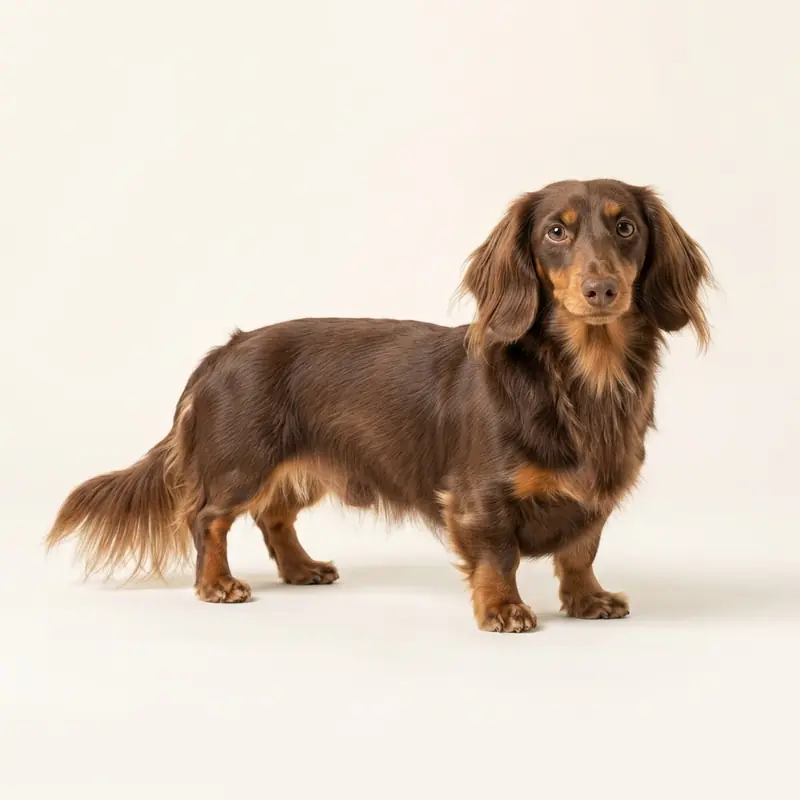
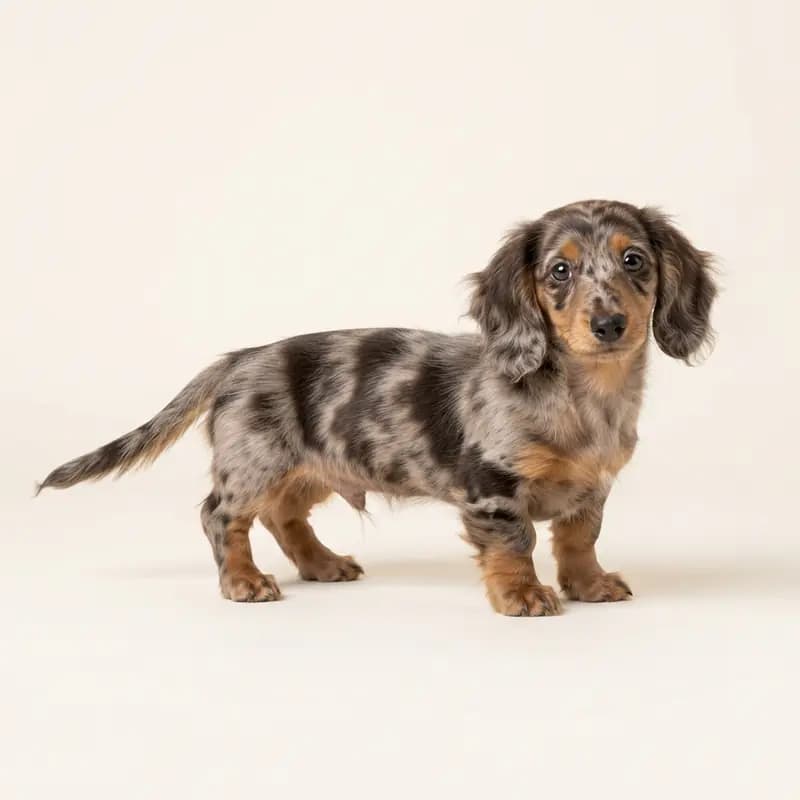
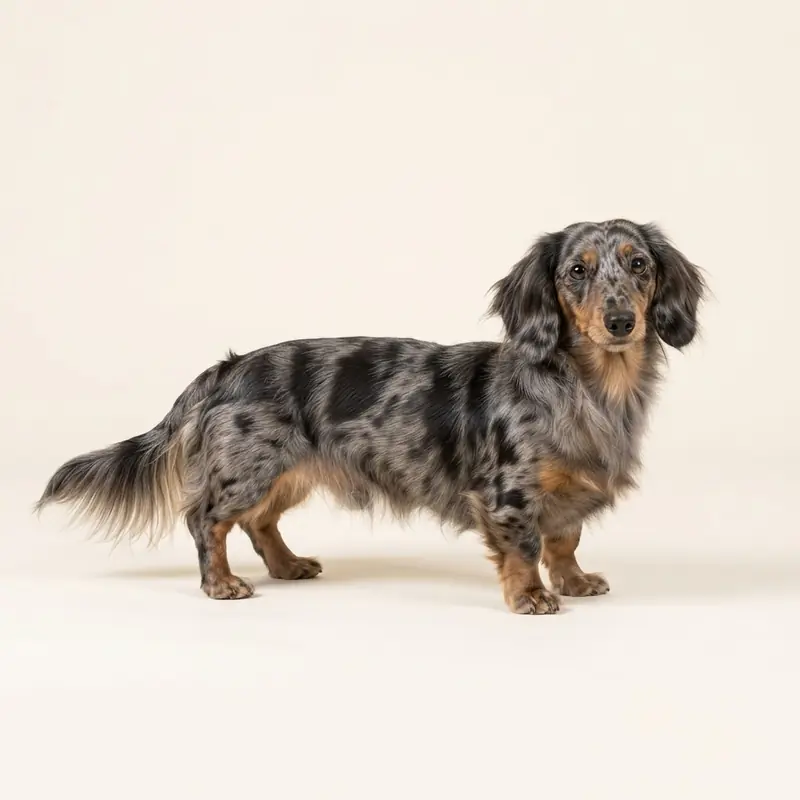
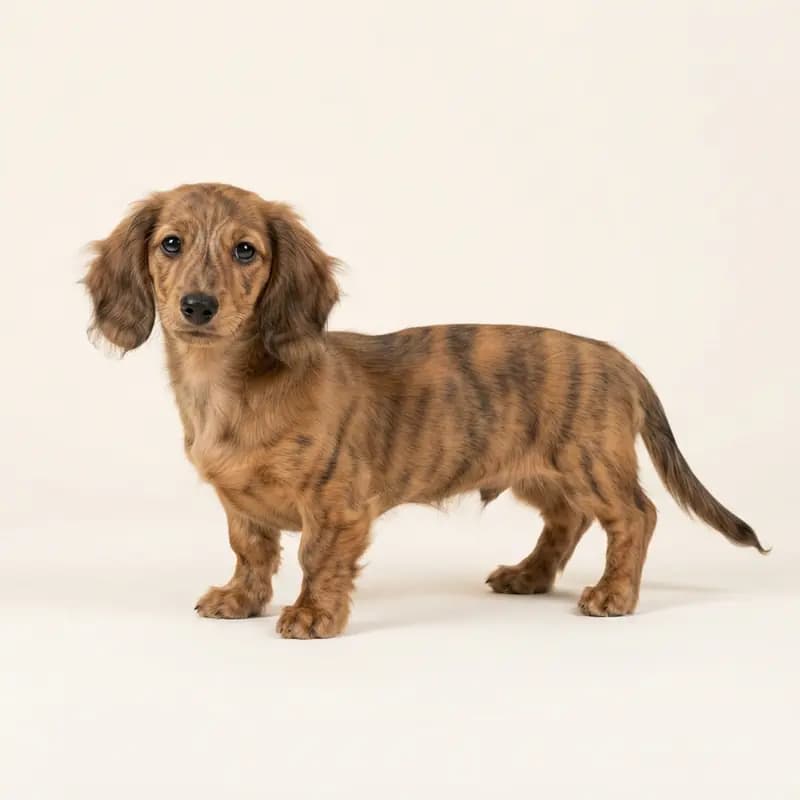

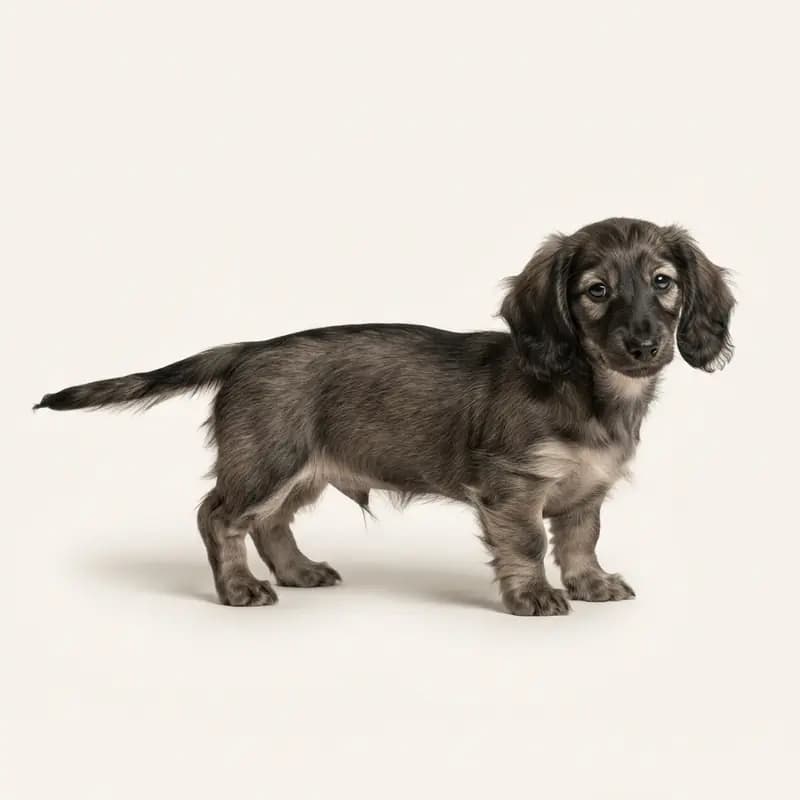
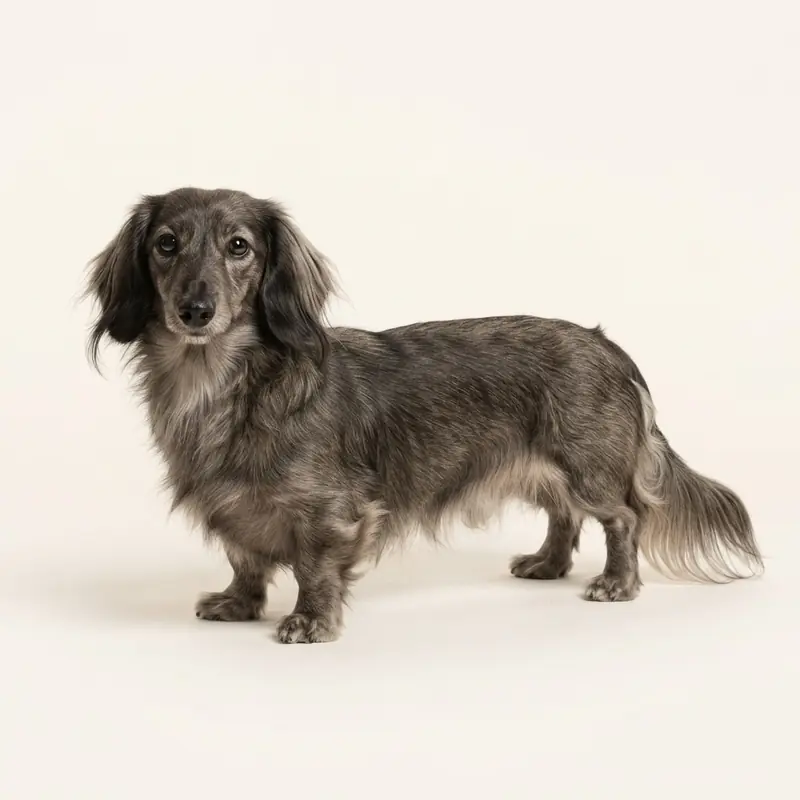


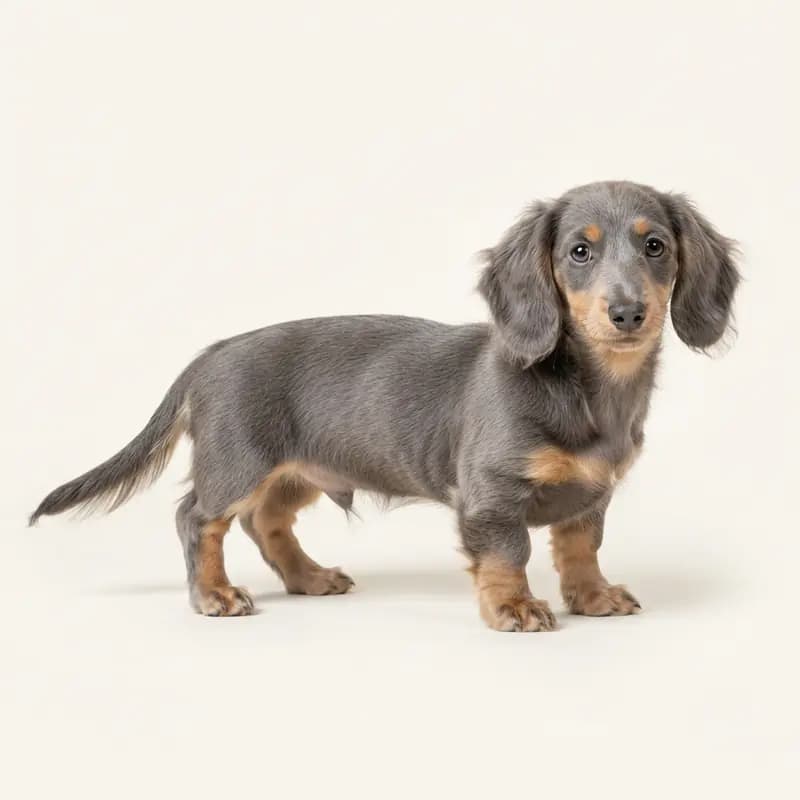
Learning how to train a dachshund puppy requires plenty of consistency and patience, as this breed was originally bred to hunt independently and carries a strong will of its own. With positive reinforcement, clear household rules, and early socialization, you can turn this intelligent and deeply devoted dog into a dependable lifelong companion.
| Trait | Impact on Training |
|---|---|
| Trainability | Moderate (headstrong, but learns quickly) |
| Motivation | Treats, nose work, hunting-style substitute activities |
| Typical Challenges | Prey drive, barking, selective hearing during recall |
| Suitable for Beginners | Conditionally (puppy school is strongly recommended) |
Why Is Training a Longhaired Dachshund Considered Hard?
Many prospective owners wonder whether longhaired dachshunds are hard to train. To answer that honestly, you have to look at the breed's history. Dachshunds were bred specifically for underground hunting, confronting badgers and foxes in subterranean dens. In a dark burrow beneath the ground, the dog cannot rely on human commands; they must assess danger on their own, stay fearless, and make split-second decisions independently. According to the official FCI breed standard for Dachshunds, they possess a passionate, persevering hunting spirit with an exceptional nose. That bred-in autonomy doesn't simply vanish because a dog lives in a modern family apartment.
That said, coat varieties matter: thanks to early crosses with spaniels, the longhaired dachshund is widely considered softer and more eager to please than smooth or wirehaired dachshunds. They are deeply affectionate, family-friendly, and naturally crave a close bond with their people. When you work with that bond instead of battling their stubborn streak, training falls into place. Force, physical pressure, or harsh scolding will only cause this clever dog to tune you out completely.
Training Your Longhaired Dachshund Puppy: The First Few Weeks
The foundation for a balanced, calm companion starts in the earliest months. When raising a longhaired puppy, set clear boundaries from day one and follow through with warm, steady consistency. Dachshunds are sharp observers and will exploit inconsistent rules in an instant.
Establishing Reliable House-Training
Young puppies have tiny bladders. Take your puppy outside after every nap, every meal, and whenever vigorous play winds down. During the first few weeks, that typically means taking them out every two to three hours. It helps to head to the exact same bathroom spot each time, as familiar scent cues trigger them to go. Patience is everything here: punishing indoor accidents only causes stress and sets back the learning process.
Bite Inhibition and Socialization
Up to 16 weeks of age, your puppy goes through a crucial sensitive socialization window. Everything they encounter positively now will remain neutral and stress-free later in life. Introduce them steadily to varied walking surfaces, everyday household sounds, unfamiliar people, and well-socialized adult dogs. At the same time, work on bite inhibition. If puppy teeth clamp down too hard during play, pause immediately with a calm "Ouch" and walk away. That teaches your pup how delicate human skin is.
For more detailed breed-specific characteristics and care requirements, explore the Longhaired Dachshund breed profile.
Developmental Milestones: Training Timeline
Every developmental stage calls for a slightly different training focus. This overview keeps your priorities straight as your longhaired dachshund matures.
| Age | Training Priority | Key Milestones |
|---|---|---|
| 8–16 Weeks | Foundations & Bonding | House-training, name response, bite inhibition, positive socialization, harness conditioning. |
| 4–6 Months | Core Obedience | Loose-leash basics, long-line recall, sit/down, early impulse control. |
| 7–14 Months (Adolescence) | Patience & Reinforcement | Navigating hormonal shifts; known cues get tested. Focus on settling and reliable long-line recall. |
| 15+ Months | Adult Refinement | Polishing commands, tailored mental outlets (e.g. scent games), calm focus around high distractions. |
Everyday Commands and Practical Obedience
You don't need a catalog of endless tricks for a well-behaved dachshund. Master a handful of reliable basics: sit, down, a rock-solid "drop it" or "leave it," and a steady stay. Because a dachshund's nose pulls their attention away easily, keep training sessions short (five to ten minutes) and upbeat.
Building a Solid Recall Against Instincts
Recall is the ultimate test when raising a dachshund. Because their prey drive is hardwired, sudden movement or wildlife scents can easily trigger a chase. Teach recall as the highest-value cue your dog knows. Clip on a 15- to 30-foot long line during off-leash practice so your pup cannot reward themselves by bolting. Shower every voluntary check-in with high-value treats or a brief game of tug. Only call your puppy when you are confident they will respond; otherwise, they learn your voice is optional background noise.
Loose-Leash Walking on Short Legs
Dachshunds naturally walk with their noses glued to the dirt, which quickly strains the leash. While managing a 13-to-20-pound dog is physically easy, chronic pulling strains their delicate spine and creates unnecessary frustration on walks. Stop moving forward the moment the leash goes taut. Only step forward when your dog releases tension and the leash hangs loose. Changing directions unpredictably also refocuses their eyes on you.
Navigating Breed-Specific Tendencies
Two typical behaviors demand proactive guidance when training a longhaired dachshund: vocal alerting and separation sensitivity.
Managing Alertness and Excessive Barking
Historically, dachshunds doubled as vigilant watchdogs that alerted hunters to approaching visitors. A short "woof" when someone knocks is entirely normal. Problems arise when alert barking turns into frantic, continuous noise. Let your dog know you have acknowledged the signal: a quiet, calm "Thank you, that's enough" followed by sending them to their mat relieves them of sentry duty. Shouting or scolding sounds to your dog like you are barking along, which only escalates the commotion.
Preventing Separation Distress
Longhaired dachshunds form intense bonds with their handlers and love being the center of attention, making alone-time challenging for some. Start separation practice early in puppyhood. Step out of the room silently for just a few seconds and return before any whining starts. Build duration gradually over several weeks. A durable chew or frozen enrichment toy gives your puppy a calm outlet while you are away.
Advanced Enrichment: Satisfying Mind and Body
An under-stimulated dachshund will invent their own entertainment—usually something you won't appreciate, like excavating the lawn or chewing on baseboards. Standard neighborhood walks aren't enough to satisfy their agile minds.
Since the longhaired dachshund lives through their nose, scent work is ideal. Hiding treat pouches around the home, laying backyard tracks, or trying amateur trailing works their brain deeply. Breed organizations like the Deutscher Teckelklub 1888 e.V. (DTK) offer diverse hunting-style and companion-dog tracking exercises that strengthen the human-canine team. Always protect their structural health during activity: skip high jumps (like hopping off beds or out of tall vehicles), avoid steep stairs, and steer clear of abrupt skidding stops during fetch to safeguard their elongated spine from IVDD (intervertebral disc disease).
Cooperative care can easily blend into your training routine. Conditioning your puppy with treats to accept daily brushing of their silky coat, paw handling, and ear checks turns grooming into an enjoyable bonding moment rather than a wrestling match.
Common Pitfalls to Avoid
A few common missteps make life with a dachshund harder than it needs to be:
- Surrendering to puppy-dog eyes: If you give in to their soulful stare and offer table scraps or let them break house rules, your dachshund will remember and push for the same pass next time.
- Physical corrections: Dachshunds are tough-minded, but their backs are physically vulnerable. Leash pops, jerking, or physically forcing them into a down position destroy trust and risk spinal injury.
- Delayed socialization: Waiting until your dachshund is an adolescent before exposing them to wildlife scents, busy environments, or other dogs makes impulse control far harder to shape later on.
- Underestimating their endurance: Don't assume short legs mean slow escapes. Dachshunds possess immense stamina and will lock onto an animal track for hours, completely oblivious to road traffic.
Frequently Asked Questions
Is a longhaired dachshund suitable for first-time dog owners?
Yes, provided you are committed to understanding breed instincts and willing to attend puppy classes early on. Longhaired dachshunds tend to be softer in temperament than wirehaired or smooth varieties, but their independent nature still calls for clear, confident guidance.
How long does it take to house-train a dachshund puppy?
It depends largely on your diligence and schedule. With consistent bathroom breaks and positive reinforcement, most puppies are reliably clean between four and six months of age. Pay close attention to subtle pre-potty signals, such as sudden floor sniffing or circling.
Can you train prey drive out of a dachshund?
No, prey drive is hardwired into their genetics and cannot be erased. However, you can manage it through targeted recall training, impulse control exercises, and alternative outlets like scent games. For many hunting-motivated dogs, keeping a long line attached in wooded areas remains the safest long-term choice.
Why does my longhaired dachshund ignore my cues?
If your dachshund tunes you out, it is rarely due to low intelligence. More often, they do not see the value in responding, or a scent in the grass is simply more rewarding. Boost your reward value and refine your engagement so that listening to you is always the best deal on the table.
Raising a Loyal Companion
Training a longhaired dachshund takes patience and a sense of humor, but the reward is a fiercely loyal, charming partner. When provided with fair structure, positive coaching, and plenty of mental enrichment, this charismatic hound thrives in family life, adapting just as easily to quiet city living as to weekend woodland trails.
If you are ready to welcome this spirited breed into your home, looking for a vetted ethical breeder, or hoping to connect with fellow dog owners, HonestDog.de offers a trusted platform to help you find the right four-legged partner for your life.